
Why Replacing Smoke Alarms on Time Could Save Your Life
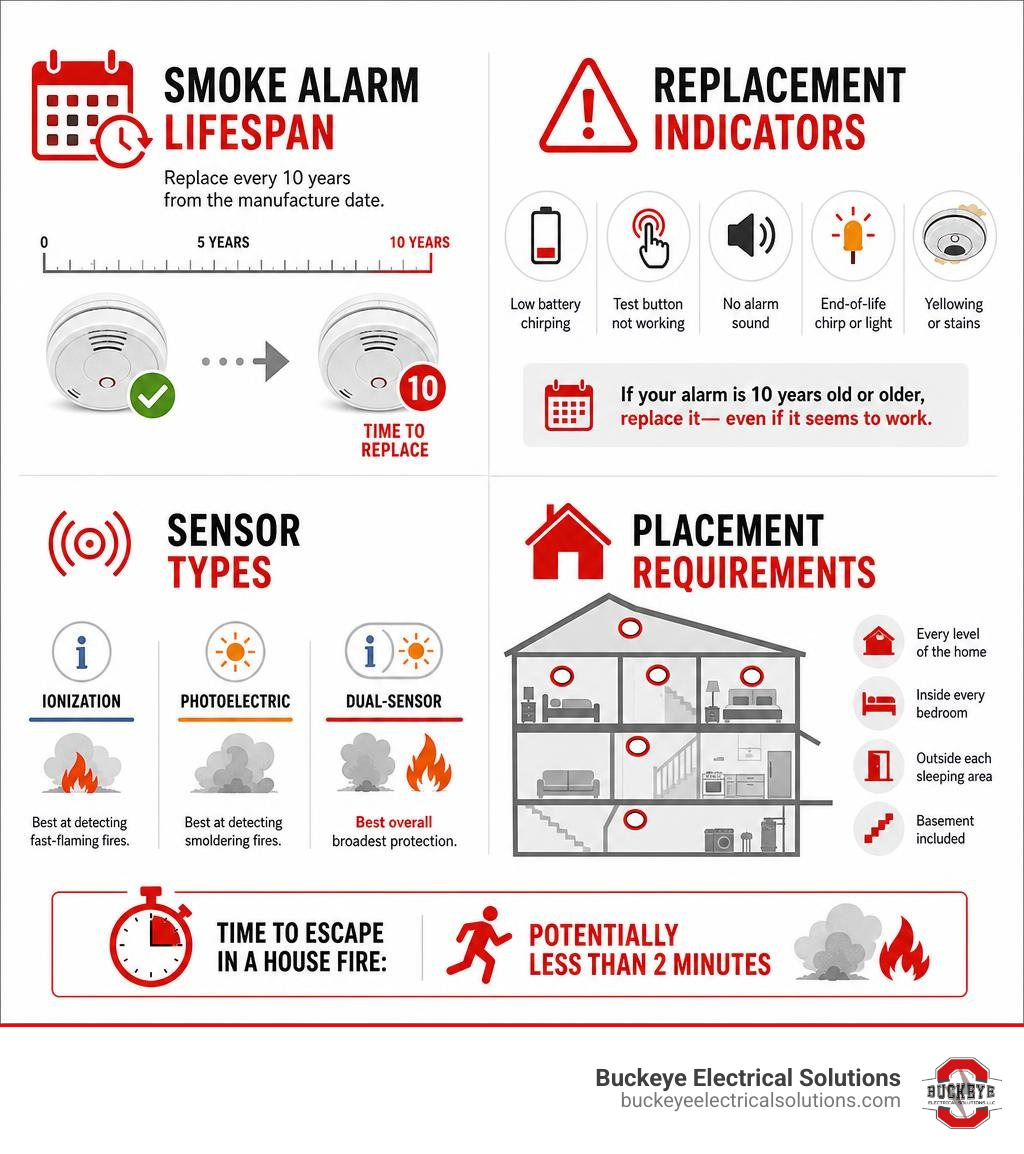
When it comes to replacement smoke alarms, the bottom line is simple: if yours are 10 years old or older, it’s time to swap them out — even if they still seem to work.
Quick answer for homeowners shopping for replacement smoke alarms:
| What you need to know | The short answer |
|---|---|
| How often to replace | Every 10 years from the manufacture date |
| Best sensor type | Dual-sensor (ionization + photoelectric) for broadest coverage |
| Power options | Hardwired, 10-year sealed battery, or 9V battery |
| How many for a typical home | At least 5 for a two-story, three-bedroom home |
| Where to place them | Every level, inside every bedroom, outside sleeping areas |
| Time to escape in a house fire | Potentially less than 2 minutes once smoke is detected |
Smoke alarms are one of the most important — and least expensive — safety investments in any home. Basic models start at around $6, while dual-sensor and smart-connected units typically run $24 and up. Yet many homeowners are unknowingly living with alarms that are past their service life, with sensors that have quietly lost their sensitivity over time.
The stakes are real. When a smoke alarm sounds, you may have less than 2 minutes to get everyone out safely. An expired or poorly placed alarm could cost you that window.
I’m Aaron, owner of Buckeye Electrical Solutions LLC, and I’ve helped dozens of Northeast Ohio homeowners assess and upgrade their replacement smoke alarms as part of permitted residential electrical projects — from single-alarm swaps to whole-home hardwired system upgrades. In this guide, I’ll walk you through everything you need to choose, place, and install the right alarms for your home.
Key terms for replacement smoke alarms:
Understanding Your Options for Replacement Smoke Alarms
When you begin searching for replacement smoke alarms, the sheer number of options on the shelf can feel overwhelming. However, the most critical decision you will make comes down to the underlying detection technology. Smoke alarms generally rely on one of two primary sensor types—ionization or photoelectric—or a combination of both.
According to the USFA FEMA Smoke Alarms Guide, both sensor technologies are highly effective, but they excel at detecting very different types of fires:
- Ionization Sensors: These alarms use a tiny amount of radioactive material to ionize the air between two electrically charged plates. When smoke enters the chamber, it disrupts the flow of ions, triggering the alarm. Ionization alarms are highly sensitive to fast-flaming fires—the kind that consume combustible liquids, wood, or paper rapidly.
- Photoelectric Sensors: These alarms use a light source and a light sensor positioned at an angle from each other. When smoke particles enter the chamber, they scatter the light beam, directing it toward the sensor and sounding the alarm. Photoelectric alarms are exceptionally quick at detecting smoldering fires—the kind that burn slowly and produce thick, toxic smoke for hours before bursting into flames (such as a cigarette left on a couch).
- Dual-Sensor Technology: Because it is impossible to predict what type of fire might occur in your home, safety experts strongly recommend using dual-sensor smoke alarms. These units house both ionization and photoelectric sensors under one hood, providing comprehensive protection against both fast-flaming and smoldering hazards.
To help you understand the tradeoffs, we have put together this comparison table highlighting the strengths, likely causes of nuisance alarms, and typical costs associated with each option:
| Sensor Type | Best at Detecting | Likely Causes of Nuisance Alarms | Common Planning Estimate (Price Range) | Priority Level |
|---|---|---|---|---|
| Ionization | Fast-flaming fires (paper, wood, grease) | Cooking smoke, high humidity | $6 – $15 | Standard |
| Photoelectric | Smoldering fires (upholstery, bedding, wiring) | Heavy dust, steam | $10 – $25 | High |
| Dual-Sensor | Both fast-flaming and smoldering fires | Cooking smoke, steam | $24 – $50+ | Recommended |
If you are planning to upgrade your home’s safety profile, mastering the differences between these technologies is the first step. For a deeper dive into how these sensors operate and how to handle them during renovations, check out our comprehensive guide on mastering smoke alarm installation and maintenance.
Power Sources and Lifespan: When and Why to Replace
One of the most common questions we receive from homeowners in Northeast Ohio is: “If my smoke alarm still sounds when I press the test button, why do I need to replace it?”
The answer lies in the mechanical degradation of the sensors themselves. While the test button confirms that the battery, circuitry, and horn are fully functional, it cannot verify whether the chemical or optical sensors are still sensitive enough to detect smoke. Over a 10-year period, constant exposure to airborne dust, pollen, pet dander, and microscopic cooking grease wears down these sensors.
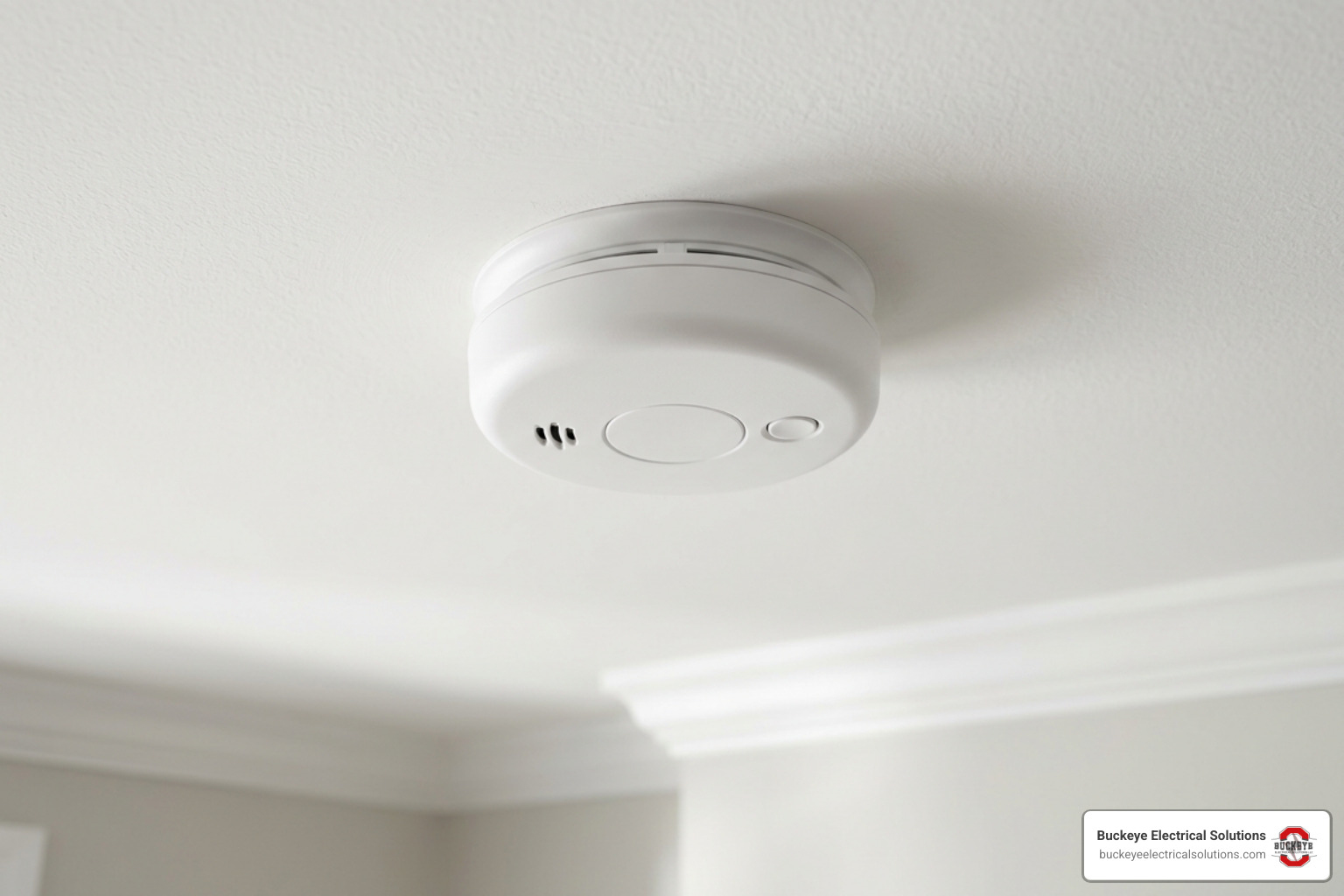
For this reason, national safety standards dictate a strict 10-year lifespan for all smoke alarms, regardless of whether they are powered by a standard battery, a sealed lithium battery, or your home’s electrical grid. Keeping track of this timeline is crucial. To find out exactly how old your unit is, twist it off its mounting bracket and look at the back. You will find a sticker or stamp indicating the manufacture date. If that date is more than a decade in the past, the unit must be replaced immediately.
To help keep our local community safe, the Ohio State Fire Marshal testing reminders emphasize checking your smoke detector dates twice a year, typically when we “spring forward” or “fall back” for daylight saving time. If you are managing an older property or planning a major home renovation, you can read our advice on navigating fire alarm system replacement to learn how to transition older systems to modern, reliable setups.
Choosing the Right Power Source for Replacement Smoke Alarms
When choosing your replacement smoke alarms, you will need to select a power configuration that aligns with your home’s existing infrastructure and your personal maintenance preferences:
- Hardwired Systems (with Battery Backup): Typically required in newer homes, these units connect directly to your home’s 120-volt electrical system. They feature a backup battery (either a standard 9V or a sealed lithium cell) to ensure continuous monitoring during power outages.
- 10-Year Sealed Lithium Battery Alarms: These units are powered by a built-in, non-replaceable lithium battery designed to last a full decade. They eliminate the annoying “low-battery chirp” in the middle of the night and require zero battery maintenance for the lifetime of the unit. Excellent examples include the 10-Year Battery Smoke Alarm | SMI110 or the Sentinel 10-Year Ionization Alarm.
- Standard Battery-Operated Alarms: These traditional units rely on replaceable 9V or AA alkaline batteries. While they are highly affordable upfront, they require annual battery replacements and will chirp when the power runs low.
Key Features to Look for in Replacement Smoke Alarms
Modern replacement smoke alarms offer a variety of high-tech features designed to improve safety and reduce panic during an emergency:
- Voice Alerts: Instead of a jarring, repetitive beep, some premium alarms feature clear, spoken voice commands that announce the specific hazard and its location (e.g., “Fire! Smoke detected in the basement!”). This is particularly beneficial for children, who are more likely to wake up to a human voice than a standard horn.
- Wire-Free Interconnectivity: Traditional hardwired alarms must be physically linked via a three-wire cable to sound simultaneously. Today, you can purchase wireless interconnected alarms that communicate via radio frequency. If an alarm detects smoke in the attic, every alarm in the house will sound, giving you precious extra seconds to escape.
- Smart Home Integration: Smart alarms, like the KIDDE Battery Smart Smoke & Carbon Monoxide Alarm | Ring, connect to your home’s Wi-Fi network. They send real-time alerts to your smartphone if an emergency occurs while you are away, allowing you to call for help even if you aren’t home.
- Built-In Escape Lights: In a dark, smoke-filled hallway, visibility drops to zero almost instantly. Alarms equipped with bright LED safety lights, such as the Kidde 10-Year Photoelectric Smoke Alarm with Safety Light, illuminate your escape path, helping your family navigate safely to the nearest exit.
Installation and Placement Guidelines under Ohio Codes
Proper placement is just as critical as choosing the right device. A top-of-the-line dual-sensor alarm won’t help you if it’s placed in a dead-air space where smoke cannot reach it.
When planning your installation, keep in mind that Ohio jurisdictions may apply the 2023 NEC or other adopted building and fire code requirements depending on the specific location and project scope, making these rules highly situational. All final placements and wiring configurations are subject to authority having jurisdiction (AHJ) approval.
Generally, standard residential building codes and safety guidelines recommend installing smoke alarms in the following locations:
- On every level of the home, including the basement.
- Inside every bedroom or room designated for sleeping.
- Outside every separate sleeping area (such as a hallway servicing multiple bedrooms).
- At least 10 feet away from cooking appliances to prevent nuisance alarms from normal kitchen steam and heat.
- On the ceiling (ideally in the center) or high on a wall (typically no more than 12 inches from the ceiling to the top of the alarm).
If you live in Central Ohio, programs like the Westerville Ohio Fire Department installation program offer assistance with basic battery-powered installations. However, for hardwired systems or full-scale residential upgrades, professional execution is vital. To learn how we plan and execute whole-home safety designs, read our guide on how to get a new fire alarm system done right.
Troubleshooting and Maintenance: Preventing False Alarms
There is nothing more frustrating than a smoke alarm that sounds when you are simply boiling water or searing a steak. Unfortunately, this frustration often leads homeowners to take dangerous shortcuts, such as removing the batteries or disabling the alarm entirely.
Never disable a smoke alarm. If your alarm sounds due to cooking steam or kitchen smoke, use the “hush” or “silence” button, open a window, and wave a dry towel near the unit to clear the air. If the problem persists, the alarm may be placed too close to the kitchen or bathroom, or the sensor may be clogged with dust.
To keep your replacement smoke alarms operating flawlessly, follow these simple maintenance steps:
- Test Monthly: Press and hold the test button on each unit once a month. You should hear a loud, clear, piercing tone.
- Clean Regularly: Gently vacuum the exterior cover of your alarms once a season using a soft brush attachment to remove dust, cobwebs, and debris.
- Replace Batteries Promptly: For units with standard 9V backups, replace the batteries at least once a year. If you hear a single, repeating chirp once every minute, it typically indicates a low battery that needs immediate attention.
- Understand Alarm Patterns: A standard smoke alarm sounds a repeating pattern of three long beeps, followed by a pause. A carbon monoxide (CO) alarm typically sounds four quick beeps, followed by a pause. If you hear three rapid chirps every minute, this generally indicates a device malfunction or an end-of-life warning, meaning the unit must be replaced.
Understanding why your alarms behave the way they do can save you a lot of headache. For a detailed breakdown of local environmental factors that trigger false alerts, check out our article on understanding fire alarm false alarms in Ohio.
Frequently Asked Questions about Smoke Alarm Replacement
Can I mix different brands of smoke alarms in an interconnected system?
While you can physically mount different brands of battery-operated alarms in the same house, we do not recommend mixing different brands within a hardwired, interconnected system.
Interconnected alarms rely on specific electrical signaling protocols to communicate with one another. Mixing brands or even different series from the same manufacturer can lead to communication failures, constant false alarms, or a failure of the system to sound collectively during a fire. To ensure complete system reliability, always consult the manufacturer’s compatibility list or replace all interconnected units at the same time using matching models. If you are experiencing communication errors or wiring issues, you can read our troubleshooting tips on how to repair fire alarm systems.
Do hardwired smoke alarms expire?
Yes. A common misconception among homeowners is that hardwired smoke detectors last forever because they run on home electrical power.
In reality, the internal sensors in a hardwired unit degrade at the exact same rate as those in battery-powered models. The mechanical components of the sensor will typically lose sensitivity after 10 years, making them unreliable. Even if your hardwired alarms look clean and functional, they must be replaced on a strict 10-year cycle. Additionally, the backup batteries within these units must still be tested and maintained. For a better understanding of how commercial and residential systems are checked for long-term viability, read our article on quarterly fire alarm testing.
Do I legally need an electrician to replace hardwired smoke alarms in Ohio?
While homeowners are permitted to replace simple plug-and-play battery alarms themselves, hardwired smoke detectors are connected to your home’s 120V electrical grid. Working with live electrical wiring carries significant safety risks, including electrical shock and fire hazards if the connections are not secured properly. For example, if an outlet has no voltage; could indicate breaker, GFCI, switch, or wiring issue, or you suspect improper wiring or a bootleg ground, professional diagnostic tools are required.
In Ohio, local building departments and electrical codes generally require that permanent, hardwired electrical work be performed by a licensed professional. Furthermore, unpermitted or improper electrical work can complicate insurance claims if an electrical fire occurs. Using a certified professional ensures your installation is code-compliant, safe, and fully functional. To see how we perform certified safety checks, refer to our step-by-step guide on professional fire alarm checks.
Conclusion
Upgrading your home with reliable replacement smoke alarms is one of the most proactive steps you can take to protect your family and your property. Whether you need to swap out a few outdated battery units, install wire-free interconnected alarms, or completely overhaul a hardwired system, investing in modern fire detection technology is an investment in peace of mind.
At Buckeye Electrical Solutions, we are dedicated to keeping Northeast Ohio homes and businesses safe. With over 20 years of experience, our team provides top-tier residential and commercial electrical installation, repair, and maintenance services. We handle everything from code-compliant smoke detector layouts to complex panel upgrades with a commitment to exceptional service and prompt project completion.
Don’t wait for a chirping alarm or an emergency to tell you your system is outdated. If you are ready to secure your home with professional installation, contact us today to schedule your service. For commercial safety systems, explore our dedicated commercial fire alarm and electrical services.