Why Fire Alarm System Design Matters When Replacing an Aging System
Fire alarm system design is typically the structured process of planning, specifying, and documenting every component of a fire detection and notification system — from detector placement to wiring, zoning, power backup, and integration with other building systems.
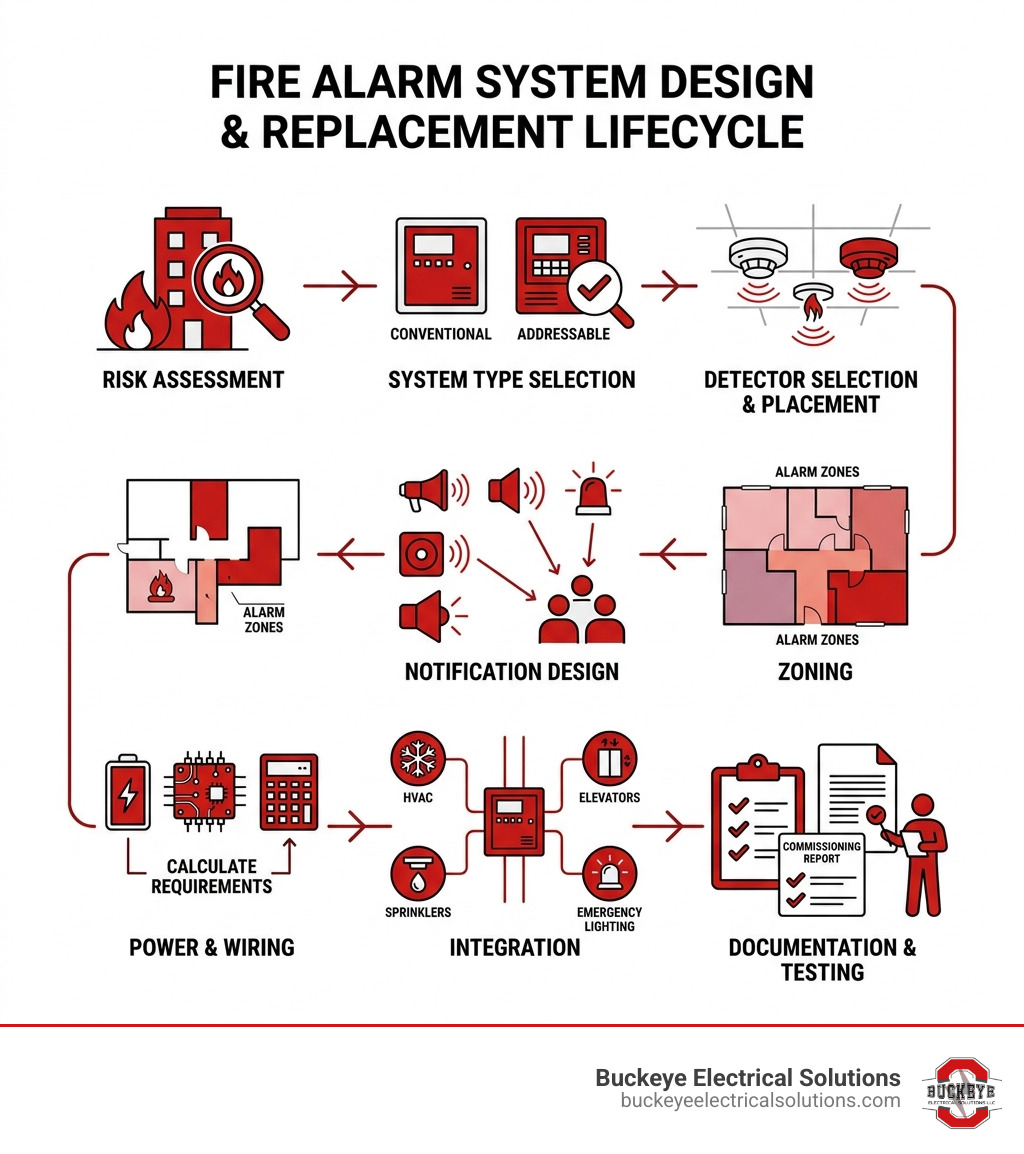
Here is a quick overview of common core design steps:
- Risk assessment — Identify building occupancy, layout, and fire hazards
- System type selection — Choose conventional, addressable, or monitored based on building size and code requirements
- Detector selection and placement — Match smoke, heat, or multi-criteria detectors to each space
- Zoning — Divide the building into logical alarm zones per applicable code
- Notification design — Ensure audible and visual alarms reach all occupants
- Power and wiring — Calculate battery backup and circuit requirements
- Integration — Coordinate with HVAC, elevators, sprinklers, and emergency lighting
- Documentation and testing — Prepare submittals, commission the system, and verify performance
Replacing an old fire alarm system is typically not simply a matter of swapping out hardware. A poorly designed system — even one using quality equipment — can fail to give adequate warning when it matters most. In Ohio, designs typically need to align with the Ohio Fire Code and applicable NFPA 72 requirements, and local Authority Having Jurisdiction (AHJ) requirements can shape everything from detector spacing to submittal approvals.
The stakes are real. According to fire safety reports, home fires can claim hundreds of lives annually — a sobering reminder that life safety systems deserve careful, code-driven design rather than guesswork.
I’m Aaron, owner of Buckeye Electrical Solutions LLC, and I’ve directed dozens of permitted electrical projects across Northeast Ohio — including work that intersects directly with fire alarm system design and life safety compliance. That hands-on experience shapes everything in this guide.
Quick Fire alarm system design definitions:
The Fundamentals of Fire Alarm System Design
When we look at a fire alarm system design, we often view it as a nervous system for a building. It is typically designed to sense a problem, process the information, and react. Components are generally intended to work in harmony to meet life safety goals.
Control Units: The Brains of the Operation
The Fire Alarm Control Unit (FACU) or panel is typically the central hub. It is designed to monitor inputs and control outputs. In a replacement scenario, upgrading the panel is often the first step to moving from an “old” system to a modern one that supports advanced features like remote monitoring and precise device identification.
Initiating Devices: The Senses
These are the components that typically “tell” the panel there is a fire. They include:
- Automatic sensors: Smoke, heat, and carbon monoxide (CO) detectors.
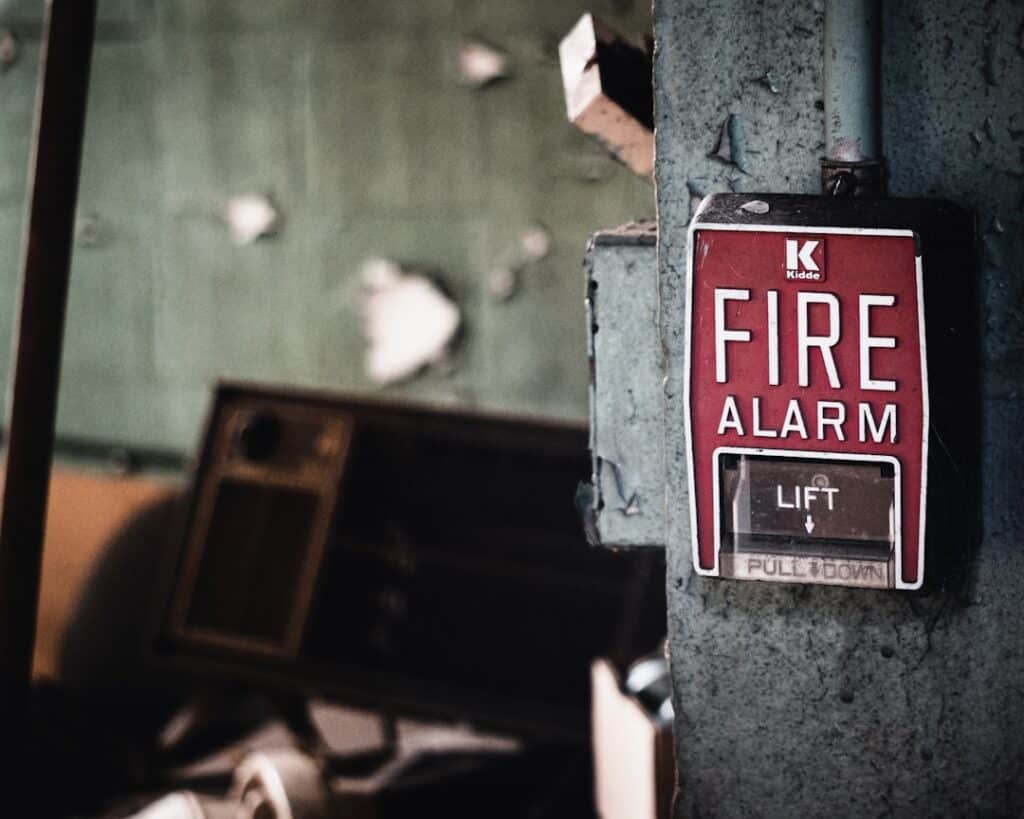
- Manual stations: The classic “pull stations” located near exits.
- Supervisory switches: Devices that monitor the health of other systems, such as water flow switches in a sprinkler system.
Notification Appliances: The Voice
Once a fire is detected, the system is designed to tell people to get out. This typically involves:
- Audible devices: Horns, bells, or voice evacuation speakers.
- Visual devices: High-intensity strobes to alert those with hearing impairments.
Power Supply: The Lifeblood
Reliability is non-negotiable. A fire alarm system design typically requires two power sources:
- Primary Power: Typically a dedicated branch circuit from the building’s electrical panel.
- Secondary Power: Battery backups or emergency generators. Batteries must typically be sized to keep the system running in standby for 24 hours, followed by several minutes of full alarm operation, depending on the specific occupancy type and code requirements.
For more information on how these components are maintained, check out our guide on Fire Alarm Services.
Compliance and Standards: NFPA 72 and the Ohio Fire Code
Navigating the regulatory landscape in Ohio is one of the most critical parts of the design process. We don’t just design for safety; we design for approval.
The Role of the AHJ
The Authority Having Jurisdiction (AHJ) is the local official—often a fire marshal or building inspector—who typically has the final say on whether a design meets the code. In Northeast Ohio, requirements can vary slightly between municipalities, making local expertise invaluable, as specific interpretations can vary depending on the AHJ.
NFPA 72 and the Ohio Fire Code
Most fire alarm system designs work in our region follows the Ohio Fire Code, which heavily references NFPA 72 (National Fire Alarm and Signaling Code). This standard typically dictates many requirements, from where a smoke detector is placed to how loud the horns must be.
Professional Qualifications and Submittals
For many commercial projects, a Qualified Fire Protection Engineer (QFPE) or a licensed professional engineer (P.E.) may be required to review and stamp the design drawings. The “submittal package” sent to the AHJ typically includes:
- Shop drawings: Detailed floor plans showing device locations.
- Battery calculations: Proof that the backup power is sufficient.
- Voltage drop calculations: Ensuring the notification devices at the end of a long wire run still receive enough power to function.
- Operating matrix: A table showing exactly what happens (output) when a specific device is triggered (input).
Understanding these code triggers and survivability requirements is essential for a system that isn’t just “new,” but fully compliant.
Selecting and Positioning Initiating Devices
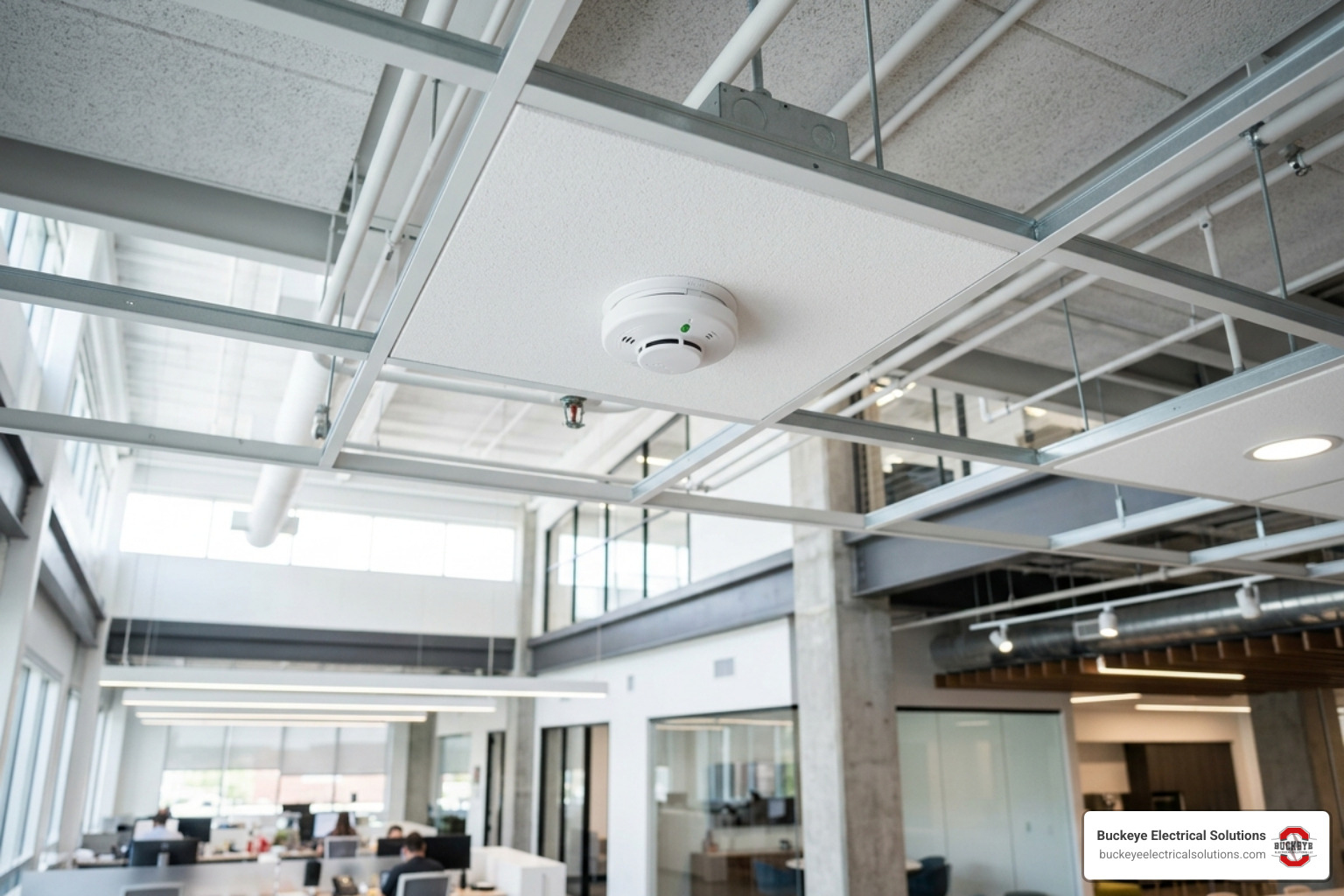
Choosing the right detector is about matching the technology to the environment. A kitchen often requires a different approach than a bedroom or a dusty warehouse.
Strategic Detector Selection and Fire Alarm System Design Placement
| Detector Type | Best Use Case | Avoid In |
|---|---|---|
| Photoelectric Smoke | Smoldering fires (living rooms, hallways) | Kitchens, bathrooms (steam/smoke) |
| Heat Detector | Kitchens, garages, boiler rooms | Life safety in sleeping areas |
| Multi-Criteria | Complex environments (hospitals, hotels) | Simple, low-budget residential |
| CO Detector | Near fuel-burning appliances | Areas with high airflow |
The UL 268 7th Edition standard has introduced new requirements for smoke detectors to better distinguish between real fire smoke and “nuisance” smoke, like burnt popcorn or steam. Incorporating these modern sensors is a great way to reduce false alarms. Learn more about choosing the right hardware in our new fire alarm system guide.
Spacing and Coverage Requirements
In fire alarm system designs, we use specific radius measurements to ensure no “blind spots” exist. While these are often adjusted based on ceiling height and obstructions, a common guideline for flat ceilings includes:
- Smoke Detectors: Often designed with a 7.5m (approx. 24ft) coverage radius.
- Heat Detectors: Typically have a smaller coverage radius, often around 5.3m (approx. 17ft).
Placement must also account for “dead air” spaces. For example, detectors should generally not be placed within 4 inches of where a wall meets a ceiling, as smoke may not circulate into that corner effectively.
System Architecture and Integration
Modern systems are often designed to do more than just beep; they typically communicate with the entire building.
Addressable vs. Conventional Fire Alarm System Design
When replacing an old system, the biggest choice is the architecture:
- Conventional Systems: These divide the building into “zones.” If a detector goes off, the panel knows which floor or area has a fire, but not the specific room. These are often used in smaller buildings or for tighter budgets.
- Addressable Systems: Every single device has a unique “address.” The panel is typically capable of identifying which detector in which room is alarming. This is often considered the gold standard for Mastering commercial fire alarm installation because it can speed up emergency response and simplify maintenance.
Integration with Building Functions
A well-designed system typically acts as a conductor for other safety features:
- Elevator Recall: The system sends a signal to elevators to return to a designated floor and stay there so occupants don’t get trapped.
- HVAC Shutdown: To prevent smoke from being pumped throughout the building, the fire alarm can shut down air handling units.
- Sprinkler Monitoring: If a sprinkler head activates, the water flow switch triggers the fire alarm.
- EVACS: In large assembly areas, Emergency Voice/Alarm Communication Systems provide spoken instructions, which are often more effective than simple sirens.
For a deeper dive, see this fire alarm system design complete guide.
The Replacement and Design Workflow
Replacing a system is a journey from risk assessment to final sign-off.
The Step-by-Step Fire Alarm System Design and Replacement Process
- Risk Assessment: We typically evaluate the building’s current use. Has a warehouse been converted into an office? The design must change to match.
- Zoning: Defining the boundaries to ensure the fire department can find the fire quickly.
- Calculations: We typically perform voltage drop and battery backup calculations to ensure the system won’t fail during a power outage.
- Software Tools: Many designers use tools like AutoCAD or specialized software (e.g., Bosch Safety Systems Designer) to create precise layouts.
Understanding the budgeting for fire alarm costs early in this process helps avoid surprises during the installation phase.
Documentation and Testing
The project is typically not considered complete when the last wire is pulled. We must prove it works:
- Operating Matrix: Verifying that every input triggers the correct output.
- Audibility Testing: Using a decibel meter to ensure the alarm is loud enough to wake people or be heard over machinery.
- Sensitivity Testing: Checking that smoke detectors aren’t too “touchy” or too slow to react.
- Commissioning: A final walkthrough with the AHJ to demonstrate the system’s compliance, which can vary depending on the AHJ.
Frequently Asked Questions about Fire Alarm Design
How do residential and commercial systems typically differ?
Residential systems are often simpler, focusing on life safety in sleeping areas and integration with security systems. Commercial systems are typically more complex, requiring fire-rated cabling, integration with building systems like elevators and HVAC, and strict compliance with the Ohio Fire Code and NFPA 72.
What are the advantages of addressable systems in large buildings?
Addressable systems typically allow for “point identification,” which can help the panel identify which device is triggered. This typically makes troubleshooting faster and can allow for more efficient wiring, as many devices can share the same Signaling Line Circuit (SLC) loop.
How often should fire alarm systems be professionally inspected?
In Ohio, commercial systems generally require at least an annual professional inspection, though some components like batteries or sensitive environments may require semi-annual checks. Regular testing is intended to ensure that when you need the system, it’s ready.
Conclusion
Upgrading from an “old” to a “bold” fire alarm system can be one of the most important investments a property owner in Northeast Ohio can make. It’s often about more than just avoiding fines; it’s about helping to ensure that your occupants, your property, and your peace of mind are protected by a system designed for reliability and compliance.
At Buckeye Electrical Solutions, we bring over 20 years of experience to every project. Whether you are in Akron, Cleveland, or the surrounding areas, we understand the local codes and the technical demands of fire alarm system designs. We pride ourselves on prompt service and quality, aiming to ensure your replacement project is handled correctly from the first drawing to the final test.
Ready to secure your building? Explore our full range of electrical services and let us help you navigate your next fire safety project.