Why House Electrical Outlet Wiring Is More Complex Than It Looks
House electrical outlet wiring is the system of cables, connections, and devices that delivers safe, usable power to every plug in your home.
Here’s a quick overview of the standards and safety requirements involved:
| Topic | Key Facts |
|---|---|
| Wire types | 14-gauge for 15-amp circuits, 12-gauge for 20-amp circuits |
| Safety Standards | GFCI and AFCI protection required in specific zones |
| GFCI required | Kitchens, bathrooms, garages, outdoors, basements, laundry rooms |
| Outlets per circuit | NEC limits 15-amp circuits to a maximum of 8 outlets |
| Ground prong orientation | Up is safest for most general-use outlets |
| Permits | Required in most municipalities before adding or modifying outlets |
| DIY restrictions | Main panel work, EV chargers, and solar wiring require a licensed electrician |
Most homeowners don’t think about their outlets until something goes wrong — or until they simply run out of them. But getting the wiring right matters far more than most people realize. Faulty connections are a leading cause of house fires, and outdated wiring in homes over 25 years old often can’t handle today’s electrical loads.
I’m Aaron, owner of Buckeye Electrical Solutions LLC, and I’ve directed more than 60 permitted electrical projects across Northeast Ohio — including full residential rewires where improper house electrical outlet wiring was at the root of serious safety issues. In the sections below, I’ll walk you through everything you need to know to understand this topic clearly and make smart decisions for your home.
Must-know house electrical outlet wiring terms:
Essential Safety Protocols for House Electrical Outlet Wiring
When it comes to house electrical outlet wiring, safety is the foundation of every professional installation. Electricity requires strict containment and expert handling to prevent hazards.
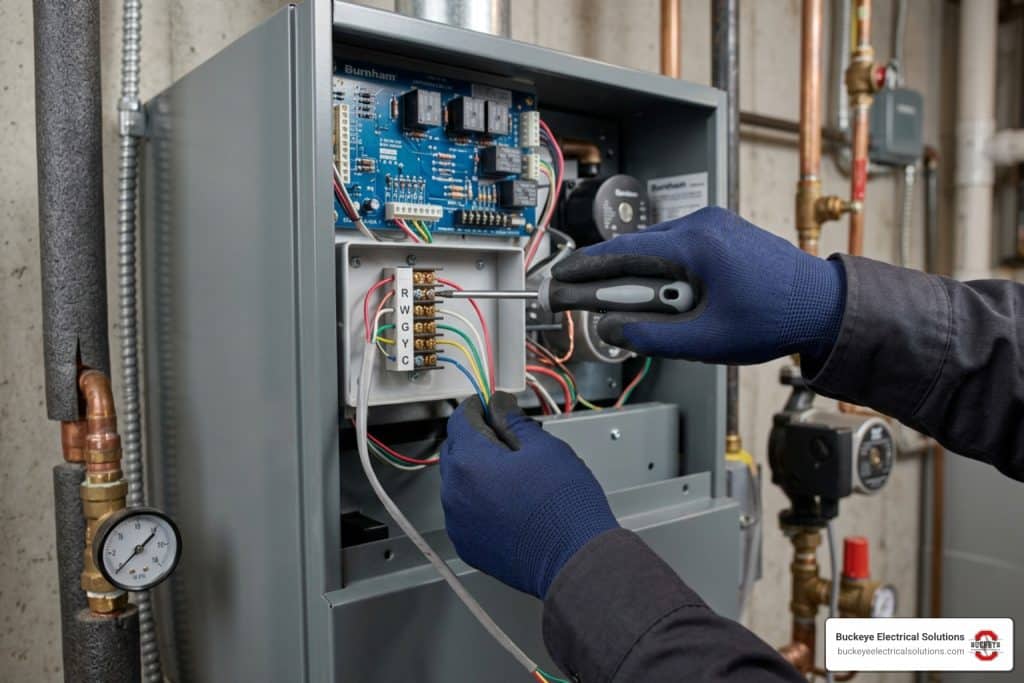
The first and most critical rule is de-energization. Professional electricians never perform work on a circuit that is live. This process involves the complete de-energization of circuits at the main panel and the implementation of lockout-tagout procedures to ensure the work area remains safe.
Professional electricians utilize specialized testing equipment, such as non-contact voltage testers, to verify that power is fully disconnected before beginning any work. Safety standards also dictate the use of personal protective equipment (PPE), such as safety glasses and insulated footwear, even when circuits are de-energized. Professionals use tools specifically designed for electrical work, featuring insulated handles to provide an additional layer of protection. Adhering to OSHA Electrical Safety Standards ensures that residential projects are completed without risk to the occupants or the property.

Understanding Circuit Capacity and Wire Gauges
One of the most common mistakes in DIY house electrical outlet wiring is a mismatch between the circuit breaker, the wire gauge, and the outlet itself. Think of electricity like water flowing through a pipe. If you try to force too much water through a pipe that’s too small, you get high pressure and potential bursts. In electrical terms, “pressure” leads to heat, and heat leads to fires.
In Northeast Ohio homes, we typically see two types of branch circuits: 15-amp and 20-amp.
| Circuit Amperage | Required Wire Gauge | Common Use Case |
|---|---|---|
| 15 Amps | 14-Gauge (14/2 NM-B) | General lighting and bedroom outlets |
| 20 Amps | 12-Gauge (12/2 NM-B) | Kitchens, dining rooms, and laundry areas |
The “80 Percent Rule” is a cornerstone of safe electrical design. The National Electrical Code (NEC) recommends that a circuit should not be loaded to more than 80% of its capacity for continuous loads. For a 15-amp circuit, that means staying under 12 amps of actual draw. When we perform residential electrical services, we calculate these loads carefully to ensure your breakers won’t trip every time you turn on a vacuum cleaner.
Wire gauge matters because thinner wire (14-gauge) has higher resistance than thicker wire (12-gauge). If you install a 20-amp breaker on a circuit wired with 14-gauge wire, the wire will overheat and potentially melt its insulation long before the breaker ever trips. This is why matching the copper conductors to the overcurrent protection is non-negotiable.
National Electrical Code Standards for House Electrical Outlet Wiring
The National Electrical Code (NEC) is updated every three years to reflect new safety research and technology. As of April 2024, Ohio has adopted the 2023 NEC, which introduced several important updates for house electrical outlet wiring.
One of the biggest shifts involves Ground Fault Circuit Interrupter (GFCI) protection. GFCIs are designed to protect people from shocks by detecting tiny imbalances in current—often caused by electricity “leaking” through water or a person—and shutting off power in milliseconds. While we used to only worry about outlets near sinks, the code now requires GFCI protection in:
- Kitchens (all countertop outlets and those within 6 feet of a sink)
- Bathrooms
- Garages
- Unfinished basements
- Outdoors
- Laundry rooms
- Crawl spaces
Additionally, Arc-Fault Circuit Interrupter (AFCI) protection is now required for most living areas. While GFCIs protect people, AFCIs protect the structure from fires caused by “arcing”—the sparking that happens when a wire is pinched or a connection is loose.
Another safety standard we strictly adhere to is the use of tamper-resistant (TR) outlets. These have internal shutters that prevent children from inserting foreign objects like paperclips into the slots. The shutters only open when two prongs are inserted simultaneously.
Spacing is also regulated. The “12-foot rule” states that no point along a floor line in any wall space may be more than 6 feet from an outlet. This ensures that a standard 6-foot lamp cord can reach an outlet without the need for dangerous extension cords.
Professional Installation vs. DIY Risks
While the internet is full of “quick fix” videos, house electrical outlet wiring carries risks that go far beyond a simple repair. A loose screw terminal or a poorly twisted wire nut can create high-resistance connections. These don’t always trip a breaker immediately; instead, they slowly generate heat over months or years, eventually igniting the wooden studs inside your walls.
Insurance liability is another major factor. If a fire is traced back to electrical work performed without a permit or by an unlicensed individual, insurance companies may deny the claim. Beyond the financial risk, there’s the technical complexity. For example, older homes in Northeast Ohio often feature “legacy” systems like knob-and-tube or aluminum wiring. These require specialized handling and specific components to prevent oxidation and fire hazards.
The Importance of Permits for House Electrical Outlet Wiring
In Ohio, and specifically within the municipalities we serve in Northeast Ohio, obtaining an electrical permit is a legal requirement for most wiring modifications. Permits ensure that the work is documented and, more importantly, inspected by a third party.
There are strict limits on what a homeowner can legally do. For instance, homeowners are generally prohibited from:
- Modifying the main electrical service panel.
- Installing Electric Vehicle (EV) chargers.
- Integrating solar photovoltaic systems.
- Wiring permanent in-ground pools or hot tubs.
These tasks require complex load calculations that must be performed by a qualified professional to ensure the home’s electrical service can handle the new demand.
The Role of Rough and Final Inspections
The inspection process is your safety net. It typically happens in two stages. During the “rough-in” inspection, the inspector examines the house electrical outlet wiring while the walls are still open. They check that the electrical boxes are securely mounted, the cables are properly supported, and the box volume is sufficient to prevent overcrowding.
The “final” inspection occurs once the drywall is up, the outlets are installed, and the plates are on. The inspector will verify that all GFCIs trip correctly, the polarity is correct, and the circuit directory in your panel is accurately labeled. At Buckeye Electrical Solutions, we handle the coordination of these inspections to ensure your project meets every local code requirement.
Frequently Asked Questions about House Electrical Outlet Wiring
How many outlets can safely be added to a 15-amp circuit?
The NEC generally limits a 15-amp circuit to a maximum of 8 outlets or lighting fixtures. This is based on a calculation that assumes each outlet represents a certain amount of “volt-ampere” load. While you might physically be able to daisy-chain more, doing so increases the likelihood of nuisance tripping and places unnecessary stress on the wiring. If you find yourself needing more power for a home office or entertainment center, it’s often better to run a new, dedicated 20-amp circuit.
When and where are GFCI outlets required by code?
As of the latest code adoptions in Ohio, GFCI protection is required in any area where moisture is likely to be present. This includes:
- Kitchens: All outlets serving countertops and any outlet within 6 feet of the sink.
- Bathrooms: Every single outlet.
- Garages and Accessory Buildings: Any outlet located at or below grade level.
- Outdoors: All receptacles, including those under soffits.
- Basements: Both finished and unfinished areas now require protection.
- Sinks: Any outlet within 6 feet of the top inside edge of the bowl of a sink.
Should outlets be installed with the ground prong up or down?
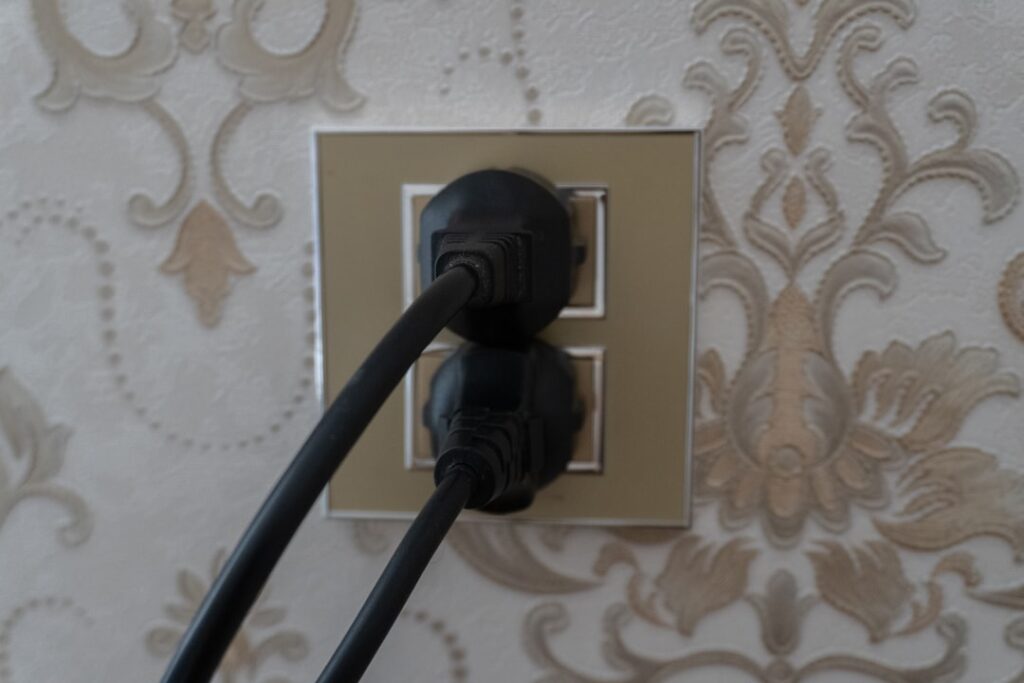
This is the great debate of the electrical world! The NEC does not actually specify a required orientation. However, many master electricians—including those of us here in Northeast Ohio—recommend installing outlets with the ground prong up.
The logic is simple: if a plug is partially pulled out and a thin metal object (like a picture wire or a child’s toy) falls onto the prongs, a ground-up orientation ensures the object hits the grounded prong first. If the ground is on the bottom, the object could bridge the hot and neutral prongs, causing a direct short circuit, sparks, and a potential fire. The only exception is for “immediate-turn” plugs found on some refrigerators or AC units, where the cord is designed to hang downward.
Conclusion
Understanding the complexities of house electrical outlet wiring is the first step toward a safer, more functional home. From matching wire gauges to the latest NEC 2023 requirements, every detail matters. While it might be tempting to tackle these projects yourself, the risks of fire, shock, and code violations are significant.
At Buckeye Electrical Solutions, we bring over 20 years of experience to every job in Northeast Ohio. We pride ourselves on prompt service, exceptional quality, and ensuring that every connection in your home is rock-solid. Whether you’re dealing with flickering lights, need to upgrade to GFCI protection, or are planning a major renovation, we’re here to help.
Don’t leave your family’s safety to chance. Schedule a professional house electrical outlet wiring consultation with us today and experience the peace of mind that comes with certified expertise.