Your Quick Guide to Electrical Service in Northeast Ohio
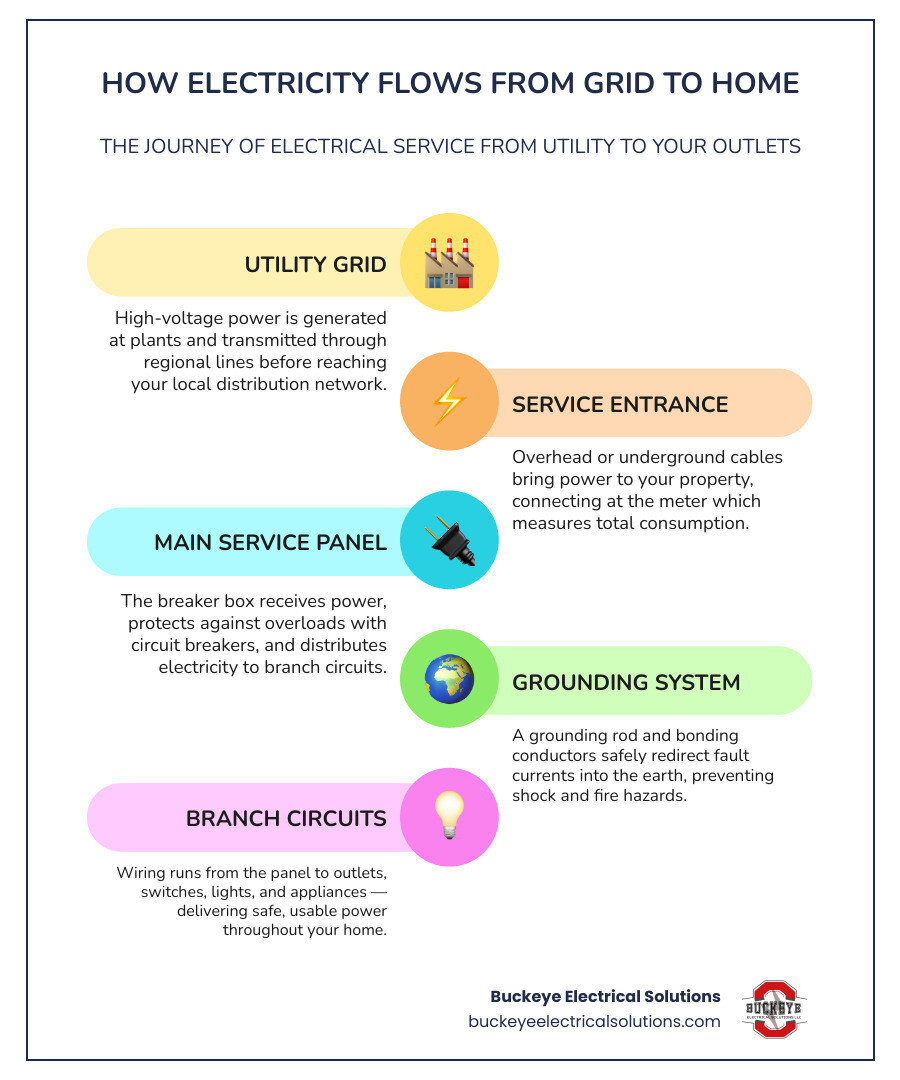
Electrical service is the equipment and conductors that deliver utility power to a building’s service equipment, typically including the service drop or lateral, meter equipment, service-entrance conductors, main disconnect, and service panel. Branch-circuit wiring carries power from the panel to outlets, lights, and appliances.
Here’s a quick overview of what that covers:
| What It Includes | Why It Matters |
|---|---|
| Utility meter and service entrance | Where grid power enters your property |
| Main service panel (breaker box) | Distributes power to all circuits in the building |
| Grounding and bonding system | Creates an effective fault-current path and stabilizes the electrical system relative to earth |
| Building electrical system, beyond the service equipment | Branch-circuit wiring carries power from the panel to outlets, lights, and appliances |
| Upgrades and new installations | Adds capacity for EVs, additions, or aging systems |
Most Ohio homes are served by 100 to 200 amps of electrical service, though older homes may fall short of what modern appliances and technology demand. When something goes wrong — or when you’re planning a renovation, adding an EV charger, or buying an older property — understanding how your electrical system works can save you time, money, and real safety risk.
This guide walks you through what electrical service includes, how it is planned, what Ohio and utility requirements may apply, and how to find a contractor you can actually trust.
I’m Aaron Estep, owner of Buckeye Electrical Solutions LLC and a licensed master electrician based in Northeast Ohio, with hands-on experience across more than 60 permitted electrical service projects ranging from residential panel upgrades to large-scale commercial rewires. Before publishing credential-specific claims, verify current licensing, bonding, insurance, project-count, and experience records because local contractor requirements and business records can vary.
What is Electrical Service and Why Does It Matter?
When we talk about electrical service, we are referring to the infrastructure that connects a property to the local utility supply and brings power to the building’s service equipment. The utility transformer reduces distribution voltage before power reaches the home or business; the main service panel then distributes and protects the supplied power, but it does not transform it.
At its core, this system is about safety and capacity. The utility grid delivers electrical energy to your property, but your service equipment, grounding and bonding, disconnecting means, and panel help control how that power is distributed. If your panel is outdated, damaged, or undersized, you may see overloaded circuits, damaged equipment, or fire hazards.
Grounding and bonding create an effective fault-current path and stabilize the electrical system relative to earth, helping breakers or fuses operate when a fault occurs.
For homeowners, keeping this system in peak condition is vital. As modern households adopt more high-demand technology — from smart home systems to electric vehicles — the strain on residential infrastructure continues to grow. If you want to dive deeper into how these systems function and how to spot potential warning signs in your home, we encourage you to read more about our dedicated Residential Electrical Services or check out our detailed guide, Beyond the Wires: What Every Homeowner Needs to Know About Residential Electrical Services.
Key Components of a Residential and Commercial Electrical System
To understand how electricity safely powers your life, it helps to look at the physical components that make up your system. While residential and commercial setups differ in scale and complexity, they share several foundational parts:
- The Electric Meter: This device measures the amount of electricity your property consumes. It is typically mounted on the exterior of your building and serves as the official point of measurement for your utility company.
- The Main Service Panel (Breaker Box): The central distribution point for your property. It houses the main service disconnect or main breaker arrangement and individual circuit breakers that protect your wiring from carrying too much current.
- The Grounding and Bonding System: Grounding and bonding create an effective fault-current path and stabilize the electrical system relative to earth, helping breakers or fuses operate when a fault occurs.
- Branch Circuit Wiring: The network of wires running through your walls to feed individual outlets, light switches, and appliances. This wiring is part of the building electrical system beyond the service equipment.
In commercial environments, the scale of these components increases dramatically. Commercial properties often require three-phase power systems to handle larger, more consistent motor loads and heavy machinery. If you are managing a business property, the design requirements, switchgear, utility coordination, and safety protocols demand specialized training.
For Ohio projects, utility requirements are local and utility-specific. Northeast Ohio customers may need to coordinate with FirstEnergy, AEP Ohio, AES Ohio, or another serving utility, each with its own service, metering, point-of-delivery, and customer-equipment requirements. To review local utility guidance, start with FirstEnergy’s Customer Guide for Electric Service in Ohio or AES Ohio’s Service Requirements. For business owners looking to optimize their facilities, we cover these specialized commercial needs extensively in our guide to Wiring for Success: What to Look for in Commercial Electrical Services.
Understanding Overhead vs. Underground Electrical Service
One of the most important design choices for any property is whether to install an overhead or underground electrical service. Both methods have distinct structural requirements, costs, and advantages.
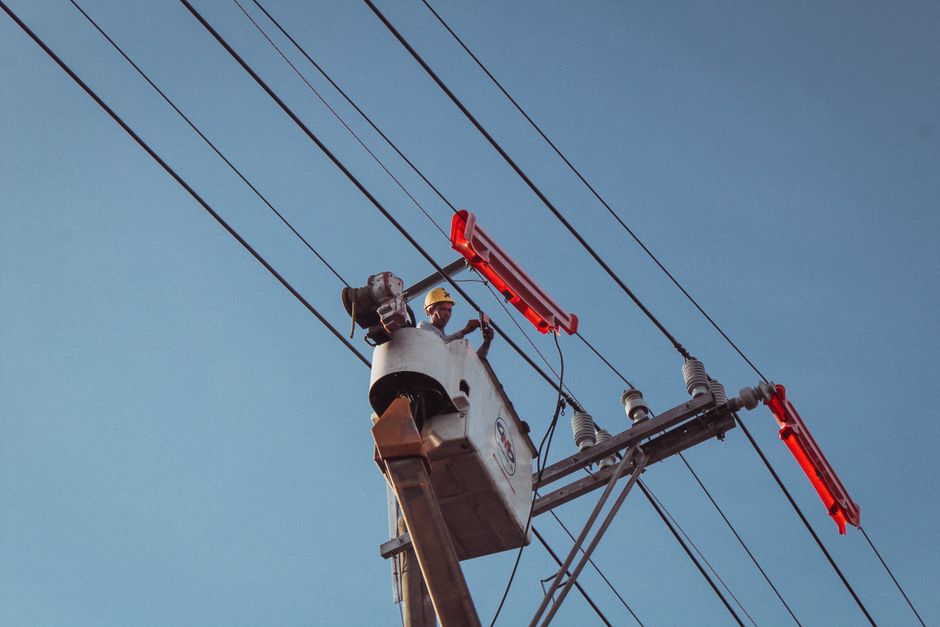
Overhead services are the traditional standard. Power lines run from a utility pole to a service mast mounted on your roof or exterior wall. This configuration is generally less expensive to install initially because it requires no digging. However, overhead lines are exposed to Ohio’s harsh winter weather, falling tree branches, and high winds, making them more susceptible to physical damage.
Underground services route power cables through buried protective raceways or direct-burial assemblies where permitted. This method keeps your property looking clean and protects your power lines from weather-related damage, but it requires careful planning, trenching, and coordination with local utility rules.
Underground service raceway type, conductor type, burial depth, trench location, warning tape, and backfill requirements are set by the serving utility, the NEC, and the AHJ.
Common Upgrades and Electrical Service Installations
As our reliance on technology grows, many older properties find that their existing systems simply cannot keep up. A system upgrade is often necessary to prevent frequent breaker trips and ensure your home can safely support modern demands.
Some of the most common installations and upgrades we perform include:
- Panel and Service Upgrades: Upgrading a 100-amp service to a higher-capacity service, often 200 amps, based on a documented load calculation, utility requirements, equipment rating, and future loads.
- EV Charger Installations: Installing a dedicated 240-volt branch circuit and listed EV supply equipment to support electric vehicles.
- Dedicated Appliance Circuits: Running independent lines for heavy-use appliances like hot water heaters, hot tubs, or workshop tools to prevent overloading shared household circuits.
Please note that any service pricing or project estimates are subject to change and highly dependent on local site conditions, utility requirements, or local authority having jurisdiction (AHJ) rules. If you are experiencing warning signs like flickering lights, warm outlets, or a panel that hums, it is time to consult with professionals. You can learn more about how to address these issues by visiting our page on Top Rated Residential Electrical Repair Experts.
Navigating Safety Standards, Permits, and Local Codes
Electrical work is strictly regulated for a simple reason: mistakes can be fatal. The primary standard governing these installations is the National Electrical Code (NEC), alongside Ohio amendments and local municipal requirements.
Ohio’s electrical code is based on the 2023 NEC with Ohio amendments. Local authorities having jurisdiction enforce the code and may also apply local permitting, zoning, utility, and inspection requirements.
Ohio has used the 2023 NEC for commercial work since March 1, 2024, with the Ohio-amended residential provisions effective in 2024. Specific rules — such as expanded GFCI protection in residential areas — remain situational and subject to final AHJ approval based on the project scope and location.
Pulling proper permits and passing inspections is not just a legal obligation; it is a critical safeguard for your property value. Unpermitted electrical work can complicate insurance claims if a hazard ever develops. For a practical look at how these rules apply to your home, read The Essential Guide to Home Electrical Installation.
To help you understand when to call in a professional, we have compiled a quick reference table of common electrical issues:
| Common Issue | Possible Causes | Recommended Response |
|---|---|---|
| Frequent breaker trips | Circuit overload, fault, failing appliance, or breaker issue | Schedule professional diagnosis if it recurs |
| Flickering or dimming lights | Loose connection, fixture issue, voltage drop, or utility problem | Prompt inspection, especially if widespread |
| Outlet has no power | Tripped breaker, tripped GFCI, failed device, or wiring issue | Check accessible breakers/GFCIs, then call if unresolved |
| Warm outlet, switch, panel, burning odor, or buzzing | Loose connection, overload, damaged equipment, or arcing | Turn off the circuit if safe and seek urgent professional service |
How to Manage Your Utility Connection and Contractor Coordination
Establishing, modifying, or moving an electrical service is a collaborative effort that requires clear communication between you, your licensed electrical contractor, and your local utility company, such as FirstEnergy, AEP Ohio, or AES Ohio.
Understanding the boundary of ownership is the first step in this process:
- The Utility Company’s Responsibility: The utility commonly owns the meter itself, but service-drop or service-lateral ownership and the exact point of delivery vary by utility and service type. Utility-side equipment can include poles, transformers, overhead service drops, underground laterals, and metering components depending on the service arrangement.
- The Customer’s Responsibility: The meter socket, service-entrance conductors, panel, and building wiring are commonly customer responsibilities. Exact requirements should be confirmed with the serving utility, AHJ, and electrical contractor before work begins.
When starting or upgrading service, your contractor typically submits a formal service request to the utility, performs load calculations, secures municipal permits, and installs the customer-side equipment. The utility’s release, inspection, and energization process varies by utility and municipality. Coordinate early with the local utility, AHJ, and electrical contractor before altering or installing service equipment.
Managing this coordination smoothly is vital for businesses to avoid costly operational downtime. For a deeper look at managing commercial electrical systems, check out Don’t Get Shocked: A Comprehensive Guide to Business Electrical Health.
Planning for Backup Power and Generator Safety
With severe weather occasionally impacting Northeast Ohio, many property owners choose to install backup generators to maintain continuous power. However, adding a generator to your system requires careful engineering to protect both your property and the utility workers repairing the grid.
First, you must install an approved transfer switch or listed interlock arrangement. This equipment isolates your building’s electrical system from the utility grid when the generator is running. Do not backfeed your home’s electrical system through an outlet or dryer plug without proper transfer equipment. Backfeeding can send power backward through utility lines, putting line workers and other people at risk.
Second, proper load sizing is critical. Generators are rated in watts or kilowatts, and larger commercial systems may also use kVA. Determining the correct size requires calculating the starting and running wattage of your essential appliances while accounting for service capacity, code requirements, and the manufacturer’s instructions.
For diesel and larger standby generators, extended light-load operation can cause maintenance problems in certain engine types. Generator sizing and load-bank requirements should follow the manufacturer’s guidance and the project design.
If you are a business owner looking to hire a commercial contractor for a complex generator or service installation, we recommend reading The Ultimate Checklist for Hiring Commercial Electrical Companies.
Frequently Asked Questions about Electrical Service
What is the difference between utility-side and customer-side electrical equipment?
The difference lies at the “point of delivery,” which is the legal boundary where the utility company’s equipment connects to your private system. The utility commonly owns the meter itself, but service-drop or service-lateral ownership and the exact point of delivery vary by utility and service type.
The meter socket, service-entrance conductors, panel, and building wiring are commonly customer responsibilities. Confirm the exact boundary with your serving utility, AHJ, and electrical contractor before altering service equipment.
How do Ohio jurisdictions apply the 2023 National Electrical Code (NEC)?
Ohio’s electrical code is based on the 2023 NEC with Ohio amendments. Ohio has used the 2023 NEC for commercial work since March 1, 2024, with the Ohio-amended residential provisions effective in 2024.
Local authorities having jurisdiction enforce the code and may also apply local permitting, zoning, utility, and inspection requirements. Specific rules — such as expanded GFCI protection in residential areas — are often situational and subject to final AHJ approval. Always consult with a licensed local contractor to verify the exact requirements in your area before beginning a project.
What should I do if an outlet has no power?
First, check your main service panel to see if a circuit breaker has tripped, and check to see if a nearby GFCI outlet needs to be reset.
If the breaker is on and all GFCIs are reset, the issue may be a loose wire connection, a failed outlet, or a hidden wiring fault. Because working with live electrical components carries serious safety risks, we strongly recommend scheduling a professional inspection to diagnose and repair the issue safely.
Conclusion
Your electrical service is the foundation of your property’s safety, comfort, and functionality. Whether you are dealing with an outdated breaker panel, preparing to install an EV charger, or building a brand-new commercial facility, navigating utility requirements and local codes requires professional expertise.
At Buckeye Electrical Solutions, we bring over 20 years of hands-on experience to every project in Northeast Ohio. As a fully licensed, bonded, and insured contractor, we take pride in delivering safe, reliable, and prompt solutions tailored to your unique property conditions. Before publishing credential-specific claims, verify current licensing, bonding, insurance, project-count, and experience records because local contractor requirements and business records can vary.
If you have questions about your system or are planning an upgrade, we are here to help. Reach out to us today to discuss your project, or explore our full range of professional options by visiting our Our Services page.