Why Every Ohio Business Needs a Commercial Electrical Inspection
Business electrical testing is the process of systematically evaluating your commercial facility’s electrical system — from wiring and panels to grounding and safety equipment — to confirm it’s safe, reliable, and code-compliant.
Here’s a quick overview of what it covers and why it matters:
| What Gets Tested | Why It Matters |
|---|---|
| Wiring, panels, and switchgear | Identifies deterioration, overloading, and fire hazards |
| Grounding and bonding | Prevents shock hazards and equipment damage |
| Circuit breakers and protective devices | Confirms fault protection is working correctly |
| GFCI/AFCI protection | Required in several locations under Ohio’s 2023 NEC adoption |
| Safety and emergency systems | Ensures fire alarms, emergency lighting, and backup power function |
Testing is not a one-size-fits-all checklist. Intervals and scope vary based on your equipment type, facility environment, usage patterns, and local authority having jurisdiction (AHJ) requirements.
What’s clear is the risk of skipping it. Faulty wiring, corroded connections, and aging panels are among the most common causes of workplace electrical failures — and many go undetected until something goes wrong.
I’m Aaron, owner of Buckeye Electrical Solutions and a master electrician with hands-on experience directing commercial electrical projects across Northeast Ohio, including large-scale rewires and panel upgrades where business electrical testing revealed hidden issues before they became costly emergencies. In this guide, I’ll walk you through everything Ohio business owners need to know about commercial electrical inspections, compliance, and what to expect from the process.
Related content about business electrical testing:
Why Commercial Electrical Inspections are Critical for Ohio Properties
In commercial real estate and business operations, the electrical system is the silent backbone. When it functions perfectly, you don’t notice it. When it fails, it can bring your entire operation to a grinding halt. Beyond the immediate inconvenience of a power outage, regular business electrical testing and preventive maintenance are vital for several high-stakes reasons.
Safety Assurance and Fire Prevention
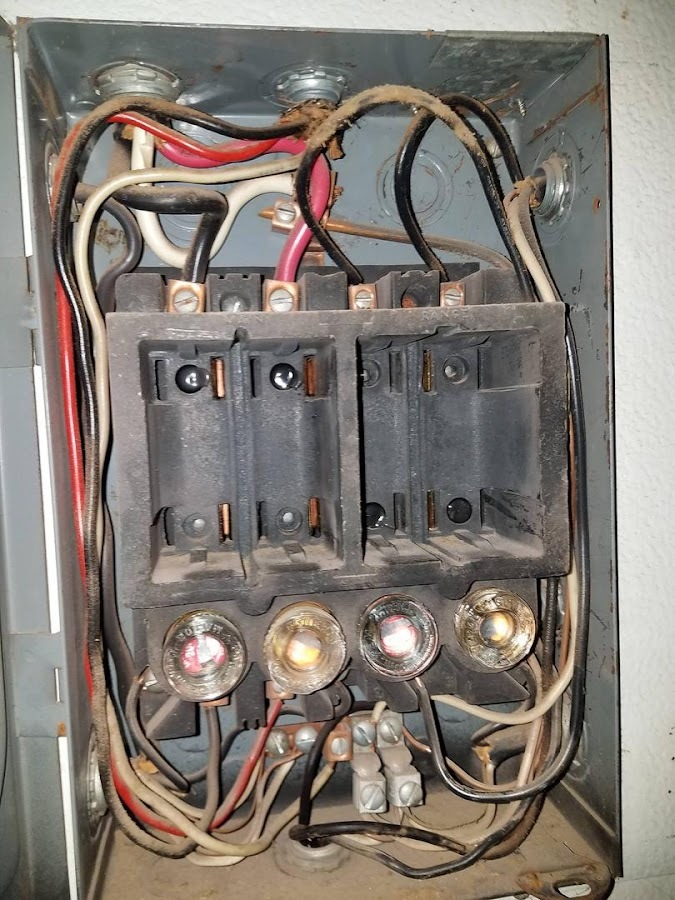
The most compelling reason for an inspection is human safety. Faulty installations and poor maintenance are common causes of failures that lead to electrical fires. Electrical fires cause significant commercial property damage annually across the United States. By identifying hot spots, loose connections, or outdated components like Federal Pacific or Zinsco panels, we can mitigate the risk of a catastrophic event.
Insurance Compliance and Risk Mitigation
Your insurance provider likely assumes that your facility is being maintained to modern safety standards. Many commercial policies require proof of regular inspections to maintain coverage or to process a claim after an incident. Without documented evidence of The Definitive Guide to Electrical Safety Inspection, you may find yourself facing claim denials or significantly higher premiums.
Adherence to NFPA 70E and OSHA Standards
As an employer in Ohio, you have a legal and moral obligation to provide a safe workplace. OSHA (Occupational Safety and Health Administration) and NFPA 70E (Standard for Electrical Safety in the Workplace) set the bar for how employees are protected from electrical hazards like arc flash and shock. Regular testing ensures your equipment is properly labeled and maintained, reducing your liability and keeping your team out of harm’s way.
Business Electrical Testing for Power Quality and Reliability
Reliability isn’t just about keeping the lights on; it’s about the “cleanliness” of the power running to your expensive equipment.
- Voltage Stability: Fluctuations can damage sensitive electronics, servers, and medical equipment.
- Surge Protection: Commercial facilities are prone to internal surges from heavy motors or HVAC systems cycling.
- Harmonic Distortion: This can cause overheating in motors and transformers, shortening their lifespan.
By following a Stay Charged: An Essential Electrical Maintenance Checklist for Facilities, you can ensure your system handles the load efficiently, improving equipment longevity and reducing unexpected downtime.
Navigating Ohio Compliance: NEC 2023 and Safety Regulations
Ohio’s electrical landscape is governed by the National Electrical Code (NEC), which is essentially The NEC Book Bible for contractors and inspectors. It is important to note that Ohio has moved toward the adoption of the 2023 NEC, which introduced several significant changes for commercial properties.
Expanded GFCI Requirements
One of the biggest shifts in the 2023 NEC is the expansion of Ground Fault Circuit Interrupter (GFCI) requirements. These safety devices are now required in several locations that were previously exempt. For instance, in commercial kitchens and areas with “buffet” lines or food prep, the rules have become more situational rather than universal, meaning the specific layout of your facility will determine exactly where these protections must be installed.
The Role of the Authority Having Jurisdiction (AHJ)
While the NEC provides the framework, the local building department or fire marshal—known as the Authority Having Jurisdiction (AHJ)—has the final say on how these rules are applied in your specific Ohio municipality. Business electrical testing helps ensure that when an AHJ walks through your doors, your facility passes with flying colors.
Frequency and Standards for Business Electrical Testing
We often get asked, “How often do I really need to do this?” Testing frequencies are flexible and based on equipment type, environment, usage, and code requirements. While a comprehensive commercial electrical inspection is often recommended every 3 to 5 years, high-risk environments may require annual check-ups to remain compliant. Learning How to Master Electrical Planned Maintenance Without Getting Zapped is the best way to stay ahead of these requirements.
Business Electrical Testing: What to Expect During the Process
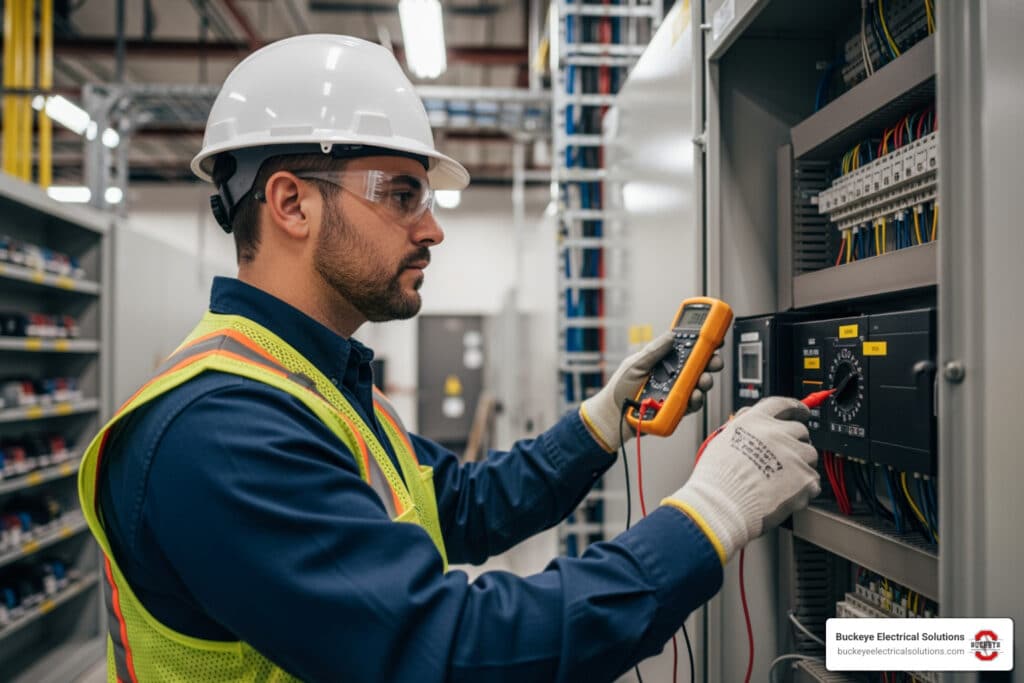
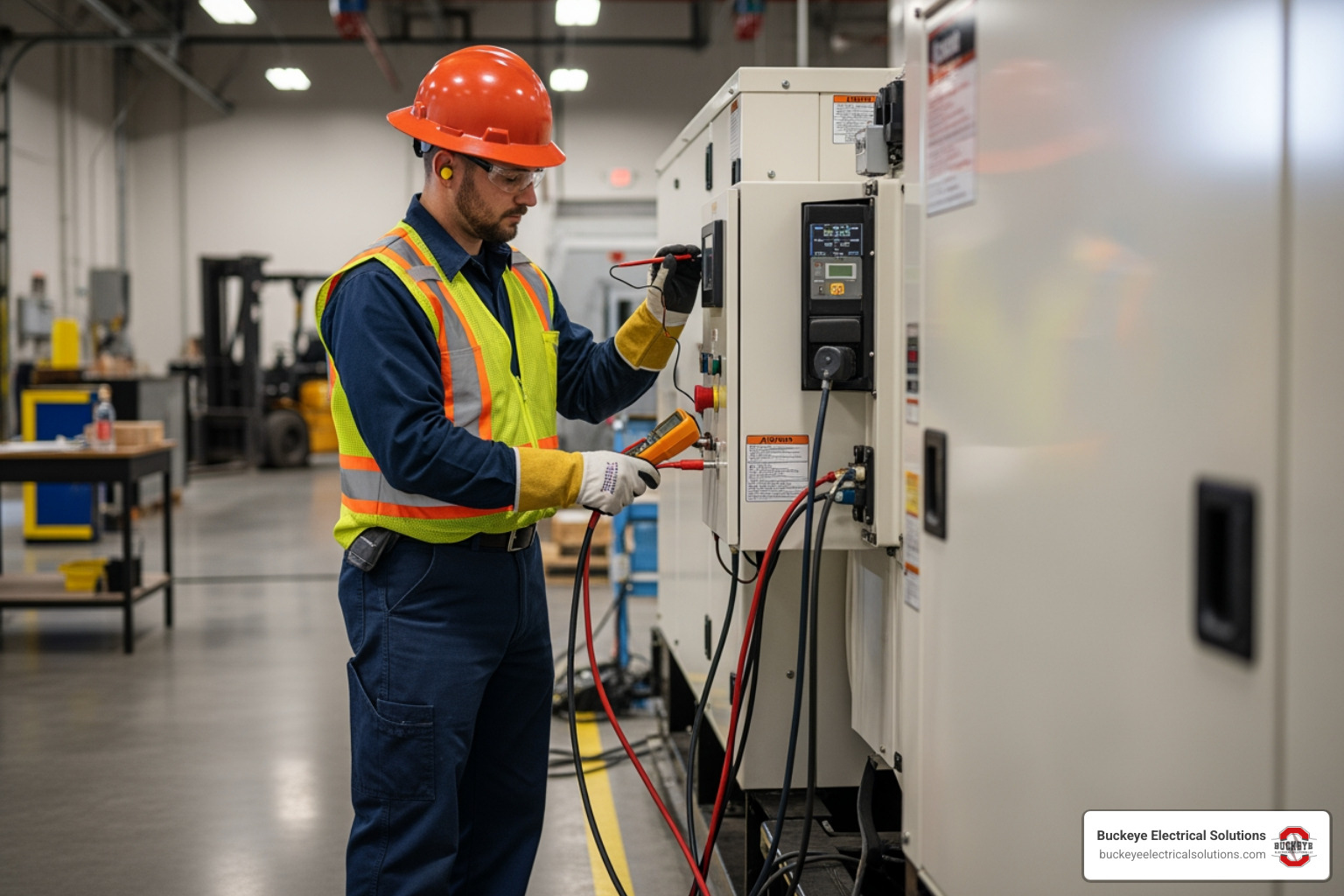
When we arrive for a business electrical testing appointment, we aim for minimal disruption. We often schedule these during off-peak hours or in sections to ensure your business stays operational.
The Step-by-Step Inspection
- Visual Evaluation: We look for obvious signs of trouble—discolored outlets, frayed wires, or unlabelled panels.
- Equipment Testing: This involves checking the functionality of breakers, relays, and switches.
- Grounding Checks: We verify that your grounding system provides a low-impedance path to the earth, which is critical for safety and lightning protection.
- Thermal Imaging: Using infrared technology, we scan panels and connections to find “invisible” heat that indicates a loose connection or an overloaded circuit.
- Comprehensive Reporting: You receive a detailed document that acts as your proof of due diligence for insurance and code compliance.
Identifying Common Hazards During Business Electrical Testing
During our years serving Northeast Ohio, we’ve seen it all. Some issues are minor, while others are “ticking time bombs.”
- Corroded Terminals: Common in older Ohio buildings or damp basements, corrosion increases resistance and heat.
- Overloaded Circuits: As businesses grow, they often plug more into existing circuits than they were designed to handle.
- Improper Wiring or Bootleg Grounds: These are often the result of DIY repairs or unqualified “handymen” working on commercial systems.
- Dead Outlets: We often find that an “Outlet has no voltage; could indicate breaker, GFCI, switch, or wiring issue.” Identifying the root cause is essential to prevent a larger fault.
If you’ve recently moved into a new space, an Outlet Overhaul: Decoding Your Electrical Inspection Results can help you understand exactly what needs to be fixed to make the space safe for your team.
Advanced Diagnostic Methods: Thermographic Scanning and Acceptance Testing
For mission-critical facilities, we go beyond the standard visual check. Advanced diagnostics allow us to see what the naked eye cannot.
Infrared (Thermographic) Scanning
By using infrared cameras for panel/switchgear inspection, we can identify defective components and elevated temperatures in switchgear and transformers. Thermographic scanning intervals are flexible and based on equipment type, environment, and usage; however, we often recommend a scan every 6 to 12 months for industrial facilities. It’s a non-invasive way to pinpoint issues before they cause an outage.
Acceptance Testing and NETA Standards
If you are installing new equipment, you shouldn’t just “flip the switch” and hope for the best. Acceptance testing, often following NETA (InterNational Electrical Testing Association) standards, ensures that new equipment was not damaged during shipping and was installed correctly.
Comparison of Diagnostic Methods
| Method | Likely Causes of Issues Found | Priority Level |
|---|---|---|
| Visual Inspection | Physical damage, age, dust accumulation | High (Immediate Safety) |
| Thermographic Scan | Loose connections, unbalanced loads | Medium to High (Preventive) |
| Grounding Test | Corrosion, improper bonding, soil changes | High (Shock Protection) |
| Power Quality Analysis | Harmonics, utility fluctuations, internal surges | Medium (Equipment Life) |
Frequently Asked Questions about Commercial Electrical Testing
How often should my Ohio business schedule an electrical inspection?
Testing intervals are flexible and based on equipment type, environment, usage, and code requirements. While standard industry practice and insurance requirements usually dictate an inspection every 3 to 5 years, high-risk or high-occupancy facilities (like chemical plants or hotels) often require annual inspections.
Who is legally responsible for ensuring electrical safety in a commercial building?
Generally, the property owner or the employer is responsible for maintaining a safe environment under OSHA regulations and local Ohio building codes. If you are a tenant, your lease agreement will usually specify whether the landlord or the business owner is responsible for the electrical infrastructure maintenance.
What are the primary warning signs that my facility needs an urgent inspection?
Don’t wait for a scheduled date if you notice:
- Flickering or dimming lights when heavy equipment kicks on.
- Frequently tripped breakers that seem to happen for no reason.
- A “burning” smell near outlets or panels (this is an emergency!).
- Buzzing or humming sounds coming from electrical components.
- Discolored or warm-to-the-touch wall plates or switchgear.
Conclusion
Business electrical testing isn’t just a box to check for the fire marshal; it is a vital part of your business’s risk management strategy. By being proactive, you protect your employees, your property, and your bottom line from the devastating effects of electrical failure.
At Buckeye Electrical Solutions, we bring over 20 years of experience to every Northeast Ohio job site. Whether you operate a small retail shop in Akron or a large manufacturing facility in Cleveland, our team provides the quality commercial service and prompt project completion you need to stay energized and compliant.
Pricing for our testing services is subject to change and dependent on local site conditions or specific AHJ requirements. We believe in providing customized solutions that fit your facility’s unique needs.
Ready to secure your facility’s future? Learn more about our commercial services and schedule your inspection today. Let us help you stay charged and compliant so you can focus on what you do best—running your business.