What You Need to Know About Electric Wire for a Home
Choosing the right electric wire for a home is one of the most important decisions in any residential electrical project — and getting it wrong can create serious safety risks.
Here’s a quick-reference summary of the most common wire types used in homes:
| Wire Type | Where It’s Used | Common Gauges |
|---|---|---|
| NM-B (Romex) | Interior dry locations — outlets, lighting, switches | 14/2, 12/2, 10/2 |
| THHN/THWN | Inside conduit — garages, basements, exposed runs | 14, 12, 10 AWG |
| UF-B | Outdoors, underground, wet locations | 12/2, 10/2 |
| MC Cable | Protected runs, workshops, exposed indoor areas | 12/2, 10/2 |
| Low-voltage wire | Thermostats, doorbells, landscape lighting | 18–12 AWG |
The right choice depends on where the wire runs, how much current it carries, and what your local code requires.
This guide walks you through every major decision — from reading jacket markings to matching gauge to breaker size — so you can understand what’s behind your walls and make informed choices on any project.
The average home contains roughly two miles of electrical cable. Most of it you’ll never see. But every foot of it matters.
I’m Aaron, owner of Buckeye Electrical Solutions LLC, and I’ve directed more than 60 permitted electrical projects across Northeast Ohio — including full-home rewires and service upgrades — where selecting the correct electric wire for a home is always the starting point for safe, code-compliant work. Whether you’re planning a simple outlet addition or a complete wiring upgrade, understanding your options before the first staple goes in makes every step easier.
Related electrical guides:
How to Choose Electric Wire for a Home in Ohio
Choosing wire starts with five questions:
- What will the circuit power?
- What amperage will the circuit carry?
- Will the wire be in a dry, damp, wet, buried, or exposed location?
- What does Ohio code and the local authority having jurisdiction require?
- Does the circuit length create voltage drop concerns?
For a simple lighting circuit, the answer may be 14/2 NM-B on a 15-amp breaker. For a bathroom receptacle circuit, it may be 12 AWG copper on a 20-amp GFCI-protected circuit. For an underground run to a detached garage or lamp post, the answer may involve UF-B cable or individual wet-rated conductors in conduit.
Ohio electrical work must follow the adopted electrical code, local amendments, permit rules, and inspection requirements. That means the “right” wire is not only about what physically works. It must also be approved for the installation method and location.
For technical sizing concepts, see this cable sizing guidance. For a homeowner-friendly overview of wiring upgrades, we also recommend our guide: Upgrade Your Watts: What You Need to Know About Electrical Wiring.
Electric wire for a home: what the jacket markings tell you
The jacket is the wire’s name tag. It tells you what you are holding before you ever strip insulation.
Common markings include:
- AWG size: The wire gauge, such as 14 AWG, 12 AWG, or 10 AWG.
- Conductor count: For example, 12/2 means two insulated conductors plus a ground in most NM-B cable.
- Ground: “W/G” means with ground.
- Cable type: NM-B, UF-B, MC, THHN, or THWN.
- Conductor material: “CU” means copper. “AL” means aluminum.
- Voltage rating: Many building wire conductors are rated 600 volts.
- Temperature rating: Insulation may be marked for 60°C, 75°C, or 90°C, but residential terminations often require using the 60°C ampacity column for small conductors.
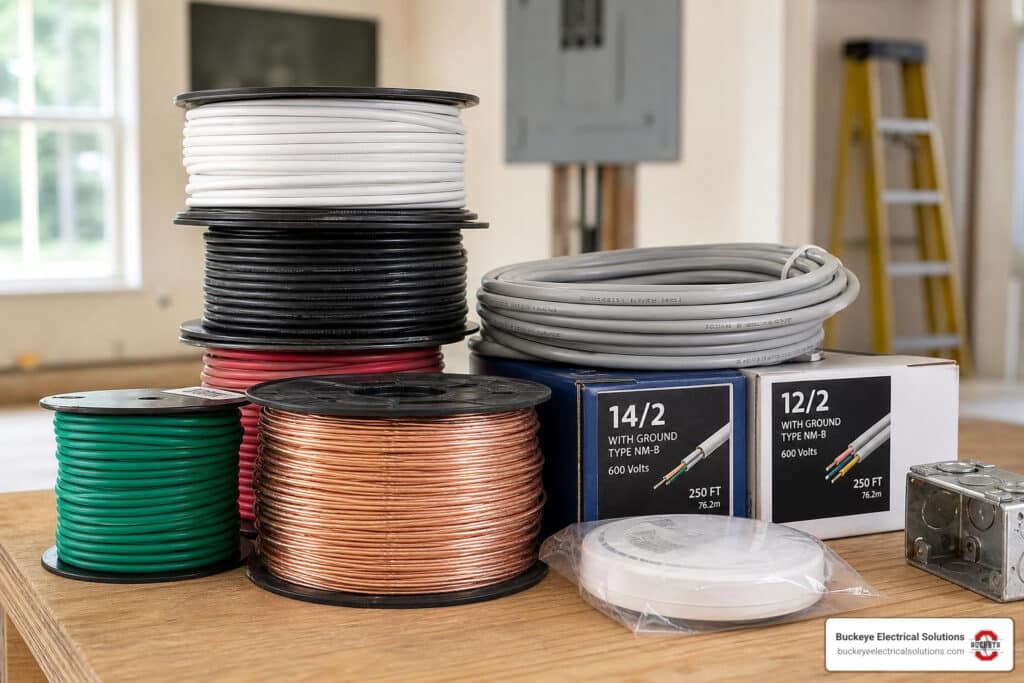
- Jacket color: White often indicates 14-gauge NM-B, yellow often indicates 12-gauge NM-B, orange often indicates 10-gauge NM-B, and black is often used on larger NM-B sizes. Always read the printed label instead of relying on color alone.
Copper vs. aluminum conductors in residential wiring
Most modern residential branch-circuit wiring uses copper because it conducts well, resists corrosion, and works with standard devices when properly installed.
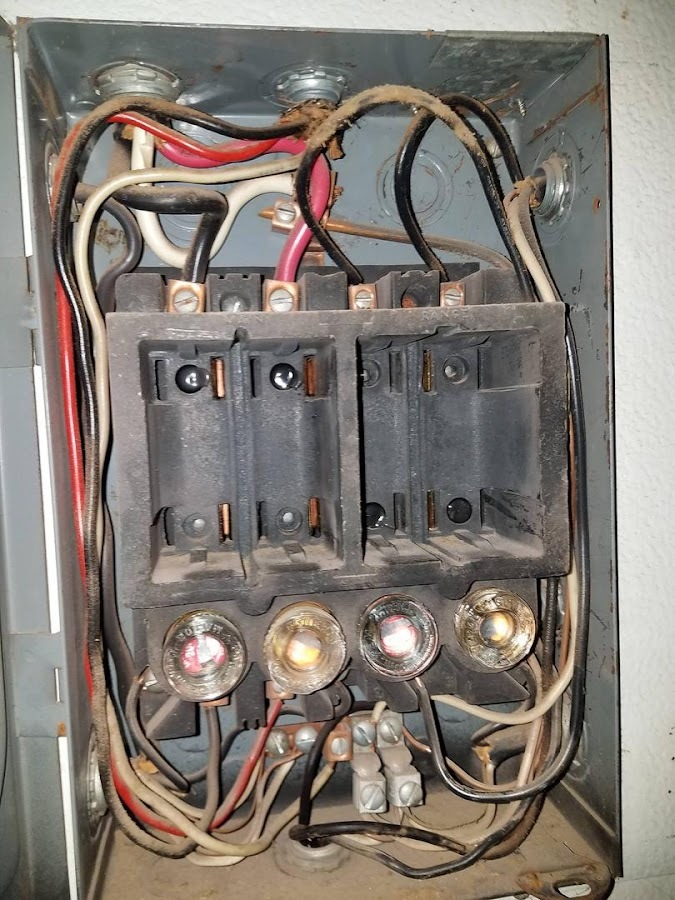
Aluminum wiring is different. Many older homes, including some in Ohio, may contain aluminum branch-circuit wiring from past decades. Aluminum expands and contracts more than copper and can develop connection problems if devices, connectors, or terminations are not rated for aluminum. Oxidation and loose connections can create heat at outlets, switches, and splices.
Aluminum is not automatically a disaster, but it does deserve a professional inspection. Important concerns include:
- Whether devices are rated for aluminum conductors
- Whether approved connectors are used
- Whether copper and aluminum are mixed incorrectly
- Whether there are warm outlets, flickering lights, or burning odors
- Whether insurance or real estate inspections require documentation
If your home has older wiring, see Old House New Wires: Your Guide to Redoing Home Electrical Wiring.
Solid vs. stranded wire for residential projects
Solid wire is one solid conductor. It is common in NM-B cable for outlets, lights, and switches. It holds its shape well and works with many residential device terminals.
Stranded wire is made of many smaller strands. It is more flexible and is often used for larger gauges, conduit pulls, appliance circuits, and certain equipment connections. The tradeoff is that terminations must be rated for stranded conductors, and the connection must be made correctly.
A simple rule: the device, breaker, lug, connector, and wire must all be compatible. Electricity is picky. It does not care that “it looked like it fit.”
Main Types of Residential Electrical Wire and Cable

Residential wiring is not one-size-fits-all. The main difference is where the wiring is allowed to be used and how it must be protected.
| Type | Location | Protection | Typical Use | Limitations |
|---|---|---|---|---|
| NM-B | Dry interior spaces | Plastic jacket, protected by framing | Outlets, lighting, switches | Not for wet or buried locations |
| THHN/THWN | Inside conduit | Conduit provides physical protection | Garages, basements, detached structures | Individual conductors cannot be run loose |
| UF-B | Wet, outdoor, underground | Solid moisture-resistant jacket | Outdoor receptacles, sheds, lamp posts | Harder to strip and route; burial rules apply |
| MC Cable | Indoor protected/exposed areas where approved | Metal armor plus grounding conductor | Workshops, basements, exposed runs | Requires proper fittings and boxes |
Other residential wiring includes service entrance cable, thermostat wire, speaker wire, data cable, coaxial cable, and landscape lighting cable. Low-voltage wire is still important, but it is not interchangeable with 120-volt branch-circuit wiring.
NM-B cable for interior dry locations
NM-B cable is the most common electric wire for a home in modern interior wiring. Many people call it Romex-style cable, though Romex is a brand name.
NM-B is used for dry interior locations such as:
- Receptacle circuits
- Lighting circuits
- Switch legs
- Bedroom, living room, hallway, and dining room circuits
- Many concealed runs through studs and joists
Common examples include:
- 14/2 NM-B for many 15-amp lighting or general-use circuits
- 12/2 NM-B for many 20-amp receptacle circuits
- 14/3 or 12/3 NM-B for three-way switches, split circuits, or circuits needing an extra conductor
- 10/3 NM-B for some 30-amp 240-volt appliance circuits
NM-B is not for wet locations, direct burial, or areas where it is subject to physical damage unless properly protected. For more basics, see Power Up Your Knowledge: A Beginner’s Guide to Home Wiring.
THHN and THWN conductors for conduit
THHN and THWN are individual insulated conductors, not cable assemblies. They are commonly pulled through conduit.
They are often used in:
- Garages
- Unfinished basements
- Workshops
- Exterior conduit runs when wet-rated conductors are required
- Detached structure feeders
- Areas where wiring needs physical protection
Many modern conductors are dual-rated THHN/THWN-2. THHN is commonly associated with dry or damp locations, while THWN ratings address wet-location use. These conductors are often rated 600 volts, but the installation still must match the code, conduit fill limits, ampacity rules, and termination ratings.
UF-B cable for outdoor and underground circuits
UF-B cable is designed for wet locations and direct burial when installed according to code. It has a tougher, moisture-resistant construction than NM-B.
Common uses include:
- Outdoor receptacles
- Yard lighting
- Lamp posts
- Sheds
- Detached garage branch circuits
- Landscape power where line-voltage wiring is required
Burial depth, conduit sleeves, physical protection, GFCI protection, and local inspection rules all matter. Outdoor wiring is one of those jobs where “close enough” can turn into “why is the shovel sparking?” very quickly.
MC cable for protected residential wiring
MC cable, or metal-clad cable, has insulated conductors inside a metal armor jacket. Unlike older armored cable types, MC cable typically includes a dedicated grounding conductor.
It may be used for:
- Exposed indoor runs where approved
- Basements
- Workshops
- Mechanical rooms
- Certain remodel conditions
- Areas needing extra physical protection
MC cable requires proper anti-short bushings where required, listed fittings, compatible boxes, and correct grounding. Local approval matters, so we verify the installation method before using it.
Choosing the Right Wire Gauge for Outlets, Lighting, and Appliances
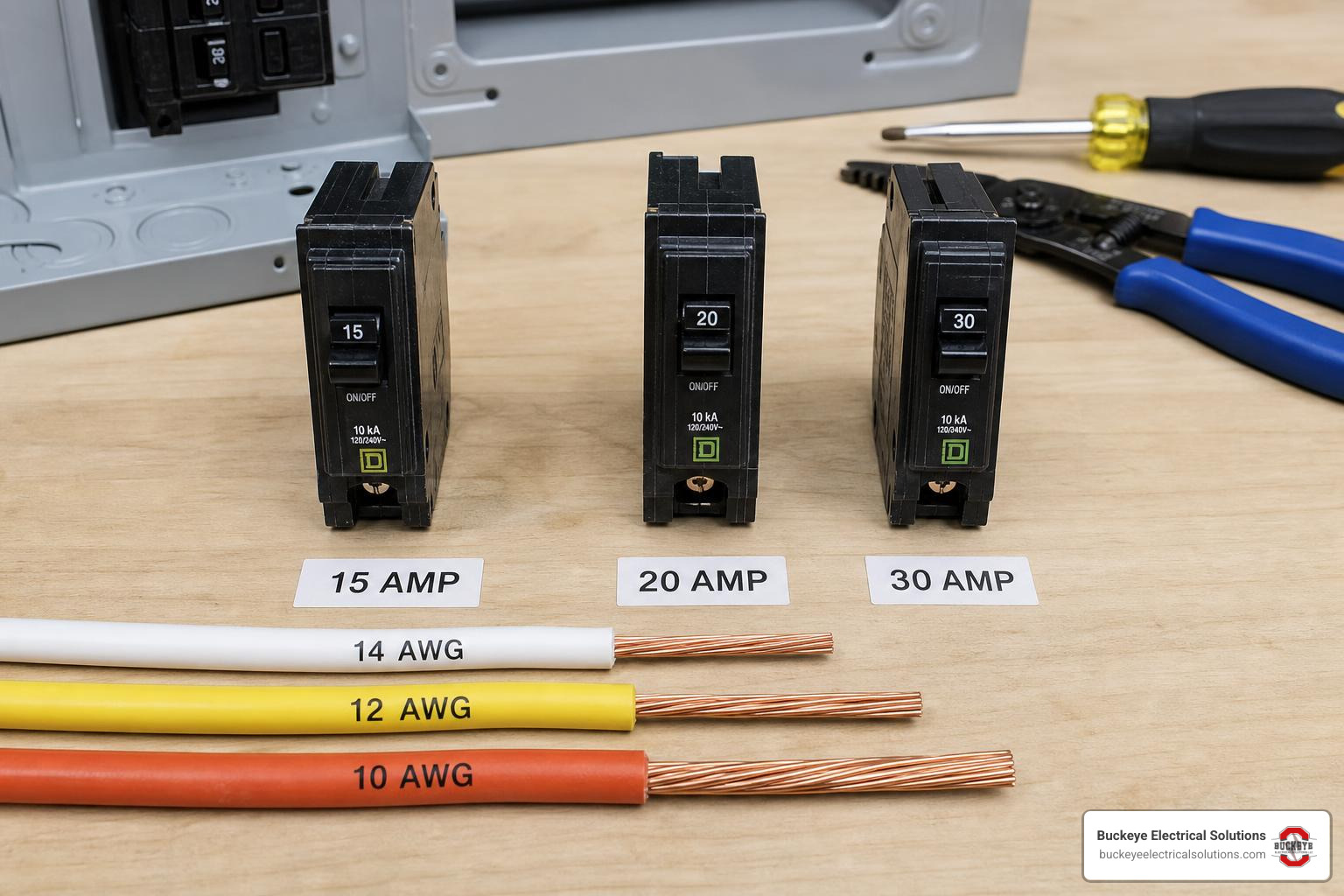
Wire gauge is measured using the American Wire Gauge system. The smaller the number, the larger the wire. That means 10 AWG is larger than 12 AWG, and 12 AWG is larger than 14 AWG.
Larger wire can generally carry more current, but ampacity depends on conductor material, insulation, temperature rating, bundling, conduit fill, ambient temperature, and termination ratings.
Electric wire for a home: common gauge and circuit pairings
Here are common residential pairings. These are general examples, not a substitute for load calculations or local code review.
| Wire Gauge | Common Breaker Size | Common Residential Uses |
|---|---|---|
| 14 AWG copper | 15 amps | Lighting, general-purpose circuits where allowed |
| 12 AWG copper | 20 amps | Receptacles, bathroom circuits, laundry circuits, many kitchen applications depending on layout and code |
| 10 AWG copper | 30 amps | Some dryers, water heaters, larger equipment |
| 8 AWG copper | 40 amps, depending on wire type and terminations | Larger appliances and feeders |
| 6 AWG copper | 50-55 amps, depending on wire type and terminations | Ranges, subpanels, some EV-readiness planning |
Ohio’s 2023 NEC adoption includes expanded GFCI requirements in several locations. Specific rules, such as kitchen requirements, can be situational depending on outlet location, appliance type, distance from sinks, and local interpretation.
Why breaker size and wire size must match
A breaker protects the wire. If the wire is too small for the breaker, the conductor can overheat before the breaker trips.
Common unsafe examples include:
- 14 AWG copper on a 20-amp breaker
- Oversized breakers installed to “fix” nuisance tripping
- Appliance circuits wired without following manufacturer instructions
- Mixed wire sizes on a circuit without proper protection
- Panel labels that do not match the actual wiring
Nuisance tripping is annoying. Overheated wire inside a wall is worse. When a breaker trips, it is telling you something. Do not just teach it to stop talking.
Voltage drop and long wire runs
Long circuits can lose voltage along the way. The NEC includes informational recommendations often summarized as 3 percent voltage drop for branch circuits and 5 percent total for feeder plus branch circuit. These are recommendations in the NEC, though some authorities having jurisdiction may treat them as part of the approval process.
Voltage drop matters for:
- Detached garages
- Long outdoor runs
- Workshops
- Home offices with sensitive electronics
- Large motors or compressors
- EV-ready planning
Hot attics can also affect ampacity. When conductors pass through high-temperature spaces, derating may be required. That is one reason we look at the whole route, not just the breaker size.
Planning Wire Length, Features, and Buying Decisions
Before buying wire, plan the route. Wire length is not just the straight-line distance from panel to outlet. Walls go up, down, around, and through framing. Homes are basically obstacle courses with drywall.
Wire-planning steps:
- Identify the circuit purpose and load.
- Confirm required amperage and voltage.
- Choose the correct cable or conductor type for the location.
- Measure the route from the panel to each box.
- Add vertical drops, turns, and routing around framing.
- Include slack at boxes for safe terminations.
- Account for box fill and device depth.
- Add a reasonable waste allowance.
- Confirm the wire is listed, correctly labeled, and undamaged.
- Verify permit and inspection requirements before installation.
How to estimate wire length for common home projects
For outlet runs, measure from the panel to the first receptacle, then from box to box. Add extra cable for each box so connections can be made safely.
For lighting circuits, include the switch location, fixture box, and any three-way switch travelers. Three-way switches often require 14/3 or 12/3 cable depending on the circuit rating.
For bathroom fan and light projects, wiring may involve separate switched legs, GFCI rules, fan ratings, and wet-location fixture requirements. See Don’t Get Zapped: The Ultimate Guide to Wiring Your Bathroom Fan and Light.
For outlet projects, our Ultimate House Electrical Outlet Wiring Masterclass explains receptacle wiring concepts in more detail.
Key features to check before buying wire
Check these features before purchasing:
- Correct gauge
- Correct conductor count
- With ground, when required
- Copper or aluminum marking
- NM-B, UF-B, MC, THHN, or THWN rating
- Wet or dry location suitability
- Direct-burial rating if going underground
- Sunlight resistance if exposed to sunlight
- UL or other recognized listing mark
- Ampacity suitability
- Undamaged jacket
- Clear packaging label
Electrical wire products can range from small affordable coils to large reels costing thousands of dollars. Large retailers list many wire and cable options; one major category page shows more than 1,500 electrical wire products. That variety is useful, but it also makes it easier to buy the wrong thing.
Where homeowners can buy reliable electrical wire
Homeowners can buy wire from electrical supply houses, home improvement retailers, and contractor supply channels. Some wire is sold by the foot, while common NM-B cable is often sold in 25-foot, 50-foot, 100-foot, 250-foot, or larger reels.
Useful buying references include:
Examples of common residential wire product formats include:
- 250 ft. 12/3 Solid Romex SIMpull CU NM-B W/G Wire
- 50 ft. 6/3 Stranded Romex SIMpull CU NM-B W/G Wire
- 25 ft. 14/3 Solid Romex SIMpull CU NM-B W/G Wire
- 100 ft. 10/3 Solid Romex SIMpull CU NM-B W/G Wire
- 1000 ft. 8/3 Stranded Romex SIMpull CU NM-B W/G Wire
Brand consistency, storage condition, return policy, and price per foot all matter. So does avoiding old, damaged, sun-baked, or mystery wire from questionable sources.
Ohio Safety Rules, Permits, and Common Wiring Mistakes to Avoid
Electrical code exists because electricity is invisible, fast, and deeply uninterested in second chances.
Ohio electrical work is governed by adopted codes, local amendments, permits, and inspections. The local authority having jurisdiction has the final say on approval. For workplace-related conductor safety language, see the Ohio electrical conductor rule. For more code basics, see The NEC Book Bible.
Ohio’s 2023 NEC adoption and GFCI requirements
Ohio’s 2023 NEC adoption includes expanded GFCI requirements in several locations. These commonly include bathrooms, garages, basements, laundry areas, outdoor areas, and other wet or damp locations. Kitchens are more situational than a simple universal statement because the exact requirement can depend on receptacle location, appliance rules, countertop areas, sink proximity, and local interpretation.
AFCI protection may also be required in many living areas. The safest approach is to verify the circuit type, room use, device location, and inspection requirements before wiring.
Safety checks before touching any wiring
Before touching wiring:
- Turn off the circuit.
- Confirm the correct breaker.
- Use a non-contact tester as an initial check.
- Verify with a meter when appropriate.
- Treat panels as hazardous, even when a branch circuit is off.
- Keep hands dry.
- Use proper ladders and lighting.
- Wear appropriate PPE.
- Stop if anything looks damaged, overheated, or unfamiliar.
A non-contact tester is helpful, but it is not a magic wand. We use proper testing methods because guessing is not a safety plan.
Common residential wiring mistakes
Common mistakes include:
- Wrong wire gauge for the breaker
- Loose terminal screws
- Overfilled boxes
- Buried splices outside junction boxes
- Missing cable clamps
- Damaged insulation
- Mixed copper and aluminum without approved connectors
- Improper wiring
- Bootleg ground
- Unsupported cable
- NM-B used in wet locations
- Outdoor cable installed without required protection
- Devices not rated for the conductor type
If a cable is cut or damaged, do not hide it in a wall. Read The Ultimate Guide to Repairing Broken and Cut Electrical Wires and call a licensed electrician when repair requirements are unclear.
Troubleshooting signs that wiring needs professional evaluation
| Symptom | Likely Causes | Priority Level |
|---|---|---|
| Flickering lights | Loose connection, overloaded circuit, service issue, failing fixture | Medium to high |
| Warm switch or outlet | Loose terminal, overload, device failure, aluminum wiring issue | High |
| Buzzing outlet | Loose connection, arcing, failing device | High |
| Burning smell | Overheating insulation, arcing, overloaded wiring | Urgent |
| Frequent breaker trips | Overload, short circuit, ground fault, equipment issue | Medium to high |
| Damaged cable | Physical impact, rodents, improper installation | High |
| Brittle insulation | Aging wiring, heat exposure, outdated materials | High |
| Aluminum branch wiring | Compatibility issue, loose connections, oxidation | Inspection recommended |
| Outlet has no voltage; could indicate breaker, GFCI, switch, or wiring issue | Tripped protection, switched receptacle, open connection, failed device | Medium |
If you see smoke, sparks, or smell burning, shut off power if safe to do so and seek emergency help.
Frequently Asked Questions About Electric Wire for a Home
What is the most common electric wire for a home?
NM-B cable is the most common cable for interior dry residential branch circuits. It is widely used for outlets, lighting, and switches in modern homes. It is not approved for wet locations, direct burial, or exposed areas subject to physical damage unless the installation method provides required protection.
How do I know whether to use 12-gauge or 14-gauge wire?
Start with the breaker rating and circuit purpose. In general, 14 AWG copper is used with 15-amp circuits, while 12 AWG copper is used with 20-amp circuits. However, appliance instructions, voltage drop, local code, GFCI/AFCI rules, and future load needs can change the design.
Never put 14 AWG copper on a 20-amp breaker. If you are unsure, have the circuit verified before installation.
Can Ohio homeowners install their own electrical wire?
In some cases, an owner-occupant may be allowed to perform limited electrical work on their own home, but permit, inspection, and local jurisdiction rules still apply. Rental properties, service panel work, multi-family buildings, and major upgrades often have stricter requirements.
Electrical mistakes can affect fire safety, insurance, resale, and inspection approval. When work involves panels, aluminum wiring, new circuits, outdoor wiring, kitchens, bathrooms, EV equipment, or service upgrades, hiring a licensed electrician is the safer path.
Conclusion
The right electric wire for a home depends on the circuit, location, amperage, installation method, and Ohio code requirements. NM-B, THHN/THWN, UF-B, and MC cable each have a place, but none of them belongs everywhere.
If you remember only three things, remember these:
- Match the wire type to the location.
- Match the wire gauge to the breaker and load.
- Follow Ohio code, permit, and inspection requirements.
At Buckeye Electrical Solutions, we help homeowners across Northeast Ohio plan safe, reliable wiring for repairs, upgrades, remodels, and full-home electrical installations. If you want the work done correctly from the first measurement to the final inspection, we are ready to help you schedule electrical services.