
What Is a Residential Electrical Box – and Why It Matters in Your Home
A residential electrical box is one of the most important – and most overlooked – safety components in your home. Every switch, outlet, light fixture, and wire splice in your house needs to live inside one.
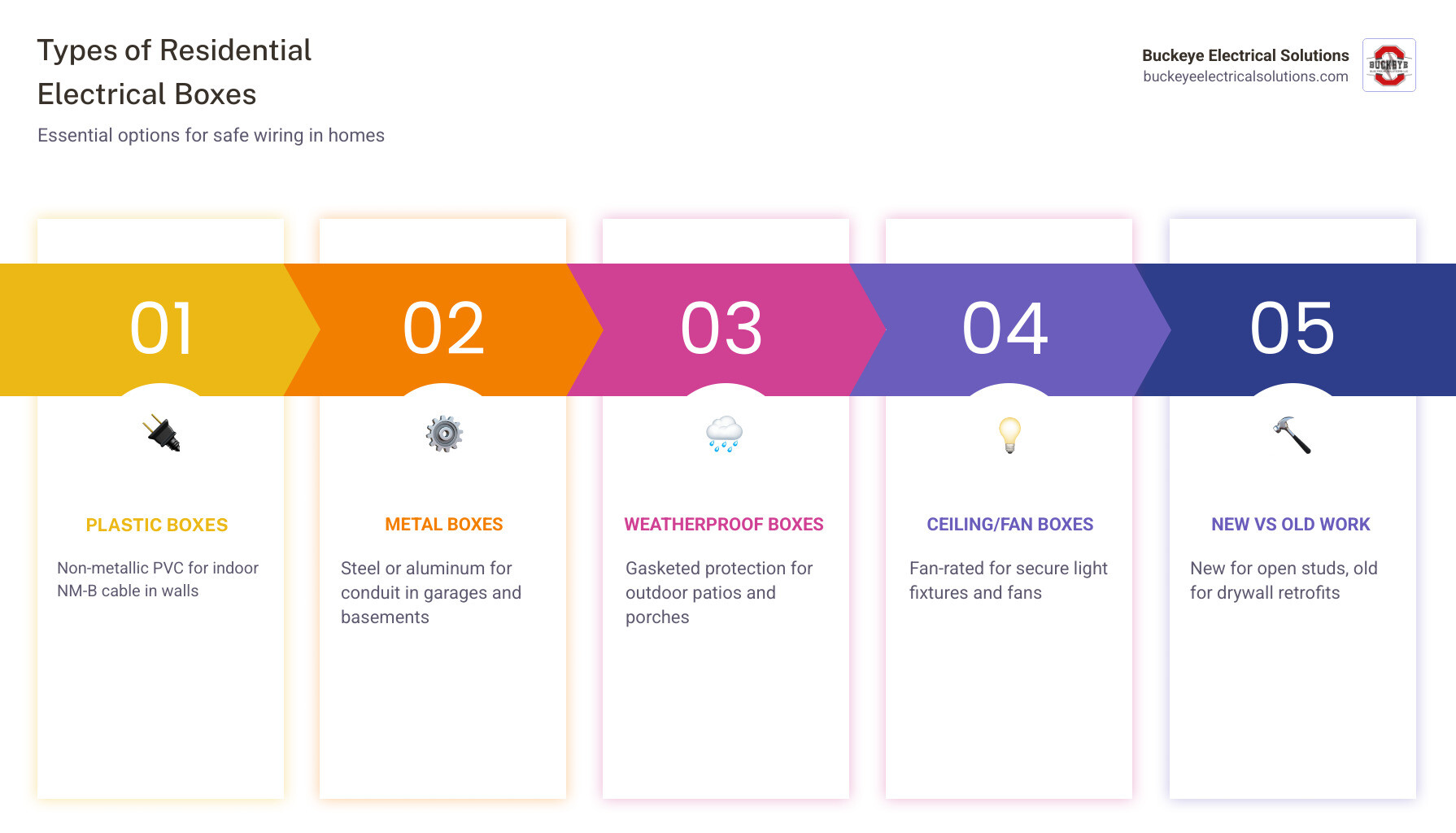
Here’s a quick look at the main types you’ll encounter:
| Type | Common Use |
|---|---|
| Plastic (PVC/non-metallic) | Indoor walls with NM-B cable |
| Metal (steel/aluminum) | Conduit runs, garages, basements |
| Weatherproof | Outdoor outlets, patios, porches |
| Junction box | Concealing wire splices |
| Ceiling/fan-rated box | Light fixtures, ceiling fans |
| Floor box | In-floor outlets in living areas |
| New work box | Open framing before drywall |
| Old work (cut-in) box | Retrofitting into finished walls |
Electrical boxes do two critical jobs:
- Contain wire connections so any sparks or heat stay inside the box
- Protect people from accidental contact with live wires
Without them, a loose wire splice inside a wall could start a fire. A bare connection near a stud could mean a shock hazard for anyone who opens that wall later. The National Electrical Code (NEC) – adopted in Ohio in its 2023 edition as of April 2024 – requires wire connections and electrical devices to be housed inside an approved box, subject to applicable code exceptions and local enforcement.
Most homeowners don’t think about their electrical boxes until something goes wrong. This guide changes that.
I’m Aaron Estep, owner of Buckeye Electrical Solutions LLC and a master electrician based in Northeast Ohio, where I’ve directed permitted projects involving residential electrical box installations, replacements, and upgrades across the region. Whether you’re planning a remodel or just want to understand what’s inside your walls, this guide will walk you through what you need to know.
Residential electrical box vocab to learn:
Types of Residential Electrical Box Options for Indoor and Outdoor Use
When we walk into a home improvement store in Ohio, the sheer variety of boxes can be overwhelming. There are over 1,300 electrical boxes and enclosures typically available in major retail inventories, ranging from simple single-gang plastic units to heavy-duty floor boxes. Choosing the right one depends entirely on where it’s going and what it’s holding.

Plastic vs. metal residential electrical box choices
The two most common materials you’ll see are plastic (often PVC or fiberglass) and metal (galvanized steel or aluminum).
- Plastic Boxes: These are the go-to for most modern residential interior wiring. They are nonconductive, meaning if a wire happens to touch the box, it won’t energize the box itself. They are designed for use with non-metallic (NM-B) sheathed cable. High-quality options like the Carlon 3-Gang 44 cu. in. PVC New Work Electrical Switch and Outlet Box are popular for their durability and built-in clamps.
- Metal Boxes: These are required when you are using metal conduit (like EMT) to run your wires. The box itself acts as part of the grounding path. You’ll often find these in garages, unfinished basements, or workshops where the wiring is exposed on the surface of the wall.
Specialty boxes for ceilings, fans, floors, and exterior walls
Not all boxes are rectangular.
- Ceiling Fan-Rated Boxes: These are heavy-duty and specifically designed to handle the weight and vibration of a spinning fan. They can often support up to 70 pounds for fans and up to 150 pounds for static light fixtures.
- Octagon and Round Boxes: These are typically used for ceiling or wall-mounted light fixtures.
- Floor Boxes: These allow you to have an outlet in the middle of a room without tripping over cords. They include specialized covers to keep dust and feet from damaging the receptacle.
When weatherproof boxes are required outside
Any time a residential electrical box is installed outdoors, it must be weatherproof. These are usually made of thick PVC or die-cast aluminum. To be code-compliant in Ohio, outdoor receptacles must have a “weather-resistant” (WR) rating and use an “in-use” cover—a clear plastic bubble that keeps the outlet dry even when a cord is plugged in. This is essential for patios, porches, and pool areas. You can find a wide variety of these Electrical boxes and conduit fittings at major retailers to suit different siding types.
New Work vs. Old Work Boxes: How to Choose the Right Installation Style
The installation style is determined by the state of your walls. If you can see the wooden studs, you need “new work.” If the drywall is already up and painted, you need “old work.”
| Feature | New Work Box | Old Work Box |
|---|---|---|
| Best For | New construction or additions | Remodels and retrofits |
| Mounting | Nails or screws directly to studs | Clamps to the drywall itself |
| Visibility | Installed before drywall | Installed through a hole in drywall |
| Stability | Very high (attached to framing) | Moderate (dependent on drywall strength) |
New work boxes for studs and open walls
New work boxes usually come with nails or screws pre-attached. Models like the New Work 3-Gang 53 cu. in. Heavy Wall Nail-on Electrical Outlet Box and Switch Box with Wiring Clamps, Gray are designed to be hammered directly into the side of a stud. They feature “ears” or tabs that help you align the box so it sits perfectly flush once the 1/2-inch or 5/8-inch drywall is installed.
Old work residential electrical box solutions for finished drywall
Also known as “cut-in” boxes, these are used when you want to add an outlet to an existing wall. You cut a hole in the drywall, slide the box in, and tighten two screws. These screws pull plastic “wings” or “ears” tight against the back of the drywall, sandwiching the box in place.
Best practices for securing boxes so they do not move
A loose outlet is a nuisance and a safety risk. For new work, ensure the nails are driven in straight and the box doesn’t twist. For old work, ensure your drywall cutout is precise—if the hole is too big, the box won’t have enough surface area to grip, leading to a “wobbly” outlet.
How to Size a Residential Electrical Box Correctly
One of the most common mistakes we see is “box overfill.” If you jam too many wires into a small box, heat can build up, which may damage insulation and create a fire hazard.
Box fill rules for wires, grounds, and devices
The NEC has a specific formula for “box fill.” Every item inside the box takes up a certain amount of space (measured in cubic inches):
- Each 14 AWG wire: 2.00 cubic inches
- Each 12 AWG wire: 2.25 cubic inches
- All ground wires combined: Count as only one wire of the largest size present.
- Each device (switch or outlet): Counts as two wires of the size connected to it.
- Internal clamps: Count as one wire.
For example, if you have a 4-Gang 75 cu. in. New Work Switch or Receptacle Box , you have plenty of room for multiple switches and 12-gauge wires. Always check the cubic inch capacity stamped inside the box before you start.
Matching box size to switches, outlets, dimmers, and GFCIs
Modern devices are bulky. Smart switches, dimmers, and GFCI outlets take up significantly more space than a standard “dumb” switch. If you are installing these, we always recommend using an “extra deep” box (typically 3.5 inches deep) to give the wires room to breathe.
NEC and Ohio code considerations homeowners should know
Ohio officially adopted the Ohio residential electrical code update based on the 2023 NEC. Some requirements can be situational depending on the location, occupancy, and scope of work. Key rules include:
- Accessibility: You can never “bury” a junction box behind drywall. It must always have a cover and be accessible for future repairs.
- Flush Mounting: In combustible walls (like wood studs and drywall), the box must be flush with the surface. It cannot be recessed more than 1/4 inch.
- GFCI Requirements: The newer code expanded GFCI requirements in several areas, but application is situational. Ensuring your box is large enough to hold a bulky GFCI is still a smart move. For more details, see Ohio residential code chapter 34.
Installation, Grounding, and Safety Basics
Safety isn’t just a suggestion; it’s the foundation of everything we do at Buckeye Electrical Solutions. Before you even touch a residential electrical box, the power must be off at the breaker.
How to install plastic and metal boxes in studs or drywall
For plastic boxes, use the built-in nails or screws. For metal boxes, you may need to use specialized brackets or screws. When bringing cable into a plastic box, the sheathing should extend at least 1/4 inch into the box, and you should have at least 6 inches of free wire to work with.
How to ground an electrical box correctly
Grounding is your safety net.
- In a plastic box, the ground wires are twisted together and connected directly to the green screw on your outlet or switch.
- In a metal box, you must also ground the box itself. We use a “pigtail”—a short piece of green wire—connected to a green grounding screw in the back of the metal box. This ensures that if a hot wire touches the metal box, the electricity travels safely to the ground rather than through you.
Common mistakes to avoid with electrical boxes
- Overfilling: As mentioned, this is a major fire hazard.
- Missing Clamps: If the cable isn’t secured where it enters the box, it can rub against the sharp edges of a knockout and short out.
- Unsupported Fixtures: Never hang a heavy chandelier or fan from a standard plastic outlet box. It will eventually fall.
Costs, Tools, Repairs, and When to Call a Pro
Understanding the financial and technical side of a residential electrical box project helps you plan your budget and decide if you’re ready for a DIY weekend or if you need our team to step in.
What residential electrical boxes typically cost and where to buy them
A basic single-gang plastic box is incredibly affordable, often costing between $1 and $5. Multi-gang boxes or specialized fiberglass models like the Allied Moulded 4-gang can range from $10 to $25. Weatherproof “in-use” kits often cost $20 to $40. These can be purchased at any major home improvement retailer or through electrical supply houses.
Note: All service pricing or estimates provided by contractors are subject to change and dependent on local site conditions or Authority Having Jurisdiction (AHJ) requirements.
Essential tools and accessories for box installation
To do the job right, you’ll need:
- Non-contact voltage tester (the most important tool you’ll own)
- Drywall saw
- Level (to ensure your outlets aren’t crooked)
- Wire strippers and side cutters
- Screwdrivers (Philips, Flathead, and Square/Robertson)
- Box extenders (if your box is recessed too deep in the wall)
Repairing or replacing a damaged box and knowing when to hire an electrician
If you notice a cracked box, a scorched smell, or an outlet that “wiggles” every time you plug something in, it’s time for a replacement. While a handy homeowner can often replace a single box “like-for-like,” more complex tasks require a professional.
You should call Buckeye Electrical Solutions if:
- You need to add a brand-new circuit to your panel.
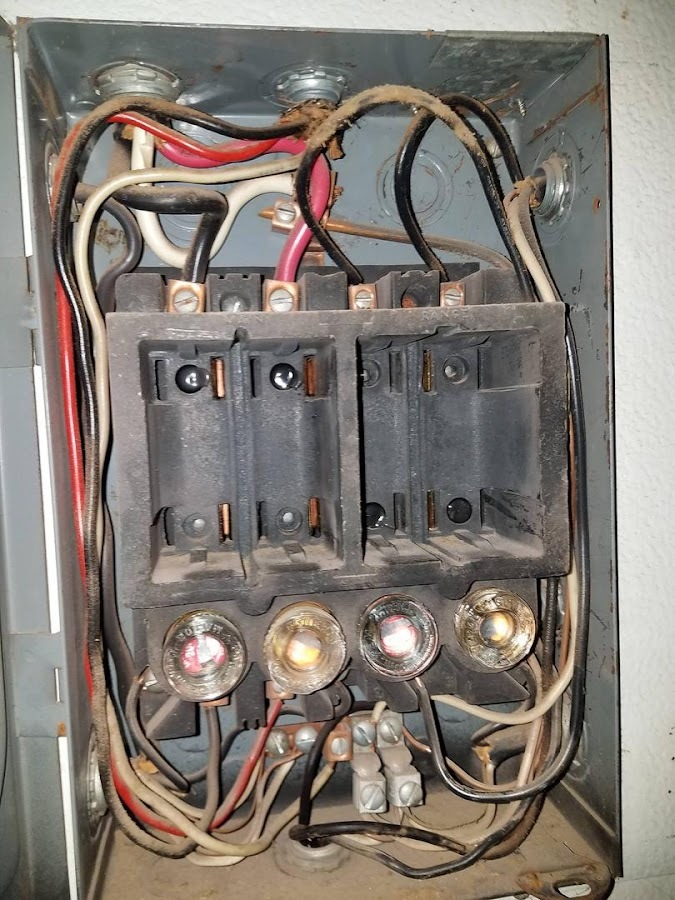
- You are upgrading from an old fuse box to a modern breaker panel. For more on this, read How To Wire A 100 Amp Breaker Box Safely And Effectively/.
- You are planning a large-scale renovation. An Electrical Panel Upgrade might be necessary to support all those new boxes and devices.
Frequently Asked Questions about Residential Electrical Boxes
Can a homeowner install a residential electrical box in Ohio?
In many parts of Ohio, homeowners are allowed to perform “like-for-like” repairs on their own primary residence. However, installing new circuits or performing work in a rental property usually requires a permit and a licensed electrician. Always check with your local building department first.
How do I know if my box is too small or unsafe?
If the wires are so tightly packed that you have to use force to screw the outlet into the box, it is likely overfilled. Other signs of danger include warm-to-the-touch cover plates, flickering lights, or a “tripping” breaker when you use a specific outlet.
What maintenance do electrical boxes need over time?
Electrical boxes are mostly “set it and forget it,” but we recommend a quick visual check once a year. Look for signs of moisture or rust in outdoor boxes and ensure all cover plates are tight and crack-free.
Conclusion
The humble residential electrical box is the silent guardian of your home’s electrical system. By choosing the right material, sizing it correctly for your wires, and following the latest Ohio code requirements, you ensure your home stays safe from fire and shock hazards.
At Buckeye Electrical Solutions, we’ve spent over 20 years helping Northeast Ohio homeowners navigate these technical details. Whether you need a simple box replacement or a full Panel Upgrade Or Replacement, our team is here to provide prompt, expert service.
Ready to secure your home’s wiring? Contact us today for all your residential electrical services and let us help you “amp up” your home safety!