Why the Cost to Replace Smoke Alarms Catches Homeowners Off Guard
Here’s a quick answer if you just need the numbers:
| Alarm Type | Unit Cost (Approx.) | Professional Installation (Approx.) | Total Per Unit (Approx.) |
|---|---|---|---|
| Battery-operated | $6 – $40 | $20 – $60 | $26 – $100 |
| Hardwired (replacing existing) | $25 – $80 | $50 – $150 | $75 – $230 |
| Hardwired (new wiring required) | $25 – $80 | $150 – $300+ | $175 – $380+ |
| Smart alarm | $100 – $300 | $100 – $250+ | $200 – $550+ |
| Combination smoke + CO | $50 – $150 | $115 – $225 | $165 – $375 |
All figures are general estimates. Your actual cost will vary based on local labor rates, site conditions, number of units, and requirements set by your local Authority Having Jurisdiction (AHJ).
Whole-home replacement for a typical 3- to 4-bedroom Northeast Ohio home generally runs somewhere between $400 and $1,100, though projects involving new wiring or smart system integration can run higher.
Smoke alarms are small. But their replacement costs can surprise you — especially once you factor in labor, permits, drywall repairs, and whether your home already has wiring in place. A single battery-powered swap might cost you $30 and twenty minutes. A full hardwired upgrade across multiple floors is a different job entirely.
And that gap — between what people expect to pay and what they actually pay — is exactly what this guide is here to close.
I’m Aaron, owner of Buckeye Electrical Solutions LLC and a licensed master electrician who has overseen dozens of permitted electrical projects across Northeast Ohio, including many involving the full-service replacement and upgrade of residential smoke alarm systems. I’ll walk you through everything that drives the cost to replace smoke alarms so you can budget accurately and avoid unexpected charges.
Cost to replace smoke alarms word guide:
- replacement smoke alarms
- smoke alarm installation and maintenance service
- fire alarm systems maintenance
Understanding the Cost to Replace Smoke Alarms in 2026
When planning home safety upgrades, understanding the overall cost to replace smoke alarms requires looking beyond the price tag on the retail box. Over the last five years, professional installation costs have risen by approximately 17.6%.
In Ohio, the average cost for professional smoke alarm installation typically sits around $360, with most standard residential projects falling within a range of $180 to $720. If you are replacing a single malfunctioning device, you might expect an average invoice of $140. However, when we perform a whole-house upgrade—which typically requires installing five to eight interconnected alarms to meet modern building codes—the project total often lands between $500 and $1,500.
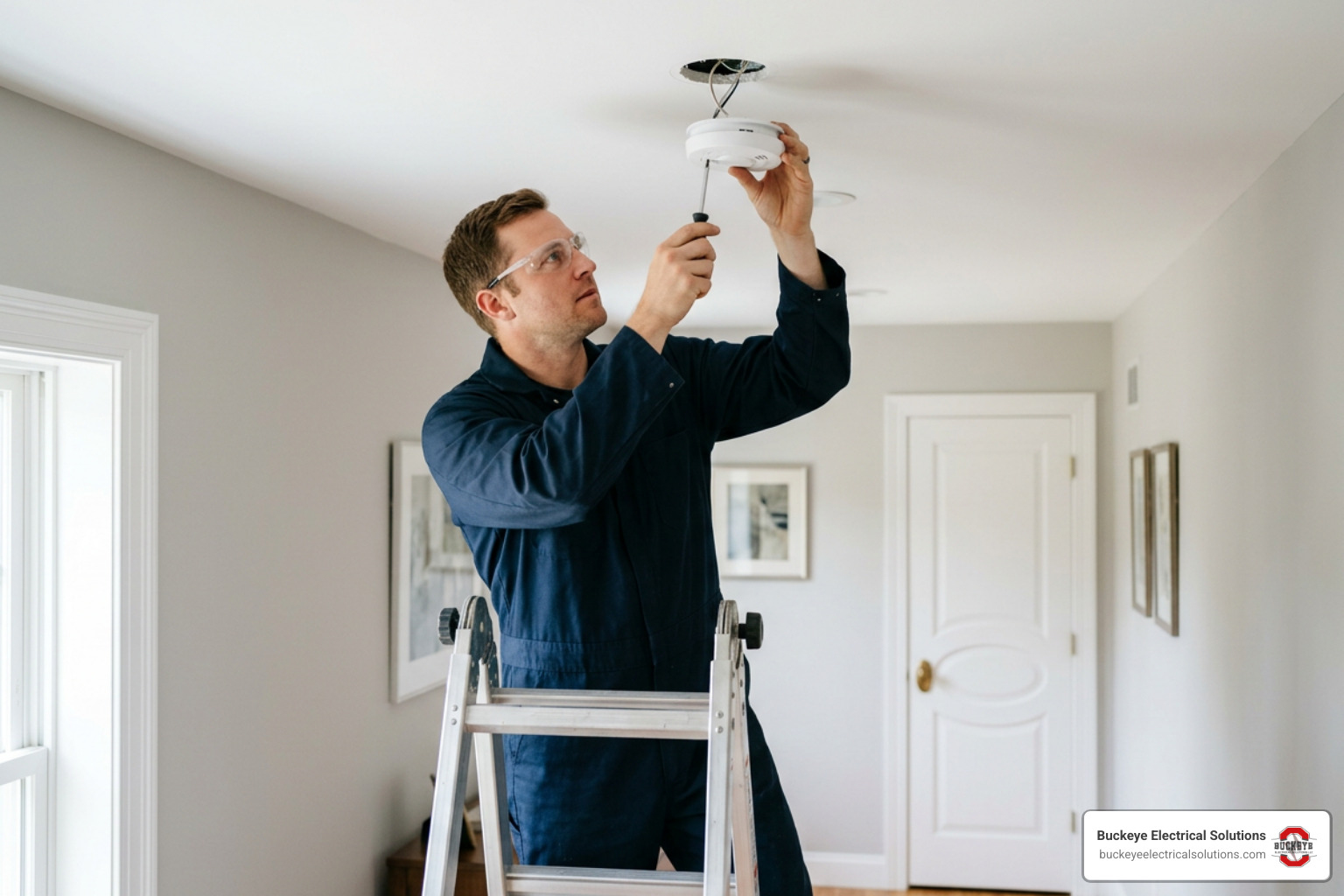
To get a clearer picture of how these expenses break down, you can read through the Smoke Alarm Replacement Cost Guide for Homes. Additionally, to understand how these residential costs stack up against commercial fire systems, check out our guide on Budgeting for Beeps: How Much Does a Fire Alarm System Really Cost?.
Unit Pricing: How Technology Impacts the Cost to Replace Smoke Alarms
The physical device you choose is the first major cost lever. Not all smoke detectors are built the same, and the internal sensor technology heavily dictates the retail price. Let’s break down the primary options:
- Ionization Smoke Alarms ($6 – $20 per unit): These models are highly responsive to fast-flaming fires. They use a tiny amount of radioactive material to ionize the air inside the sensing chamber. While budget-friendly, they are more prone to nuisance tripping from kitchen steam or bathroom condensation.
- Photoelectric Smoke Alarms ($10 – $30 per unit): These sensors use a light source and a light-sensing receiver. They excel at detecting slow, smoldering fires—the kind that often start in upholstery or bedding late at night.
- Dual-Sensor Smoke Alarms ($24 – $40+ per unit): Because the National Fire Protection Association (NFPA) recommends having both types of detection, dual-sensor units combine ionization and photoelectric technologies into one housing. They provide comprehensive protection but carry a higher upfront hardware cost.
- Combination Smoke & Carbon Monoxide (CO) Alarms ($50 – $150 per unit): These multi-gas units protect your household from both fire and the silent threat of carbon monoxide. Replacing an existing combo unit typically costs $115 to $150 in labor and materials, while running new wiring for a new combo location typically runs $175 to $225.
For a deeper look at retail device pricing and brand comparisons, refer to the ConsumerAffairs guide on How much does it cost to replace smoke detectors?.
Hidden Fees That Can Increase Your Total Cost to Replace Smoke Alarms
Many homeowners assume that replacing a hardwired smoke alarm is “just two screws and a plug.” However, several behind-the-scenes factors can quickly shift your budget:
- Wiring Complexity and Age: If your home was built before 1999, it may lack the dedicated neutral wire or physical three-wire interconnect system required for modern hardwired safety codes. Running new 14/3 cabling through finished walls to link your alarms requires specialized tools and significant labor.
- Ceiling Height and Accessibility: If you have high vaulted ceilings or an alarm mounted directly above a grand stairwell, a standard stepstool won’t cut it. Electricians must use heavy-duty ladders or specialized scaffolding, which adds time and safety risks to the job.
- Drywall Patching and Painting: When fishing new wires through a finished home, we occasionally have to make small access cuts in the drywall. Most electrical contractors do not include professional plastering or painting in their standard hourly rates, meaning you may need to budget separately for wall repairs.
- Permit and Inspection Fees: In many Northeast Ohio jurisdictions, adding a new electrical circuit or modifying your home’s hardwired life-safety system requires a local electrical permit. These local municipal fees typically range from $25 to $150 depending on your city or township.
To learn more about why the labor involved is more complex than it appears, check out the detailed breakdown in Smoke Detector Installation Cost (2026): Battery vs Hardwired (and Why the Labor Isn’t ‘Just Two Screws’) | What It Actually Costs.
Comparing Power Sources: Battery vs. Hardwired vs. Smart Systems
Choosing the right power system is a balance between your budget, your home’s age, and your desired level of convenience.
Here is a quick comparison of the three primary power configurations:
| Feature | Battery-Operated Alarms | Hardwired with Battery Backup | Smart Smoke Alarms |
|---|---|---|---|
| Power Source | Disposable 9V or 10-Year Sealed Lithium | 120V Household Current + Battery Backup | 120V Hardwired or 10-Year Battery + Wi-Fi |
| Interconnection | Typically None (unless wireless models used) | Physical 3-Wire or Wireless Interconnect | Wireless App-Based Interconnect |
| Typical Lifespan | 8 – 10 Years | 10 Years | 10 Years |
| Required Maintenance | Annual Battery Swaps (unless sealed unit) | Annual Battery Backup Swaps (unless sealed) | App-monitored self-testing |
| Likely causes | Dead battery, dust buildup | Sensor degradation, power surge damage | Wi-Fi disconnect, sensor degradation |
| Priority level | High (if older than 10 years) | Medium (if existing units function) | Low (luxury upgrade for convenience) |
Note: All systems require complete unit replacement after 10 years because the internal sensors naturally degrade over time.
To explore these options further, read our comprehensive resource: Upgrade Your Safety: The Ultimate Guide to Replacement Smoke Alarms.
Battery-Operated Alarms
Battery-only smoke alarms are the most affordable and simplest units to install. They require no electrical wiring and mount to any wall or ceiling with standard mounting brackets.
While older models required annual 9-volt battery replacements, modern safety standards highly recommend units featuring sealed 10-year lithium batteries. These sealed models eliminate the annoying “low-battery chirp” for the entire decade-long lifespan of the device, making them an excellent choice for retrofitting older homes where hardwiring is cost-prohibitive.
Hardwired Systems with Battery Backup
Hardwired smoke alarms run on your home’s 120-volt electrical system and include a battery backup (either a 9V battery or a sealed lithium cell) to keep the unit active during a power outage.
The primary benefit of a hardwired system is physical interconnection. When one alarm detects smoke in the basement, a signal wire triggers every single alarm throughout the house simultaneously. This gives your family crucial extra seconds to evacuate, regardless of where the fire starts.
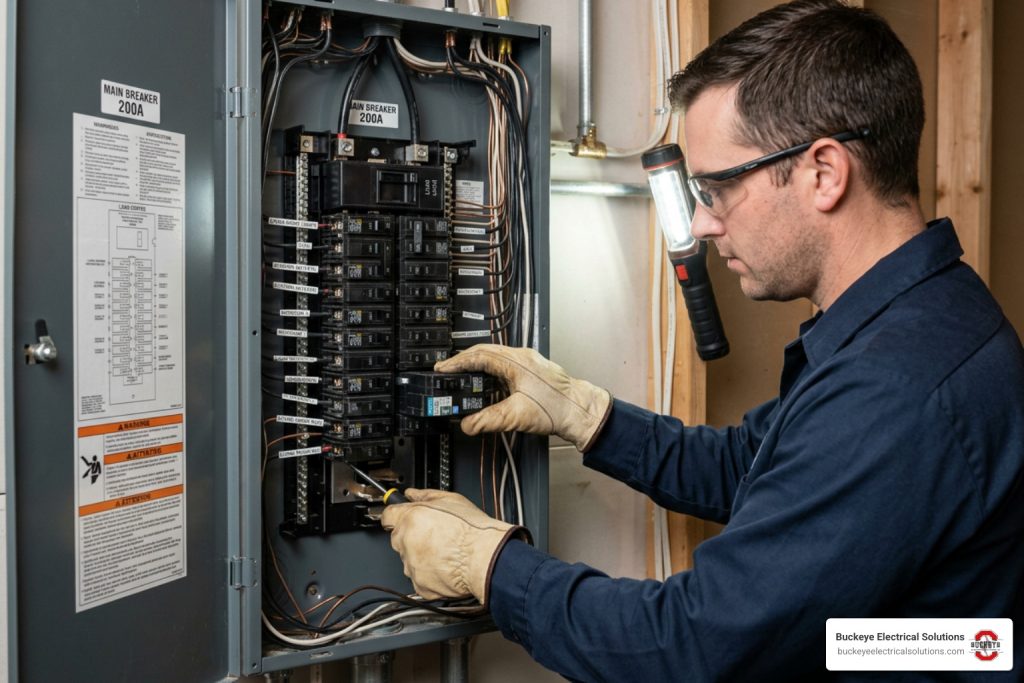
If you need to install or repair hardwired circuits, our team is ready to help. Learn more about our Residential Electrical Services.
Smart Smoke Alarms
Smart smoke alarms represent the cutting edge of residential fire safety. These devices connect directly to your home’s Wi-Fi network and integrate with smart home hubs.
If a fire or carbon monoxide leak occurs while you are away from home, a smart alarm sends an instant push notification to your smartphone. This allows you to alert emergency services immediately, potentially saving your property and protecting pets. Many smart units also feature advanced voice alerts that tell you exactly which room is experiencing an emergency, rather than just sounding a generic siren.
DIY vs. Professional Installation: Balancing Savings and Safety
It is tempting to look at a smoke detector and assume it is a quick weekend DIY project. While swapping out a basic battery-operated unit is well within the reach of most homeowners, modifying your home’s electrical system is a different story.
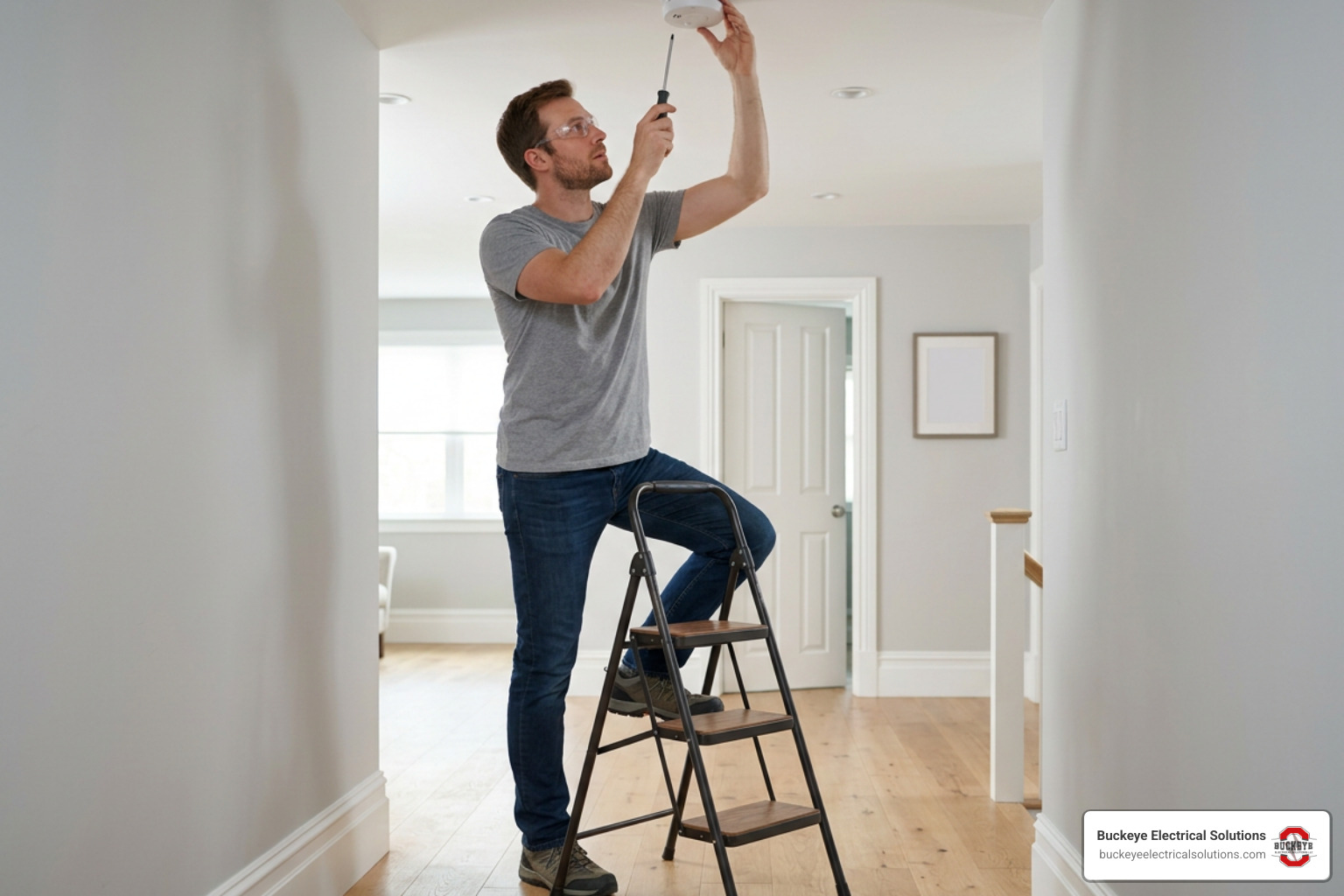
Before deciding to tackle this project yourself, read our detailed guide: From Chirps to Cheers: Mastering Smoke Alarm Installation and Maintenance.
When DIY is Appropriate
DIY installation is highly practical for:
- Replacing old, battery-only smoke alarms with new, 10-year sealed battery units.
- Mounting battery-powered alarms to drywall using simple anchors and screws.
- Performing monthly button tests and cleaning dust out of your alarm covers with a vacuum attachment.
If you are comfortable standing on a ladder and using a screwdriver, you can save on labor costs by handling these basic battery swaps yourself.
Why Hardwired Upgrades Require a Licensed Electrician
If your home uses hardwired smoke alarms, or if you want to upgrade your property to an interconnected hardwired system, hiring a licensed professional is essential. Working with live 120-volt household electricity carries risks of severe electrical shock or arc-flash hazards if handled improperly.
Furthermore, improper wiring can lead to a false sense of security. If the interconnect wire is connected incorrectly, your alarms may fail to communicate during an emergency, or a sudden power surge could permanently destroy the delicate sensors. Licensed electricians understand local building codes, ensure proper circuit loading, and pull the necessary municipal permits to guarantee your system is fully compliant.
To learn more about the importance of professional oversight, read The Definitive Guide to Electrical Safety Inspection.
Lifespan, Expiration, and Signs Your Smoke Alarm is Malfunctioning
Many homeowners assume that as long as a smoke detector “beeps” when they press the test button, it is working perfectly. Unfortunately, this is a dangerous misconception. The test button only confirms that the battery, siren, and electrical circuitry are functional—it does not test the actual chemical sensor that detects smoke.
Over time, the photoelectric and ionization sensors inside your alarms degrade due to airborne dust, humidity, cooking grease, and natural wear. To keep your home protected, review Don’t Get Shocked: The Ultimate Electrical Safety Checklist for Your Home.
How to Check Your Alarm’s Expiration Date
All residential smoke alarms have a maximum functional lifespan of 10 years. To find out if yours have expired, follow these quick steps:
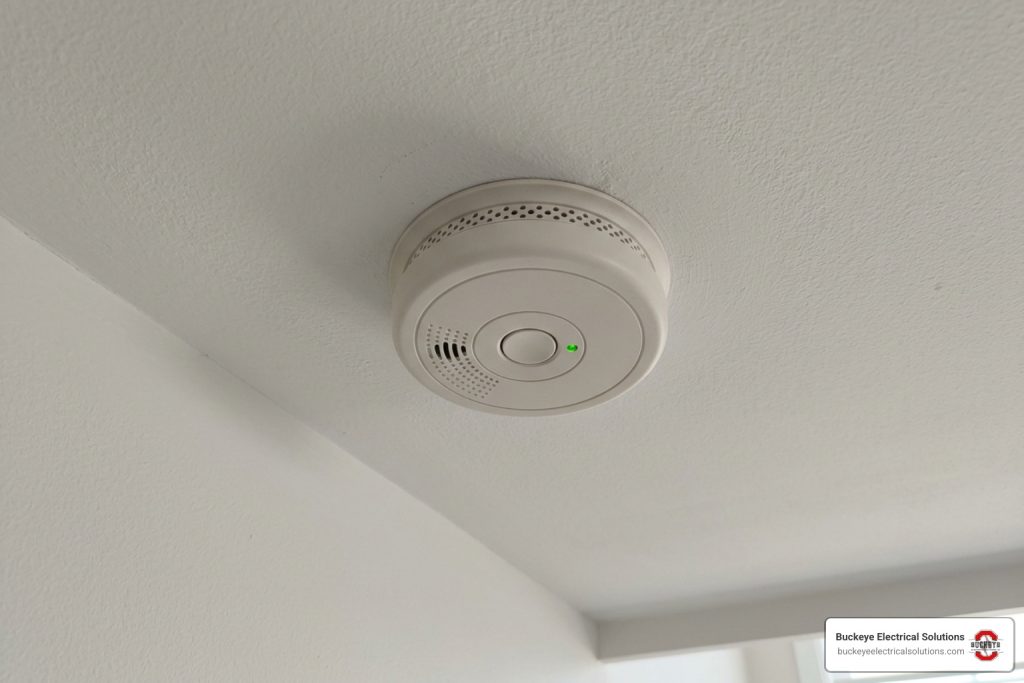
- Remove the Unit: Twist the smoke alarm counterclockwise to detach it from its ceiling or wall mounting bracket. (If it is a hardwired unit, gently unplug the wiring harness from the back of the device first).
- Inspect the Back: Look at the manufacturer’s label on the back of the unit. You will find a printed manufacture date or an explicit expiration date.
- Calculate the Age: If the manufacture date is more than 10 years old (or approaching that mark), the unit must be replaced immediately. If there is no legible date on the back, assume the unit is expired and replace it.
Warning Signs of a Malfunctioning Unit
Keep an eye out for these common warning signs that indicate your alarm is failing and needs immediate replacement:
- Constant Chirping: If an alarm chirps once every minute even after you have installed brand-new batteries, the internal sensor is likely dirty or failing.
- Frequent Nuisance Tripping: If your alarms trigger when there is no smoke, steam, or dust present, the sensors may be overly sensitive or degraded.
- Muffled or Weak Sirens: When you press the test button, the siren should be piercingly loud. If the sound is weak, muffled, or inconsistent, the internal horn is failing.
- Three Rapid Chirps: Many modern alarms feature a specific “malfunction signal” consisting of three rapid chirps every minute. Refer to your manufacturer’s manual to confirm this pattern.
Ohio Building Codes and Home Safety Requirements
When replacing smoke alarms, you must ensure your home complies with local residential building regulations. Ohio jurisdictions may apply the 2023 National Electrical Code (NEC) or other adopted local building code requirements, depending on your specific location and project scope.
Because local enforcement and amendments can vary, all code compliance details are subject to local Authority Having Jurisdiction (AHJ) approval. For example, you can review regional guidelines provided by the Miami Township Fire & EMS or check out the municipal safety resources from the City of Fairfield, OH.
Required Alarm Placement and Interconnection
Generally, modern residential building codes require smoke alarms to be installed in the following locations:
- On every level of your home, including finished basements.
- Inside every bedroom or designated sleeping area.
- In the immediate hallway or common area outside of sleeping rooms.
- Within 21 feet of any bedroom door (subject to local AHJ specifications).
Additionally, applicable codes typically mandate that when new hardwired alarms are installed, they must be interconnected. If running physical wires through your ceilings is impossible without destroying finished drywall, many Ohio jurisdictions permit the use of listed wireless interconnect alarms as a compliant alternative.
If you are facing financial hardship, some local non-profits and regional safety campaigns offer assistance. You can look into the FREE Smoke Alarm Installation program in Northern OH to see if you qualify for free basic battery-operated units.
Offsetting Costs with Insurance and Warranties
Upgrading your home’s life-safety systems can provide financial benefits beyond basic fire protection. Many homeowners’ insurance carriers offer premium discounts ranging from 2% to 5% if you install professionally monitored smart smoke alarms or fully interconnected hardwired systems.
Additionally, if you have a comprehensive home warranty package, your contract may cover the replacement of malfunctioning hardwired smoke alarms. However, keep in mind that performing unpermitted or non-compliant DIY electrical work can complicate insurance claims if a fire occurs. Always keep copies of your professional installation invoices and municipal permits to protect your investments.
Frequently Asked Questions about Smoke Alarm Replacement
How many smoke alarms does my home typically need?
A typical two-story, three-bedroom home generally requires between six and eight smoke alarms to meet modern safety codes. This includes one unit inside each of the three bedrooms, one in the hallway outside the bedrooms, one on the main living level, one in the basement, and one near the attic stairs or utility spaces.
Can a home warranty or insurance discount offset the cost of replacing smoke alarms?
Yes, in many cases. Many insurance providers offer a 2% to 5% discount on your annual premium if you install qualifying smart smoke alarms or professionally installed, interconnected hardwired systems. Some high-level home warranty packages also cover the cost of replacing failed hardwired units, though you will still need to pay your standard service call fee.
What should I do if my hardwired smoke alarm outlet has no voltage?
Outlet has no voltage; could indicate breaker, GFCI, switch, or wiring issue.
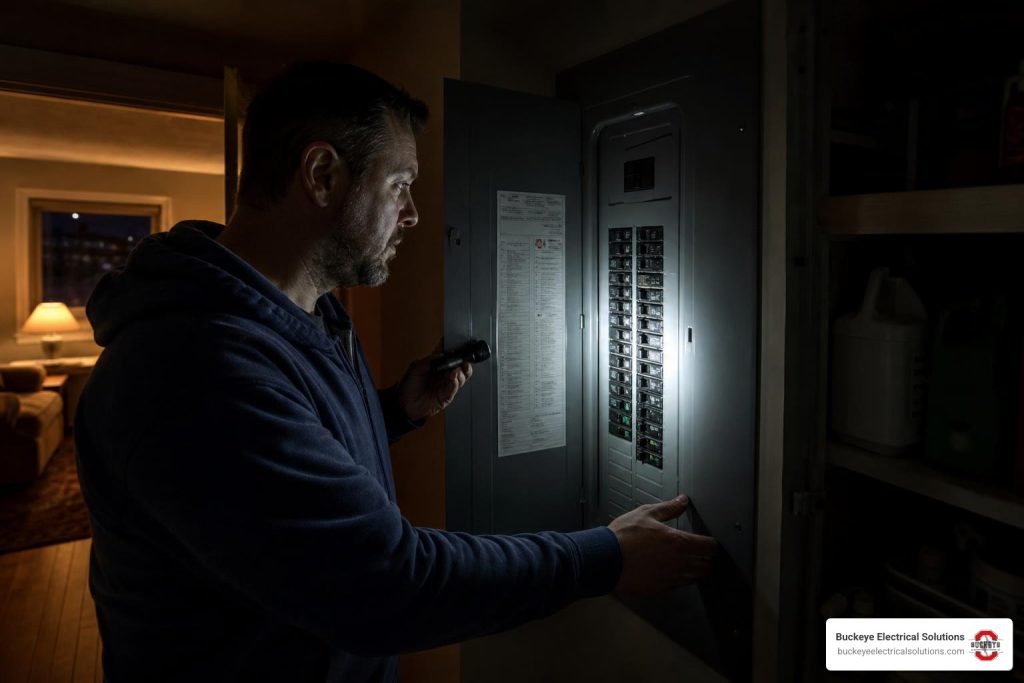
First, check your main service panel to see if a circuit breaker has tripped. Note that Ohio’s 2023 NEC adoption includes expanded GFCI requirements in several locations, meaning specific rules (such as those for kitchens or utility spaces) are situational rather than universal. If the alarm circuit is tied to a downstream GFCI receptacle or a switched outlet, a tripped GFCI or turned-off wall switch could be cutting power to your alarms. Because troubleshooting live electrical circuits carries severe safety risks, we highly recommend calling a licensed electrician to diagnose the issue safely.
Conclusion
Your home’s smoke alarms are the most important life-safety devices on your property. While understanding the cost to replace smoke alarms helps you budget effectively, prioritizing proper installation, code compliance, and reliable interconnection is what truly keeps your family safe.
At Buckeye Electrical Solutions, we bring over 20 years of professional electrical experience to homeowners and businesses throughout Northeast Ohio. Whether you need to swap out a few outdated hardwired units or completely retrofit an older home with a modern interconnected system, our team is committed to providing prompt, exceptional service.
Don’t leave your family’s safety to chance. If you are ready to upgrade your home’s fire protection or need professional assistance with commercial systems, contact us today or explore our Commercial and Residential Fire Alarm Services.