When the Power Goes Out: Your First Move Matters
If you need an emergency electrician in Cleveland right now, here is what to do first:
- If you see smoke, sparks, or smell burning – leave the area and call 911.
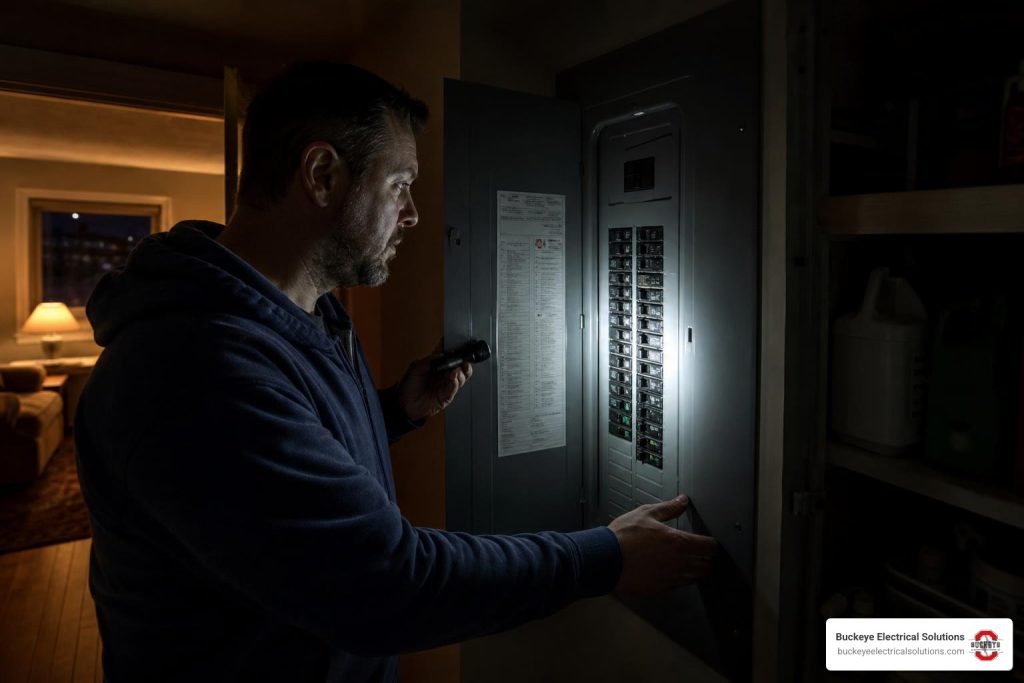
- If it is safe, shut off power at the main breaker.
- Check with your neighbors or utility provider to rule out a neighborhood outage.
- Call a licensed 24/7 electrician for anything that is not a utility-side problem.
- Do not attempt DIY repairs – improper wiring or panel work can cause fires or electrocution.
Electrical emergencies do not wait for a convenient moment. A burning smell near your panel at midnight, a sparking outlet during a summer storm, a dead circuit that is killing your sump pump during a heavy rain – these are not situations where you wait until Monday morning.
Fire-safety guidance and research from National Fire Protection Association home structure fire research is a useful reminder that electrical failures or malfunctions can create serious home fire concerns. Ohio homes – many of which were built decades ago with older wiring systems – can carry added risk when heavy seasonal demands push aging electrical infrastructure to its limits.
This guide walks you through exactly what to do in a power panic: how to recognize a true electrical emergency, how to stay safe while you wait for help, what to expect from emergency service in the Cleveland area, and how to prevent the next crisis before it starts.
I’m Aaron, owner of Buckeye Electrical Solutions LLC and a master electrician with hands-on experience directing more than 60 permitted electrical projects across Northeast Ohio – including urgent emergency electrical repairs in Cleveland and the surrounding region. Having responded to everything from failed service panels to storm-damaged wiring in older Cleveland-area homes, I have written this guide to give you a straight, practical answer when you need it most.
Related emergency electrical resources for Cleveland homeowners:
What Counts as an Electrical Emergency in Cleveland?
An electrical emergency is any electrical condition that creates an immediate or likely risk of fire, shock, equipment damage, loss of essential power, or unsafe occupancy.
In plain English: if the electrical system is hot, smoking, sparking, buzzing, wet, repeatedly failing, or powering something critical like a sump pump, furnace, medical device, or business equipment, it deserves urgent attention.
In Cleveland and throughout Northeast Ohio, we treat these situations seriously because many properties combine older wiring with modern electrical demand. Homes that once powered a few lights and basic appliances may now be supporting HVAC systems, computers, chargers, sump pumps, EV equipment, smart devices, and high-load kitchen appliances. That extra demand can expose weak connections, aging panels, overloaded circuits, and outdated grounding.
Electrical work also has to comply with the National Electrical Code, Ohio’s adopted code requirements, and local authority having jurisdiction, often called the AHJ. In an emergency, the first goal is to make the situation safe. The second goal is to repair it correctly so the same hazard does not come back wearing a fake mustache.
Electrical Red Flags That Require Immediate Help
Call for emergency electrical help immediately if you notice any of these warning signs:
- Burning odor near outlets, switches, appliances, or the breaker panel
- Smoke from any electrical device, panel, fixture, or wiring area
- Scorch marks on outlets, switches, cords, or the panel
- A breaker panel that is buzzing, humming loudly, crackling, or vibrating
- Sparking from an outlet, switch, light fixture, appliance, or panel
- Outlets or switch plates that feel warm or hot
- Breakers that trip repeatedly after being reset
- Electrical shock or tingling when touching an appliance, switch, or metal fixture
- Flickering lights combined with heat, odor, or buzzing
- Water near outlets, wiring, panels, extension cords, or appliances
- Storm damage affecting the service mast, meter, overhead lines, or exterior wiring
- Downed electrical lines on or near the property
- Partial power loss where some rooms work and others do not
- A failed circuit serving a sump pump, furnace, refrigerator, freezer, or medical equipment
If there is visible fire, smoke, or an active life-safety threat, call 911 first. Then call an electrician after everyone is safe.
Common Emergency Calls in Cleveland Homes
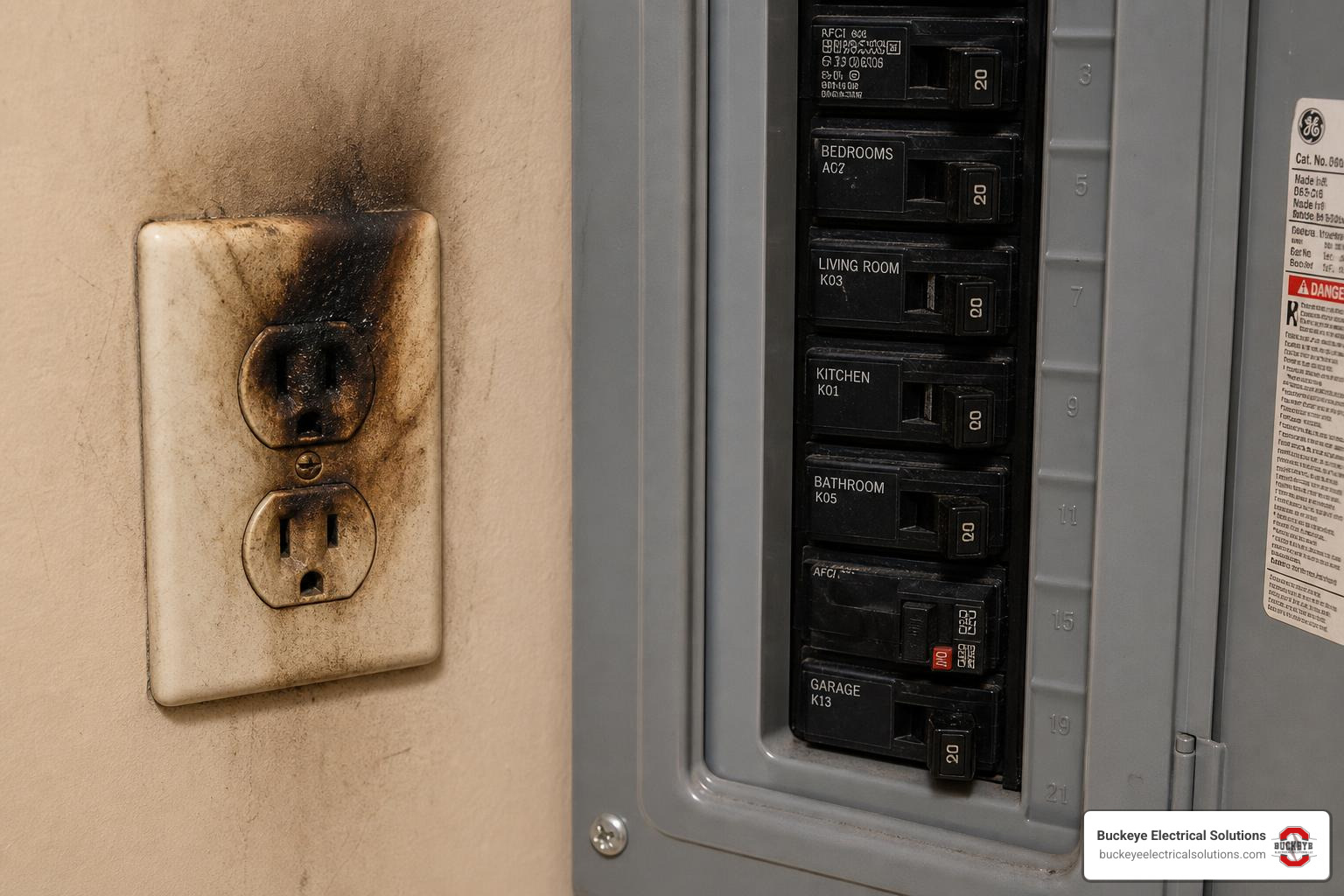
The most common urgent calls we see in Northeast Ohio usually fall into a few categories:
- Partial power outage in part of the home
- Total power loss not explained by a utility outage
- Failed breaker or breaker that will not reset
- Damaged or overheated wiring
- Tripped GFCI that will not restore power
- Dead receptacle: Outlet has no voltage; could indicate breaker, GFCI, switch, or wiring issue
- Overloaded electrical panel
- Ceiling fan or lighting failure with burning smell or heat
- Sump pump circuit failure during heavy rain
- Furnace circuit failure during cold weather
- Air conditioner circuit issues during high summer demand
- Generator or transfer switch problem
- Storm-related damage to exterior electrical components
Not every dead outlet is a midnight emergency. But when power loss affects safety, heat, refrigeration, water control, business operations, or creates signs of overheating, it becomes urgent.
Why Electrical Emergencies Are Especially Serious in Ohio Homes
Ohio homes can be tough, charming, and full of character. Unfortunately, some are also full of electrical systems that were never designed for today’s power needs.
Older Cleveland-area properties may still have or have previously had:
- Cloth-insulated wiring
- Aluminum branch wiring
- Ungrounded two-prong outlets
- Fuse boxes
- Undersized or outdated panels
- Improper wiring from past DIY work
- Aging service entrance components
- Overloaded circuits created by renovations or added appliances
Seasonal weather adds more pressure. Winter heating loads, summer air conditioning, thunderstorms, basement flooding, and sump pump demand can all stress weak electrical systems. A circuit that seems “fine” in October may fail during a February cold snap or a July storm.
National fire data consistently shows electrical malfunction as a meaningful cause of residential building fires. That does not mean every flickering light is a disaster, but it does mean electrical warning signs deserve respect.
What to Do While Waiting for an Emergency Electrician
Once you call for help, your job is not to fix the problem. Your job is to keep people safe, reduce damage if possible, and give the electrician useful information.
For a deeper homeowner safety breakdown, we recommend reading The Homeowner Guide to Emergency Electrical Repair.
Safety Steps Before Your Cleveland Emergency Electrician Arrives
Use this checklist while waiting for an emergency electrician:
- Move people and pets away from the problem area.
- If you smell burning, see smoke, or see flames, leave the area and call 911.
- If it is safe, turn off the affected breaker or the main breaker.
- Do not touch the panel if it is hot, wet, smoking, buzzing, or visibly damaged.
- Unplug appliances only if the plug, cord, and outlet appear normal and safe to touch.
- Do not repeatedly reset a tripping breaker.
- Stay away from exposed wires.
- Do not use water on an electrical fire.
- Keep clear of flooded basements or standing water near electrical equipment.
- Check with neighbors or the utility provider to see if the outage is neighborhood-wide.
- Clear a safe path to the electrical panel.
- Write down what happened, when it started, and what devices were running at the time.
That last step may sound small, but it helps. “The breaker trips every time the microwave and space heater run together” gives us a much better starting point than “the house is acting weird.” Although, to be fair, sometimes houses do act weird.
What Homeowners Should Not Do During a Power Panic
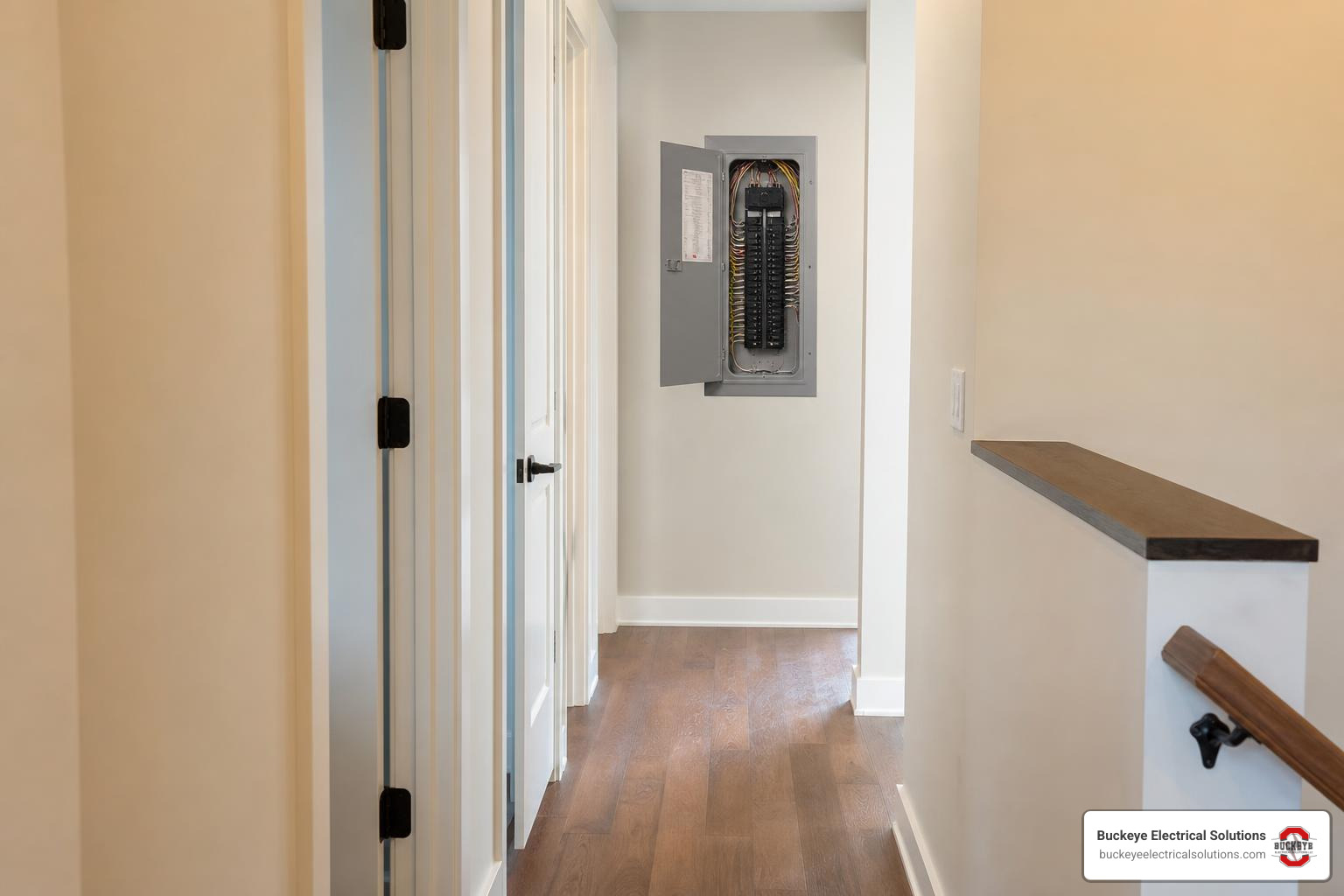
Please do not do these things during an electrical emergency:
- Do not keep cycling a breaker on and off.
- Do not plug a high-load appliance into an extension cord to “get by.”
- Do not use an outlet with scorch marks, heat, buzzing, or looseness.
- Do not remove the panel cover.
- Do not attempt bootleg ground fixes.
- Do not create temporary improper wiring to restore power.
- Do not pour water on an electrical fire.
- Do not run a generator indoors, in a garage, or near open windows.
- Do not backfeed a generator into the home without a proper transfer switch.
- Do not make DIY splices behind walls, in attics, or in basements.
- Do not wrap a damaged wire in tape and call it repaired.
- Do not step into water if outlets, cords, appliances, or panels may be energized.
Temporary electrical shortcuts often become permanent hazards. If something feels unsafe, assume it is unsafe until a licensed electrician checks it.
Emergency Service Availability, Response Expectations, and Cost in Cleveland
Many electrical contractors in Ohio offer some form of 24/7 emergency service, including nights, weekends, and holidays. Availability can depend on workload, storm activity, technician location, parts availability, and the severity of the emergency.
At Buckeye Electrical Solutions, we provide residential and commercial electrical repair, installation, and maintenance throughout Northeast Ohio. With more than 20 years of experience, we know that urgent electrical problems need calm communication, practical triage, and safe repairs completed as promptly as site conditions allow.
Here is a helpful symptom guide:
| Electrical symptom | Likely causes | Priority level |
|---|---|---|
| Burning smell near panel or outlet | Overheated wiring, loose connection, failing breaker, overloaded circuit | Immediate emergency |
| Smoke or visible sparks | Arcing, short circuit, failed device, damaged wiring | Immediate emergency; call 911 if fire is present |
| Breaker trips repeatedly | Overload, short circuit, ground fault, failing breaker, damaged appliance | Urgent |
| Partial outage | Failed breaker, loose service connection, utility issue, damaged circuit | Urgent to immediate depending on symptoms |
| Dead outlet | Tripped GFCI, open connection, failed device, breaker issue | Moderate to urgent |
| Buzzing electrical panel | Loose connection, failing breaker, arcing, overloaded equipment | Urgent |
| Warm outlet or switch | Loose terminal, overload, damaged device, improper wiring | Urgent |
| Water near electrical equipment | Flooding, leaking pipe, storm intrusion, energized components | Immediate emergency |
| Sump pump circuit failure | Tripped GFCI, failed breaker, overloaded circuit, pump fault | Urgent, especially during rain |
| Flickering lights with odor or heat | Loose neutral, failing connection, overloaded circuit, fixture issue | Immediate emergency |
Emergency Electrician Response Times in Cleveland: What Is Realistic?
Emergency response is not just about driving fast. It includes call intake, safety triage, dispatch, travel, diagnosis, parts, and safe repair.
A realistic emergency process may include:
- Asking whether there is smoke, fire, shock, or water involved
- Determining whether the issue is utility-side or property-side
- Prioritizing life-safety hazards
- Giving safety guidance by phone when appropriate
- Dispatching an electrician based on urgency and availability
- Stabilizing the system first, then completing the permanent repair if possible
- Returning with specific parts if the repair requires equipment not stocked on the vehicle
Weather matters. During major storms, widespread outages and damaged service equipment can increase demand across the region. Parts availability can also affect whether a full repair happens immediately or whether temporary stabilization is needed first.
For a clearer idea of how emergency electrical visits typically unfold, see our guide to Emergency electrical response expectations.
How to Compare 24/7 Electricians Without Relying on Brand Hype
A good emergency electrician should bring more than a flashlight and a confident voice. Before hiring, look for:
- Proper Ohio licensing and local registration where required
- Insurance coverage
- Knowledge of current code requirements
- 24/7 or after-hours availability
- Residential and commercial capability, if relevant
- A clear dispatch process
- Upfront explanation of diagnostic costs and repair options
- Written scope of work
- Permit handling when permits are required
- Safety-first troubleshooting
- Clear communication without pressure tactics
- Warranty information for completed work
- Willingness to explain what failed and why
If you are deciding whether the issue can wait, read Don’t Wait Get an Emergency Electrician Now. When electricity gives you warning signs, it is usually trying to be helpful before becoming expensive.
Typical Emergency Electrical Cost Factors in Cleveland
Emergency electrical pricing varies. Any estimate should be treated as subject to change based on site conditions, repair scope, parts, accessibility, and AHJ requirements.
Common cost factors include:
- After-hours, weekend, or holiday timing
- Diagnostic time
- Whether the issue is isolated or system-wide
- Breaker replacement
- Outlet, switch, or GFCI replacement
- Panel repair or panel replacement
- Wiring repair
- Surge or storm damage
- Accessibility of the panel, attic, basement, crawlspace, or exterior service
- Specialty parts
- Permit and inspection requirements
- Commercial system complexity
- Temporary power needs
- Final code correction after emergency stabilization
- Documentation for insurance claims
The safest approach is to ask for clear pricing before work begins, then request an updated explanation if the electrician discovers additional hazards.
Preventing Future Electrical Emergencies in Cleveland Homes and Businesses
The best emergency electrical repair is the one you never need. Preventive maintenance helps catch small problems before they become smoke, sparks, outages, or “why is the panel making that noise?”
Good prevention includes:
- Electrical safety inspections
- Panel evaluations
- Dedicated circuits for high-load appliances
- Whole-home surge protection
- Proper grounding and bonding
- GFCI and AFCI protection where required
- Smoke detector and CO detector maintenance
- Generator transfer switch installation
- Load calculations before adding major equipment
- Commercial electrical maintenance plans
- Timely replacement of damaged outlets, switches, and breakers
For businesses, prevention also protects uptime. A failed panel, lighting outage, or equipment circuit problem can interrupt operations, damage equipment, and create safety concerns for employees and customers.
Ohio Code and 2023 NEC Updates Homeowners Should Know
Ohio’s 2023 NEC-related requirements should be treated as situational because the exact rule that applies can depend on the equipment, location, scope of work, and local AHJ interpretation. Expanded GFCI requirements may apply in areas such as wet locations, garages, basements, outdoor outlets, laundry areas, and certain appliance circuits.
Kitchen GFCI rules can be situational rather than universal, depending on receptacle location, appliance type, circuit use, and the specific code path adopted and enforced by the AHJ. That is why code-compliant electrical work should be evaluated on site instead of guessed from a social media comment thread.
Important code-related points for Cleveland-area property owners:
- Permits may be required for panel changes, service upgrades, new circuits, and other significant work.
- Inspections may be required by the local AHJ.
- Emergency stabilization may be followed by additional code corrections.
- Older systems may need upgrades before new equipment can be safely added.
- GFCI and AFCI requirements are safety-driven, not decorative. They are not there to annoy you, even if a nuisance trip feels personal.
High-Risk Systems to Inspect Before They Fail
Some systems deserve extra attention because failure can be dangerous, expensive, or disruptive:
- Electrical panels
- Main breakers and branch breakers
- Service entrance cable and service mast
- Meter base and exterior disconnects
- Outlets and switches that are loose, cracked, warm, or discolored
- Attic wiring
- Basement wiring
- Sump pump circuits
- Furnace and air conditioner circuits
- EV charger circuits
- Hot tub wiring
- Generator systems and transfer switches
- Aluminum wiring
- Knob-and-tube wiring concerns
- Frequently overloaded circuits
- Extension cord-dependent rooms
- Commercial lighting and equipment circuits
If a property is over 40 years old, has ungrounded outlets, uses frequent extension cords, or has had multiple remodels, an inspection is especially valuable.
Practical Prevention Checklist for Cleveland Properties
Use this checklist to lower the odds of an electrical emergency:
- Schedule a professional electrical inspection.
- Replace damaged, loose, or discolored outlets and switches.
- Add dedicated circuits for high-load appliances.
- Avoid relying on extension cords for permanent power.
- Test GFCI outlets regularly.
- Label your electrical panel clearly.
- Install whole-home surge protection.
- Upgrade outdated or overloaded panels.
- Maintain your generator and transfer switch.
- Keep the panel area dry and accessible.
- Trim branches that may threaten overhead service lines.
- Keep basement electrical equipment protected from moisture where possible.
- Replace missing outlet covers.
- Stop using devices that cause shocks, burning smells, or repeated breaker trips.
- Have storm damage inspected before restoring normal use.
- Review When the Lights Go Out Your 24-Hour Electrical Survival Guide before the next outage.
Frequently Asked Questions About Emergency Electrical Service in Cleveland
Are 24/7 Emergency Electrician Services Available in Cleveland?
Yes, 24/7 emergency electrician services are available in many cases throughout the Cleveland area and Northeast Ohio. After-hours service may include nights, weekends, holidays, and storm-response situations.
Availability can vary based on current call volume, weather, technician location, and the type of emergency. When you call, be ready to explain whether there is smoke, fire, shock, water, a partial outage, a failed critical circuit, or damaged service equipment.
For more information on round-the-clock electrical help, see our 24/7 electrician service guide.
Do Emergency Electricians Handle Both Residential and Commercial Problems?
Yes, qualified emergency electricians often handle both residential and commercial electrical problems. Buckeye Electrical Solutions provides electrical service for homes and businesses across Northeast Ohio.
Emergency work may include:
- Home power loss
- Apartment electrical issues
- Retail lighting failures
- Office outlet or panel problems
- Light industrial circuit issues
- Generator problems
- Breaker and panel failures
- Code corrections
- Safety inspections
- Emergency stabilization
- Equipment protection
- Business continuity repairs
Commercial emergencies can be more complex because they may involve larger panels, three-phase equipment, life-safety systems, tenant spaces, business interruption, or specialized equipment. The priority is still the same: make it safe, identify the cause, and repair it correctly.
When Should I Call Immediately Instead of Waiting for a Normal Appointment?
Call immediately if you notice:
- Smoke
- Sparks
- Burning smell
- Electrical shock
- Hot outlet, switch, or panel
- Buzzing or crackling panel
- Wet electrical equipment
- Repeated breaker trips
- Partial outage
- Storm damage
- Damaged meter or service mast
- Exposed wiring
- Failed sump pump, furnace, refrigeration, or medical equipment circuit
- Any electrical issue that feels unsafe
If the problem involves fire, active smoke, downed lines, or immediate danger to people, call 911 first.
Conclusion
Electrical emergencies are stressful, but the right first steps can make a major difference. Get people away from danger, shut off power only if it is safe, avoid DIY repairs, and call a licensed electrician before a warning sign becomes a fire or shock hazard.
Buckeye Electrical Solutions is a trusted electrical contractor serving Northeast Ohio. With over 20 years of experience, we provide quality residential and commercial electrical repair, installation, and maintenance with a focus on safe work, prompt project completion, and code-compliant solutions.
If you need an emergency electrician in Cleveland for urgent power loss, burning smells, repeated breaker trips, storm damage, or another electrical hazard, do not wait for the problem to escalate. Start with our guide to Emergency Electrical Service in Northeast Ohio Don’t Get Left in the Dark or explore our electrical services to get help from a team that understands Cleveland-area electrical systems and Ohio safety requirements.