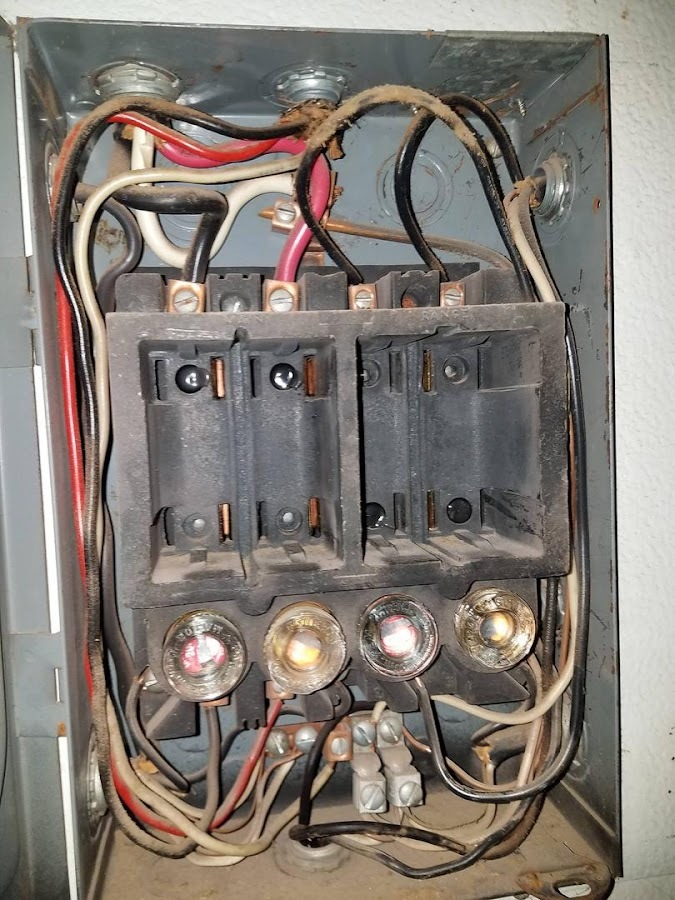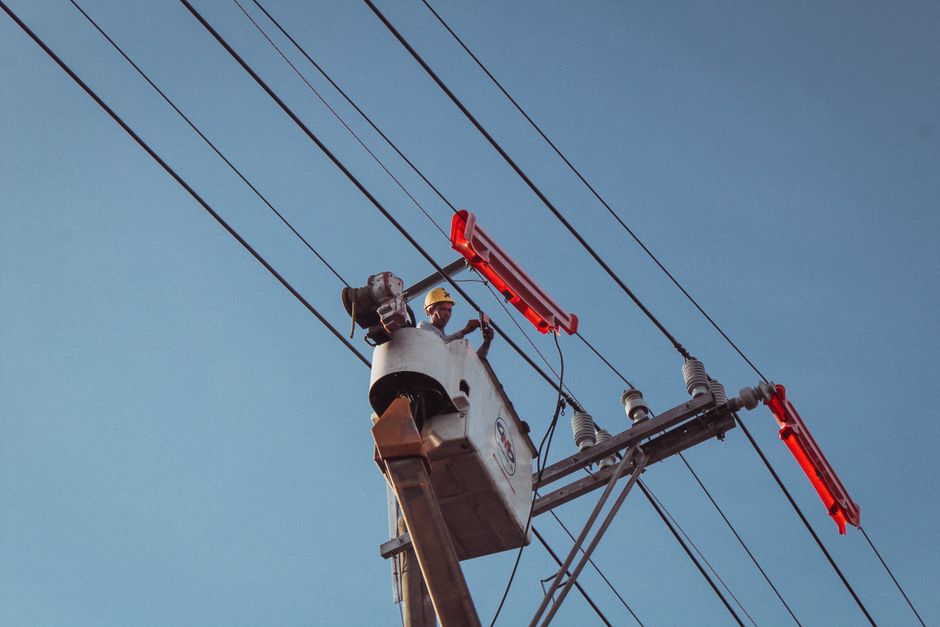
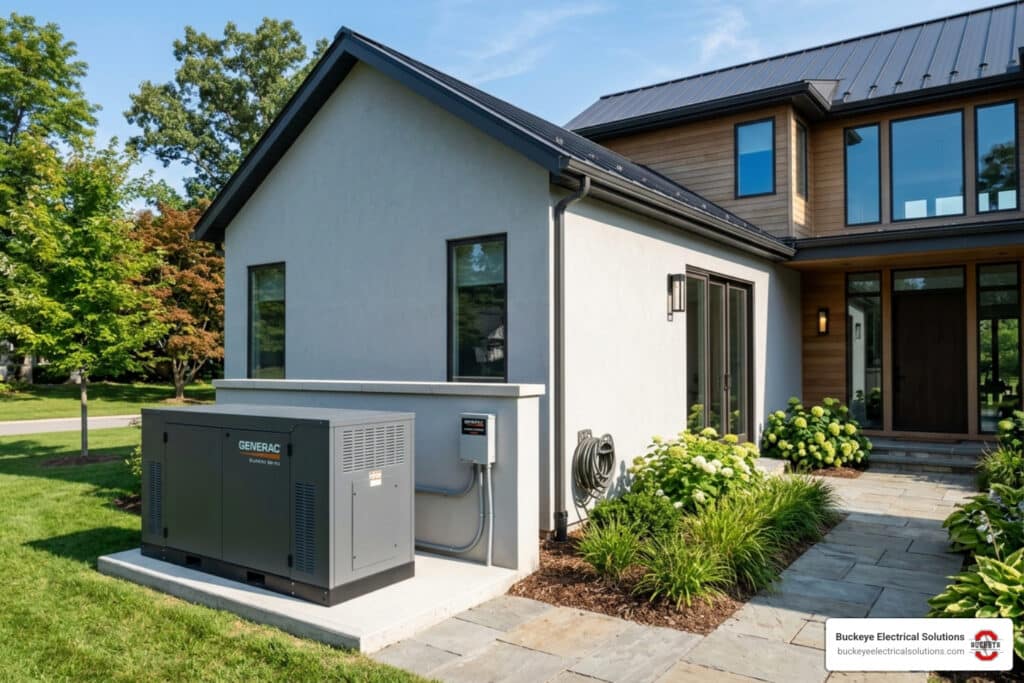
Why Invest in a Home Backup System?
A generator installation guide can serve as your roadmap to safe, code-compliant backup power — and if you’re in a hurry, here’s the short version:
Quick-Start: Generator Installation in Ohio
- Assess your power needs — calculate wattage for essential appliances (typically 7-22 kW for most Ohio homes)
- Choose your generator type — portable or standby (automatic)
- Select a fuel source — natural gas or propane
- Pick a safe location — typically at least 5 feet from windows, doors, and vents, on a level concrete pad
- Pull permits — electrical, gas, and zoning permits are typically required by your local AHJ
- Hire a licensed electrician — for transfer switch installation, wiring, and final inspection
- Test the system — simulate an outage and confirm automatic operation
If you’ve lived in Northeast Ohio for any length of time, you know the drill. A winter ice storm rolls in, heavy winds take down a line, and suddenly your neighborhood goes dark — sometimes for days. It can be more than just an inconvenience. A failed sump pump could potentially lead to a flooded basement. A refrigerator full of food may spoil. Medical equipment might stop running. For many families, a power outage can be a genuine emergency.
That’s exactly why more Ohio homeowners are turning to standby backup generators. Unlike portable units that require manual setup, a properly installed standby system detects an outage and kicks on automatically — often within 10 seconds — without you lifting a finger.
But installation is not something to guess at. It involves electrical work, gas connections, concrete pads, permits, and inspections. If not performed correctly, it could potentially void your warranty, fail a safety inspection, or worse.
This guide walks you through every stage of the process — from sizing and site selection to fuel hookups, transfer switches, and long-term maintenance.
I’m Aaron, owner of Buckeye Electrical Solutions LLC and a licensed master electrician based in Northeast Ohio, and I’ve overseen dozens of permitted generator installation projects across the region. This generator installation guide reflects what I see in the field every day — what typically works, what doesn’t, and where homeowners most often run into trouble.
Relevant articles related to Generator installation guide:

In Northeast Ohio, we deal with everything from the infamous “lake effect” snow to summer microbursts. When the grid fails, your home quickly loses its ability to protect itself. Investing in a backup system is often about safeguarding your property and your family’s health.
For many of our clients, a primary driver is food preservation. A standard refrigerator can typically only keep food safe for about four hours without power; a full freezer might last 48 hours if left unopened. With a generator, a significant grocery investment stays frozen.
Even more critical is sump pump operation. During a heavy rainstorm, a power outage could lead to a flooded basement, potentially causing substantial costs, sometimes estimated at $10,000 or more in water damage. Furthermore, families relying on medical equipment, such as CPAP machines or oxygen concentrators, often cannot afford downtime.
A standby generator also helps maintain HVAC continuity. In an Ohio winter, pipes can freeze and burst if your furnace loses power. By keeping your heating system running, you avoid potential plumbing failures. Beyond safety, there is a financial upside: a professionally installed standby generator could potentially add between $5,000 and $10,000 to your home’s resale value.
To help you decide which path is right for you, we’ve broken down the two main options in the table below. For more details on how these systems integrate with your home, check out our guide on essential services for your electrical generator.
| Feature | Portable Generator | Standby Generator |
|---|---|---|
| Activation | Manual (Typically requires manual start) | Automatic (Often starts within seconds) |
| Fuel Source | Gasoline (Typically requires storage) | Natural Gas or Propane (Continuous supply) |
| Capacity | Limited (Typically 3-12 kW) | High (Typically 7-50+ kW) |
| Home Connection | Extension cords or Manual Switch | Automatic Transfer Switch (ATS) |
| Maintenance | Often DIY-friendly | Typically requires annual professional service |
| Typical Lifespan | Often 5–10 years | Often 15–20+ years |
Choosing the Right Unit: A Generator Installation Guide
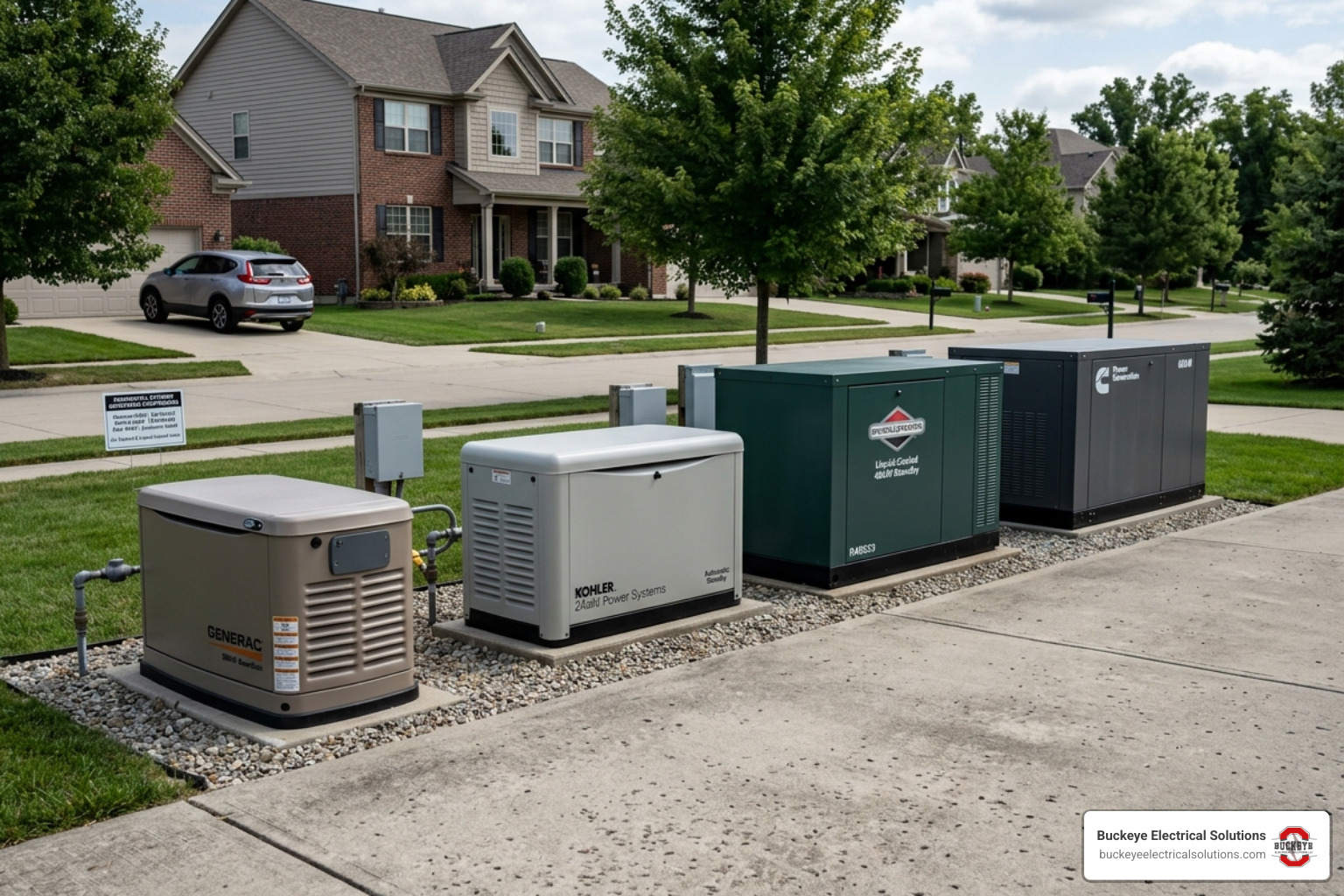
When you start shopping, you’ll notice two main cooling styles. Air-cooled units are the most common for residential homes. They use a fan to pull air across the engine, much like a lawnmower but far more sophisticated. These are typically available in sizes up to 26 kW.
For very large estates or small businesses, liquid-cooled systems are often considered the gold standard. They use an enclosed radiator system (similar to a car) and are typically quieter and more durable for long-term continuous running. However, they are significantly larger and often require more complex installation.
Choosing the right unit requires a deep dive into your specific needs. For a comprehensive look at the different models available, you can refer to this A Guide to Installing Generators | Generator Mart.
Sizing Your System: A Generator Installation Guide for Ohio Homes
One of the most common mistakes we see is homeowners “guessing” their wattage needs. If you buy a unit that is too small, it could potentially stall or shut down when your AC kicks on. If it’s too large, you may be wasting money on fuel and equipment costs.
In Northeast Ohio, most homes typically fall into the 7-22 kW range.
- 8kW–14kW: Typically covers “essential circuits” — your fridge, furnace fan, sump pump, some lights, and a few outlets.
- 14kW–22kW: This is often the “sweet spot” for whole-home power, allowing you to run your HVAC system and kitchen appliances simultaneously.
- 24kW+: Typically necessary for larger homes (over 3,000 sq. ft.) with multiple AC units, electric water heaters, or luxury features like heated floors.
We always perform a professional load calculation before recommending a unit. We sum the “running watts” and the “starting watts” (the extra surge needed to start a motor) of your appliances. We then add a safety buffer, often around 20%, to ensure the generator rarely has to work at 100% capacity, which typically extends the life of the engine. If you are a business owner looking for larger solutions, see our insights on commercial generator installation.
Fuel Source Selection: Natural Gas vs. Propane
Your choice of fuel often depends on what is already available at your property.
Natural Gas is the most popular choice in urban and suburban areas like Akron or Cleveland. It provides an unlimited fuel supply, meaning you typically never have to worry about a delivery truck during a blizzard. However, your gas utility may need to upsize your gas meter to ensure there is enough pressure to run the generator and your furnace at the same time.
Propane is the go-to for rural Ohio homes. It burns slightly cleaner and more efficiently than natural gas, but it requires a large on-site tank (typically 250 to 500 gallons). You’ll need to monitor levels; we recommend keeping the tank at least 30% full to ensure you’re ready for an unexpected outage.
Both fuels perform well in cold weather, though we often recommend optional “cold weather kits” (battery warmers and oil heaters) for Ohio winters to ensure a smooth start when it’s below zero. For more on utility requirements, refer to the Customer Guide for Electric Service – Ohio December 2023.
Site Selection and Permitting Requirements
You can’t just stick a generator anywhere. Placement is governed by NFPA 37 standards and local Ohio building codes.
The “5-foot rule” is a critical standard: The generator must typically be at least 5 feet away from any house opening, including windows, doors, and vents. This is to prevent carbon monoxide (CO) from seeping into your living space. Additionally, the unit typically needs an 18-inch setback from the exterior wall of the house, provided the wall is fire-rated.
Other placement considerations include:
- Property Lines: Most municipalities typically require the unit to be at least 5 feet from your neighbor’s property line.
- Elevation: It should be placed in a well-drained area to help prevent flooding.
- Proximity to Utilities: Placing the unit near your electric meter and gas line can often save you money in trenching and plumbing costs.
Permits are typically required by local Ohio jurisdictions. In Ohio, your local AHJ (Authority Having Jurisdiction) will typically require a zoning permit, an electrical permit, and a gas/plumbing permit. Skipping these steps could potentially void your homeowner’s insurance and result in fines. We handle the paperwork and coordination with companies like FirstEnergy to ensure the installation is fully documented and legal.
The Physical Installation Process
The actual “hands-on” installation often takes 1 to 2 days, but it involves several distinct phases.
First, we prepare the site. This usually involves a pre-cast concrete pad or a custom-poured slab. Some smaller units can sit on a level bed of pea gravel inside a high-strength polymer frame. Because these units are heavy — air-cooled models can often weigh 400-600 lbs — they arrive via a truck with a lift gate delivery. It typically takes a specialized crew or specialized equipment to move the unit into its final position.
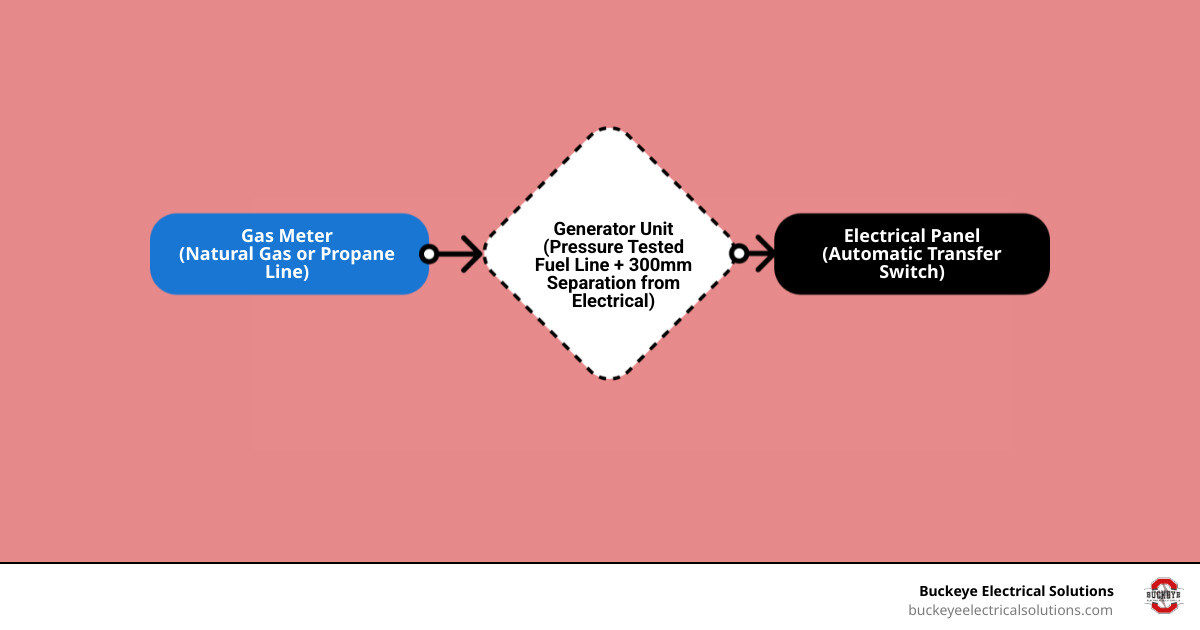
Step-by-Step Generator Installation Guide: From Pad to Power
Once the unit is on the pad, we secure it using stainless steel bolts to help prevent vibration from shifting the machine.
Next comes the plumbing. If we are running a new gas line, we often bury it in a trench. Ohio code requires a specific horizontal separation of 300mm (about 12 inches) between gas and electrical lines if they share the same trench. Once the pipe is laid, we perform a pressure test to ensure there are zero leaks before the line is ever activated.
Finally, we install the battery and activate the digital controller. This is where we program the “exercise cycle” — a weekly 10-minute run that keeps the engine lubricated and the battery charged.
Electrical and Fuel Integration
The “brain” of the system is the Automatic Transfer Switch (ATS). We mount this near your main electrical panel. Its job is to monitor the utility power. When it detects a drop in voltage, it disconnects your home from the utility grid (to prevent “backfeeding” power into the street, which can be dangerous for utility workers) and connects it to the generator.
This process involves:
- Utility Shutoff: We coordinate with the utility to safely disconnect power, typically for 2-4 hours.
- ATS Wiring: We integrate the switch with your service entrance or a dedicated subpanel.
- Grounding: We drive a new grounding rod into the earth to help protect your home from electrical surges.
- Outage Simulation: We pull the main breaker to “trick” the system into thinking there’s an outage, ensuring the generator starts and the ATS transfers the load correctly.
Safety and Long-Term Maintenance
Safety considerations typically continue after the installation is complete. Carbon monoxide is an odorless, colorless gas that can be extremely dangerous. Even with a perfectly installed unit, you should have UL-listed CO detectors on every level of your home.
Regular maintenance is often what determines if a generator lasts 20 years or fails prematurely.
- Weekly Exercise: Your generator should run itself once a week. If you don’t hear it running at its scheduled time, give us a call.
- Annual Service: Just like a car, a generator typically needs its oil and filters changed. We also check the spark plugs and test the battery.
- Post-Outage Checks: If the generator runs for an extended period (more than 24 hours), you should check the oil levels as soon as the power returns.
Frequently Asked Questions about Generator Installation
How long does the typical installation take in Ohio?
The physical installation often takes 1 to 2 days, though the total process typically spans 2 to 6 weeks depending on permit processing by the local AHJ and equipment availability. Factors like gas meter upgrades or custom concrete work can occasionally extend this timeline.
Can I install a standby generator myself?
Standby installation is typically not a DIY project as it requires specialized knowledge of Ohio electrical codes, gas plumbing, and NFPA safety standards to maintain warranties and insurance coverage. Most manufacturers also require professional installation to validate the product warranty.
How loud is a standby generator during operation?
Modern units typically produce 60-70 decibels at a distance of 20 feet, which is often comparable to the sound of a standard central air conditioning unit. Most homeowners find that the noise is barely noticeable from inside the house with the windows closed.
Conclusion
A home standby generator is a highly reliable backup solution for your property. While the installation process involves complex electrical and plumbing work, the peace of mind you gain — knowing your sump pump will run and your family will stay warm — is a significant benefit.
At Buckeye Electrical Solutions, we pride ourselves on navigating the red tape of permits and the technical hurdles of Ohio’s electrical codes so you don’t have to. With over 20 years of experience in Northeast Ohio, our team ensures your system is sized correctly, installed safely, and ready to perform when the clouds roll in.
Don’t wait for the next ice storm to wish you had a plan. Contact us today to schedule a professional load calculation and site survey.
Buckeye Electrical Solutions https://buckeyeelectricalsolutions.com/services/