An electrical panel upgrade usually gets attention only after something goes wrong. A breaker will not stay set. A burning smell drifts from the basement wall. An electrician says there is no room left for the circuit you need.
Your panel feeds every circuit in the house. When it runs out of capacity or reaches the end of its life, the symptoms show up in the rooms first and at the panel last.
Northeast Ohio has a lot of housing built between the 1940s and the 1970s. Back then a 60-amp or 100-amp service ran a furnace, a fridge, and some lights. That same house now carries a heat pump, a hot tub, and a home office. A car may charge in the driveway overnight.
Panel Replacement or Full Service Upgrade
Homeowners use one phrase for two different jobs, and the difference drives the schedule.
A panel replacement swaps the enclosure, the bus, and the breakers. Grounding and bonding usually get corrected too. The power coming into the house does not change.
A full service upgrade raises the capacity of the whole service. New service conductors, a new meter socket, a new main disconnect, and a new panel go in. The utility has to de-energize and reconnect the incoming line, so the work gets scheduled around them.
If your electric panel is simply full of tandem breakers, a replacement or a subpanel may solve it. If the house only receives 100 amps and your loads say otherwise, you need the service raised. A licensed electrician settles that with a load calculation under NEC Article 220. Nobody should decide it from the age of the box.
Seven Signs Your Electric Panel Is Out of Room or Out of Time
- Breakers trip during ordinary use. A space heater and a microwave should not be a daily negotiation.
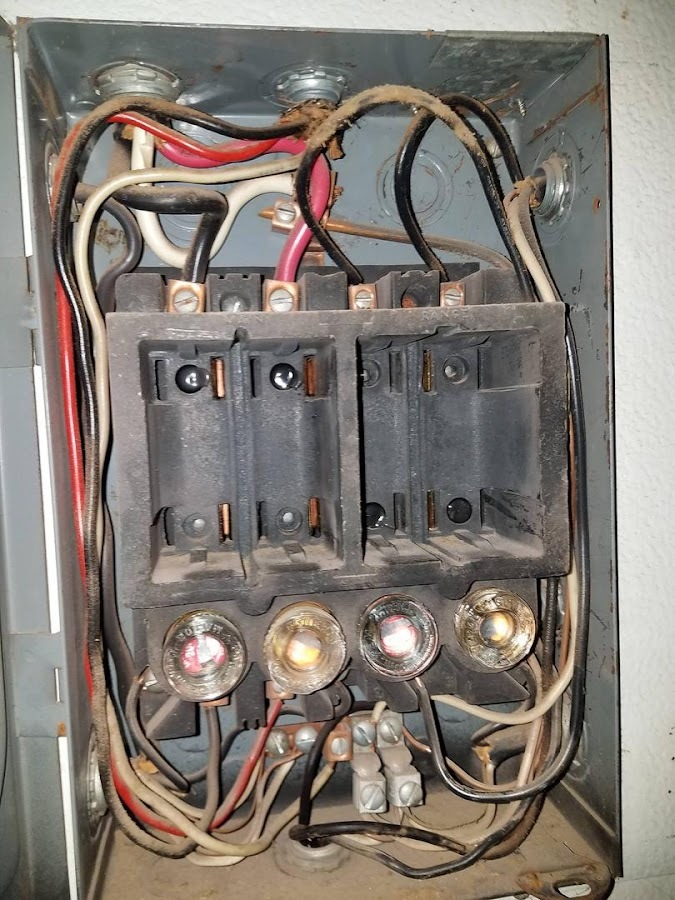
- You still have fuses. Fuse panels are not automatically unsafe. Replacement parts are scarce, and the panel is usually undersized for how you live now.
- The panel is full. Every slot taken, tandems doubled up, no space for the next circuit.
- Warmth, buzzing, or scorch marks. Heat at the cover, a hum inside, or discoloration around a breaker are reasons to call.
- Lights dim when the AC or well pump starts. Occasional flicker happens. Repeated dimming across the house points at the service or the neutral.
- The panel is rusty or damp. Basements near Lake Erie move moisture, and corrosion shortens the life of everything in the enclosure.
- A big load is coming. EV charging, a hot tub, a shop, central air, or an electric range each need a dedicated circuit and headroom to feed it.
Two of these together is enough to schedule an evaluation with a residential electrician. Heat or scorching earns a call this week.
Winter Is When Panel Problems Turn Dangerous
NFPA research on home fires involving electrical distribution and lighting equipment names December through March as the peak months. Those four months hold 40 percent of the fires and 45 percent of the deaths. The report ties that to people spending more time indoors, running more equipment (NFPA, February 2022).
The same report counts an estimated average of 32,620 home fires a year involving that equipment from 2015 to 2019. Those fires caused about 430 deaths and 1,070 injuries a year. Wiring and related equipment accounted for roughly two-thirds of them.
Two details matter in older houses here. Electrical problems in concealed locations, such as attics and walls, may be harder to notice early. And the Consumer Product Safety Commission recommends that aluminum branch-circuit wiring be repaired or replaced by a qualified electrician (CPSC Publication 516). Aluminum branch wiring showed up in many homes built between 1965 and the mid-1970s. If your house is from that stretch, look at the panel and the branch-circuit connections together.
Code, Permits, and DIY Risk
Electrical panel upgrades in Ohio follow NFPA 70, the National Electrical Code, with state amendments for one-, two-, and three-family dwellings (Ohio Administrative Code 4101:8-34-01). Ohio adopted the 2023 edition of NFPA 70 for these homes, effective April 15, 2024 (Ohio Board of Building Standards). A new box on the wall is not the whole job. The scope may require updates to meet applicable code requirements, and a local inspector signs off.
| Requirement | Code reference | What it means for the work |
| Minimum service disconnect rating for a one-family dwelling | NEC 230.79© | A service upgrade or replacement must meet the minimum service-disconnect rating required by the code enforced locally |
| Surge protection at the service | NEC 230.67 | Current NEC requirements generally call for a Type 1 or Type 2 SPD (surge-protective device) at or adjacent to dwelling service equipment, subject to locally enforced code and project scope |
| Service load calculation | NEC Article 220 | Panel size comes from your actual loads |
| GFCI protection in wet and damp areas | NEC 210.8 | GFCI (ground-fault circuit interrupter) coverage widens as circuits get reworked |
| AFCI protection on dwelling branch circuits | NEC 210.12 | AFCI (arc-fault circuit interrupter) breakers land in the new panel where required |
| Permit and inspection | Residential Code of Ohio | Your local building department issues the electrical panel upgrade permit and inspects the finished work |
Ohio’s residential electrical rules took effect April 15, 2024, but permits, inspections, and enforcement details remain local. Code editions and amendments vary by city and county, so your electrician confirms which edition your jurisdiction enforces before pulling the permit.
A DIY electrical panel upgrade sits in a different risk category than a light fixture. The line side of the meter stays energized after the main is off. The work is permitted and inspected. Unpermitted electrical work can create complications during inspections, insurance reviews, appraisals, or a future home sale. Leave it to a licensed contractor.
What the Day Looks Like, and What to Ask First
Many straightforward panel replacements can be completed in a day, but full service upgrades may take longer because of utility coordination, permitting, site conditions, equipment availability, and needed repairs. The electrician pulls the permit and coordinates the utility disconnect. Power goes off for several hours, so plan for the refrigerator, medical equipment, and your internet. The old panel and feeders come out, new service equipment goes in, and circuits get transferred and labeled one at a time. Grounding and bonding get corrected, often the quietest improvement of the project. Then the utility reconnects and the inspector reviews the work.
Ask these before you approve anything:
- Is this a panel replacement or a full service upgrade, and what does the load calculation show?
- Who pulls the permit, and which inspector signs off?
- How long will power be off, and on what day?
- Does the scope include grounding, bonding, and surge protection?
- Will the panel directory be labeled circuit by circuit?
- Are any splices or aluminum connections being corrected at the same time?
Every homeowner asks about upgrade cost early. A number posted online would be fiction. The gap between a straight panel swap and a 200-amp electrical panel upgrade with new conductors is large, and so is the cost between an open basement location and a panel behind finished walls. Ask for a written scope and quote.
Commercial buildings follow the same logic with more moving parts. A commercial electrical panel upgrade belongs in a commercial electrical conversation, not a residential one. Buildings with monitored life-safety systems also need fire alarm coordination before any planned outage.
Plan Your Electrical Panel Upgrade Before the Cold Sets In
Scheduling an evaluation before winter allows more time for planning, permits, equipment availability, and utility coordination. In January a failed panel is an emergency. Handle it now and you protect your family from a winter failure, keep your circuits ready for the loads you are adding, and get an inspected service instead of a patched one.
If your house still runs on fuses, if the panel has no room left, or if an EV charger or heat pump is coming this winter, start with an evaluation and a load calculation. Buckeye Electrical Solutions handles a home electrical panel upgrade for homeowners across Northeast Ohio. Call the team or send a message to get on the schedule.
FAQ
Do I need a panel replacement or a full electrical service panel upgrade?
A load calculation under NEC Article 220 settles it. If the service carries your loads and the panel is just full or failing, a replacement or a subpanel may be enough. If the calculated load passes what the service delivers, the conductors, meter, and main disconnect go too.
Is a 100-amp service still acceptable in Ohio?
NEC 230.79© sets 100 amps as the minimum service disconnect rating for a one-family dwelling, so 100 amps can be code compliant. Whether it is enough depends on your load calculation, especially with EV charging or electric heat.
How long will my power be off?
Plan on several hours for a typical residential job, scheduled with the utility. Your electrician gives you the window ahead of time so you can prepare food storage and sensitive equipment.
Do I need a permit?
Yes. Panel and service work is permitted and inspected through your local building department. The Residential Code of Ohio applies the National Electrical Code with state amendments.
My breakers only trip when it gets cold. Is that the panel?
Sometimes. Cold weather brings space heaters and more equipment onto the same circuits. The trips may point to circuit loading rather than the panel, and an evaluation separates the two.
What is a surge-protective device, and do I have to add one?
An SPD limits voltage spikes reaching your circuits. Current NEC requirements generally call for a Type 1 or Type 2 SPD at or adjacent to dwelling service equipment, including replacement equipment. Whether one is required on your job depends on the code your jurisdiction enforces and the scope of the work.