What the Generator Installation Process Actually Involves
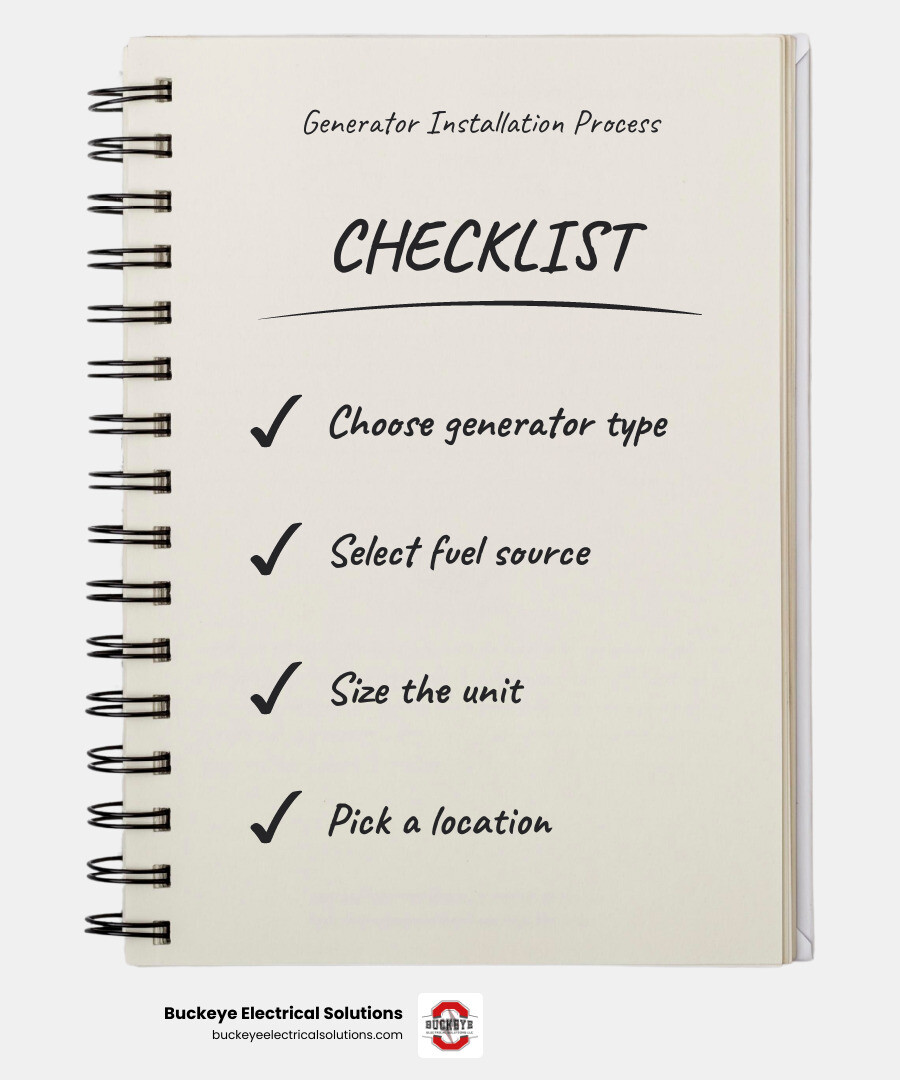
The generator installation process has several distinct phases:
- Choose a system type — portable generator with a manual transfer switch or interlock, or a permanently installed standby generator with an automatic transfer switch
- Select a fuel source — gasoline for many portable units, dual-fuel or tri-fuel options for some portable units, and natural gas or propane for many permanent standby systems
- Size the unit — calculate running and starting watt requirements
- Pick a location — follow the manufacturer’s manual, the unit listing, local zoning rules, and the AHJ
- Prepare the site — level the base and use a manufacturer-approved concrete or composite pad when required
- Install transfer equipment — connect the system safely to the home’s electrical distribution
- Connect the fuel supply — installed and tested by a qualified, properly licensed contractor when fuel-gas piping is involved
- Commission the system — test startup, transfer, load operation, and retransfer after required inspections and setup
- Confirm permits and approvals — requirements vary by Northeast Ohio jurisdiction
Power outages in Northeast Ohio are not rare. Storms, ice, and grid failures can leave a home without power for days. A properly installed standby generator can keep critical loads running, but installation involves electrical work, fuel connections, local permits, and careful planning.
I’m Aaron, owner of Buckeye Electrical Solutions LLC, and I’ve overseen dozens of permitted electrical projects across Northeast Ohio, including the electrical integration and transfer switch work that’s central to any generator installation process.
Useful resources for the generator installation process:
Understanding Your Backup Power Options
Most homeowners choose between portable generators and permanently installed standby systems.
Portable generators are flexible and often less expensive upfront, but they require manual setup, safe outdoor placement, refueling, and proper connection through a manual transfer switch or interlock. Many portable generators run on gasoline, and some are dual-fuel or tri-fuel models that can use propane or natural gas when properly configured.
A standby generator is a permanent outdoor unit that monitors utility power. When an outage occurs, the generator starts automatically, and an automatic transfer switch transitions selected circuits—or, in some designs, the whole home—to generator power. Permanent residential standby units commonly use natural gas or propane. For a broader comparison, read Power Up: A Guide to the Best Emergency Power Systems.
Fuel Source Selection: Gasoline, Natural Gas, Propane, and Diesel
Choosing the right fuel source is a critical part of the generator installation process:
- Gasoline: Common for portable generators. It is easy to find, but storage, shelf life, and safe refueling during an outage need planning.
- Natural Gas: Often convenient for Northeast Ohio homes with existing gas service. Natural gas avoids on-site refueling in normal conditions, but utility service is not guaranteed during every emergency. The gas system must meet the generator manufacturer’s fuel-demand specifications.
- Liquid Propane (LP): A good option where natural gas is unavailable. Tank size, delivery access, and outage duration should be reviewed with the propane supplier.
- Diesel: More common for larger residential or commercial systems. Diesel can provide strong output, but fuel storage and prolonged light loading can create maintenance concerns.
For portable connection safety, see Power Up: The Ultimate Portable Generator Hookup Manual.
Sizing and Planning Your Generator Installation Process
A successful generator installation depends on documented load sizing, safety requirements, and code compliance. Guessing can lead to a unit that stalls under load or costs more than needed.
Calculating Electrical Load Requirements
Correct sizing accounts for running watts and starting watts, especially for motor-driven loads such as air conditioners, sump pumps, and refrigerators.
A soft-start device may reduce compressor starting demand; final generator size should still be based on a documented load calculation and the equipment manufacturer’s requirements.
Your electrical panel capacity also affects how the generator connects to the home. For more detail, read Size Matters When Picking Your Next Home Generator.
Selecting the Ideal Physical Location
Follow the exact generator manufacturer’s installation manual, the unit’s listing, local zoning rules, and the AHJ. Clearances from doors, windows, vents, combustible walls, overhangs, shrubs, and property lines vary by model and jurisdiction.
For many standby units, a 5-foot separation from windows, doors, vents, and other wall openings is commonly applicable. Clearance from the home itself is manufacturer- and listing-specific; some residential standby models may be listed for installation closer to a wall while still requiring separation from openings and adequate working and airflow clearance.
The mounting surface should be stable and level. Depending on the model and local requirements, this may mean a concrete pad or a manufacturer-approved composite pad on properly prepared compacted stone. Anchoring should follow the manufacturer’s instructions and local requirements.
For detailed technical specifications, refer to the manufacturer’s Installation Guidelines.
Step-by-Step Breakdown of the Physical Installation
The physical generator installation process involves site preparation, electrical integration, fuel connection, and commissioning.
Phase 1: Site Preparation and Mounting
The crew prepares a stable base by leveling the site and adding drainage material such as compacted stone when required. The generator is then placed on a manufacturer-approved surface, such as a concrete or composite pad. Any anchoring should follow the manufacturer’s instructions and local requirements.
Phase 2: Electrical Integration and Transfer Switch Setup
Transfer-switch placement depends on the system design. An ATS may be service-entrance-rated and located between the utility service and main equipment, or it may be installed at or near the main panel with a dedicated emergency or critical-load panel.
Ohio’s residential code adopts the 2023 NEC with Ohio amendments; local authorities having jurisdiction may also enforce applicable local zoning, building, gas-piping, and inspection requirements. When panels are reconfigured, the design should address applicable GFCI, AFCI, grounding, and bonding requirements. To learn more, read A Shockingly Simple Guide to Backup Generator Installation.
Phase 3: Fuel Line Connection and System Commissioning
A qualified, properly licensed contractor should install and test fuel-gas piping in accordance with the applicable code, utility requirements, and the generator manufacturer’s fuel-demand specifications.
After required inspections and manufacturer setup, the installer tests the system using the generator controller and transfer equipment to confirm startup, transfer, load operation, and retransfer.
Troubleshooting Common Installation Issues
This homeowner-safe checklist can help you decide when to call for service:
| Issue | What to check | Next step |
|---|---|---|
| Generator does not start | Fuel supply, visible battery corrosion, controller alerts | Call the installer/service provider if the issue persists |
| Generator starts but does not power the home | Transfer-switch status, controller alert, breaker position | Do not bypass equipment; call a qualified electrician |
| Generator displays a fault | Record the fault code and note recent outage conditions | Contact an authorized service technician |
| Damaged wiring, fuel odor, or CO alarm | Do not operate the system | Leave the area if needed and contact qualified help/emergency services |
Regulatory Compliance, Permits, and Safety Standards
A standby generator is a permanent electrical and fuel-burning system, so permits and inspection should be addressed before work begins. Permit requirements vary by jurisdiction and may include electrical, gas-piping/plumbing, zoning, building, or fire-safety review. Northeast Ohio communities such as Bay Village and Willoughby may require plan or specification documentation and multiple approvals.
Ohio’s residential code adopts the 2023 NEC with Ohio amendments; local authorities having jurisdiction may also enforce applicable local zoning, building, gas-piping, and inspection requirements. Coordinate with the utility when its equipment, service conductors, meter location, or gas service must be modified. For commercial considerations, see The Business of Backup: What to Expect from Commercial Generator Installation.
Critical Safety Protocols and Carbon Monoxide Prevention
Portable-generator safety and standby-generator installation rules are different. A portable generator must operate outdoors, well away from the home, doors, windows, and vents. A permanent standby unit follows its own manufacturer-approved installation clearances.
Carbon monoxide (CO) is an odorless, colorless exhaust gas that can be lethal. Install and maintain CO alarms in accordance with the manufacturer instructions and local code, including near sleeping areas. Maintain proper grounding, keep combustible materials away from generator equipment, and keep an ABC-rated fire extinguisher accessible where appropriate.
Cost, Timeline, and Professional vs. DIY Considerations
Installing a standby generator is a significant project. Budget and schedule depend on equipment, site conditions, utility distances, and AHJ requirements.
Budgeting for the Generator Installation Process
Your total investment generally includes the generator, transfer switch or interlock equipment, electrical labor, fuel-line work, permitting, and site preparation. A site assessment helps identify panel capacity, fuel-supply needs, placement constraints, and inspection requirements before equipment is ordered.
Timeline Expectations for the Generator Installation Process
A common planning estimate includes:
- Preparation & planning: load calculations, site selection, equipment ordering, permit review, and utility coordination when needed
- Physical installation: site prep, pad placement, generator setting, transfer equipment, conduit, wiring, and fuel piping
- Inspection & commissioning: AHJ inspection and final operational testing
Equipment availability, permit review, fuel upgrades, site complexity, utility coordination, and inspection scheduling can extend the timeline. Installation may take hours or days, while planning and preparation commonly take weeks.
Why Professional Installation is Essential
The generator installation process is not a weekend DIY task. Licensed electrical work helps keep the system safe, compliant, and reliable.
Unpermitted work can complicate insurance claims if an electrical issue occurs. Warranty coverage and installation requirements vary by manufacturer; confirm them before purchase.
Professional installation also prevents dangerous backfeeding. Do not backfeed electricity into your home’s outlets or the utility grid without proper, code-compliant transfer equipment, as this can create a fatal shock hazard for utility workers. For more information, see Power Up: Essential Services for Your Electrical Generator.
Frequently Asked Questions about Generator Installation
How long does the generator installation process typically take?
Physical installation may take hours or days, but planning, equipment availability, permit review, utility coordination, inspection scheduling, and final commissioning commonly stretch the full process across several weeks.
What maintenance is required to keep a standby generator reliable?
Follow the owner’s manual and service schedule. Typical annual service may include inspection, oil and filter service based on time and operating hours, battery/charger testing, air-filter inspection, and a review of exercise and fault history.
Can I run my entire home, including the AC, on a standby generator?
In many cases, yes, but it depends on load calculation, generator capacity, transfer equipment, and HVAC starting demand. A soft-start device may help reduce compressor starting demand, but it does not replace proper sizing.
Conclusion
The generator installation process requires careful planning, technical expertise, and attention to safety. From load sizing to permits, fuel supply, and transfer equipment, every step matters.
At Buckeye Electrical Solutions, we are a trusted electrical contractor serving Northeast Ohio. With over 20 years of experience, we provide residential and commercial electrical repair, installation, and maintenance.
A standby generator is a permanent electrical and fuel-burning system—not a plug-in appliance. Start with a site assessment, load calculation, fuel-supply review, and permit plan. Buckeye Electrical Solutions can help you design the electrical and transfer-switch portion of a code-conscious backup-power system for your Northeast Ohio home.