Why Emergency Power Systems Matter Before the Lights Go Out
Emergency power systems are independent electrical sources that automatically keep critical loads running when utility power fails.
Here’s a quick look at the main options:
| System Type | Best For | Transfer Time |
|---|---|---|
| Emergency system (NFPA 70 Art. 700) | Life safety: exit lights, fire pumps, alarms | Within 10 seconds |
| Legally required standby (Art. 701) | Heating, sewage, ventilation | Within 60 seconds |
| Optional standby (Art. 702) | Data protection, business continuity | At owner’s discretion |
| Battery/UPS | Uninterrupted power, sensitive equipment | Instantaneous |
| Diesel/gas generator | Extended outages, high load demands | 10–60 seconds |
| Fuel cell / hybrid | Long-duration, low-emission applications | Varies by design |
Power outages in Northeast Ohio are not a rare edge case. When utility power goes down, the right backup system is the difference between a minor inconvenience and a serious safety risk.
Whether you’re protecting a home, a small business, or a commercial facility, choosing the right emergency power solution means understanding your load requirements, the applicable codes, and the technology options available to you.
I’m Aaron, owner of Buckeye Electrical Solutions LLC and a master electrician with hands-on experience overseeing dozens of permitted emergency power systems projects across Northeast Ohio — from panel-level transfer switch installations to full commercial backup power setups. In this guide, I’ll walk you through everything you need to make a confident, code-aware decision.
Emergency power systems terminology:
Understanding Emergency Power Systems vs. Standby Power
When the lights go out, there is a common misconception that any backup power source is technically an “emergency” system. However, electrical codes draw a very strict line between true emergency power systems and standby systems. Understanding these regulatory distinctions is critical for proper system design, budgeting, and local compliance.
Under the National Electrical Code (NEC) — specifically NFPA 70 Article 700 — a true emergency power system is designed solely to protect human life. These systems are legally mandated by municipal, state, or federal codes to supply power to critical life-safety loads.
The most rigid requirement of an Article 700 emergency system is its activation speed. When normal utility power fails, the emergency system must automatically start up and fully transfer its designated loads within exactly 10 seconds. This rapid response is essential for powering:
- Emergency exit signs and egress lighting paths
- Fire detection and alarm systems
- Fire suppression pumps
- Public communication and emergency notification networks
- Elevators designated for emergency evacuation or rescue operations
Because these systems are so critical to life safety, they must remain completely separate from all other electrical wiring in the building. They require their own dedicated transfer switches, conduits, and distribution panels to prevent a fault in a non-critical circuit from compromising the emergency supply. This standard is heavily governed by the NFPA 110, Standard for Emergency and Standby Power Systems , which outlines performance requirements for emergency power supply systems (EPSS). For a deeper look into maintaining these setups, you can read the Overview of Emergency Power Supply Systems – NFPA .
Legally Required Standby Systems
Stepping down one level of criticality brings us to Legally Required Standby Systems, which are governed by NFPA 70 Article 701. These systems are intended to power loads that do not directly affect immediate life safety but could create hazards or hamper rescue operations if left unpowered.
Per Article 701, a legally required standby system typically has up to 60 seconds to transfer loads after a utility failure. This extended window allows for a wider variety of generator types and starting mechanisms to be utilized. Common loads placed on legally required standby systems include:
- Building heating and ventilation systems (to prevent freezing or toxic fume accumulation)
- Sewage ejector pumps and water distribution systems
- Critical refrigeration systems
- Communication systems not explicitly designated for life safety
If your facility handles public services, multi-family housing, or critical commercial operations, having a reliable legally required standby system is essential. If you experience system failures or need immediate assistance with your backup infrastructure, Don’t Wait, Get an Emergency Electrician Now!
Optional Standby Systems
The final category is Optional Standby Systems, governed by NFPA 70 Article 702. These systems are installed entirely at the discretion of the property owner or business manager. They are designed to prevent financial loss, protect valuable data, and maintain operational continuity during a grid failure.
There is no legally mandated transfer time for Article 702 systems. They can be configured to start automatically within minutes or can even rely on manual intervention. Optional standby systems are highly customizable and typically support:
- Data centers, server rooms, and IT infrastructure
- General office lighting and convenience outlets
- Residential heating, cooling, and refrigeration
- Commercial manufacturing and production lines
Investing in an optional standby system is a smart operational strategy for businesses in Northeast Ohio. To learn more about what to expect during a professional commercial setup, read our guide on The Business of Backup: What to Expect from Commercial Generator Installation.
Key Technologies for Backup and Emergency Power
Selecting the right backup power technology requires a criteria-based approach. We must evaluate performance factors such as reliability, maintenance demands, load-handling capabilities, capital cost, and environmental emissions.

Battery-Based Emergency Power Systems
Battery Energy Storage Systems (BESS) and Uninterrupted Power Supply (UPS) systems represent the gold standard for seamless, instantaneous power. Unlike combustion engines, which must physically crank and warm up, battery systems use advanced power electronics to deliver filtered, continuous AC power the millisecond a voltage drop is detected.
Modern inverter-based emergency systems are highly valued because they require significantly less intensive maintenance than traditional mechanical generators and contribute toward carbon-neutral goals. For life-safety applications, specialized inverter-based systems are often certified to UL 924 standards to guarantee they can power emergency lighting and exit signs reliably.
Furthermore, manufacturers like Myers Emergency & Power Systems, with over 60 years of design experience, have pushed battery boundaries. For example, their EnerShed 2.0 system achieved a major industry milestone by being the first BESS to pass the rigorous UL 9540A 6th Edition Fire Test in North America with units spaced only two inches apart, proving that high-density battery storage can be deployed safely in tight commercial spaces.
Generator-Based Emergency Power Systems
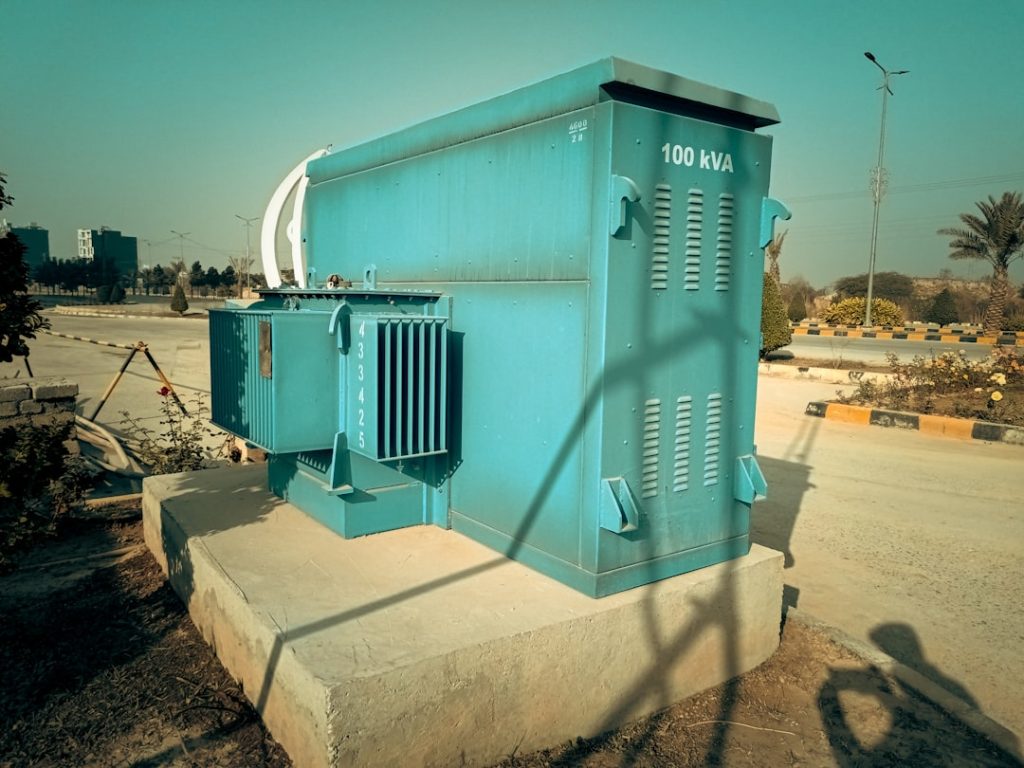
For long-duration outages and high-demand applications, internal combustion engine generators remain the industry workhorse. These systems are typically rated in watts or kilowatts (kW), though larger commercial systems are often rated in kilovolt-amperes (kVA).
Generators are generally split into two categories based on fuel type:
- Diesel Generators: Renowned for their high torque, rapid sequential motor loading capabilities, and fuel efficiency. However, they require active fuel management to prevent fuel degradation and have higher upfront capital costs.
- Gaseous Generators (Natural Gas / Propane): These units offer an virtually infinite fuel supply when connected to a municipal natural gas line and require less on-site fuel storage maintenance, making them highly popular for residential and light commercial use.
To understand how to safely set up and run a generator at your facility, consult our A Shockingly Simple Guide to Backup Generator Installation.
Fuel Cells and Hybrid Emergency Power Systems
As businesses look to reduce their carbon footprint, fuel cells have emerged as a highly reliable, zero-emission alternative to traditional combustion engines. Utilizing hydrogen or direct methanol, these systems produce electrical energy through an electrochemical reaction, yielding only water vapor and waste heat as byproducts.
Companies like SFC Energy AG manufacture advanced hydrogen and direct methanol fuel cells designed for hybrid emergency power supplies. When paired with a battery bank, a fuel cell can provide continuous, quiet, and clean operation for remote telecommunication sites, railroad signal boxes, or eco-conscious commercial offices. This hybrid approach ensures that the battery handles immediate surge demands while the fuel cell provides stable, long-term power generation.
Code Compliance and Regulatory Standards in Ohio
Designing and installing emergency power systems requires strict adherence to local and national codes. In Ohio, building and electrical regulations can vary significantly depending on your specific municipality and county. Ohio jurisdictions may apply the 2023 NEC or other adopted code requirements, depending on the location and project scope.
For example, Ohio’s 2023 NEC adoption includes expanded GFCI requirements in several locations, though it is important to qualify specific rules (like those in commercial kitchens) as situational rather than universal, subject to local AHJ (Authority Having Jurisdiction) approval.
When planning a backup installation, we must also design in accordance with NFPA 110 classifications, which dictate how long a system must operate without refueling (ranging from Class 1 for 1 hour to Class X for multi-day operations). Additionally, the International Building Code (IBC) mandates specific seismic anchorage and vibration isolators for emergency equipment in areas prone to seismic activity.
Navigating these complex regulations requires a certified, professional touch. If you need help ensuring your system meets Ohio’s stringent codes, read about our Emergency Electrical Service in Northeast Ohio: Don’t Get Left in the Dark.
Marine and Specialized Applications
Specialized environments require unique regulatory frameworks. For vessels and marine applications, emergency power is governed strictly by federal regulations under PART 112—EMERGENCY LIGHTING AND POWER SYSTEMS .
These Coast Guard regulations mandate that passenger vessels on ocean voyages must have an independent emergency power source capable of operating for at least 36 hours. The system must be located above the uppermost continuous deck, aft of the collision bulkhead, and must function reliably even when the vessel is listed up to 22.5 degrees. This ensures that lifeboats, emergency communications, and bilge pumps remain fully operational during a maritime crisis.
Nuclear and Critical Infrastructure Standards
At the far end of the reliability spectrum lie nuclear power plants and high-security critical infrastructure. These facilities utilize Class 1E standby power supplies, which are designed to withstand extreme design-basis events like earthquakes, floods, and tornadoes.
The design and testing of these systems are incredibly rigorous. For instance, according to the 0420 – E111 – Emergency Diesel Generators – Chapter 01 – Diesel Generators as Emergency Power Sources. training standards, nuclear emergency diesel generators (EDGs) are designed for a service life of 4,000 starts and 6,000 operating hours over a 40-year span. They must meet the Station Blackout (SBO) rule under 10 CFR 50.63 and adhere to IEEE 387 standards to ensure rapid sequential motor loading within 10 to 30 seconds of utility loss.
Furthermore, as outlined in the safety guide for EMERGENCY ELECTRIC POWER SUPPLY SYSTEMS FOR PRESSURISED HEAVY WATER REACTOR , these systems must provide complete electrical and physical separation between redundant trains to ensure that a single failure cannot prevent a safe reactor shutdown.
Designing for Reliability: Redundancy and Natural Hazard Mitigation
To build a truly resilient emergency power infrastructure, we must plan for the unexpected. True reliability is achieved by eliminating single points of failure through redundancy strategies and physical hardening.
One of the most common redundancy strategies is the N+1 configuration. In this setup, “N” represents the minimum number of generators or UPS units required to carry the facility’s critical load, and “+1” represents a completely redundant unit. If one generator fails to start or requires emergency maintenance during an outage, the remaining units seamlessly absorb the load without interrupting operations.
Pairing N+1 generators with redundant utility feeds from two separate substations provides an exceptionally high level of uptime.

To help you identify potential vulnerabilities in your system, we have compiled a table of common failure modes, their likely causes, and their priority levels for maintenance:
| Emergency Power System Failure Mode | Likely Causes | Priority Level |
|---|---|---|
| Generator fails to crank | Dead or degraded starting battery; charger failure | Critical |
| Fuel starvation | Fuel line blockage; degraded/gelled diesel; low tank levels | High |
| Engine overheating | Coolant leak; blocked air intake; belt failure | High |
| Voltage/Frequency instability | Faulty voltage regulator; governor issues; wet stacking | Medium |
| Transfer switch failure | Mechanical binding; control board failure; burnt contacts | Critical |
Mitigating Natural Hazards in Ohio
Northeast Ohio is no stranger to severe weather. Heavy snow, freezing rain, and high-wind events present constant threats to our power grid.
During historic winter storms, heavy ice accumulation has caused widespread transmission line failures, leaving thousands of customers across the region without power for extended periods.
To protect your emergency power equipment from these hazards, proper physical design is essential. Generators and switchgear should be elevated above historical flood levels to prevent water inundation. In areas subject to heavy mechanical vibrations, utilizing vibration isolators and heavy-duty anchorage is critical to prevent fuel lines and electrical conduits from shearing.
Sizing and Planning Your Emergency Power Infrastructure
Sizing an emergency power system is not as simple as adding up the nameplate wattages of your appliances. An undersized system can suffer extreme voltage and frequency dips when large motors start up, potentially causing sensitive electronics to crash or damaging the generator itself.
When we perform a load study, we calculate the continuous load (the power required to keep equipment running) alongside the transient surge loads (the massive inrush current required to start motors, such as those in air conditioners or elevator drives).
As a common planning estimate, we recommend incorporating a 20% to 30% power buffer above your calculated peak load. This buffer allows the generator to run cooler, extends its operational lifespan, and leaves room for future facility expansion. For a detailed breakdown of residential sizing, check out our guide: Size Matters: When Picking Your Next Home Generator.
Fuel Storage and Maintenance Best Practices
If you rely on a diesel generator, your system is only as dependable as the fuel in its tank. Diesel fuel naturally degrades over time, accumulating water, algae, and sediment that can quickly clog fuel filters and starve an engine.
To maintain system readiness, we recommend several essential services:
- Fuel Polishing: A filtration process that removes water, sediment, and microbial growth from your stored diesel.
- Fluid Sample Testing: Regularly analyzing engine oil and coolant to detect internal wear or contamination before a catastrophic failure occurs.
- Load Bank Testing: Running the generator under an artificial electrical load to bring the engine up to its optimal operating temperature. This is crucial for preventing “wet stacking” — a condition where unburned fuel accumulates in the exhaust system due to prolonged light loading.
To keep your generator in peak condition, read our comprehensive overview of Power Up Essential Services for Your Electrical Generator.
Safe Installation and Transfer Equipment
A backup generator is useless — and dangerous — without proper transfer equipment. An Automatic Transfer Switch (ATS) acts as the brain of your backup system, constantly monitoring utility voltage. When a failure is detected, the ATS safely isolates your building from the utility grid and connects it to the generator.
Do not backfeed electricity through a dryer outlet or main panel without proper transfer equipment. Backfeeding is incredibly dangerous; it can send high-voltage electricity back down the utility lines, posing a fatal threat to utility line workers trying to restore power. Additionally, unpermitted electrical work can complicate insurance claims if an electrical fire or equipment damage occurs.
For portable systems, always utilize a certified manual transfer switch or interlock kit. Learn how to do this safely in our Power Up: The Ultimate Portable Generator Hookup Manual.
Frequently Asked Questions about Emergency Power Systems
What is the exact difference between emergency power and standby power?
The primary differences lie in their activation times, code compliance, and wiring separation. An emergency power system (NEC Article 700) must transfer power within 10 seconds of a utility outage and is strictly dedicated to life-safety loads (like exit signs and fire pumps) with completely separate wiring. A standby system (NEC Article 701/702) has up to 60 seconds (or more) to transfer power, can share wiring components, and is designed for non-life-safety operations or business continuity.
How does wet stacking affect diesel emergency generators?
Wet stacking occurs when a diesel engine operates under light loads (typically less than 30% to 40% of its rated capacity) for extended periods. Because the engine does not reach its optimal operating temperature, fuel is not fully combusted. This unburned fuel accumulates as a dark, oily liquid in the exhaust system, leading to carbon buildup, reduced engine efficiency, and potential engine damage. Regular load bank testing is the best way to mitigate this issue.
What should I do if an outlet has no voltage during an outage?
Outlet has no voltage; could indicate breaker, GFCI, switch, or wiring issue. During an outage, first verify if your backup system is configured to power that specific circuit, as optional standby systems often exclude non-essential outlets. If the generator is running but the outlet remains dead, check your main electrical panel for tripped breakers or reset any local GFCI outlets. If the issue persists, avoid DIY troubleshooting and contact a licensed professional to inspect the wiring.
Conclusion
When it comes to protecting your property, family, or business from unpredictable power outages, there is no substitute for a professionally designed and installed emergency power system.
At Buckeye Electrical Solutions, we bring over 20 years of dedicated electrical contracting experience to every project in Northeast Ohio. Whether you need a simple generator interlock, a comprehensive commercial generator installation, or emergency repairs, our team is committed to delivering exceptional service, prompt project completion, and absolute code compliance.
Let us help you keep the lights on. Explore our comprehensive services by visiting our Buckeye Electrical Solutions Services Portal today!