What Your Electrical Outlet Inspection Results Actually Mean
An electrical outlet inspection can reveal hidden dangers that most homeowners never think about — until something goes wrong.
Here’s a quick summary of the most common inspection findings and what they likely mean:
| Finding | Likely Cause | Priority Level |
|---|---|---|
| Outlet has no voltage | Could indicate breaker, GFCI, switch, or wiring issue | Moderate — investigate promptly |
| Open ground | Missing or disconnected ground wire | Moderate — equipment protection at risk |
| Open neutral | Neutral wire disconnected somewhere upstream | High — circuit is unreliable and potentially dangerous |
| Reversed polarity | Hot and neutral wires swapped at terminals | High — shock risk at the outlet |
| Improper wiring (bootleg ground) | Neutral jumped to ground terminal | High — creates false safety reading |
| Visible burn marks or heat damage | Arcing or loose connection | Urgent — potential fire hazard |
| GFCI fails to trip | Worn internal mechanism or faulty device | High — no shock protection in wet areas |
These findings don’t always mean disaster — but they do mean something needs attention. Some are simple fixes. Others point to deeper wiring problems that can quietly become fire hazards or shock risks over time.
I’m Aaron, owner of Buckeye Electrical Solutions LLC, and I’ve personally overseen dozens of permitted residential electrical projects across Northeast Ohio where electrical outlet inspection results revealed issues the homeowner had no idea existed. In this guide, I’ll walk you through exactly what each finding means and what your next step should be.
Electrical outlet inspection terms made easy:
The Critical Role of a Professional Electrical Outlet Inspection
In our experience serving Northeast Ohio, we’ve found that many homeowners view outlets as “set it and forget it” devices. However, regular testing is vital for early detection of problems that could lead to electrical fires or equipment damage. According to the NFPA, faulty wiring is a leading cause of residential fires, and a professional electrical outlet inspection is your first line of defense.
Beyond immediate safety, these inspections ensure your home adheres to NFPA 70 (National Electrical Code) standards. This is especially important during real estate transactions. Many lenders in areas like Akron or Cleveland may deny a mortgage if hazardous conditions, such as un-remediated aluminum wiring or missing safety devices, are discovered. By following a home electrical inspection checklist, you protect your property value and gain peace of mind.
A comprehensive electrical safety inspection goes deeper than just checking if a lamp turns on. It verifies the integrity of the entire circuit, ensuring that the path back to your breaker panel is clear and safe.
Decoding the Results: Common Faults Found During an Electrical outlet inspection
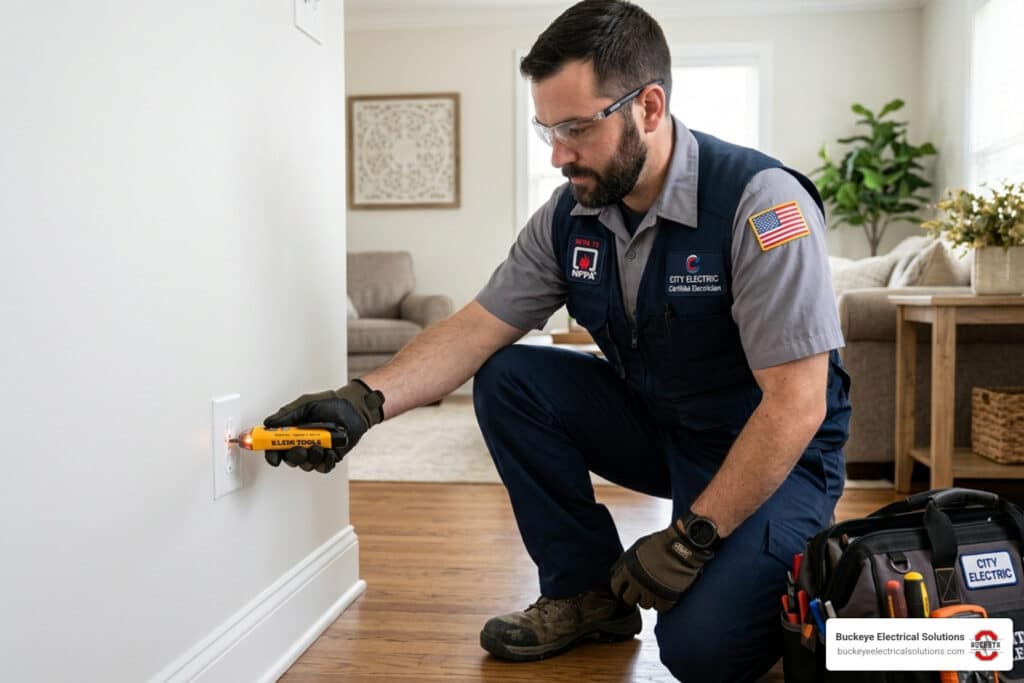
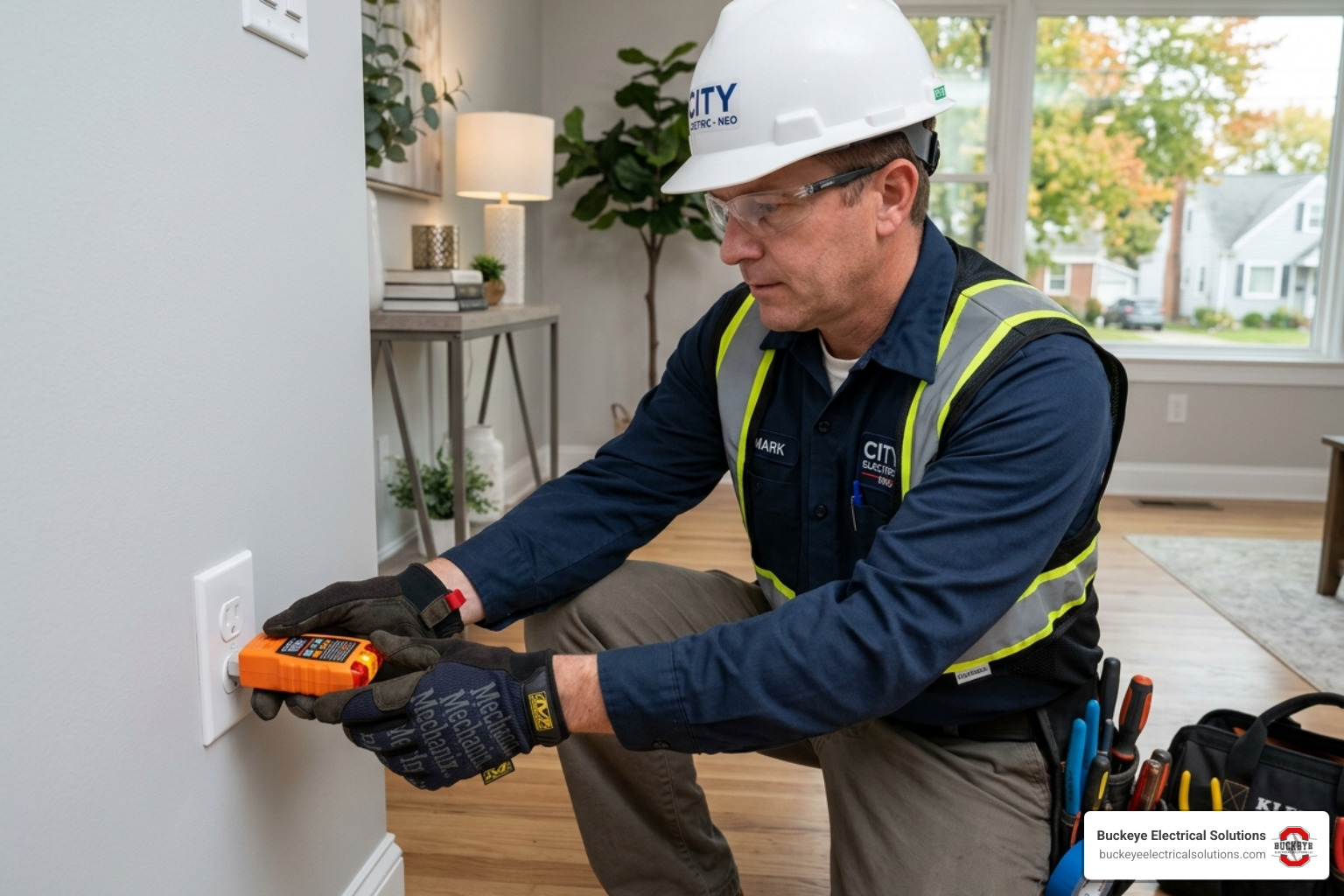
When we perform an inspection, we often use a three-light circuit tester. This simple tool provides a “shorthand” for the health of your wiring. However, interpreting these patterns requires a bit of detective work.
Open Neutral
An “Open Neutral” reading on a tester means the white wire is not properly connected somewhere along the circuit. This prevents the electrical current from returning to the main panel. While the outlet might not work at all, an open neutral can sometimes cause “floating” voltages that damage sensitive electronics.
Open Hot
This indicates that the black (power) wire is disconnected. If your report states “Outlet has no voltage; could indicate breaker, GFCI, switch, or wiring issue,” we start by checking the easiest solutions first: Is a breaker tripped? Is there a wall switch nearby that controls the outlet? If those aren’t the culprits, the issue likely lies in a loose wire inside the wall box or a failure at an “upstream” outlet.
Understanding Polarity and Improper Wiring
“Reversed Polarity” is one of the most common findings in older Ohio homes. This happens when the hot (black) wire is connected to the silver terminal and the neutral (white) wire is connected to the brass terminal.
While a device plugged into a reversed-polarity outlet will often still function, it creates a significant shock risk. For example, in a lamp with reversed polarity, the “shell” of the light bulb socket remains energized even when the switch is off. If you touch that shell while changing a bulb, you could receive a dangerous shock. Correcting this usually involves a straightforward outlet correction where we swap the wires back to their intended terminals.
Addressing Grounding Faults in an Electrical outlet inspection
A reading of “Open Ground” means your outlet lacks a safe path for stray electricity to travel back to the panel during a fault. This is common in homes built before 1962, which often utilized two-wire systems without a dedicated ground wire.
Improper Wiring and “Bootleg Grounds”
A particularly dangerous finding is a “bootleg ground.” This is an improper wiring technique where a person “jumps” the neutral terminal to the ground terminal to fool a three-light tester into showing a correct reading. This is a severe safety violation because it can energize the metal frames of your appliances, leading to potential electrocution.
For those looking to understand the mechanics of these connections, our outlet wiring masterclass provides a deep dive into how modern grounded systems operate.
Ohio Building Codes and GFCI/AFCI Requirements
Ohio officially adopted the 2023 National Electrical Code (NEC) in April 2024, which brought significant changes to how we protect your home. One of the biggest updates involves expanded requirements for Ground Fault Circuit Interrupter (GFCI) and Arc Fault Circuit Interrupter (AFCI) protection.
In Northeast Ohio, GFCI protection is now required in several locations, including:
- Bathrooms and laundry rooms.
- Garages and unfinished basements.
- Outdoor receptacles (which must also have weather-resistant covers).
- Situational kitchen requirements: While many think GFCIs are only for outlets near the sink, the 2023 code expanded this to include nearly all kitchen receptacles serving countertops, as well as those for dishwashers and microwaves.
If you are in the Avon area and need to bring your home up to code, we offer expert GFCI outlet installation. That inspection pricing is subject to change based on your specific home’s layout and local AHJ (Authority Having Jurisdiction) requirements.
Testing GFCI Functionality During an Electrical outlet inspection
During an electrical outlet inspection, we don’t just look for the presence of a GFCI; we test its mechanical and electrical integrity. Per UL 943 standards, GFCIs should be tested monthly by the homeowner using the “Test” and “Reset” buttons.
We also verify “downstream protection.” One GFCI outlet can protect several standard outlets located further down the same circuit. We use specialized testers to ensure that if a fault occurs at the end of the line, the primary GFCI trips as intended. This is a key part of the NSPIRE standards used in many safety-critical inspections.
Safety First: Identifying Dangerous Receptacles
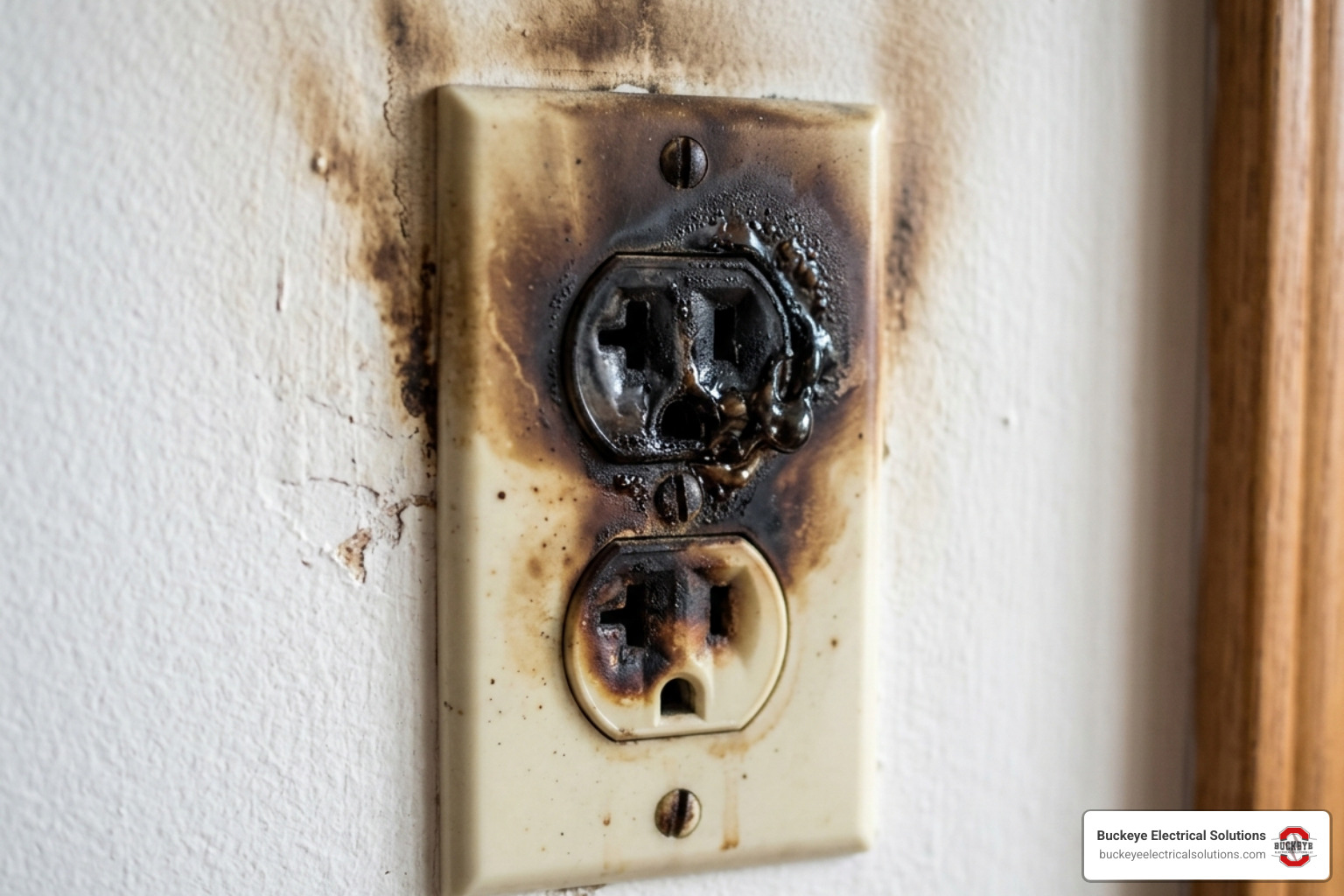
Sometimes, an outlet looks fine on the outside but is a ticking time bomb on the inside.
Retention Force and Mechanical Wear
Did you know there is a standard for how “tight” an outlet should be? Per NFPA standards, the retention force of a grounding blade should not be less than 115 grams (4 ounces). If your plugs fall out of the wall or feel wobbly, the internal springs have worn out. This loose connection causes “arcing” — electricity jumping through the air — which can reach temperatures of 3,000 degrees Fahrenheit.
Red Flags for Immediate Replacement:
- Heat Discoloration: If the faceplate is warm or shows brown/black scorch marks, stop using it immediately.
- Burning Smells: An ozone or “fishy” smell near an outlet often indicates melting plastic or wire insulation.
- Aluminum Wiring: If your home was built between 1965 and 1973, it may have aluminum branch wiring. This requires specific remediation because aluminum expands and contracts differently than copper, often leading to loose, overheating connections.
For a full list of warning signs, check out our ultimate electrical safety checklist.
Frequently Asked Questions about Electrical Outlet Inspections
How often should I have my home’s outlets inspected?
Professional inspections are recommended every 3 to 5 years, while homeowners should perform monthly GFCI button tests and semi-annual visual checks for heat or damage. If you live in an older home with legacy wiring, more frequent checks are a wise investment.
Can I replace a two-prong outlet with a three-prong outlet myself?
In Ohio, replacing a two-prong outlet with a three-prong version requires either a verified equipment ground or GFCI protection labeled “No Equipment Ground” to meet 2023 NEC standards. Simply swapping the receptacle without ensuring a ground path (or GFCI protection) is illegal and dangerous.
Why does my outlet feel warm to the touch even when nothing is plugged in?
A warm outlet is a severe red flag indicating a loose connection or arcing wires; this is a high-priority fire hazard that requires immediate professional attention. Even if nothing is plugged in, electricity may be passing through that outlet to serve other devices “downstream” on the same circuit.
Conclusion
Understanding your electrical outlet inspection results is the first step toward a safer home. Whether you are dealing with reversed polarity, an open ground, or the need for 2023 NEC upgrades, Buckeye Electrical Solutions is here to help. With over 20 years of experience in Northeast Ohio, we specialize in professional remediation that keeps your family safe and your home up to code.
Don’t let a “moderate” finding turn into an “urgent” emergency. Contact us today for all your residential electrical services and let our experts ensure your power is up to par.