Why Every Homeowner Needs to Know About an Electric Meter Safety Check
An electric meter safety check is a professional inspection of your home’s meter, meter base, and surrounding electrical components to identify damage, hazards, and potential billing errors before they become serious problems.
Here’s what a basic electric meter safety check covers:
- Visual inspection – Looking for physical damage, corrosion, burn marks, or pulled wires
- Meter base and socket condition – Checking for overheating, arcing, or moisture intrusion
- Service wire integrity – Confirming no exposed or deteriorating conductors
- Tampering signs – Identifying any unauthorized interference with the meter
- Accuracy verification – Confirming the meter is recording usage correctly
- Clearance and access – Ensuring nothing is blocking safe access to the meter
Your electric meter is the gateway between the utility grid and everything inside your home. It sits in a high-voltage zone that most homeowners never think about – until something goes wrong. Electrical fires are one of the leading causes of property damage each year, and a compromised meter installation can be a silent contributor. Beyond fire risk, a faulty meter can quietly inflate your electricity bills or, worse, expose your family to shock hazards.
The stakes are higher than most people realize. A current flow of just 50 milliamperes – far below what a standard 15-amp household breaker would ever trip for – is enough to cause a fatal injury. That gap between “protected by a breaker” and “protected from serious harm” is exactly why meter safety deserves attention.
I’m Aaron, owner and master electrician at Buckeye Electrical Solutions, and I’ve completed more than 60 permitted electrical projects across Northeast Ohio – including meter base replacements, service upgrades, and full residential rewires – giving me experience with what an electric meter safety check can reveal and prevent. Let’s walk through everything you need to know to keep your home safe.
Electric meter safety check terms made easy:
Why an Electric Meter Safety Check is Essential for Your Home
When we talk about home maintenance, we often think about cleaning gutters or servicing the HVAC system. However, the electric meter is frequently overlooked. In Northeast Ohio, where our infrastructure faces everything from blistering humidity to sub-zero blizzards, an electric meter safety check is a critical line of defense for property protection.
One of the most sobering statistics in our industry is that a fatal injury can occur with a current flow of only 50 milliamperes (mA). To put that in perspective, a standard 100-watt lightbulb draws about 850 mA. Your home’s circuit breakers are designed to protect your property and wiring from catching fire, but they aren’t sensitive enough to protect a person from that 50mA threshold. This is why ensuring the physical integrity of the meter and its housing is a matter of life and death.
Beyond the immediate physical danger, there is the financial aspect. While utility companies like AEP Ohio or FirstEnergy maintain high standards, billing errors can occur if a meter is damaged or improperly calibrated. According to Electricity meters: high bills or meter readings – GOV.UK, high bills are rarely due to “broken” meters, but rather environmental factors or internal faults that cause the meter to work harder than it should. Interestingly, some utility providers report error rates as low as 0.04%, but when an error does occur, it can cost a homeowner hundreds of dollars before it’s caught.
Regular inspections also ensure you stay in compliance with local Ohio building codes. As we provide residential electrical services throughout the region, we often find that older homes have meters that no longer meet modern safety standards, especially regarding grounding and bonding. A professional check confirms that your “gateway” to the grid is both safe and legal.
Recognizing Warning Signs of a Faulty Meter
You don’t need to be an electrician to spot some of the red flags that suggest your meter is struggling. While we never recommend opening the meter base yourself, keeping a “weather eye” on the exterior can save you from a major headache.
Common indicators that you need a professional to step in include:
- Unusual Noises: A healthy meter should operate almost silently. If you hear buzzing, humming, or crackling (which often indicates arcing), it’s time to call us.
- Physical Displacement: If the meter box appears to be pulling away from your home’s siding, it can strain the service wires and allow water to seep behind the unit.
- Discoloration: Scorch marks, soot, or browning on the meter enclosure are signs of extreme heat buildup or previous “flash” events.
- Flickering Lights: While flickering can happen for many reasons, if it occurs across the entire house simultaneously, the problem might be at the meter or the main service entrance.
According to this homeowner’s guide on faulty electric meters, ignoring these signs can lead to total power loss or, in the worst-case scenario, an electrical fire. We cover more about what to look for in our guide on what to expect from an electrical inspection for your new home.
Urgent Indicators for an Electric Meter Safety Check
Some signs are “call us tomorrow,” while others are “call us right now.” If you smell something like burning plastic or ozone near your meter, that is an emergency. This often points to a short circuit or a failing connection that is generating enough heat to melt insulation.
Another urgent sign is a meter cover that feels hot to the touch. High resistance at the meter jaws (where the meter plugs into the socket) can create localized heating. If left unaddressed, this can lead to a “meter blow-out.” If your main breaker trips frequently despite you not running many appliances, the fault might actually lie within the meter socket itself. For more on these types of issues, check out our expert advice for electrical troubleshooting.
Environmental Hazards Requiring an Electric Meter Safety Check
In Northeast Ohio, our weather is perhaps the greatest enemy of electrical safety. The freeze-thaw cycles we experience in Akron and the surrounding areas can be brutal. Water can find its way into the conduit (the pipe holding the wires) and, when it freezes, it expands. This expansion can crack the conduit or even pull the meter base right off the wall.
Storm damage from fallen limbs can also bend the service mast—the pipe that extends above your roof to catch the power lines. Even a slight bend can break the weather-tight seal, allowing rain to run straight down the wires and into your meter or, worse, your main electrical panel. This moisture leads to corrosion, which increases electrical resistance and heat. If you’ve recently had a heavy ice storm or high winds, a quick visual electric meter safety check of your service mast is a smart move. If moisture has already entered your system, you might be looking at a panel upgrade or replacement to ensure your home remains safe. Utility companies often perform power meter inspections to check for these issues, but they usually only look at the meter itself, not the equipment you are responsible for maintaining.
Professional Inspection Protocols and Safety Standards
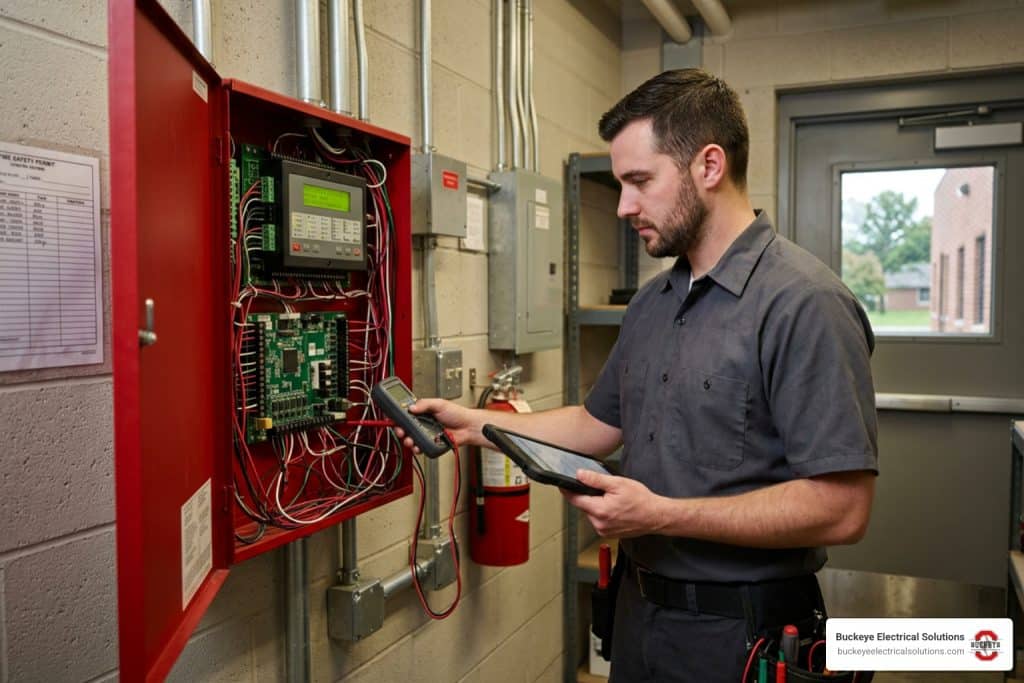
When we perform an electric meter safety check, we follow strict industry protocols to ensure nothing is missed and everyone stays safe. One of the most important methods we use is the T3 testing method (Test-Verify-Test).
The T3 process works like this:
- T1: We test our meter on a known live source to ensure the tool is working correctly.
- T2: We test the target circuit (your meter or panel) to check for voltage.
- T3: We re-test our meter on the known live source again to confirm it didn’t fail during the inspection.
This “Three-Point” check ensures that a “zero” reading truly means the power is off, rather than just meaning the tester’s battery died. We also utilize Lockout/Tagout (LOTO) procedures. This involves physically locking the power source in the “off” position while we work, ensuring no one can accidentally flip a switch and energize the system while we are handling components.
Safety isn’t just about procedure; it’s about gear. We always wear approved Personal Protective Equipment (PPE), including voltage-rated gloves and safety glasses. Dealing with the service entrance is different from changing a light switch; the “fault current” available directly from the transformer is massive and can cause an arc flash if handled improperly. This is why having a licensed electrician is so important. As noted by AEP Ohio, while the utility owns the meter, the homeowner is typically responsible for the “meter base” (the box it sits in) and the service mast.
Smart Meters vs. Traditional Meter Safety
If you’ve lived in Ohio for a while, you’ve likely seen the transition from the old “spinning dial” meters to modern digital smart meters. Smart meters have been in use across the U.S. since 2006, with over 98 million currently active.
From a safety perspective, smart meters offer some unique advantages:
- Remote Monitoring: They can often alert the utility company to a power outage or a “meter-off” event instantly.
- RF Technology: They use Radio Frequency (RF) technology—similar to cell phones or Wi-Fi—to transmit data. These signals are typically very brief, lasting less than 60 seconds per transmission and totaling under 15 minutes per day, well within FCC safety limits.
- Data Encryption: Your usage data is encrypted, ensuring privacy as it travels across the network.
While they are technologically advanced, they still require the same physical electric meter safety check as traditional meters. The digital display makes it easier to read a meter accurately, but the physical connections behind the glass can still suffer from the same corrosion and heat issues as old-school units. If you’re considering modernizing your home’s electrical system, a smart meter is often paired with an electrical panel upgrade to handle the increased energy demands of modern life.
Frequently Asked Questions about Meter Safety
How often should an electric meter be inspected?
For a standard residential property in Northeast Ohio, we recommend a professional electric meter safety check every 10 years for newer homes. however, if you live in an older home (built before 1980) or own a rental property, you should have an inspection every 3 to 5 years. Rental properties often see higher “wear and tear” on electrical systems, and older homes may have outdated meter bases that weren’t designed for the load of modern appliances and EV chargers.
| Property Type | Recommended Inspection Frequency |
|---|---|
| New Construction (Last 10 years) | Every 10 Years |
| Older Residential (Pre-1980) | Every 3-5 Years |
| Rental Properties | Every 3 Years |
| After Major Storm/Ice Event | Immediately (Visual Check) |
Who is responsible for repairing a damaged meter box?
This is a point of confusion for many homeowners. Generally, the utility company (like FirstEnergy or AEP Ohio) owns and maintains the actual glass-encased meter. However, the homeowner is responsible for the meter socket (the metal box), the service mast (the pipe), and the wires inside that mast. If a storm rips the mast off your house, you must hire a private electrician to repair it before the utility company will reconnect your power. If you suspect a fault, your first step is often calling the utility to verify the meter, but a private electrician is needed for the housing and mast.
What are the risks of ignoring a faulty electric meter?
Ignoring a faulty meter is a gamble with your home’s safety. The primary risk is an electrical fire caused by overheating connections. Additionally, a compromised meter can lead to power surges that fry sensitive electronics or “brownouts” that damage the motors in your refrigerator or AC unit. There is also the risk of electric shock if the grounding system has failed. Understanding the basics of home wiring can help you realize just how interconnected these risks are.
Conclusion
At Buckeye Electrical Solutions, we believe that a little prevention goes a long way. An electric meter safety check might seem like a small detail, but it’s the most effective way to ensure the heart of your home’s electrical system is beating strong. With over 20 years of experience serving Northeast Ohio, we’ve seen how a simple inspection can prevent devastating fires and save homeowners thousands in emergency repairs.
Whether you’re worried about a high bill, noticed a strange smell near your service entrance, or just want the peace of mind that comes with a professional safety verification, we’re here to help. Don’t wait for a storm to reveal a weakness in your system.
For more information about our electrical services or to schedule your safety check, reach out to us today. Let’s keep your home powered up safely!