
Why Choosing the Right Ceiling Fan Matters for Your Ohio Home
A ceiling fan is a practical comfort upgrade for many Ohio homes. The right model can help rooms feel cooler in summer, improve air circulation in winter, and support more efficient heating and cooling habits when used properly.
Here are several ceiling fan brands and retailers worth comparing:
| Brand | Common Strengths | Where to Buy |
|---|---|---|
| Hunter | Established brand, broad product range, smart-feature options | hunterfan.com, Lowe’s, Home Depot |
| Hampton Bay | Affordable, wide variety | Home Depot |
| Home Decorators Collection | Style-forward, mid-range pricing | Home Depot |
| Minka Aire | Premium design | Specialty retailers |
| Parrot Uncle | Modern/farmhouse styles, quiet-motor options | Online retailers |
A few things to know upfront:
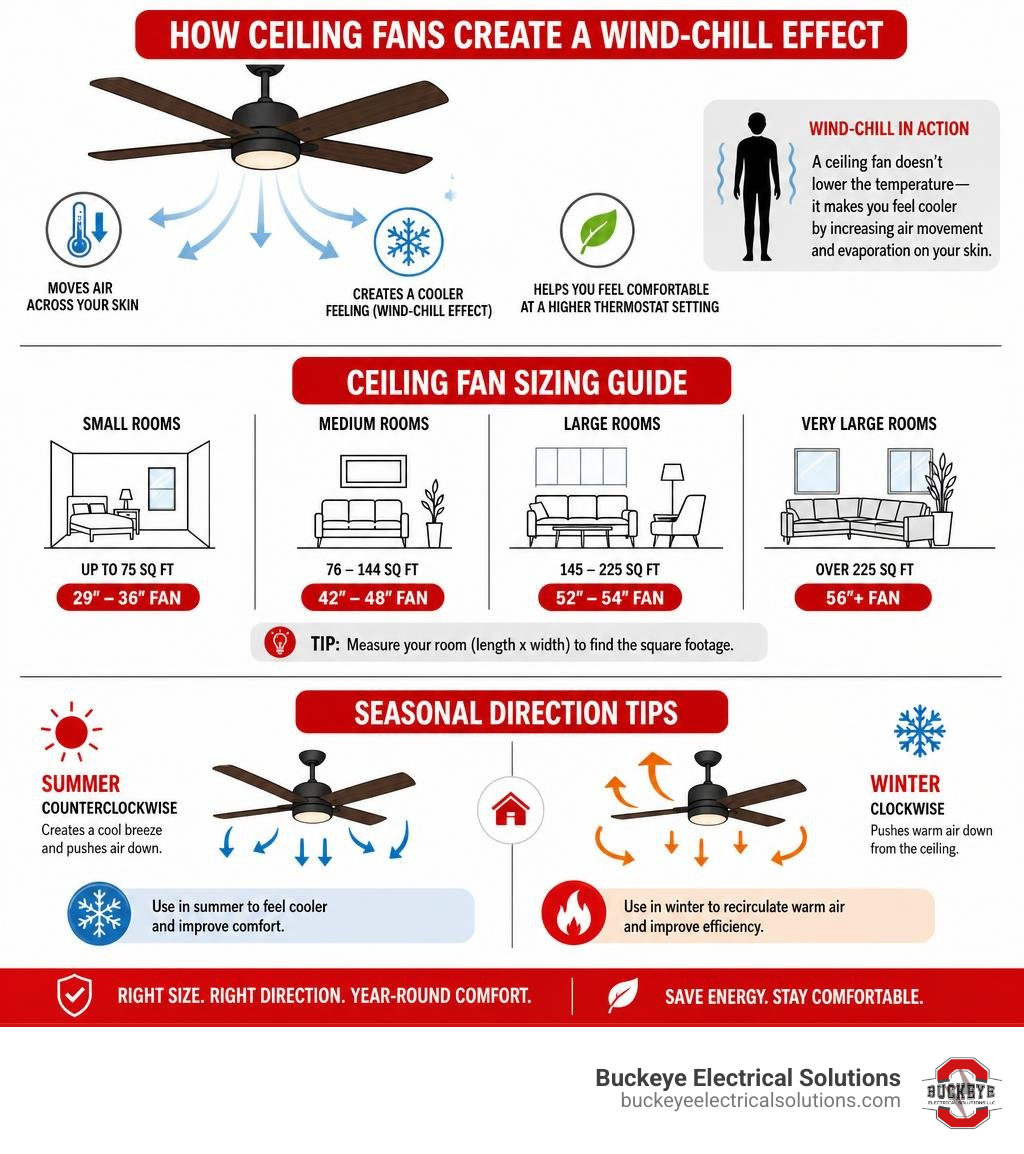
- Size matters. A 42″ fan may work well for many bedrooms; a 52″ fan is common in many living rooms.
- Motor type matters. DC motors are typically quieter and often more efficient than standard AC motors.
- Mounting type matters. Low ceilings may need flush-mount fans; high ceilings typically need a downrod.
- Location matters. Outdoor spaces in Ohio should use damp-rated or wet-rated fans based on exposure to humidity, rain, and snow.
- Direction matters. Run counterclockwise in summer for a cooling breeze; reverse the fan at low speed to help redistribute warm air near the ceiling.
ENERGY STAR-certified ceiling fans are designed to meet efficiency standards that can help reduce energy use and improve comfort year-round, especially when paired with efficient lighting and proper thermostat use.
I’m Aaron Estep, owner of Buckeye Electrical Solutions LLC and a master electrician with dozens of permitted ceiling fan and electrical projects completed across Northeast Ohio. I’ve seen what separates a safe, well-planned ceiling fan installation from one that causes problems — and I’ll walk you through what to consider before you buy or install one.
Ceiling fan terms you need:
Ceiling Fan Brands and Retailers to Compare: Hunter, Home Depot, and Lowe’s

When searching for the right ceiling fan, the best choice depends on your room size, ceiling height, budget, style, noise tolerance, and whether the fan will be installed indoors or outdoors. Rather than treating one brand as universally best, it helps to compare models by airflow, motor type, controls, blade span, rating, warranty, and installation requirements.
Major home improvement retailers offer a large selection of fixtures. If you are browsing Ceiling Fans at Lowe’s , you will find options ranging from basic, budget-friendly models to smart-home-enabled designs. Retailers like Lowe’s and Home Depot make it easy to compare finishes, blade spans, integrated lighting, controls, and outdoor ratings side by side.
Hunter Fan Company and SureSpeed Technology
Hunter is a well-known brand with a broad range of smart and traditional ceiling fans. Some Hunter models emphasize quiet operation, higher airflow, or integrated lighting, but performance varies by model and installation conditions.
If higher air movement matters to you, compare the specific model’s airflow, blade span, room-size recommendation, noise expectations, and warranty before buying.
One example is the Hunter Lilliana with 2 LED Lights 52 inch – Hunter Fan . This model pairs a mid-century modern look with a 52-inch blade span, LED lighting, and multiple speed settings, making it a reasonable option to compare for bedrooms or living spaces where that size and style fit.
Home Depot and Hampton Bay Options
The Home Depot is another major resource for homeowners, including in-house brands like Hampton Bay and Home Decorators Collection. These brands often appeal to homeowners looking for practical features, modern styles, and moderate pricing.
If you want a simple, classic design, the Campbell 52 in. Indoor LED Brushed Nickel Ceiling Fan with Light Kit, Downrod, Reversible Blades and Remote is one option to compare. This Hampton Bay model includes reversible blades, an integrated LED light kit, and a remote control.
How to Choose the Right Ceiling Fan Size and Mounting for Your Ohio Home
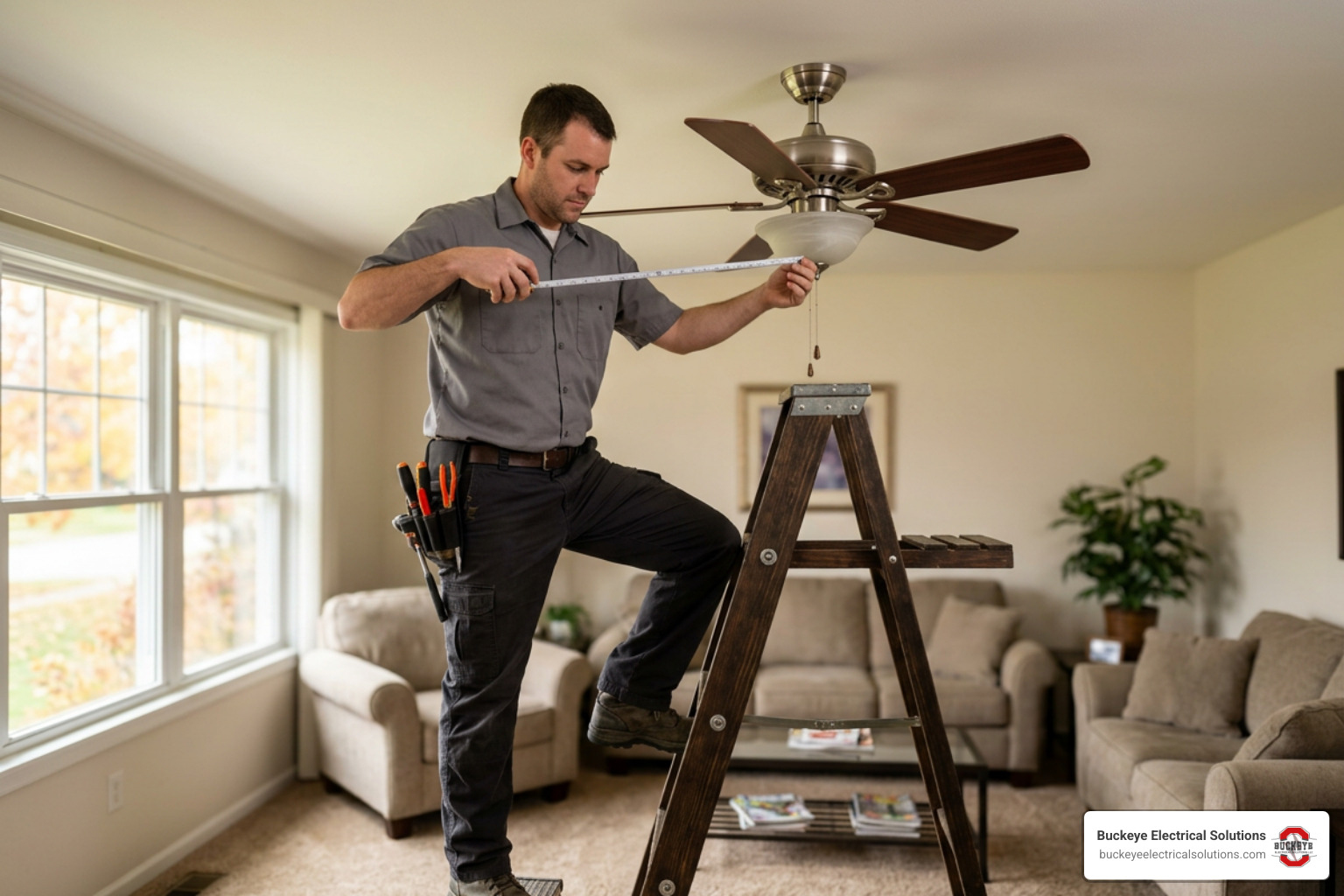
Choosing the correct ceiling fan size affects comfort, appearance, and performance. An oversized fan can feel too strong in a small room, while an undersized fan may not move enough air to be useful.
To find the right fit, start with the room’s square footage. You can read a deeper overview in the Ceiling Fan Size Guide 2026: Complete Measurement & Guide . As a general reference, many homeowners compare sizes like these:
- Up to 75 sq. ft. (Small bedrooms, walk-in closets): 29 to 36-inch blade span
- 76 to 144 sq. ft. (10×10 to 12×12 rooms): 36 to 42-inch blade span
- 145 to 225 sq. ft. (Standard bedrooms, kitchens): 44 to 48-inch blade span
- 226 to 400 sq. ft. (Living rooms, master suites): 50 to 54-inch blade span
- Over 400 sq. ft. (Great rooms, open floor plans): 56 to 72-inch blade span, or multiple smaller fans
For open-concept spaces over 400 square feet, two mid-size fans can sometimes distribute airflow more evenly than one very large fan, depending on the room layout.
Understanding AC vs. DC Ceiling Fan Motors
When shopping for a new ceiling fan, you will run into two common motor types: Alternating Current (AC) and Direct Current (DC).
AC motors are the traditional standard. They are reliable, usually cost less upfront, and commonly offer three speed settings controlled by a pull chain, wall switch, or remote.
DC motors are typically quieter and often more efficient than standard AC motors. You can estimate CFM needs and compare sizing with the Ceiling Fan Size Calculator — Blade Span, CFM & Downrod .
Selecting the Best Outdoor Ceiling Fan for Ohio Patios
Northeast Ohio summers are beautiful, and a covered porch or patio can be a great place to use a fan. However, outdoor installations require the correct environmental rating. An indoor-rated fan may not be built to handle humidity, temperature swings, or direct moisture.
When shopping for outdoor spaces, pay close attention to the UL (Underwriters Laboratories) ratings:
- Damp-Rated: Generally appropriate for covered, protected outdoor spaces like screened porches or covered patios. These fans are designed for moisture in the air but not direct rain.
- Wet-Rated: Designed for locations exposed to rain, snow, or water spray. These are typically used for open pergolas, exposed decks, or areas where the fan may get wet.
Determining Downrod Length and Mounting Types
For comfort and safety, fan placement should follow the manufacturer’s installation instructions and applicable code requirements. Many residential installations aim to keep blades high enough for safe clearance while low enough to provide useful airflow.
- Flush Mount (Hugger Fans): Often used on lower ceilings where a downrod would place the fan too low. Because the blades sit closer to the ceiling, some models may move less air than comparable downrod-mounted fans.
- Standard Downrod Mount: Common for typical ceiling heights when the manufacturer’s included downrod provides appropriate clearance.
- Extended Downrod Mount: Often used for vaulted, sloped, or high ceilings, subject to the fan manufacturer’s instructions and the ceiling structure.
A common planning formula is:
Estimated Downrod Length = Ceiling Height – Target Blade Height
For example, if a room has a 12-foot ceiling and the target blade height is about 9 feet, a 36-inch downrod may be appropriate, assuming the fan, ceiling slope, and mounting hardware are compatible. For a safe and stable setup, check out our guide on ceiling fan downrod installation.
Safe Installation and Electrical Requirements in Ohio Homes
While hanging a new light fixture is a common DIY project, installing a ceiling fan requires extra attention because fans are moving loads. The mounting box, bracket, fasteners, wiring, and controls all need to be compatible with the fan and the structure above it.
For a comprehensive walkthrough of the process, you can consult our resource on mastering ceiling fan installation.
Junction Box and Fastener Requirements
One of the most common mistakes we see in Northeast Ohio homes is a ceiling fan attached to a box that was intended only for a light fixture. A fan-rated support method is important because the box must handle both the fan’s weight and the movement created while it operates.
Ceiling fans should be mounted to a box rated and listed for fan support, following manufacturer instructions and applicable code.
To ensure your home remains safe, read our expert guides on securing your junction box and choosing the correct fasteners for a secure fitting.
Wiring, Switches, and Local Code Considerations
Wiring a fan can get complicated, especially if you are installing a model with integrated lights and want separate wall controls for the fan and light. It is important to understand the wiring layout before you begin, which we detail in our guide to wiring a ceiling fan light switch.
Ohio code adoption and enforcement can vary by jurisdiction and application, and electrical work is always subject to AHJ approval. GFCI, AFCI, box-fill, grounding, bonding, and switch-control requirements can depend on the room type, circuit, device location, and scope of work. A licensed electrician can evaluate your specific installation before work begins.
Troubleshooting Common Electrical Issues
If your fan is humming, clicking, wobbling, or refusing to turn on, the issue may involve the electrical supply, controls, mounting hardware, or the fan itself. Use this table as a general reference only:
| Symptom | Possible Causes | Priority Level |
|---|---|---|
| Fan does not turn on; light works | Loose connection, faulty remote receiver, motor or capacitor issue | Medium |
| Light does not turn on; fan works | Burned-out bulb, failed light kit connection, faulty switch or control | Low |
| Fan and light both have no power | Tripped breaker, upstream GFCI/AFCI device, failed switch, loose supply connection | High |
| Fan wobbles excessively at high speeds | Unbalanced blades, loose bracket screws, improper or non-fan-rated support | High |
| Loud humming or buzzing noise | Incompatible dimmer or control, loose canopy parts, motor issue | Medium |
Note: Any troubleshooting involving live testing or accessing the junction box should be handled by a qualified professional to avoid shock, fire, or equipment-damage risks.
Frequently Asked Questions About Ceiling Fans
How does changing the fan direction help with heating and cooling?
Ceiling fans do not actually change the temperature of the air in a room. Instead, they help people feel cooler through air movement and can help circulate warm air that collects near the ceiling.
- Summer Mode (Counterclockwise): Looking up at the fan, the blades typically rotate counterclockwise to push air downward and create a cooling breeze.
- Winter Mode (Clockwise): In winter, many fans can be reversed to run clockwise at low speed. This can help redistribute warm air near the ceiling, but actual heating savings depend on ceiling height, insulation, thermostat settings, and how the fan is used.
Can I install an indoor ceiling fan in an outdoor space?
No, you should not install an indoor-rated fan outdoors. Indoor fans are not generally designed or listed for outdoor moisture, humidity, or direct water exposure. Depending on the model, outdoor use can damage blades, motor housings, finishes, electrical components, and may void the manufacturer’s warranty. Choose a damp-rated or wet-rated fan based on the exposure level.
How do I clean and maintain my ceiling fan?
Keeping your fan clean prevents dust from unbalancing the blades and causing wobbles.
- Dust Regularly: Slip an old pillowcase over a fan blade, pull it back to trap the dust inside, and wipe clean. This prevents dust from falling onto your furniture.
- Check Tightness: Every year, use a screwdriver to check that the mounting bracket, downrod, and blade screws are tightly secured, following the manufacturer’s instructions.
- Wobble Correction: If your fan wobbles, use a balancing kit to find the heavy blade and apply a small adhesive weight if needed.
Conclusion
A well-chosen ceiling fan can improve comfort in many Ohio homes, but performance depends on the right size, rating, mounting method, controls, and installation quality. Brand, style, and price matter, but so do support, wiring, clearance, and local code considerations.
As a trusted electrical contractor in Northeast Ohio with over 20 years of residential and commercial experience, Buckeye Electrical Solutions helps homeowners replace outdated fixtures, run new wiring for ceiling fans, and evaluate installations for safety and code compliance.
Please note: All electrical service pricing or estimates are subject to change and dependent on local site conditions or AHJ (Authority Having Jurisdiction) requirements.
Ready to upgrade your home comfort? Contact us today to schedule your professional Residential Electrical Services and keep your home running safely and efficiently!