What Is Automatic Gate Servicing — and Do You Need It?
Automatic gate servicing is the routine inspection, lubrication, testing, and repair of the mechanical and electrical components that keep your gate running safely and reliably.
Here’s a quick overview of what it covers and how often you need it:
| Property Type | Recommended Service Frequency |
|---|---|
| Residential (low traffic) | Once per year |
| Residential (apartments/high usage) | Quarterly |
| Commercial / school campus | Quarterly |
| Industrial / high-security | 2–3 times per year |
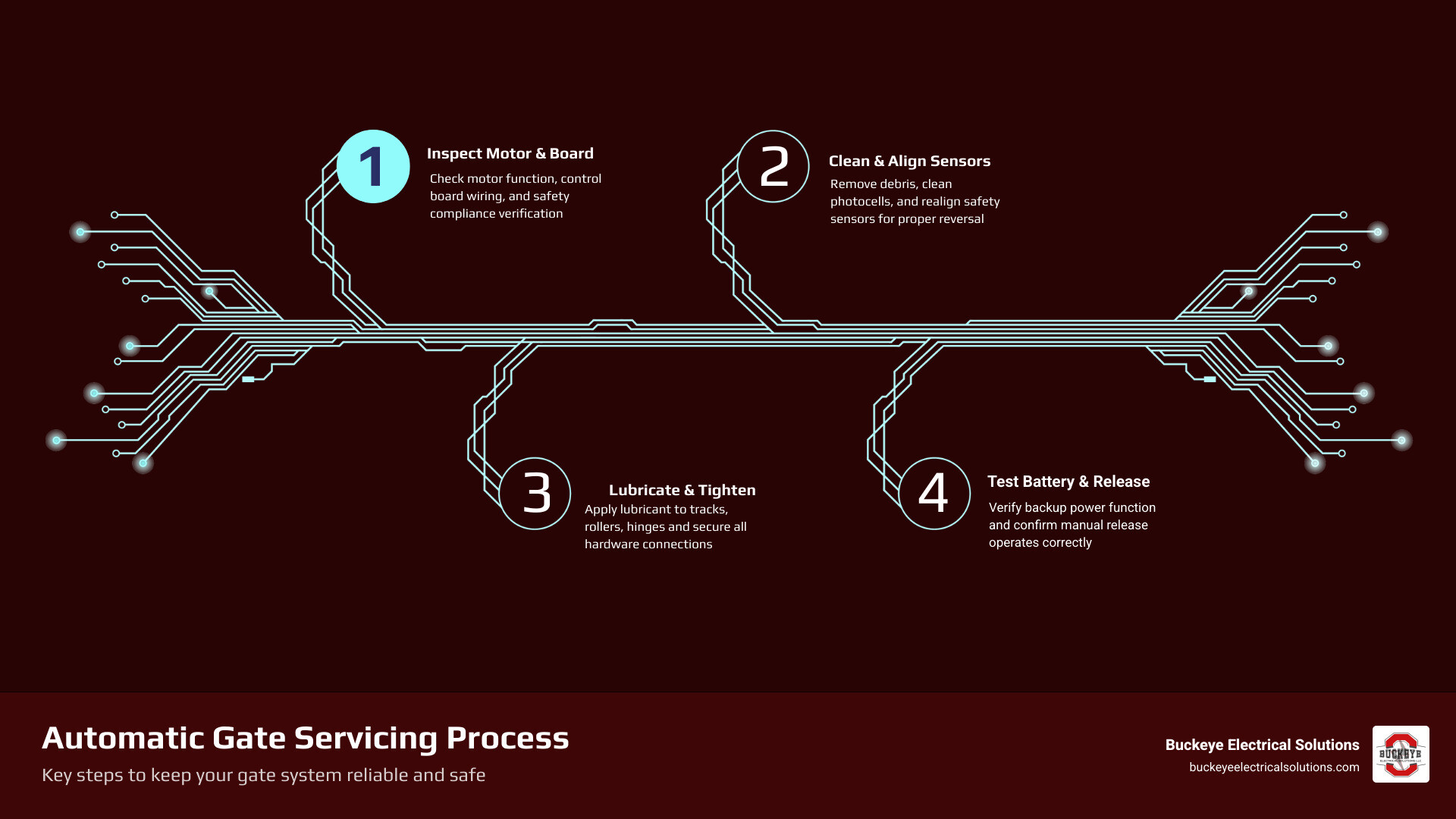
What a standard service typically includes:
- Motor and control board inspection
- Safety sensor cleaning and alignment
- Track, roller, and hinge lubrication
- Hardware tightening and structural check
- Battery backup and manual release testing
- Safety compliance verification
Your automatic gate does a lot of quiet work — opening and closing dozens of times a week, exposed to rain, rust, and temperature swings. When it stops working, it’s rarely at a convenient time. A gate stuck open is a security risk. A gate stuck closed blocks access entirely.
The good news: most failures are preventable. High-quality electric gates that are properly installed and regularly maintained can last 15 to 20 years. Skip the maintenance, and you’re looking at a much shorter lifespan — and more expensive emergency repairs along the way.
I’m Aaron, owner of Buckeye Electrical Solutions and a master electrician with experience in residential and commercial electrical systems across Northeast Ohio — including the wiring, power supply, and control systems behind automatic gate servicing. In the sections below, I’ll walk you through everything you need to know to keep your gate running safely and efficiently year-round.
Automatic gate servicing word roundup:
The Importance of Regular Automatic Gate Servicing
Routine service is not just about avoiding the annoyance of a gate that refuses to cooperate when you’re already late. It directly affects safety, reliability, operating cost, and how long the whole system lasts.
A properly maintained gate is more likely to:
- Open and close smoothly
- Detect vehicles, people, and obstacles correctly
- Put less strain on the motor and operator arms
- Resist corrosion and weather damage
- Avoid emergency breakdowns
- Stay safer for family members, visitors, employees, and delivery drivers
For Ohio property owners, this matters even more. Northeast Ohio weather is hard on outdoor equipment. Rain, humidity, winter ice, road salt, and freeze-thaw movement all speed up wear. A gate that worked fine in October can become sluggish, noisy, or unreliable by January.
Regular servicing also helps catch small issues before they turn into expensive repairs. A loose bracket, dirty photo eye, weak battery, or binding hinge is usually manageable. A burned motor, damaged control board, or bent track is a very different conversation.
Routine maintenance is generally the best way to reduce avoidable failures and keep safety devices functioning as intended.
Key Components of Professional Automatic Gate Servicing
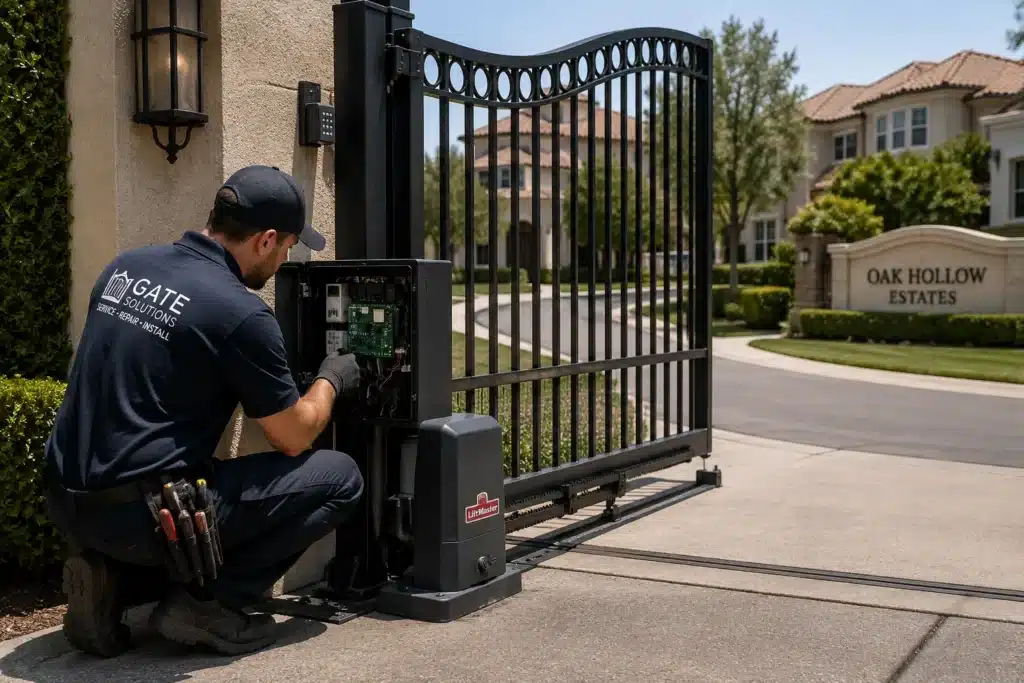
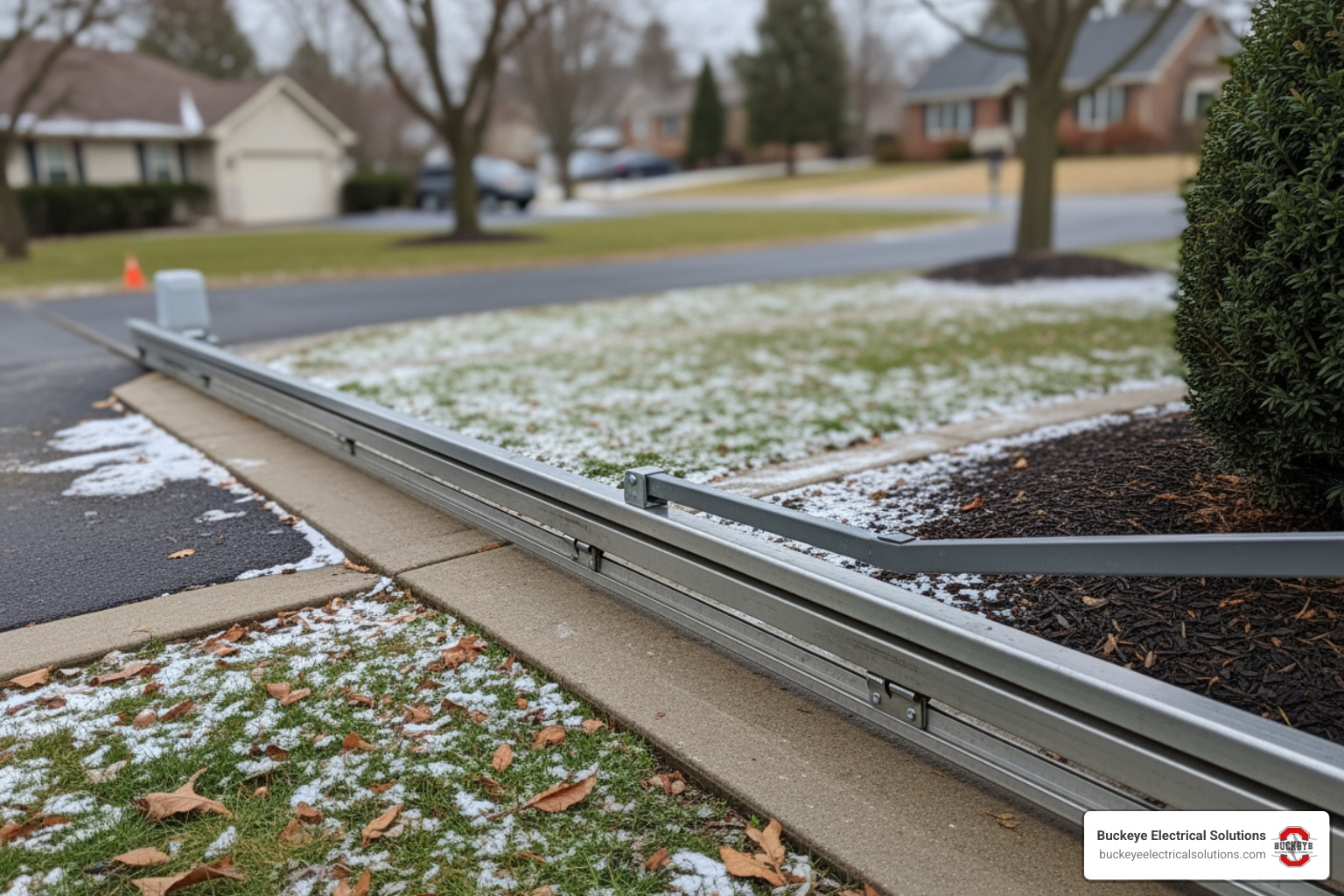
A thorough service visit should check both the mechanical and electrical sides of the system. Automatic gates are really two systems working together: a physical gate structure and an electrical control system.
Here are the main components we look at during automatic gate servicing:
- Gate motor or operator
- Control board and wiring connections
- Safety sensors and photo eyes
- Reversal and obstruction response settings
- Hinges, rollers, wheels, and bearings
- Track or slide path condition
- Chains, belts, or drive arms
- Mounting hardware and brackets
- Access controls such as keypad, intercom, remote receiver, or card reader
- Battery backup system
- Manual release mechanism
- Posts, supports, and visible structural elements
Preventative maintenance usually includes:
- Cleaning debris from tracks and housings
- Lubricating moving parts where appropriate
- Tightening loose fasteners
- Inspecting for rust, cracked welds, or shifting supports
- Testing opening and closing cycles
- Confirming sensor alignment and response
- Checking battery condition and charging
- Verifying the gate stops and reverses properly
That last point is important. A gate should not just move. It should move safely.
Impact on System Lifespan and Performance
Routine maintenance reduces friction, vibration, and electrical stress. That matters because all three are silent gate killers.
Research consistently shows that well-installed, high-quality electric gates can last up to 15 to 20 years with regular maintenance. Some automated systems may only deliver 8 to 10 years under heavier use, poor environmental conditions, or neglected service. In practical terms, regular service can add meaningful years to the life of the operator, sensors, and moving hardware.
It also improves day-to-day performance:
- Faster, smoother travel
- More consistent closing
- Fewer false reversals
- Less grinding, squeaking, and jerking
- Better reliability during heavy rain or cold snaps
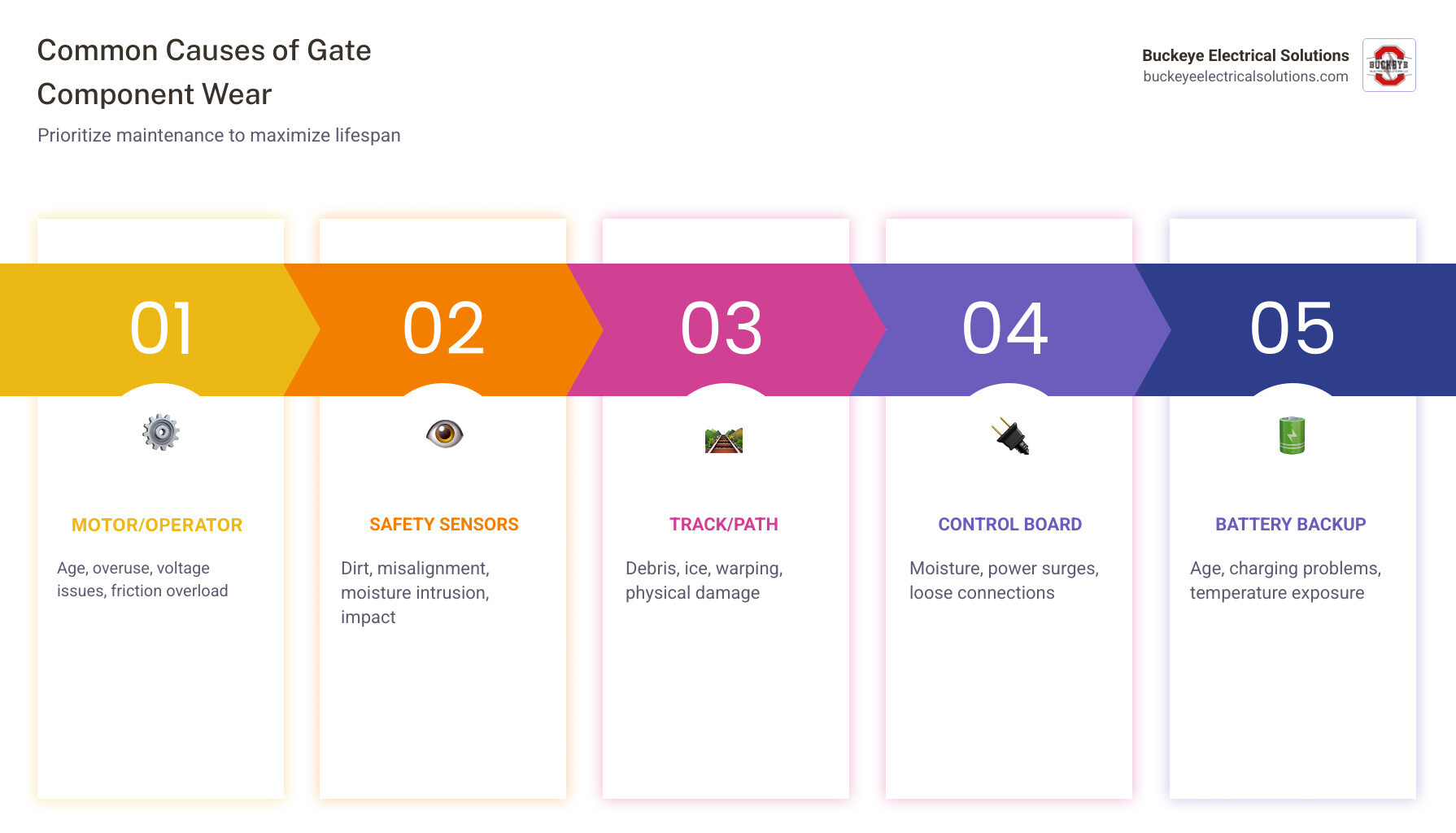
Here is a simple reference table for common wear patterns.
| Component | Likely Causes | Priority Level |
|---|---|---|
| Motor or operator | Age, overuse, voltage issues, friction overload | High |
| Safety sensors | Dirt, misalignment, moisture intrusion, impact | High |
| Rollers or hinges | Lack of lubrication, rust, wear | Medium |
| Track or gate path | Debris, ice, warping, physical damage | High |
| Battery backup | Age, charging problems, temperature exposure | Medium |
| Control board | Moisture, power surges, loose connections | High |
| Access controls | Wiring faults, dead batteries, programming issues | Medium |
Common Issues and Troubleshooting for Ohio Property Owners
The most common issues that lead to service calls are usually not mysterious. They fall into a few broad categories:
- Power failures
- Sensor problems
- Mechanical obstructions
- Worn moving parts
- Corrosion or water intrusion
- Remote, keypad, or access control failure
- Damage from impact, shifting ground, or weather
In Ohio, environmental conditions are often part of the story. Freeze-thaw cycles can shift gate posts or affect track alignment. Winter debris and packed snow can block a slide gate path. Moisture can creep into enclosures or corrode terminals. Salt exposure can accelerate rust on metal components and fasteners.
Identifying Electrical and Power Failures
If a gate suddenly stops working, power should be one of the first things checked.
Common electrical causes include:
- Tripped breaker
- Power outage
- Failed transformer
- Loose low-voltage wiring
- Damaged underground cable
- Corroded terminals
- Dead remote batteries
- Weak or failed battery backup
- Faulty capacitor in the motor circuit
- Control board failure
For electrical troubleshooting, we start with the basics:
- Verify incoming power.
- Check breakers, disconnects, and power supplies.
- Inspect visible wiring and termination points.
- Test the control board and output circuits.
- Confirm the motor is receiving the proper signal.
- Check battery voltage and charging status.
If a nearby receptacle is part of the system, remember this exact possibility: Outlet has no voltage; could indicate breaker, GFCI, switch, or wiring issue.
In Ohio, outdoor electrical components should also be checked for moisture intrusion and enclosure condition. While Ohio’s 2023 NEC adoption includes expanded GFCI requirements in several locations, the exact application is situational depending on the equipment, location, and installation method. That is one reason professional evaluation matters.
Warning signs of electrical trouble include:
- Gate is completely unresponsive
- Operator hums but does not move
- Gate moves slowly
- Intermittent operation
- Lights on the control board flicker oddly
- System works on battery only, or fails during outage transfer
Improper wiring, aging splices, and unprotected low-voltage conductors can all create recurring problems. These are not good candidates for guess-and-check DIY repair.
Mechanical Obstructions and Sensor Misalignment
Some of the most common service calls turn out to be mechanical rather than electrical.
Examples include:
- Leaves, gravel, or ice in the track
- A branch or trash bin breaking the photo eye beam
- Insect nests in sensor housings
- Wheel or roller wear
- Hinge binding
- Chain slack or drive arm wear
- Gate sagging due to post movement
- Track warping or damage
If the gate opens but will not close, sensors are a frequent suspect. Dirt, spider webs, frost, and misalignment can all interrupt the beam.
Property owners can safely do a few basic checks:
- Clear the gate path
- Remove snow and debris
- Wipe sensor lenses gently
- Check remotes for dead batteries
- Look for obvious loose hardware or bent parts
- Listen for new grinding or squealing noises
But if the gate is reversing unpredictably, striking the end stop hard, dragging, or getting stuck halfway, it is time for professional service.
Safety Standards and Regulatory Compliance in 2026
Automatic gates are convenient, but they are also powered moving equipment. Safety standards exist for a reason.
In 2026, UL 325 remains one of the main safety benchmarks for automated gate systems in the U.S. It addresses key safety functions such as:
- Entrapment protection
- External safety devices
- Reversal behavior
- Sensor and monitored protection systems
- Safe response to obstructions
A compliant and properly maintained system should be able to detect hazards and react appropriately. If the gate closes with excessive force, fails to reverse when it should, or has nonworking sensors, that is not just a reliability issue. It is a safety issue.
Ohio Electrical Codes and GFCI Requirements
For the electrical side of automatic gate systems in Ohio, code compliance matters. Outdoor equipment needs proper wiring methods, weather-resistant fittings, suitable disconnecting means where required, and protection against moisture intrusion.
Ohio’s 2023 NEC adoption includes expanded GFCI requirements in several locations, but those rules are situational rather than universal. The exact requirement depends on the type of equipment, how it is supplied, and where it is installed. That is why gate power circuits, outdoor receptacles, service equipment, and accessory devices should be evaluated as a complete system rather than piece by piece.
We also pay close attention to:
- Outdoor-rated enclosures
- Proper grounding and bonding
- Wire protection from physical damage
- Disconnect accessibility
- Condition of conduit and seals
- Moisture management around operators and control boxes
For commercial properties, multi-family sites, and schools, documentation of maintenance and safety testing is also a smart practice.
DIY Maintenance vs. Professional Automatic Gate Servicing
There is a difference between basic owner care and actual gate service.
Safe DIY tasks usually include:
- Clearing debris from the track or swing path
- Washing dirt from the gate exterior
- Replacing remote batteries
- Gently cleaning photocell lenses
- Watching for rust, loose bolts, or unusual noise
- Reporting changes early
Professional automatic gate servicing should handle:
- Electrical diagnosis
- Operator adjustment
- Control board testing
- Force and reversal checks
- Sensor alignment and calibration
- Battery charging and transfer verification
- Wiring repairs
- Motor and capacitor testing
- Safety compliance review
Why not DIY the rest? Because the gate combines electricity, moving machinery, and life-safety functions. Some failures are hidden. Some adjustments affect entrapment protection. Some repairs require specialized tools and testing procedures. And if the gate is in a commercial or shared-use setting, liability risk rises quickly.
In short: wiping off a photo eye is homeowner territory. Opening a control cabinet and troubleshooting a live circuit is not.
Scheduling and Frequency: Residential vs. Commercial Needs
How often should a gate be serviced? The honest answer is: it depends on usage, environment, and risk level.
The broad recommendations in the research are consistent:
- Low-use residential gates: annual service
- Apartments or high-use residential settings: quarterly
- Commercial or school campus gates: quarterly
- Industrial or high-security gates: 2 to 3 times per year, sometimes more depending on cycle count
A gate at a private home may cycle a few times a day. A gate at a multi-tenant property may cycle dozens or hundreds of times. Those are not the same maintenance situations.
Residential Maintenance Recommendations
For most Ohio homeowners, a yearly service visit is a solid baseline.
We usually recommend:
- One full professional inspection each year
- Seasonal visual checks before winter and after winter
- Prompt service if the gate gets slower, louder, or less consistent
- Battery replacement as needed based on age and performance
- Light maintenance of hinges, rollers, and exposed hardware as appropriate
Homeowners can also help prevent problems by:
- Keeping the gate path clear
- Trimming vegetation away from sensors and moving parts
- Watching for standing water near operator equipment
- Reporting sagging, scraping, or delayed response early
If your home gate sees frequent daily use, or if the property has multiple drivers, deliveries, or service traffic, quarterly maintenance may make more sense.
Commercial and High-Traffic Requirements
Commercial, industrial, school, and multi-family gates need a more disciplined schedule. Higher cycle counts create more wear, and the consequences of failure are greater.
We generally advise more frequent servicing for:
- Apartment and condo developments
- Commercial parking and service yards
- Schools and campuses
- Industrial security gates
- Facilities with emergency access requirements
A commercial maintenance plan often includes:
- Quarterly inspection and servicing
- Safety device testing each visit
- Control cabinet and wiring inspection
- Gate balance and hardware review
- Access control verification
- Documentation of findings and recommended repairs
This is also where the difference between routine maintenance and extraordinary repair becomes clear.
Routine maintenance includes:
- Inspection
- Cleaning
- Lubrication
- Adjustment
- Testing
- Minor tightening or alignment corrections
Extraordinary repairs include:
- Replacing operators or control boards
- Repairing impact damage
- Replacing bent tracks or damaged posts
- Rewiring failed circuits
- Major structural correction
- Upgrading outdated safety devices
Think of routine maintenance as keeping the gate healthy. Extraordinary repair is what happens when it has already gotten sick – or been hit by a truck.
Frequently Asked Questions about Automatic Gate Servicing
How often should my automatic gate be serviced in Ohio’s climate?
For most residential gates, once a year is the minimum good practice. For apartments, shared drives, and high-use systems, quarterly service is a better fit. Commercial and school properties should generally plan on quarterly servicing, while some industrial or high-security gates may need 2 to 3 visits per year depending on traffic and operating conditions.
Ohio weather can shorten maintenance intervals. Snow, ice, humidity, and salt exposure all increase wear.
What are the warning signs that my gate motor needs immediate repair?
Call for service quickly if you notice:
- Humming without movement
- Burning smell
- Slow or jerky travel
- Frequent stopping mid-cycle
- Tripped breakers
- Gate only working intermittently
- Excessive heat at the operator housing
- Loud grinding, popping, or straining sounds
These often point to motor stress, capacitor issues, binding hardware, voltage problems, or internal operator failure.
Can regular servicing prevent the gate from getting stuck during winter freezes?
It can significantly reduce the chances. Regular service helps by:
- Keeping tracks and wheels clean
- Identifying poor drainage
- Correcting minor alignment problems
- Lubricating moving parts properly
- Checking batteries before cold weather weakens them
- Making sure sensors are clean and mounted securely
No service can stop every weather-related issue, but it can prevent many of the most common winter failures.
Conclusion
Regular automatic gate servicing is one of the simplest ways to protect your property’s access, safety, and convenience. It helps prevent unexpected breakdowns, supports longer equipment life, and keeps both electrical and mechanical components working together the way they should.
At Buckeye Electrical Solutions, we bring more than 20 years of experience serving Northeast Ohio with dependable residential and commercial electrical repair, installation, and maintenance. That electrical knowledge matters when a gate problem involves power supply, controls, wiring, protection devices, or system reliability.
If your automatic gate is overdue for service, showing warning signs, or simply needs a professional inspection before the next Ohio season rolls in, we’re here to help. For a broader look at what we do, visit More info about our services.
A well-maintained gate gives you one less thing to worry about – and honestly, Ohio weather gives us enough already.