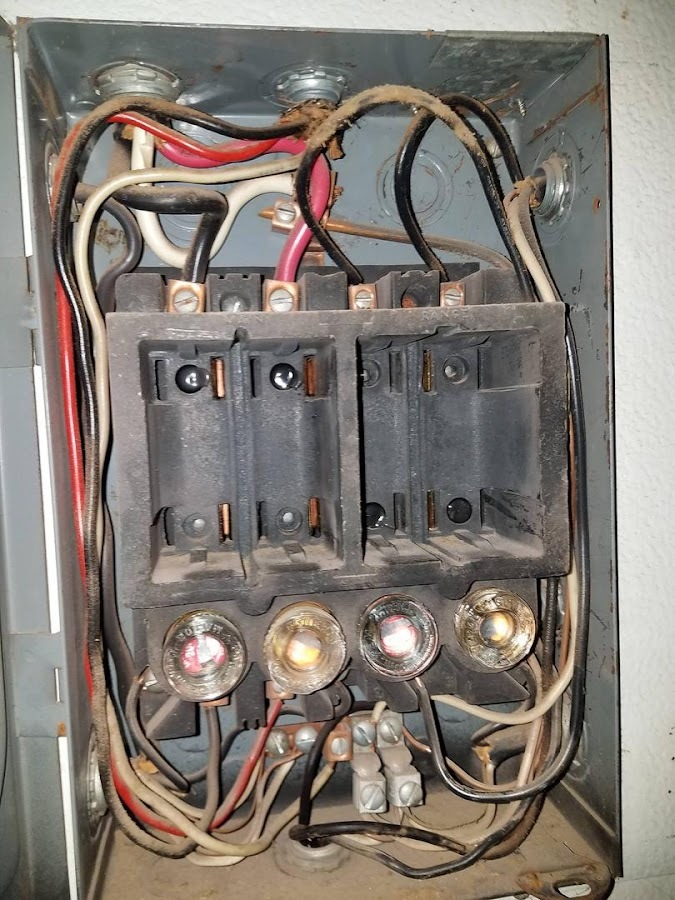
A whole house surge protector is a device an electrician mounts at your main panel or meter to limit voltage spikes before they reach your circuits. It guards your furnace controls, refrigerator, washer, and every outlet in the house at once. With winter storm season coming to Northeast Ohio, now is a good time to check how your home handles power spikes. This guide explains how the device works, which types exist, what Ohio code says, and what to check before you add one.
What a Surge Protector for Your Electrical Panel Does
A power surge is a brief jump in voltage above what your wiring and devices are built for. Most surges are brief. Big ones can destroy electronics on the spot. Small, repeated ones wear down circuit boards over time.
A whole-home unit sits at the service entrance, where power enters your home. When voltage spikes, the device limits the voltage reaching connected equipment by diverting surge current through its protective components. Plug-in strips only protect what is plugged into them. The panel device covers hardwired loads too, such as your furnace, water heater, garage door opener, and range.
The Electrical Safety Foundation (ESFI) lists whole-home protection as the “best” level of surge protection. It also notes that whole-home units must be installed by a qualified electrician.
Where Power Surges Come From in a Northeast Ohio Home
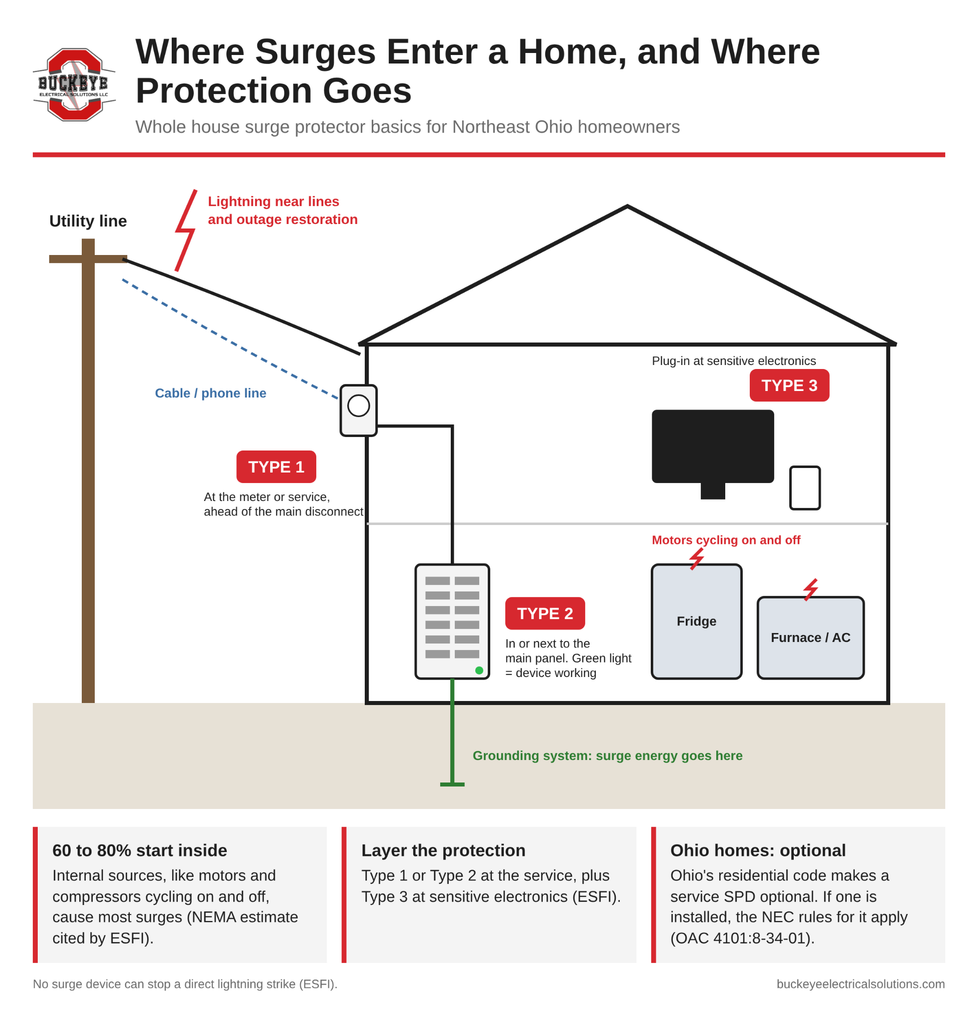
Lightning gets the blame, but most power surges start inside the house. ESFI cites a National Electrical Manufacturers Association estimate that 60 to 80 percent of surges come from internal sources.
FirstEnergy, the parent company of The Illuminating Company, lists these common sources:
- Lightning hitting power, phone, or cable lines
- Trees, birds, or animals contacting power lines
- Vehicle accidents that hit utility equipment
- Power coming back on after an outage
- Large motors and compressors cycling on and off, such as refrigerators and air conditioners
- Poor grounding and faulty wiring
FirstEnergy also notes that surges can enter through cable and phone lines, irrigation systems, yard lights, and well pump feeds. When storms bring down lines in Northeast Ohio and cause disruptions, each restoration after an outage is another chance for a spike.
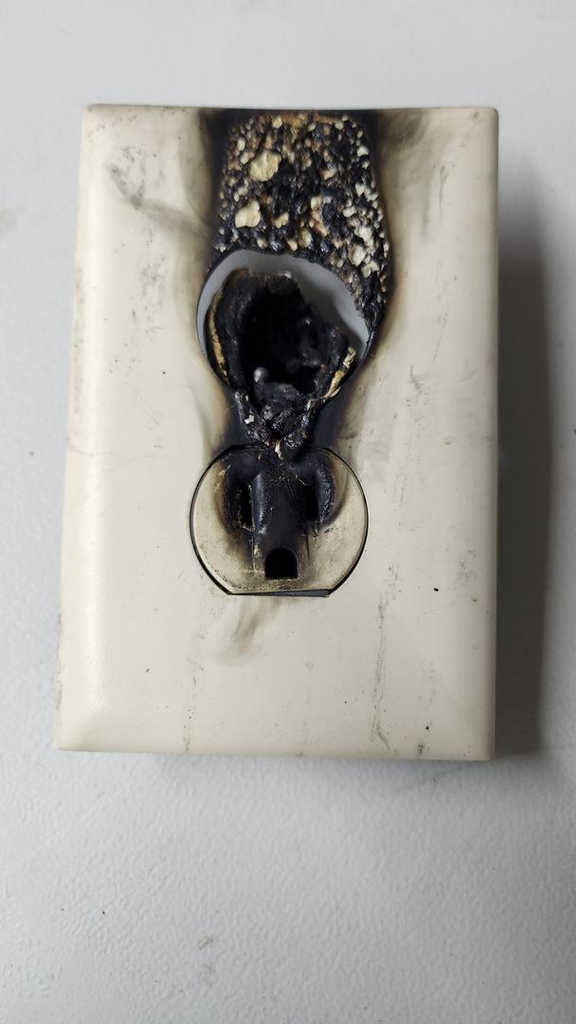
A scorched outlet like the one above can come from a loose connection, an overloaded circuit, or damage from a surge. Only an evaluation can tell which one. Any burn mark on an outlet calls for an electrician before you use it again.
Surge Protector Types: Type 1, Type 2, and Type 3
Surge protective devices (SPDs) come in types based on where they connect. Choosing the right one depends on your service equipment and what you want to safeguard.
| Type | Where it connects | What it protects | Who installs it |
| Type 1 | At or ahead of the main service disconnect, inside or outside the home | Surges from the utility side and from inside the home | Licensed pro |
| Type 2 | In or next to the main breaker panel, on the load side | Surges from inside and outside that reach the panel | Licensed pro |
| Type 3 | At the outlet, as a plug-in strip or receptacle | The devices plugged into it | Homeowner for plug-in units; qualified electrician for surge-protective receptacles |
ESFI recommends using Type 1 or Type 2 at the panel along with Type 3 at sensitive electronics for the best coverage. The panel device handles large surges. The plug-in device handles smaller spikes that start inside the room.
Look for a UL 1449 listing on any SPD. That is the safety standard for surge protective devices. The National Electrical Code (NEC) also requires an installed SPD to show that it is working, usually with an indicator light.
Does Ohio Require a Whole House Surge Protector?
Ohio’s rule differs from the national code here. The 2020 and 2023 editions of the NEC, Section 230.67, call for a Type 1 or Type 2 SPD on every service that supplies a dwelling unit. Many homeowner guides online repeat that rule.
Ohio changed it. The Residential Code of Ohio adopted the 2023 NEC for one-, two-, and three-family homes effective April 15, 2024. Ohio Administrative Code rule 4101:8-34-01 rewrites Section 230.67(A). The Ohio version applies “where provided as part of the service.” In plain terms, a service-level SPD is optional for one-, two-, and three-family homes in Ohio. If you choose to install one at the service, it still has to meet the rest of that code section.
A few points to keep in mind:
- Apartment buildings with four or more units fall under the Ohio Building Code instead, and the rules there can differ.
- Local building departments enforce the code, and details can vary by department.
- The device protects the same equipment whether code asks for it or not.
What to Check Before You Add Surge Protection at the Panel
A surge protector works best as part of a sound electrical system. Before installation, have these items checked:
- Grounding and bonding. Proper grounding and bonding are essential to the performance of the surge-protection system. A weak or missing grounding system limits what it can do.
- Panel condition and space. Some SPDs install in breaker spaces. Others mount beside the panel. An older or full panel may need work first.
- Other entry points. Cable, phone, and satellite lines should be bonded at the same grounding point.
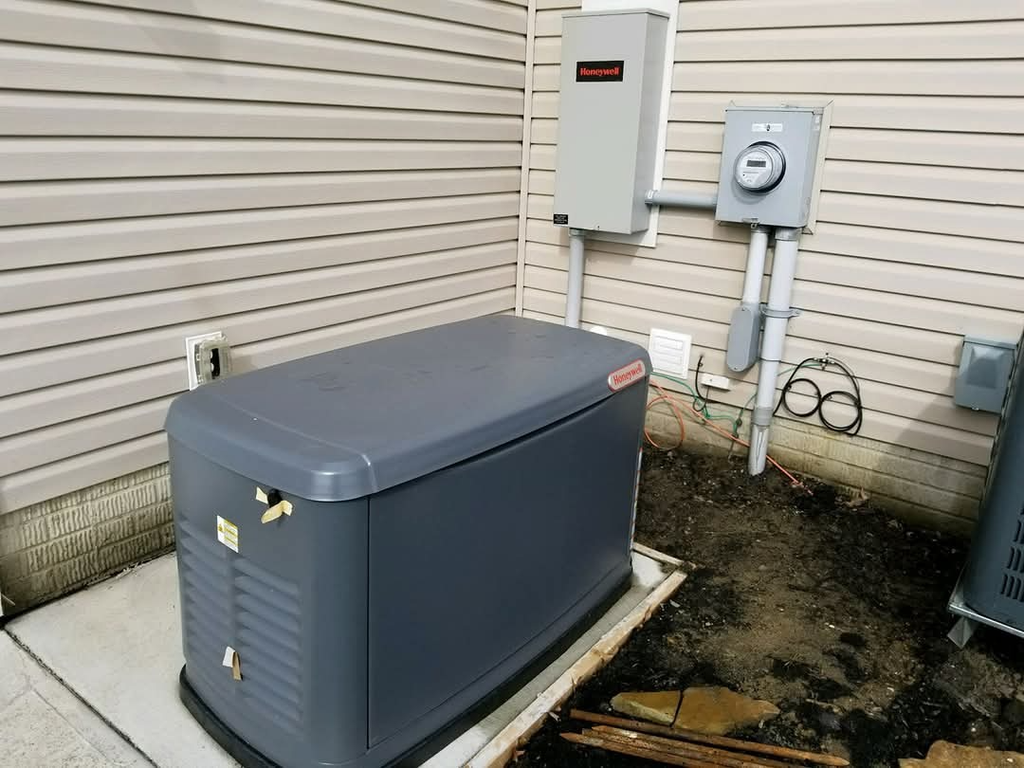
- Standby generators. If you have a generator and transfer switch, the layout of your service equipment affects where the SPD goes.
- Indicator location. You should be able to see the status light without opening the panel.
If you are already planning a panel upgrade, ask about adding an SPD at the same time. Adding the device during panel work can save a separate visit. Buckeye Electrical Solutions’ residential electrical services cover panel work, repairs, and wiring for homes across Northeast Ohio.
Frequently Asked Questions
Q: Is whole-home surge protection worth it?
A: It depends on what you want to protect. Homes with smart appliances, HVAC controls, home offices, and entertainment systems have more circuit boards at risk. The device covers hardwired equipment that plug-in strips cannot reach.
Q: Will a surge protector at the panel stop a lightning strike?
A: No. ESFI states that no surge protection can handle a direct lightning strike. It helps with surges from nearby strikes, utility switching, and equipment inside your home.
Q: How much does surge protector installation cost?
A: The cost depends on the device type, your panel, and whether grounding needs work. An electrician can give you a price after looking at your service equipment.
Q: Do I still need plug-in surge protectors?
A: Yes, for sensitive electronics. ESFI recommends pairing a Type 1 or Type 2 device with Type 3 protection at the outlet. Replace plug-in units over time or after a major surge.
Q: Does homeowners insurance cover surge damage?
A: Coverage depends on your policy and on how the surge happened. Check with your insurance agent before you assume a claim will be paid.
Q: How long does a surge protector last?
A: Large surges can wear down the parts inside the device. Check the status light on a regular schedule and replace the device when it shows a fault.
Sources for this article are listed below.
- Ohio Administrative Code 4101:8-34-01, Electrical (Residential Code of Ohio), effective April 15, 2024
- Ohio Department of Commerce, CSI review of Residential Code of Ohio amendments
- ESFI: Surge Protective Devices
- ESFI: Surge Protection, Keeping Your Electronics and Home Safe
- FirstEnergy: Surge Assist FAQs
- NFPA 70, National Electrical Code, free access
A whole house surge protector is one of the simpler ways to protect the equipment you rely on every day. Contact Buckeye Electrical Solutions to schedule an evaluation of your panel and surge protectio