Electric space heaters can be used safely in an older Cleveland home when the heater and electrical system are in good condition and you follow the manufacturer’s instructions and safe-use precautions. The risk goes up when a heater runs for hours on a worn outlet or a circuit that already carries other loads. This guide covers the space heater safety tips that matter most in older Northeast Ohio homes, the warning signs to watch for at your outlets, and when to call an electrician.
Why Space Heater Safety Matters in Winter
Heating equipment is one of the leading causes of home fire deaths, according to the National Fire Protection Association (NFPA). From 2020 to 2024, space heaters and heating stoves were involved in 30% of home heating equipment fires but 73% of the deaths. Nearly half of home heating equipment fires (46%) happened from December through February.
The U.S. Consumer Product Safety Commission (CPSC) estimates that portable heaters, including electric space heaters, were involved in an average of 1,600 fires per year from 2020 to 2022. Those fires led to an average of 70 deaths and 150 injuries a year. Most of the advice that follows comes from these agencies and the Electrical Safety Foundation International (ESFI).
What Makes Older Homes Different
A portable space heater pulls a large, steady load for hours at a time. It draws far more power than a lamp or a phone charger, and the wattage is printed on its label. The heater asks more of the outlet, the wire connections, and the circuit than most other things you plug in.
Older homes can add three problems:
- Worn outlets and connections can heat up. The CPSC explains that a deteriorated connection adds resistance, and that resistance causes overheating when current flows through it. A heater keeps current flowing for hours.
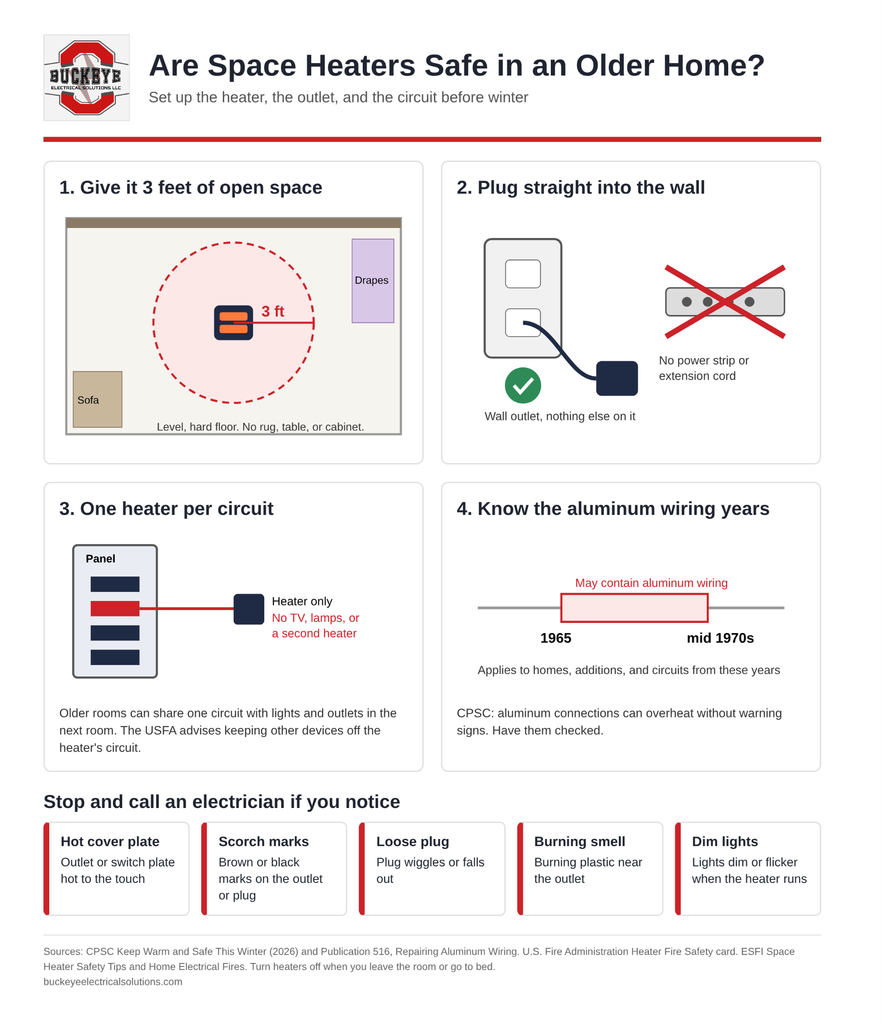
- A room may have only a few circuits. A bedroom or den can share one circuit with lights, a TV, and outlets in the next room. The U.S. Fire Administration (USFA) advises against plugging anything else into the circuit your heater uses, because it can cause overheating.
- Some homes have aluminum branch wiring. The CPSC says homes wired between 1965 and the mid 1970s may contain aluminum wiring. In a CPSC survey, homes built before 1972 and wired with aluminum were 55 times more likely to have outlet connections reach fire hazard conditions than homes wired with copper.
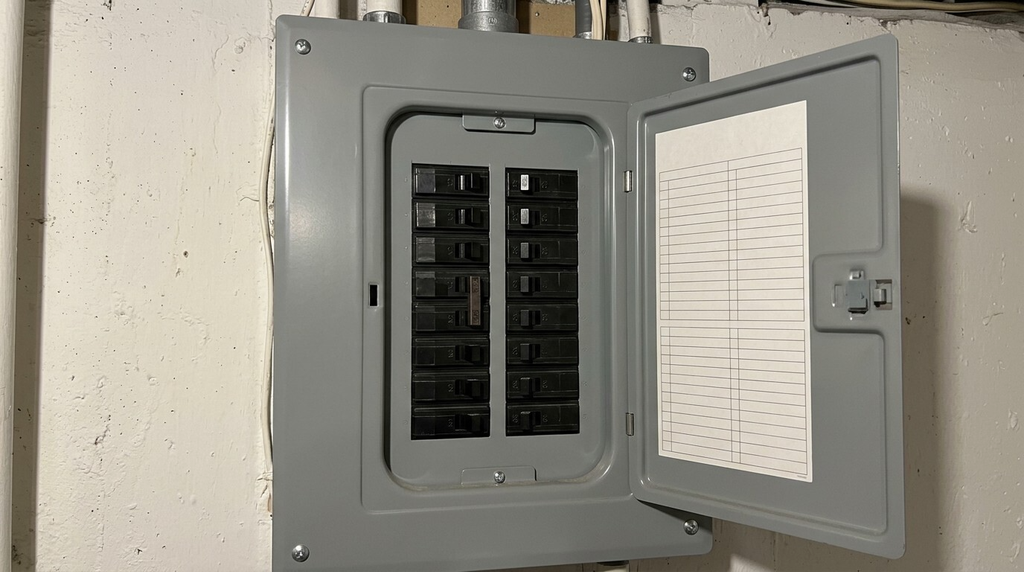
If you aren’t sure what’s behind your walls, a licensed electrician can check your outlets, connections, and circuit loads before the heater comes out for the season.
Are Space Heaters Safe Once They’re Plugged In?
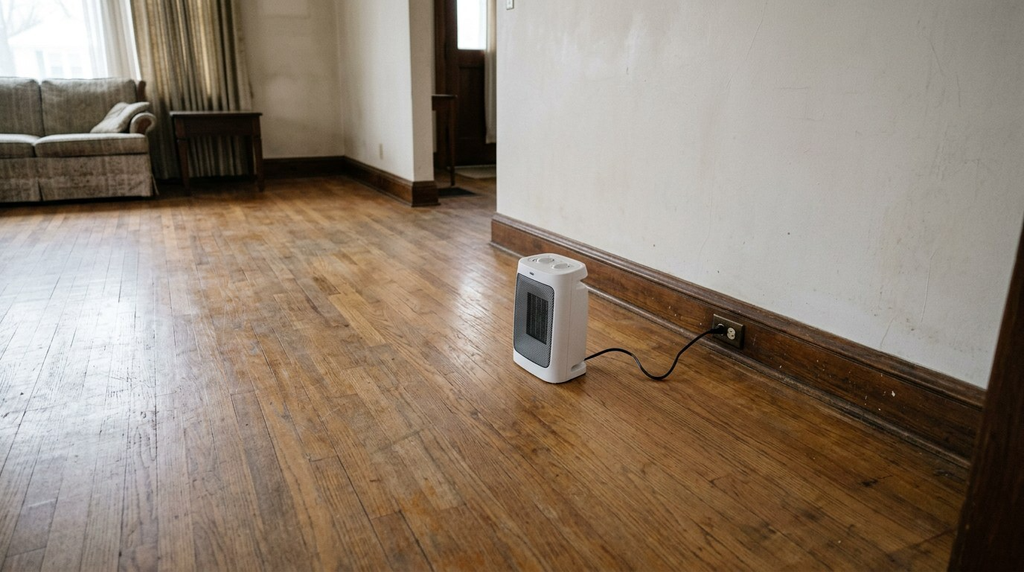
Where and how you plug in a heater matters as much as the heater itself. Follow these space heater safety tips from the CPSC, USFA, and ESFI:
- Choose a heater listed by a recognized testing laboratory, with an automatic shutoff that turns it off if it tips over.
- Plug the heater directly into a wall outlet. Don’t use an extension cord or power strip, which can overheat.
- Don’t plug other devices into the same outlet, and keep other large loads off that circuit.
- Keep the heater at least three feet from drapes, furniture, bedding, and anything else that can burn.
- Set it on a level, flat floor. ESFI warns against placing heaters on cabinets, tables, furniture, or carpet.
- Check the cord and plug before each use. Don’t use a heater with a cracked plug, frayed cord, or loose connection.
- Turn the heater off when you leave the room or go to bed.
A heater used properly can take the chill out of a drafty room. When one of these steps gets skipped, the heater can become a fire hazard. If your breaker trips when the heater runs, read our guide on why a breaker keeps tripping for the circuit math.
Warning Signs at the Outlet
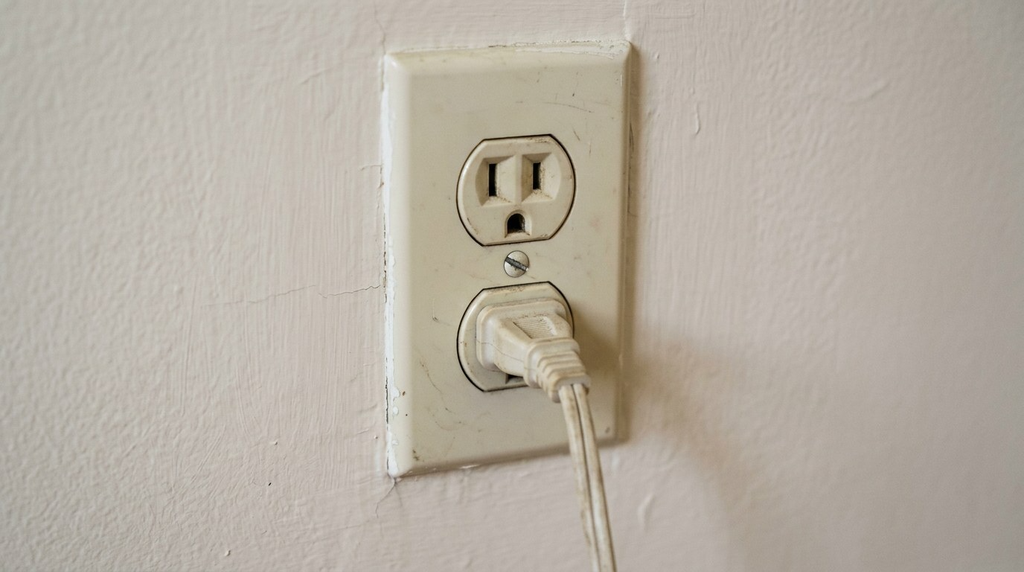
The CPSC lists these signs of electrical system problems: outlet or switch cover plates that are hot to the touch, flickering lights, circuits that don’t work, and the smell of burning plastic at outlets or switches. ESFI adds dim lights, sizzling or buzzing sounds, and breakers that trip repeatedly.
With the heater running, check for these signs:
- The plug or outlet cover feels hot after the heater has run for a while
- Brown or black marks appear on the outlet face or the plug prongs
- The plug falls out of the outlet or wiggles in place
- Lights in the room dim when the heater cycles on
- You smell burning plastic near the outlet
If you notice any of these, turn the heater off and stop using that outlet. Have a qualified electrician find the cause. The CPSC warns against trying the repair yourself, because you could be electrocuted or make the problem worse. The CPSC also notes that failing aluminum connections can overheat without any warning signs at all, which is one more reason to have an older system checked.
Space Heater Safety Checklist for Older Homes
Use this table to check your setup before winter.
| Check | Safer setup | Warning sign |
| Where it plugs in | Directly into a wall outlet | Extension cord or power strip |
| What else is on it | Nothing else on that outlet or circuit | TV, lamps, or a second heater on the same circuit |
| Outlet condition | Plug fits tight, cover plate stays cool | Loose plug, hot cover, scorch marks |
| Clearance | Three feet of open space on all sides | Bedding, drapes, or furniture nearby |
| Floor | Level, hard, flat floor | Carpet, rug, table, or cabinet |
| Heater features | Lab-listed with tip-over shutoff | No listing label, damaged cord or plug |
| When it runs | Only while someone is in the room | Left on overnight or in an empty room |
When to Call an Electrician
Call a licensed electrician if your outlets show any of the warning signs above, if your home may have aluminum wiring, or if you rely on a portable heater every winter because one room stays cold. An electrician can check the outlet and connections, test how much load the circuit already carries, and tell you whether a dedicated circuit makes sense for that room.
Buckeye Electrical Solutions provides residential electrical repairs and safety inspections for homes across Northeast Ohio. Our inspections look for hotspots, overloaded circuits, and loose connections before they cause bigger problems. If your panel is old or full, our guide to electrical panel upgrade signs explains what to look for.
Frequently asked questions
Is it safe to leave a space heater on overnight?
No. The CPSC, USFA, and NFPA all advise turning space heaters off when you go to bed or leave the room. Use extra blankets or warmer bedding to stay comfortable overnight instead.
Can I plug a heater into a power strip?
You shouldn’t. The CPSC says to plug electric space heaters directly into a wall outlet instead of an extension cord or power strip. Power strips and cords can overheat under the steady load a heater draws.
Why does my outlet get warm when the heater runs?
A warm outlet or plug can point to a loose connection, a worn outlet, or a circuit carrying too much load. Turn the heater off, stop using that outlet, and have an electrician find the cause.
Are space heaters safe with aluminum wiring?
Aluminum wire connections can overheat under load, and the CPSC says they can fail without warning signs. If your home was built or rewired between 1965 and the mid 1970s, have an electrician check your outlets and connections before you run a heater for long periods.
Why should I get a routine electrical inspection?
An electrical inspection can help identify safety concerns and show whether your system can support your current needs. It’s especially worthwhile for older homes, after major renovations, or when you add major appliances that increase demand. An inspection can assess capacity, wiring condition, panel connections, grounding, and protective devices. Ask our team to confirm the inspection scope for your property when you schedule.
Sources for this article are listed below.
- National Fire Protection Association, Safety With Heating Equipment
- U.S. Consumer Product Safety Commission, Keep Warm and Safe This Winter
- U.S. Consumer Product Safety Commission, Repairing Aluminum Wiring (Publication 516)
- U.S. Fire Administration, Heater Fire Safety Card
- U.S. Fire Administration, Heating Fire Safety
- ESFI, Space Heater Safety Tips
- ESFI, Home Electrical Fires