
Why Professional Home Electrical Services Matter for Ohio Homeowners
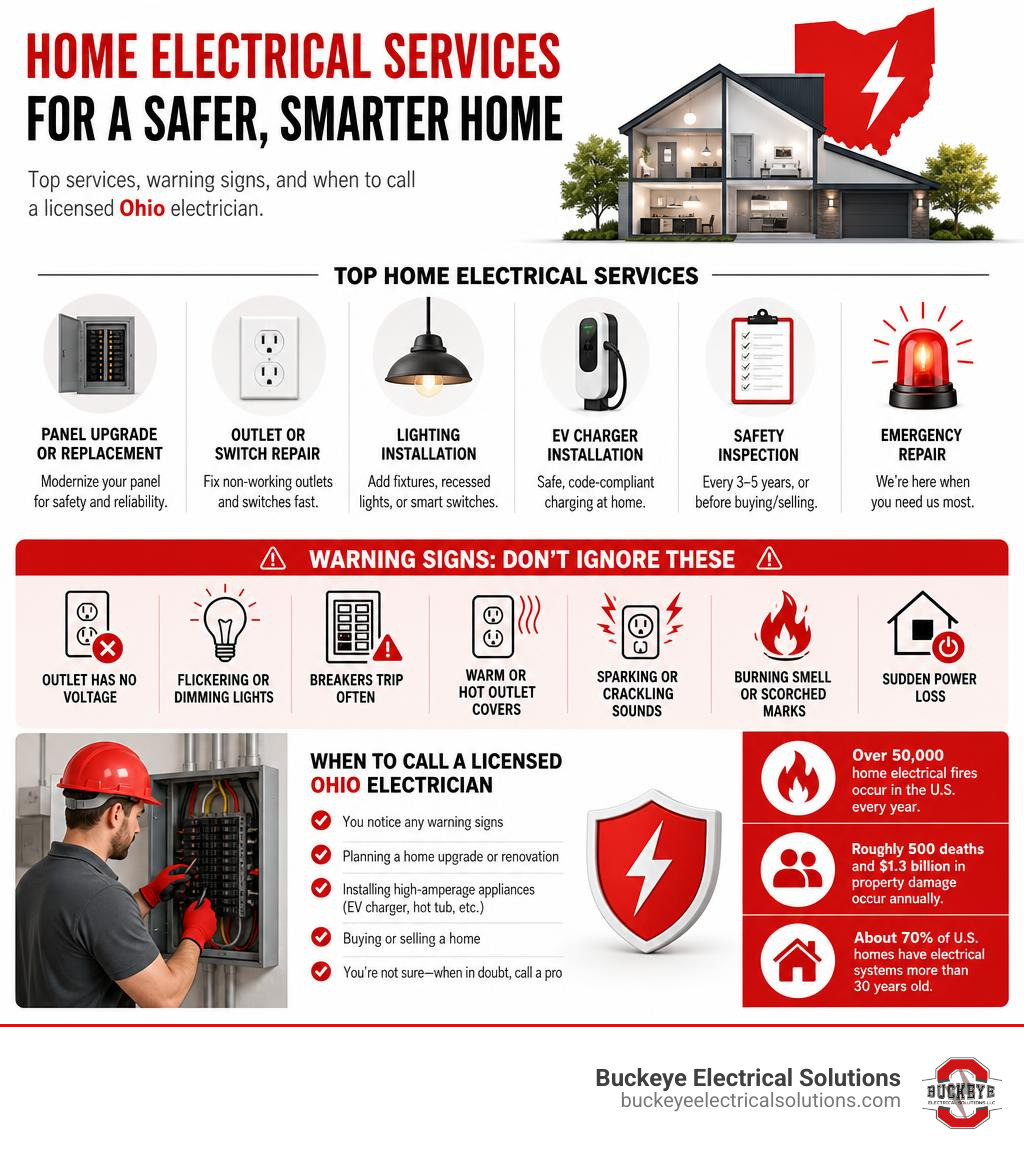
When something goes wrong with your wiring, finding reliable home electrical services in Ohio becomes an urgent priority – not just a convenience. Here’s a quick snapshot of what professional electricians offer and when to call one:
| What You Need | When to Call a Pro |
|---|---|
| Panel upgrade or replacement | Breakers trip often, or panel is 30+ years old |
| Outlet or switch repair | Outlet has no voltage; could indicate breaker, GFCI, switch, or wiring issue |
| Lighting installation | Adding fixtures, recessed lights, or smart switches |
| EV charger installation | Requires dedicated high-amperage circuit and permits |
| Safety inspection | Every 3-5 years, or before buying/selling a home |
| Emergency repair | Burning smell, sparking outlet, or sudden power loss |
The numbers make a strong case for acting fast. According to the Electrical Safety Foundation International, electrical problems are associated with tens of thousands of home fires in the U.S. each year, along with deaths, injuries, and significant property damage. And many U.S. homes have electrical systems more than 30 years old – meaning the risks are not rare or abstract.
Electrical problems don’t announce themselves politely. Flickering lights, a warm outlet cover, or a breaker that keeps tripping can all signal something serious happening inside your walls.
I’m Aaron, owner of Buckeye Electrical Solutions LLC, and I’ve led more than 60 permitted electrical projects across Northeast Ohio – from whole-home rewires to panel upgrades and EV charger installations – giving me a front-row view of the issues Ohio homeowners face most. In this guide, I’ll walk you through everything you need to know about choosing and using professional residential electrical services in Ohio.
Explore more about home electrical services in Ohio:
Common Residential Electrical Services in Ohio
Maintaining a safe, modern household requires a robust electrical infrastructure. When we look at the demands of modern appliances, high-speed internet, smart home systems, and electric vehicles, older electrical infrastructure quickly becomes overwhelmed. We specialize in providing comprehensive Residential Electrical Services designed to keep your home’s power flowing smoothly and safely.
Electrical Panel Upgrades
Many homes built before the 1980s operate on 100-amp service, which was perfectly adequate when the most demanding appliance in the house was a color television. Today, with central air conditioning, modern kitchen appliances, and home offices, 100 amps is often insufficient. Upgrading to a 200-amp or 400-amp panel doubles or quadruples your capacity, preventing overloaded circuits and allowing you to safely add new appliances. Additionally, modern smart circuit breakers can be integrated to provide advanced energy monitoring and safety features.
EV Charger Installation
As electric vehicles become more common throughout Ohio, the demand for residential Level 2 charging stations has skyrocketed. Unlike standard Level 1 chargers that plug into a typical 120-volt wall outlet and take days to charge your vehicle, Level 2 chargers require a dedicated 240-volt circuit. Installing these systems demands a professional assessment of your existing panel capacity, precise load calculations, and proper permitting to ensure safe, high-amperage power delivery.
Lighting and Smart Home Installations
Upgrading your home’s lighting is one of the most effective ways to improve both energy efficiency and aesthetic appeal. From designing and installing recessed LED lighting to integrating smart switches, dimmers, and automated home controls, we help you personalize your living space. Transitioning to LED lighting can reduce your lighting energy consumption by up to 75% while lasting up to 25 times longer than legacy incandescent bulbs.
To learn more about what goes on behind your drywall, check out our guide on Beyond the Wires: What Every Homeowner Needs to Know About Residential Electrical Services. Whether you need minor repairs or a complete system overhaul, finding the right team is essential; read our tips on how to Need a Residential Electrician? Find the Best Local Pros for Any Job Big or Small.
Recognizing the Signs of Electrical Issues in Your Home
Electrical hazards are often invisible until they manifest as a system failure or, worse, a safety emergency. Understanding the warning signs of a compromised electrical system can help you take action before costly damage occurs.
- Flickering or Dimming Lights: If your lights flicker when the refrigerator or air conditioner kicks on, your electrical panel is likely struggling to handle the transient load surges. This indicates that your system is operating at or near its capacity limit.
- Tripped Breakers: Circuit breakers are designed to shut off power when a circuit is overloaded. While an occasional trip can happen, frequent trips indicate a persistent overload, a short circuit, or a failing breaker that requires professional diagnostic intervention.
- Warm Outlets or Switches: An electrical outlet or switch plate should never feel warm to the touch. Warmth, discoloration, or buzzing sounds are warning signs of electrical arcing or loose terminal connections behind the wall.
- The Specific Outlet Failure: Outlet has no voltage; could indicate breaker, GFCI, switch, or wiring issue. This requires a systematic diagnostic approach to trace the circuit and locate the point of failure safely.
- Improper Wiring and Grounding: In older homes, we frequently find instances of “improper wiring” or a “bootleg ground” (where a three-prong outlet is incorrectly grounded to a neutral wire rather than a true equipment grounding conductor). This creates a severe shock hazard for modern electronics and appliances.
| Common Electrical Issue | Likely Causes | Priority Level |
|---|---|---|
| Flickering lights during appliance startup | Overloaded circuit, undersized panel feed, loose main connections | Moderate |
| Outlet has no voltage; could indicate breaker, GFCI, switch, or wiring issue | Tripped breaker, blown fuse, failed GFCI receptacle, or loose terminal wiring | Moderate |
| Warm outlet plates or switch covers | High-resistance connection, loose terminal screws, overloaded circuit | High |
| Frequent circuit breaker tripping | Circuit overload, short circuit, ground fault, or failing breaker | High |
| Buzzing, sizzling, or popping sounds behind walls | Active electrical arcing, loose wire nuts, damaged wire insulation | Emergency |
If you are noticing any of these warning signs, it is time to consult with Top Rated Residential Electrical Repair Experts to ensure your home remains safe and secure.
Navigating Ohio Electrical Codes and Safety Standards
All electrical work performed in Ohio must adhere to strict safety regulations to protect occupants and property. The foundation of these regulations is the National Electrical Code (NEC), which is updated periodically to reflect new safety technologies and research.
Ohio’s 2023 NEC adoption represents a significant step forward in residential safety. One of the most notable updates in this edition is the expansion of Ground Fault Circuit Interrupter (GFCI) and Arc Fault Circuit Interrupter (AFCI) requirements. However, rather than applying a blanket rule, the updated code qualifies specific rules (like those governing kitchens and outdoor receptacles) as situational rather than universal. For example, GFCI protection is now required for specific high-amperage appliances and outdoor outlets, but the exact application depends on the layout, proximity to water sources, and specific equipment ratings.
Ensuring your home meets these updated standards is not just about passing inspections; it directly impacts your safety and can even reduce your homeowner’s insurance premiums. Working with Licensed Ohio electricians ensures that all permits are pulled, the work is performed to code, and the final installation successfully passes municipal inspections. For a deeper dive into how these rules protect you, read our guide on Navigating electrical repair options in Ohio.
Selecting Professional Home Electrical Services in Ohio
Choosing the right partner for your home’s electrical needs requires careful vetting. Because electrical work carries inherent safety risks, you should never cut corners when selecting a contractor.
- Licensing: Always verify that the contractor holds an active license with the Ohio Construction Industry Licensing Board (OCILB). A licensed contractor has demonstrated the necessary technical knowledge and experience to perform safe, code-compliant work.
- Insurance and Bonding: A reputable company must carry robust general liability insurance and workers’ compensation. This protects you from financial liability in the rare event of property damage or an on-the-job injury.
- Background Checks: Your safety and peace of mind are paramount. Ensure the company performs thorough background checks and drug screenings on all technicians who enter your home.
- Transparent Reviews: Look for consistent, positive feedback from local clients that highlights prompt communication, cleanliness, and technical expertise.
To help you navigate this process, we have compiled a resource on Power Up Your Home: How to Find a Reliable Electrician.
What to Expect from Professional Home Electrical Services
When you hire a professional team, the experience should be seamless and stress-free. A professional service call typically begins with a thorough diagnostic process using specialized testing equipment to identify the root cause of your issue, rather than simply treating the symptoms. Technicians should follow strict safety protocols, including lock-out/tag-out procedures, to isolate circuits before working.
Clear communication is the hallmark of a great contractor. You should receive a detailed explanation of the findings, a clear outline of the proposed solutions, and a comprehensive walkthrough of the completed work. For urgent situations, having a plan is vital; consult The Homeowner Guide to Emergency Electrical Repair and keep the contact information handy for The Best Emergency Electricians (or rather, your trusted local emergency team). Knowing how to quickly secure help during an outage or hazard is covered in our guide on Don’t Get Zapped: Finding a 24-Hour Residential Electrician.
For those residing in central parts of the state, you can also check out our advice on how to avoid subpar contractors: Don’t Get Zapped by Bad Service with These Columbus Electrical Pros.
Budgeting for Local Home Electrical Services
We believe in complete financial transparency. When budgeting for electrical upgrades or repairs, look for contractors who offer upfront pricing with no hidden fees.
Please note that all service pricing, project ranges, or estimates are subject to change and dependent on local site conditions, existing infrastructure layout, or specific Authority Having Jurisdiction (AHJ) requirements. For example, while a typical panel upgrade or a whole-home rewire represents a standard range of investment, the final cost will depend heavily on your local utility requirements, the physical placement of your meter base, and the specific permitting fees in your municipality. To help make larger, necessary safety upgrades more accessible, we also offer flexible financing options for qualified projects.
Frequently Asked Questions about Ohio Residential Electrical Work
Why do my circuit breakers keep tripping?
Circuit breakers trip when the electrical current flowing through them exceeds their rated capacity. This is usually caused by an overloaded circuit—such as running a microwave, a space heater, and a hair dryer on the same circuit simultaneously. It can also be caused by a short circuit (where a hot wire touches a neutral wire) or a ground fault. If you experience frequent tripping, a professional load redistribution or circuit additions may be required to balance the demand safely.
How often should I have my electrical system inspected?
For most residential properties in Ohio, we recommend a comprehensive electrical safety inspection every 3 to 5 years. However, if you live in an older home (over 30 years old), have recently completed a major renovation, or are experiencing symptoms like flickering lights or warm outlets, you should schedule an inspection immediately to identify potential hazards early.
Can I install an EV charger myself?
We strongly advise against DIY EV charger installations. Level 2 charging stations operate on high-amperage 240-volt circuits, which carry significant risks of severe electrical shock and fire if improperly wired. Furthermore, a professional installation requires load calculations to ensure your panel can support the added demand, proper permitting through your local building department, and strict compliance with the NEC to maintain your vehicle’s warranty and your home insurance coverage.
Conclusion
Your home’s electrical system is its central nervous system, powering your daily life, your comfort, and your safety. Trying to cut corners with DIY electrical work or unpermitted installations risks severe damage, insurance complications, and safety hazards.
At Buckeye Electrical Solutions, we are proud to be the trusted residential electrical contractor serving Northeast Ohio. With over 20 years of hands-on experience, we provide top-tier residential repair, installation, and preventative maintenance. Our team is fully licensed, bonded, and insured, and we are dedicated to delivering exceptional service with prompt, code-compliant project completion.
Ready to secure your home’s power flow? Contact Buckeye Electrical Solutions today to schedule your professional home electrical services.