Why Emergency Light Repair Can’t Wait
Emergency light repair is something most homeowners and building managers don’t think about — until the power goes out and a hallway goes completely dark.
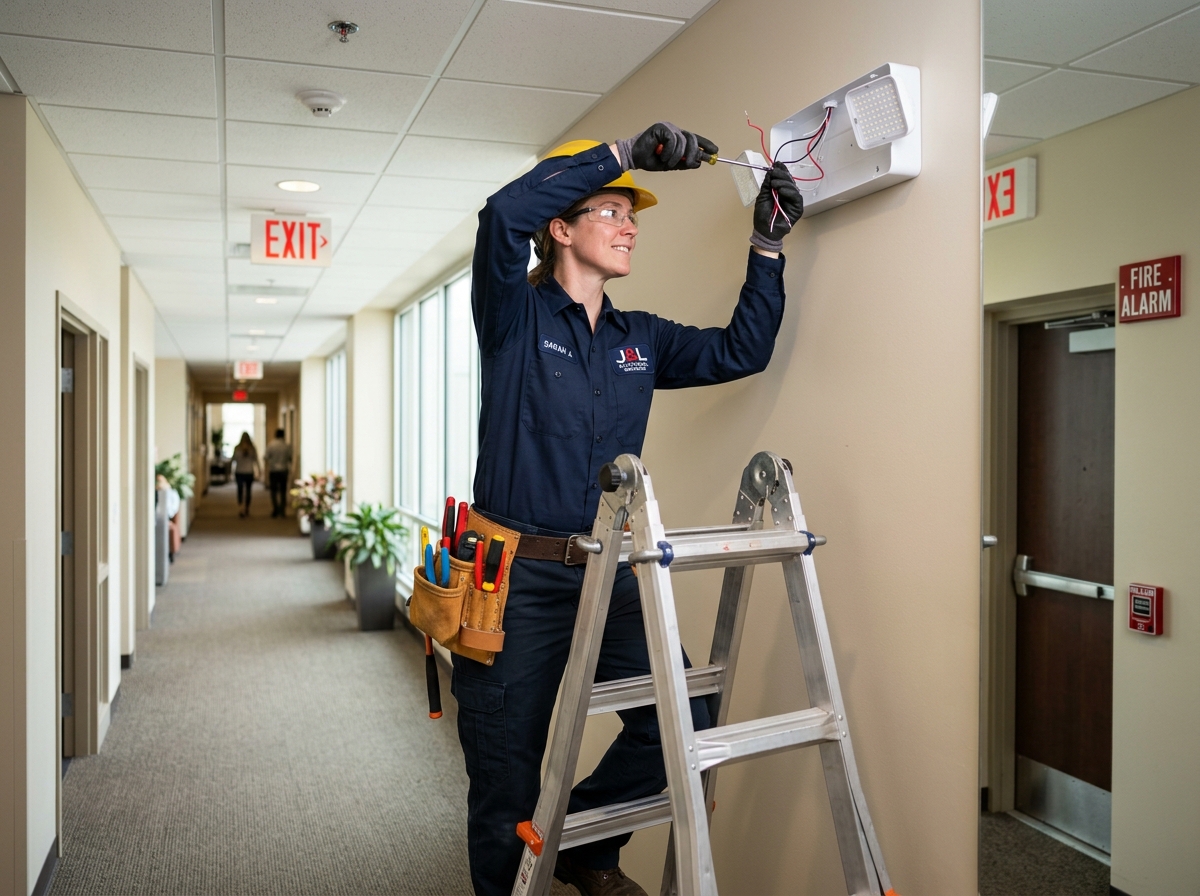
Professional emergency light repair involves a comprehensive process: identifying issues like dead batteries or faulty circuits, testing the system under simulated outage conditions, replacing worn components such as SLA or NiCd batteries, and verifying that all units meet NFPA 101 and NEC standards. Proper documentation is also maintained to ensure compliance during fire inspections.
Emergency lights are your building’s last line of defense during a power outage. They guide people to exits, help first responders navigate, and are required by law in most commercial and multi-unit residential buildings.
The stakes are real. Without working emergency lighting, stairwells go dark, panic sets in, and safe evacuation becomes dangerous — especially for those unfamiliar with the building layout.
I’m Aaron, owner and master electrician at Buckeye Electrical Solutions, and I’ve handled emergency light repairs across dozens of residential and commercial projects throughout Northeast Ohio. In this guide, I’ll explain the critical aspects of emergency lighting systems and the professional standards required to keep them operational.
Understanding the Importance of Emergency Light Repairs
When the main power grid fails, the transition to backup illumination must be seamless. This isn’t just a matter of convenience; it is a critical safety measure designed to prevent accidents and save lives. In Northeast Ohio, where lake-effect snow and summer storms can knock out power without warning, having a reliable backup system is essential.
An illuminated exit sign in a dark hallway does more than just show the way out; it provides a psychological anchor. During an emergency, people tend to panic when they lose their sense of direction. Proper egress paths, clearly lit by functional emergency fixtures, significantly reduce this risk.
We often see buildings where the emergency lights have been neglected for years. This is a major liability. According to NFPA 101 (the Life Safety Code) and OSHA regulations, these systems must be operational at all times. If a fire occurs and the emergency lights fail, the building owner could face massive fines or legal action. Ensuring your system is up to code is a core part of our Emergency Electrical Service in Northeast Ohio: Don’t Get Left in the Dark.
Legal Requirements for Building Safety
The National Electrical Code (NEC) and the NFPA set strict standards for how long these lights must stay on. In most cases, an emergency light must provide at least 90 minutes of illumination during a power failure. For certain larger facilities, codes may even require up to three hours of backup power.
Regular fire inspections in cities like Cleveland or Akron will specifically look for the “push-to-test” verification on your units. If the lights don’t kick on immediately, you’re looking at a code violation. By staying on top of repairs, we help you reduce liability and ensure you pass municipal ordinances with flying colors.
Strategic Placement for Code Compliance
It isn’t enough to just have a light; it has to be in the right place. Code requirements dictate that emergency lighting must cover:
- Stairwells: These are the most hazardous areas during an outage.
- Escape routes: Any hallway leading to an exit.
- Windowless rooms: Specifically those over 8 square meters (about 86 square feet) or any bathroom without natural light.
- Floor level changes: Any spot where someone could trip in the dark.
Common Causes of Emergency Lighting Failure
Even the best systems eventually need attention. Most emergency light repair calls we receive stem from a few predictable issues. Understanding these can help you spot trouble before the next storm hits. If you notice your signs are dim or unlit, Don’t Wait – Get an Emergency Electrician Now to avoid being caught in the dark.
Identifying Battery Issues in Emergency Light Repair
The battery is the heart of the system, and it is also the most common point of failure. Most units use one of two types:
- Sealed Lead-Acid (SLA): These look like miniature car batteries and are common in older, larger “bug-eye” units.
- Nickel-Cadmium (NiCd): These are smaller, often wrapped in plastic, and found in modern, slimline exit signs.
Batteries have a finite number of charging cycles. Over time, they lose their ability to hold a charge. A battery might show a “green” ready light but fail instantly when the power is cut because it no longer has the reserve power necessary to drive the bulbs.
Troubleshooting Flickering and Buzzing Fixtures
If your emergency light is making noise or flickering while the building power is on, it’s usually a sign of internal hardware distress.
- Capacitor failure: Especially in older units, internal capacitors can leak or bulge, leading to electrical “humming.”
- Aging ballasts: In fluorescent emergency signs, the ballast controls the energy flow; when it fails, the light will flicker or strobes.
- Loose connections: Vibration or poor initial installation can cause wires to vibrate against the casing, creating a buzzing sound.
Professional Maintenance and Testing Standards
To keep your building safe and compliant, we follow a rigorous testing schedule. The NFPA 101 standards aren’t just suggestions; they are the blueprint for reliability.
- Monthly Functional Test: A 30-second test where we trigger the battery backup to ensure the bulbs illuminate and the switching mechanism works.
- Annual Discharge Test: A full 90-minute “stress test.” We disconnect the main power to the unit and ensure it stays lit for the entire duration required by code.
- Documentation: We maintain a log of these tests. If a fire marshal walks into your building in Northeast Ohio, this log is the first thing they will ask to see.
| Feature | Incandescent Lamps | LED Emergency Lights |
|---|---|---|
| Lifespan | ~5,000 Hours (approx. 9 months) | Up to 10 Years |
| Energy Use | High | Very Low |
| Visibility | Standard | High Contrast/Bright |
| Maintenance | Frequent bulb changes | Minimal |
Maintained vs. Sustained Lighting Systems
It is important to know which system you have when discussing repairs.
- Maintained Systems: These lights stay on all the time (like an exit sign). They switch from main power to battery power when the grid goes down.
- Sustained Systems: These only turn on when the power fails. They use low-voltage bulbs that stay dark until the internal sensor detects a loss of main voltage.
The Role of LED Technology in Emergency Light Repair
If you are still using old incandescent “bug-eye” lights, we often recommend an upgrade during the repair process. Modern LED fixtures are a game-changer. They last up to 10 years, meaning you won’t be calling us for bulb replacements every few months. They also draw much less power from the battery, which can extend the overall life of the backup system. For information on other electrical improvements, you can view our resource on How to Replace a Broken Light Switch: A Beginner’s Guide.
When to Call a Professional for Electrical Repairs
While some maintenance tasks seem simple, emergency light repair involves working with live electricity and complex circuitry. Our team at Buckeye Electrical Solutions brings the specialized tools and experience needed to handle these safely.
You should call a professional if:
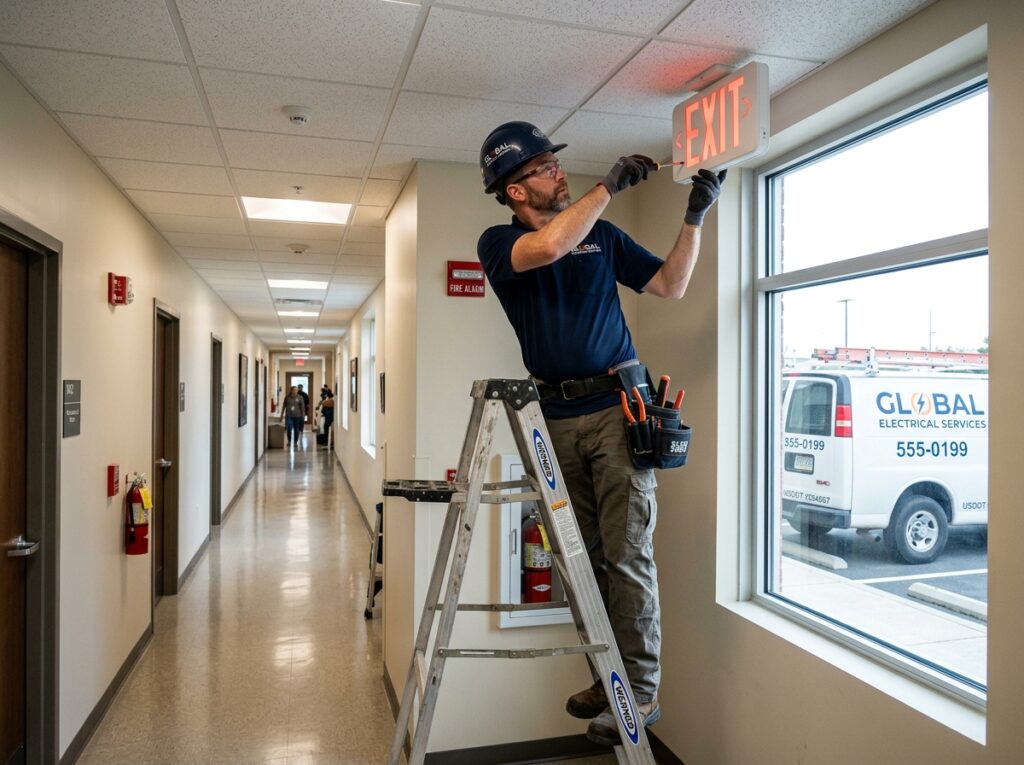
- High-Ceiling Access: Many exit signs are mounted in spots that require specialized ladders or lifts.
- Complex Wiring: If the unit is tied into a central fire alarm system, a mistake during repair could trigger a false alarm for the entire building.
- Sourcing Components: Finding the exact NiCd battery or transformer for an older unit can be difficult without access to professional supply chains.
- Repeated Failures: If you replace a battery and it dies again within a month, there is a deeper issue with the charging circuit that requires expert diagnosis.
Safety is our top priority. For more insights on electrical safety and professional troubleshooting, see our Don’t Get Shocked: Expert Advice for Electrical Troubleshooting.
Frequently Asked Questions about Emergency Lighting
How often should emergency lights be tested?
NFPA 101 requires a 30-second test every 30 days and a full 90-minute discharge test annually to ensure the system can provide light during a prolonged outage. This ensures that the battery hasn’t “filmed over” or lost its capacity to hold a charge.
Why is my emergency light red or blinking?
A red or blinking status light typically indicates a component failure, such as a depleted battery or a faulty charging circuit, requiring immediate professional attention. Some modern units have “self-diagnostic” features where the number of blinks tells us exactly which part has failed.
How long do emergency light batteries typically last?
Most emergency lighting batteries last between 3 to 5 years, though environmental factors like extreme heat or frequent power cycles in Northeast Ohio can impact this lifespan. We recommend proactive replacement every 4 years to avoid unexpected failures.
Conclusion
At Buckeye Electrical Solutions, we believe that safety shouldn’t be left to chance. Emergency light repair is a fundamental part of maintaining a secure environment for your family, tenants, or employees. Whether you need a simple battery replacement or a full system upgrade to LED technology, our team provides the professional inspection and safety-first approach you need for long-term reliability.
Don’t wait for the next power outage to find out your backup lights aren’t working. Contact us today for expert emergency electrical services across Northeast Ohio, and let us ensure your building stays bright when the world goes dark.