Why Every Northeast Ohio Homeowner Needs an Electrical Safety Inspection
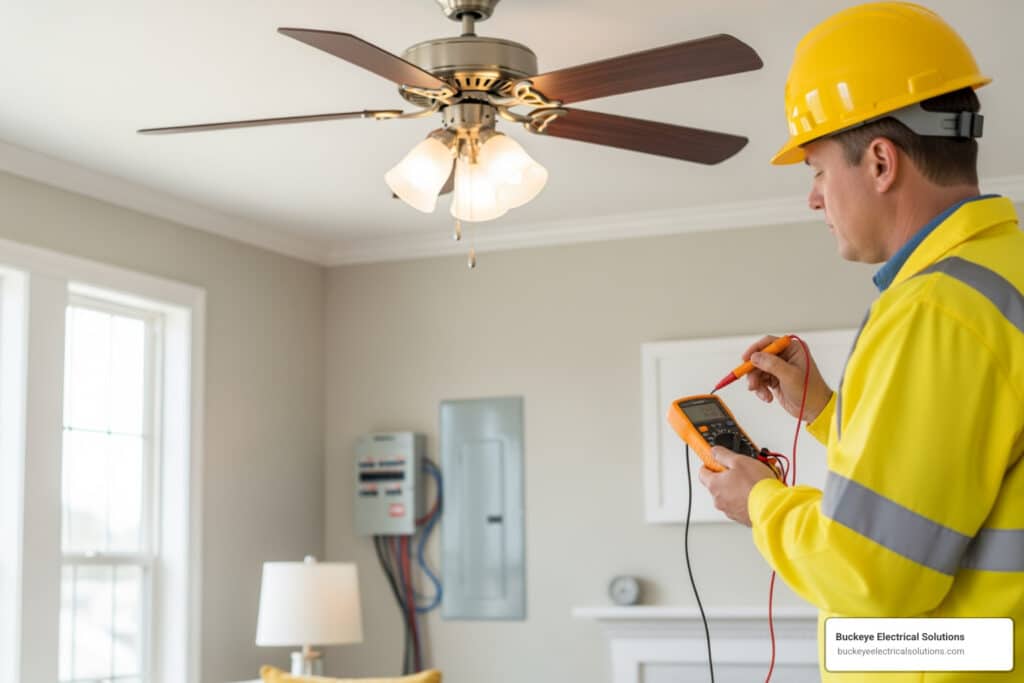
An electrical safety inspection is a professional review of your home’s wiring, outlets, panels, and devices to identify fire hazards, shock risks, and code violations before they cause injury or property damage.
Quick Answer: What You Need to Know
- What it is: A licensed electrician tests outlets, wiring, panels, GFCIs, and breakers to find dangerous conditions
- When to get one: Every 5 years, when buying/selling, after storms, or if your home was built before 1980
- What it costs: $100–$350 depending on home size and inspection scope
- Why it matters: Poor electrical maintenance causes thousands of deaths and fires yearly
- Who can do it: Only Licensed Electrical Contractors (LECs) or authorized inspectors
Every year, faulty wiring and outdated electrical systems start fires and cause injuries that could have been prevented. The U.S. Consumer Product Safety Commission recommends inspecting your home’s electrical products every six months, yet most homeowners wait until they smell burning plastic or see sparks before calling for help.
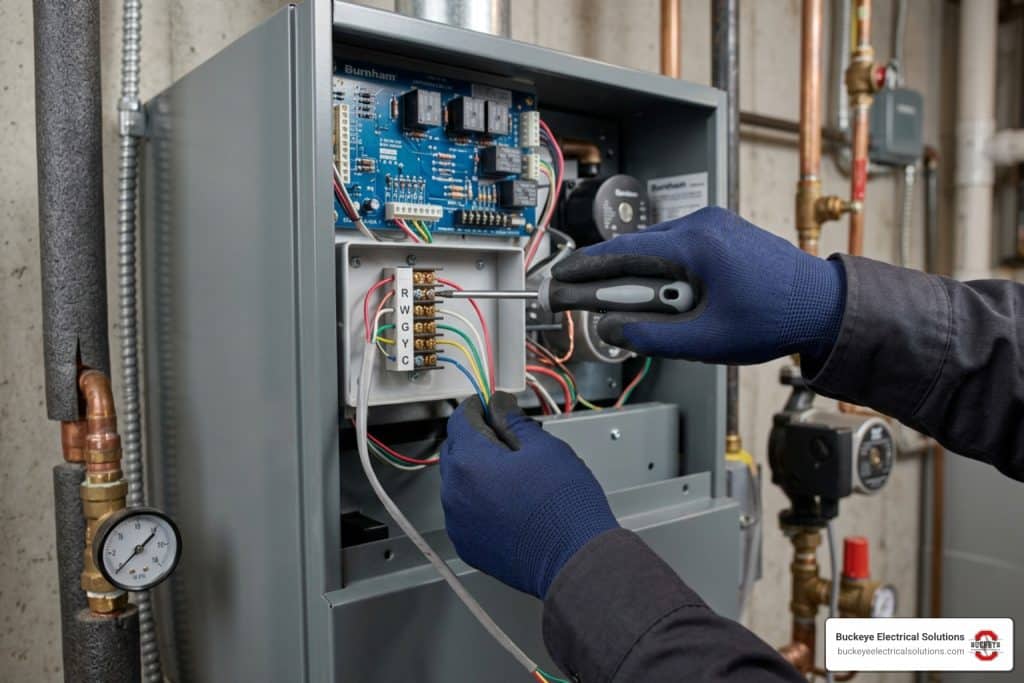
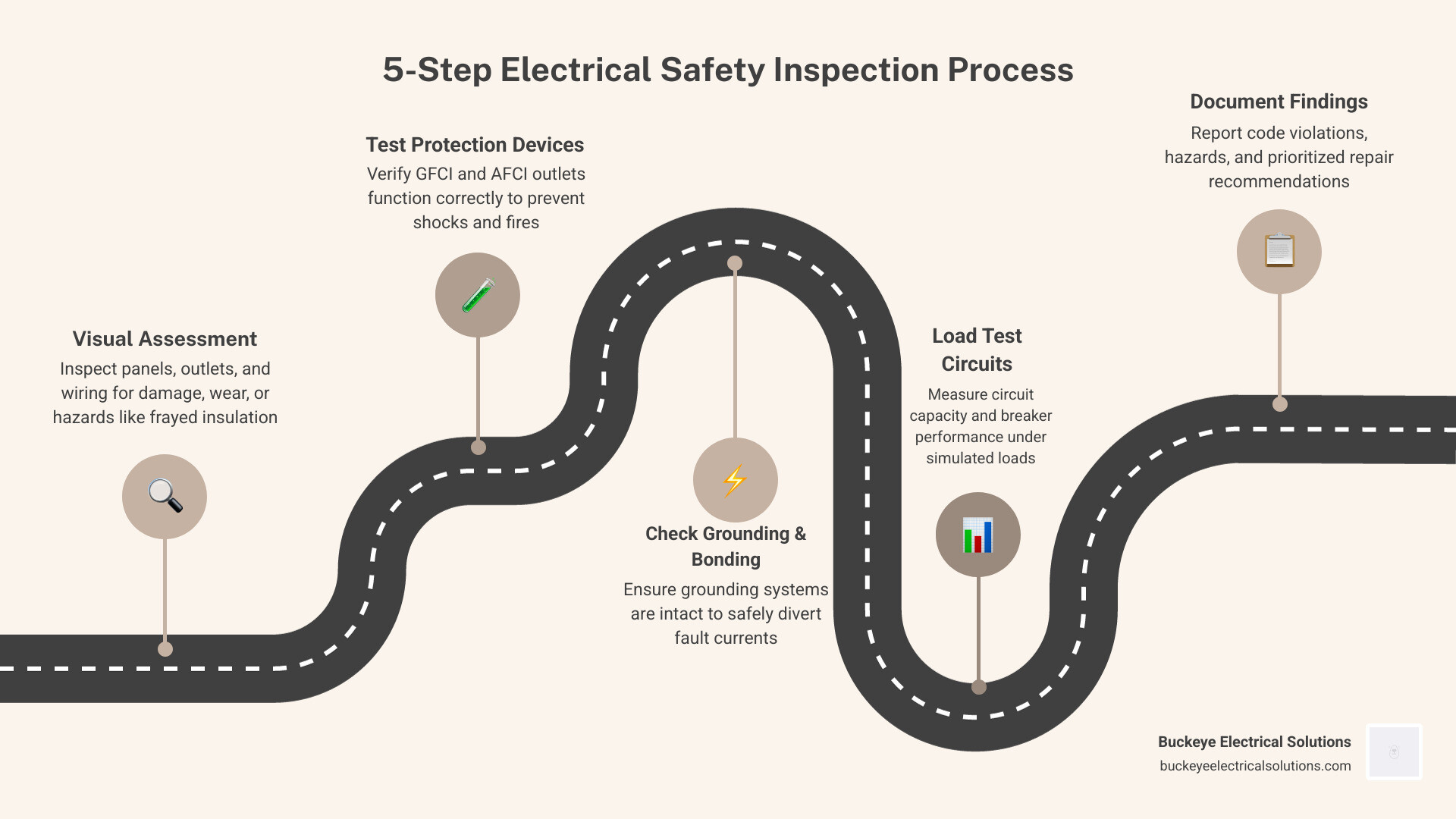
An inspection covers your electrical panel, circuit breakers, grounding systems, GFCI protection in wet areas, wiring condition, and devices like switches and outlets. Inspectors look for aluminum wiring, ungrounded outlets, Federal Pacific panels, knob-and-tube systems, and code violations that create shock or fire risks.
I’m Aaron, and I’ve led Buckeye Electrical Solutions through more than 60 permitted projects across Northeast Ohio, from complete rewires to panel upgrades, and I’ve seen how a thorough electrical safety inspection protects families and property. Whether you’re preparing to sell, dealing with an older home, or just want peace of mind, understanding what inspectors check—and why—helps you keep your home safe.
What is an Electrical Safety Inspection and Why Does It Matter?
At its core, an electrical safety inspection is about risk management. We aren’t just looking for things that don’t work; we are looking for things that work dangerously. Electricity is a silent force, and unlike a leaky pipe that leaves a puddle, a faulty wire often gives no warning until it ignites.
The primary reasons to prioritize this service include:
- Fire Safety: According to the U.S. Consumer Product Safety Commission, electrical products are associated with thousands of fires annually. Inspections identify arcing faults and overloaded circuits before they start a blaze.
- Electrocution Prevention: We verify that Ground Fault Circuit Interrupters (GFCIs) are installed and functioning in kitchens, bathrooms, and outdoors.
- Insurance Compliance: Many insurance companies in Ohio now require a “4-point inspection” (which includes the electrical system) before they will provide coverage for older homes.
- Property Protection: High-voltage surges or poor grounding can fry expensive electronics and appliances.
As noted in Inspection and periodic verification | WorkSafe, owners must not use electrically unsafe installations. Ensuring your home meets modern standards isn’t just a recommendation; it’s a responsibility of property ownership.
The Importance of Code Compliance
The National Electrical Code (NEC) is updated every three years to reflect new safety technologies and findings. For example, Ohio recently adopted the 2023 NEC, which expanded requirements for GFCI protection. While your home might have been “up to code” when it was built in 1995, it likely falls short of today’s safer standards.
During an inspection, we check for compliance with local by-laws and NEC standards. This is especially vital if you have done any DIY work or hired an unlicensed “handyman” for repairs. Code compliance ensures that if you ever sell your home, the electrical system won’t become a “deal-killer” during the buyer’s home inspection. You can learn more about how we handle these standards on our Residential Electrical Services page.
When to Schedule an Electrical Safety Inspection for Your Home
Timing is everything. While you don’t need an inspector at your door every month, there are specific milestones where a professional look is mandatory for safety.
- Homes Older Than 1980: If your home was built before the 80s and hasn’t had a recent check, it is time. These homes often have undersized electrical panels (60 or 100 amps) that struggle to handle modern appliances, EVs, and high-def electronics.
- Every Five Years: This is the industry gold standard for a full system “physical.” Over time, connections can loosen due to thermal expansion, and rodents can chew through insulation in attics or crawlspaces.
- Post-Storm Damage: If a tree fell on your service line or your neighborhood experienced a major power surge or lightning strike, internal components may be compromised.
- Major Renovations: Adding a room or finishing a basement requires a permit and a multi-stage inspection process to ensure the new load doesn’t overwhelm your existing service.
For those in the rental market, there is a growing trend toward mandatory checks. For instance, Electrical safety standards in the private and social rented sectors: guidance – GOV.UK highlights that landlords are increasingly required to provide proof of safety every five years. While Ohio laws vary by municipality, keeping a 5-year schedule is the best way to avoid liability.
Signs You Need an Immediate electrical safety inspection
Sometimes you can’t wait for the five-year mark. Your home often “talks” to you when something is wrong. Listen for these warning signs:
- Flickering or Dimming Lights: This often indicates a loose connection in the panel or a circuit that is nearing its capacity.
- Burning Smells: If you smell something like “fish” or burning plastic near an outlet or the panel, turn off the main breaker immediately. This is a sign of active electrical arcing.
- Warm Outlets or Switches: No electrical component should feel hot to the touch. This suggests poor wiring or an internal fault.
- Frequent Breaker Trips: If you can’t run the microwave and the toaster at the same time without a “pop,” your system is overloaded.
If you notice these issues, it might also be time to check your fire detection systems. You can find more info about fire alarm services to ensure your secondary safety net is ready if the worst happens.
Common Hazards Identified During a Professional electrical safety inspection
When we walk into a Northeast Ohio home for an electrical safety inspection, we often find hidden “surprises” that the homeowner never knew existed.
One of the most common issues is exposed or frayed wiring. This is often the result of DIY repairs where wires were run through attics or basements without proper protection. Other major red flags include:
- Ungrounded Outlets: Have you ever seen an outlet with two slots but no round hole beneath? That’s an ungrounded outlet. They are a significant shock risk for modern three-prong appliances.
- Aluminum Wiring: Used in roughly 1.5 million homes between 1965 and 1973, aluminum wiring is 55 times more likely to have fire hazard conditions than copper because it expands and contracts significantly, leading to loose connections.
- Knob-and-Tube Systems: Found in homes built before 1940, this system uses ceramic knobs and tubes. While not inherently “evil,” it lacks a ground wire and the insulation often becomes brittle and flakes off over the decades.
- Federal Pacific or Zinsco Panels: These specific brands of panels are notorious in the industry. They have a high failure rate where the breakers refuse to trip during an overload, essentially turning your wiring into a heating element.
Identifying Outdated Wiring and Panel Issues
Your electrical panel is the heart of your home. If it’s undersized or damaged, the rest of the system is at risk. We frequently see 60-amp service in older Akron or Cleveland homes, which is simply not enough for a modern lifestyle.
We also look for:
- Double-Tapped Breakers: This is when two wires are shoved into a breaker designed for only one. It creates a loose connection and a fire hazard.
- Corrosion/Rust: If moisture gets into your panel, it can corrode the bus bar, leading to resistance and heat.
- Undersized Circuits: Using a 15-amp breaker on a circuit that should be 20-amp (or vice versa) can lead to nuisance tripping or dangerous overheating.
For business owners, these issues are even more critical. You can see how we handle larger-scale systems on our Commercial Electrical Services page.
| Feature | GFCI (Ground Fault) | AFCI (Arc Fault) |
|---|---|---|
| Primary Goal | Prevents Electrocution | Prevents Electrical Fires |
| How it Works | Detects leaks to ground | Detects dangerous sparking (arcing) |
| Common Locations | Kitchens, Baths, Outdoors | Bedrooms, Living Areas |
| Testing Frequency | Monthly | Monthly |
The Different Stages of Electrical Inspections
If you are building a new home or doing a major addition, the electrical safety inspection isn’t a one-and-done event. It happens in stages to ensure nothing is hidden behind the walls that shouldn’t be there.
- Rough-in Inspection: This happens after all the boxes, cables, and conduits are installed but before the drywall goes up. The inspector needs to see how the wires are pulled and secured.
- Service/Connection Inspection: This focuses on the main electrical service equipment, the meter base, and the grounding electrode system. This is what allows the utility company to safely hook up your power.
- Underground Inspection: If you are running power to a detached garage or a pool, this inspection happens while the trench is still open so the inspector can verify the depth and type of conduit used.
- Final Inspection: The “grand finale.” This occurs when all devices (outlets, switches, lights) are installed, the panel is fully labeled, and the system is energized.
Regulations for Landlords and High-Risk Sites
Certain installations carry a higher risk and require more frequent or specialized oversight. As specified in Regulation 70, high-risk installations like high-voltage systems or hazardous areas are subject to third-party inspections.
In the residential world, landlords have a duty of care. While the U.S. doesn’t have a nationwide “warrant of electrical fitness” like some other countries, local Northeast Ohio municipalities often require point-of-sale or rental inspections to ensure tenants aren’t living in fire traps. Medical facilities and industrial sites also fall under stricter periodic verification rules to ensure life-safety equipment never loses power.
How to Prepare and What to Expect During the Process
Preparing for an electrical safety inspection can save you time and money. Most standard residential inspections in Ohio cost between $100 and $200, while a comprehensive “whole-house” inspection for a larger property might reach $350.
To get ready:
- Clear Access: Ensure there is at least 3 feet of clear space in front of your electrical panel. We can’t inspect what we can’t reach!
- Label Your Breakers: If your panel directory looks like a mess of scribbles from 1992, take a moment to identify which breakers control which rooms.
- Gather Documentation: Have any recent permits or receipts for electrical work ready for the inspector.
- Unplug Sensitive Electronics: We may need to trip breakers to test them; it’s safer to have your $2,000 gaming PC unplugged during the process.
Following the advice in Preparing for Your Inspection – ESA can help ensure the process goes smoothly. The inspector isn’t there to “catch” you; they are there to help you avoid a disaster.
Using an electrical safety inspection Checklist
A professional uses a detailed checklist to ensure no stone is left unturned. This includes testing every GFCI outlet, checking the age of smoke detector batteries, and verifying that surge protection is in place for the whole house.
You can even do a “mini-inspection” yourself every few months:
- Test GFCIs: Press the “Test” button; the “Reset” button should pop out and the power should cut off.
- Check Cords: Look for pinched or frayed extension cords.
- Exercise Breakers: Once a year, flip your breakers off and back on to ensure the mechanical parts don’t “stick.”
Frequently Asked Questions about Electrical Safety Inspections
How much does an electrical safety inspection cost?
The average cost of a full home electrical safety inspection is around $350. However, standard diagnostic visits or smaller home checks typically range from $100 to $200. If you require advanced infrared thermography—where we use a thermal camera to find “hot spots” hidden inside walls—expect to add about $250 to the total.
Who is qualified to perform an electrical safety inspection?
Only a Licensed Electrical Contractor (LEC) or a certified government inspector should perform these checks. As noted in Regulation 71, inspections can only be carried out by a person authorized by their registration and practicing license. In Ohio, always ask to see an electrician’s license and insurance before they begin work.
How often should I test my GFCI and AFCI outlets?
The U.S. Consumer Product Safety Commission (CPSC) recommends testing GFCI outlets once a month. AFCI breakers should also be tested monthly using the test button on the breaker itself. These devices are complex electronic components that can fail silently; testing is the only way to know you’re still protected.
Conclusion
Your home’s electrical system is easy to ignore because it’s mostly hidden behind walls. But “out of sight” shouldn’t mean “out of mind.” Whether you are dealing with the quirks of a century-old home in Cleveland or ensuring your new construction in Akron is up to code, a professional electrical safety inspection is the single best investment you can make for your family’s safety.
At Buckeye Electrical Solutions, we bring over 20 years of experience to every job site. We know the specific challenges of Northeast Ohio homes, from aging infrastructure to the latest NEC requirements. We pride ourselves on prompt, professional service that gives you the “all clear” you need to sleep soundly at night.
Don’t wait for a spark to tell you there’s a problem. Schedule your professional electrical safety inspection today and let us help you keep the lights on—safely.