Why Electric Fireplaces Are Changing Northeast Ohio Homes
How to install electric fireplace units has become one of the most common questions we hear from homeowners looking to add warmth and ambiance without the mess of traditional fireplaces. Whether you’re upgrading an unused wood-burning fireplace or adding a stunning focal point to a bare wall, electric fireplaces offer a clean, efficient solution that you can often install yourself in just a few hours.
Quick Answer: Basic Installation Steps
- Choose your type – Wall-mounted, insert, or freestanding unit
- Gather tools – Level, stud finder, drill, measuring tape, screwdriver
- Prepare the location – Check electrical access, measure space, mark mounting points
- Mount or position – Secure brackets to studs (wall-mount) or slide into opening (insert)
- Connect power – Plug into grounded outlet or hardwire with dedicated circuit
- Test and finish – Verify operation, add decorative elements, secure glass front
Most electric fireplaces require a standard 120-volt outlet and 1,500 watts to operate. Running costs typically range from 10 to 30 cents per hour, and a 5,200-BTU model can heat up to 1,000 square feet. Unlike gas or wood fireplaces, there’s no venting needed, no chimney required, and no special permits for basic plug-in models.
The real beauty of electric fireplaces is their flexibility. You can use them year-round for ambiance with the heat turned off, or crank up the warmth on those cold Ohio winter nights. They’re safer than space heaters, easier to maintain than traditional fireplaces, and can be installed almost anywhere you have wall space and an outlet.
I’m Aaron, and I’ve helped dozens of Northeast Ohio homeowners plan electrical upgrades for modern features like electric fireplaces through Buckeye Electrical Solutions. While many homeowners can successfully install electric fireplace units themselves, understanding the electrical requirements and safety considerations is crucial for a safe, code-compliant installation. If your project requires hardwiring, a new dedicated circuit, or you’re simply not comfortable with electrical work, that’s exactly when professional help makes the most sense.
Planning Your Installation: Types, Tools, and Prep Work
Before we dive into the nitty-gritty of installation, a little planning goes a long way.
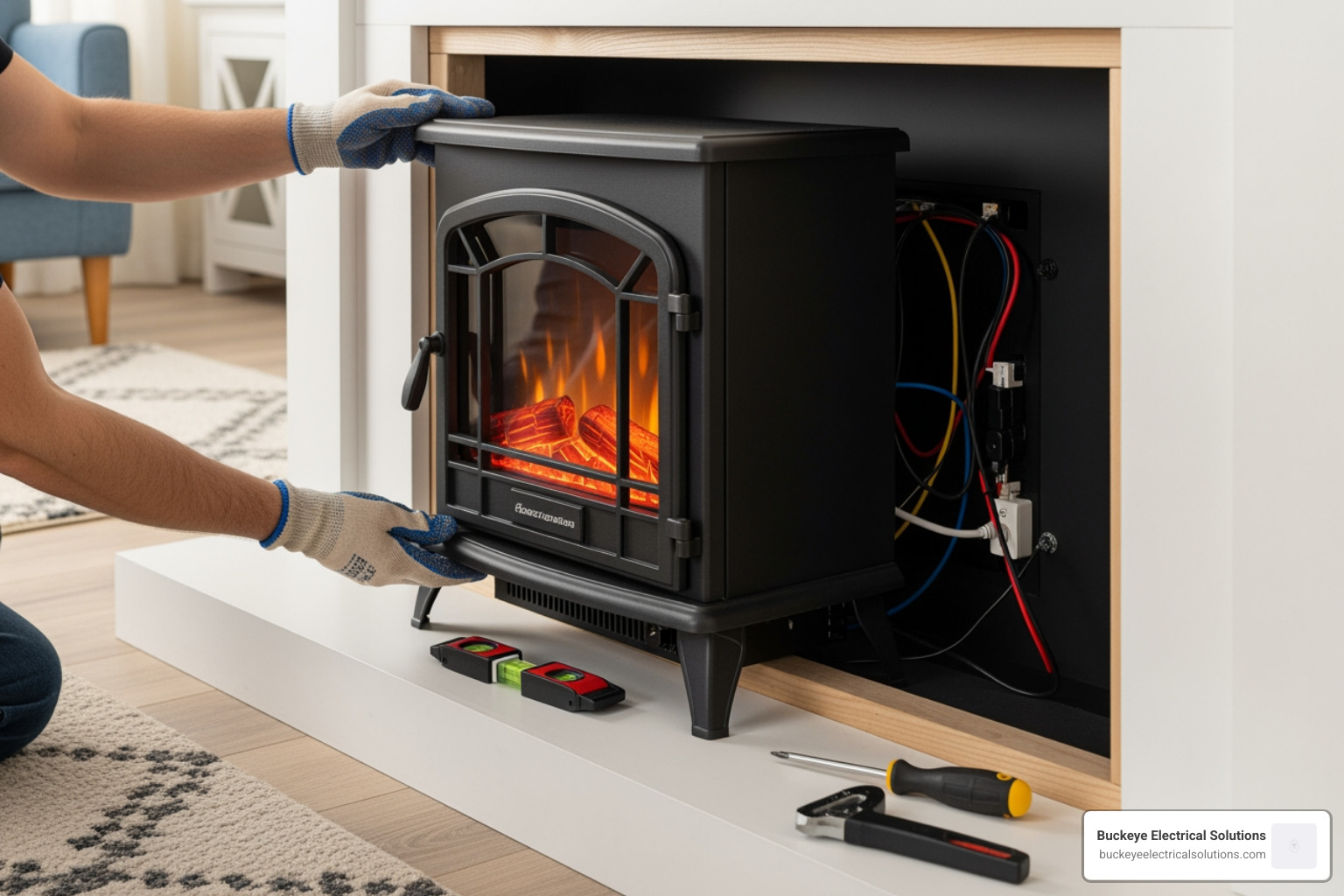
Choosing the Right Electric Fireplace
The first step in learning how to install electric fireplace units is deciding which type best suits your space and needs. Electric fireplaces come in a few main varieties:
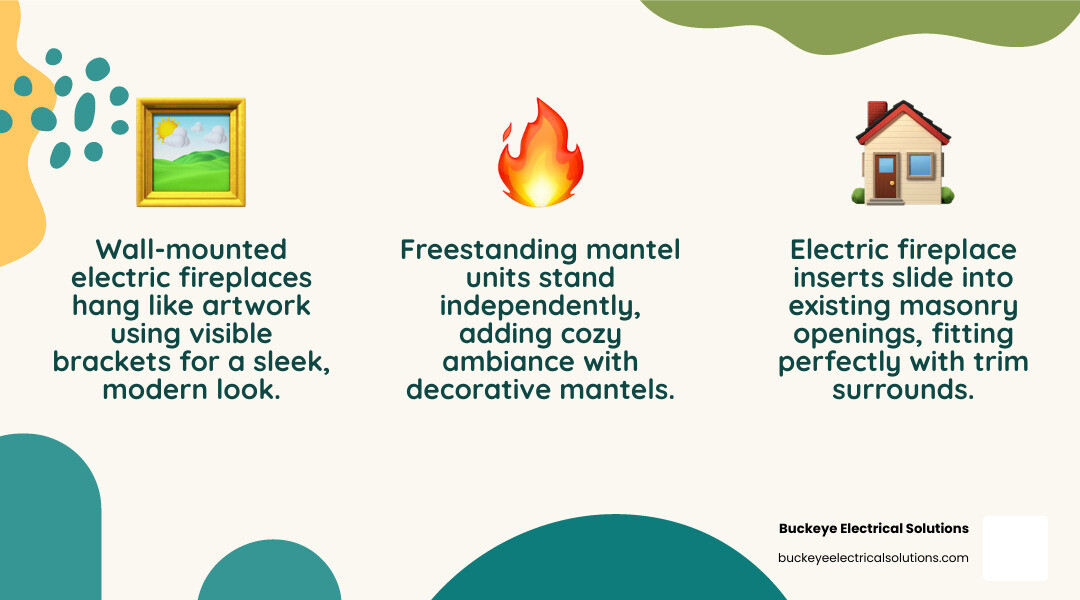
- Wall-Mounted Units: These hang directly on your wall, much like a flat-screen TV. They’re perfect for adding a sleek, modern touch and are generally the easiest to install, often requiring just a sturdy mounting bracket.
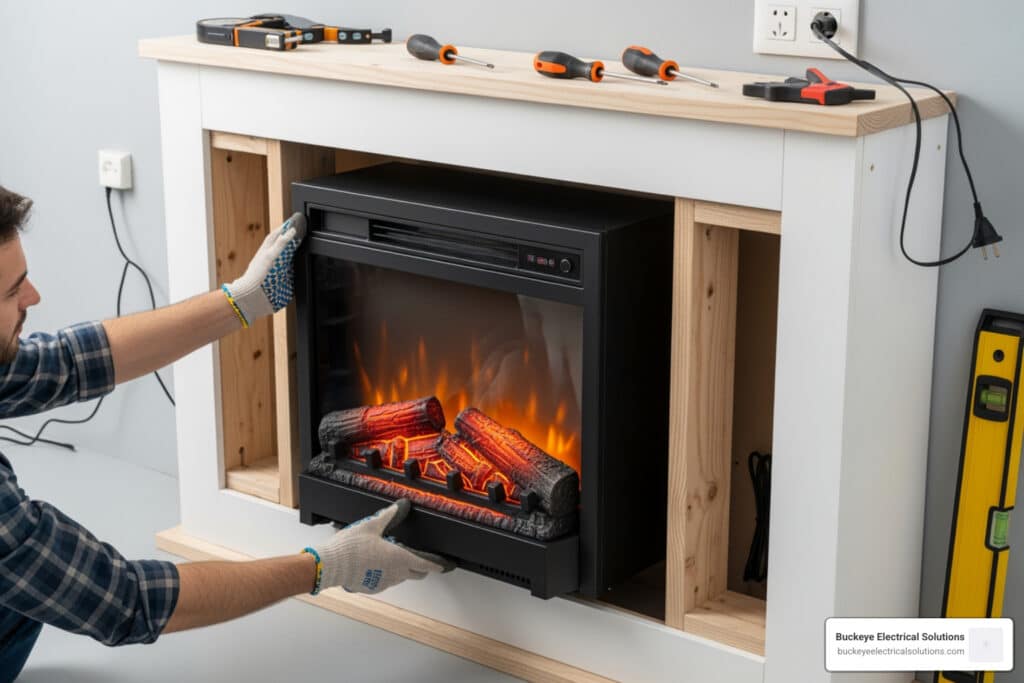
- Electric Fireplace Inserts: If you have an existing wood-burning fireplace that’s seen better days, an insert is an excellent choice. These units slide directly into your old firebox, instantly changing it into a clean, efficient electric hearth.
- Freestanding Mantels and Media Consoles: These are all-in-one units that include the fireplace and a decorative mantel or media stand. They don’t require any wall mounting; you simply place them where you want them and plug them in.
When choosing your unit, consider the BTU output (British Thermal Units). A 5,200-BTU electric fireplace can typically heat an area up to 1,000 square feet, making it a great supplemental heat source for many rooms in Northeast Ohio homes. Most electric fireplaces require between 1,000 and 1,500 watts.
Also, think about the flame effect technology. Modern electric fireplaces use LED lights and mirrors to create incredibly realistic flame displays, often with adjustable colors and brightness. You can find more detailed information in this Electric Fireplace Buying Guide.
For electric fireplace inserts, accurate measurements are paramount. SimpliFire electric fireplace inserts come in 25″, 30″, and 35″ sizes. Before ordering, you’ll need to measure the height, width, and depth of your existing fireplace opening. You can find more details in this product brochure SimpliFire electric fireplace insertscome in 25″ , 30″ and 35″ sizes. Before ordering yourSimpliFire electric insert, measure the height, width and depth of your existing fireplace opening. Whether you plan on ordering online or working with ahearth professional, these dimensions are needed to ensure….
Tools and Materials You’ll Need
Having the right tools on hand makes any DIY project smoother:
- Tape measure: For precise sizing and placement
- Stud finder: Crucial for locating wall studs
- Level: To guarantee your fireplace hangs perfectly straight
- Drill and bits: For pilot holes and driving screws
- Phillips screwdriver: For various fasteners
- Mounting brackets: Usually included with wall-mounted units
- Screws and wall anchors: Use heavy-duty screws for studs
- Safety gloves and goggles: To protect yourself
- Utility knife: Handy for opening packaging
- Wire strippers: If hardwiring (with qualified help)
- Electric fireplace unit and trim kit: Your main components
Preparing the Installation Site
Careful preparation is a cornerstone of any successful installation.
- Choosing a Location: Select a spot that’s not susceptible to moisture, and ensure it’s a safe distance from high-traffic areas, furniture, and drapes. We recommend at least 3 feet of space in any direction from heat-generating appliances.
- Wall Integrity: If you’re installing a wall-mounted or recessed unit, assess the wall. Is it a load-bearing wall? Building out an existing wall can simplify wiring and avoid compromising load-bearing or exterior walls.
- Clearance to Combustibles: For recessed installations, any exposed wood framing inside the opening should be covered with drywall to maintain the recommended clearance to combustibles.
- Proximity to Electrical Outlet: Most electric fireplaces require a standard 120V outlet. Ensure there’s an accessible outlet nearby. If not, you might need to consider running a new one.
- Using a Cardboard Cutout: Create a cardboard cutout of your fireplace unit to visualize its exact placement on the wall, helping you mark mounting points accurately.
- Sealing an Existing Chimney Flue: If installing an insert into an old wood-burning fireplace, seal the chimney flue and damper to prevent cold drafts and water infiltration.
How to Install a Wall-Mounted Electric Fireplace
Wall-mounted electric fireplaces are fantastic for their modern aesthetic and relatively straightforward installation. Here’s how we approach it.
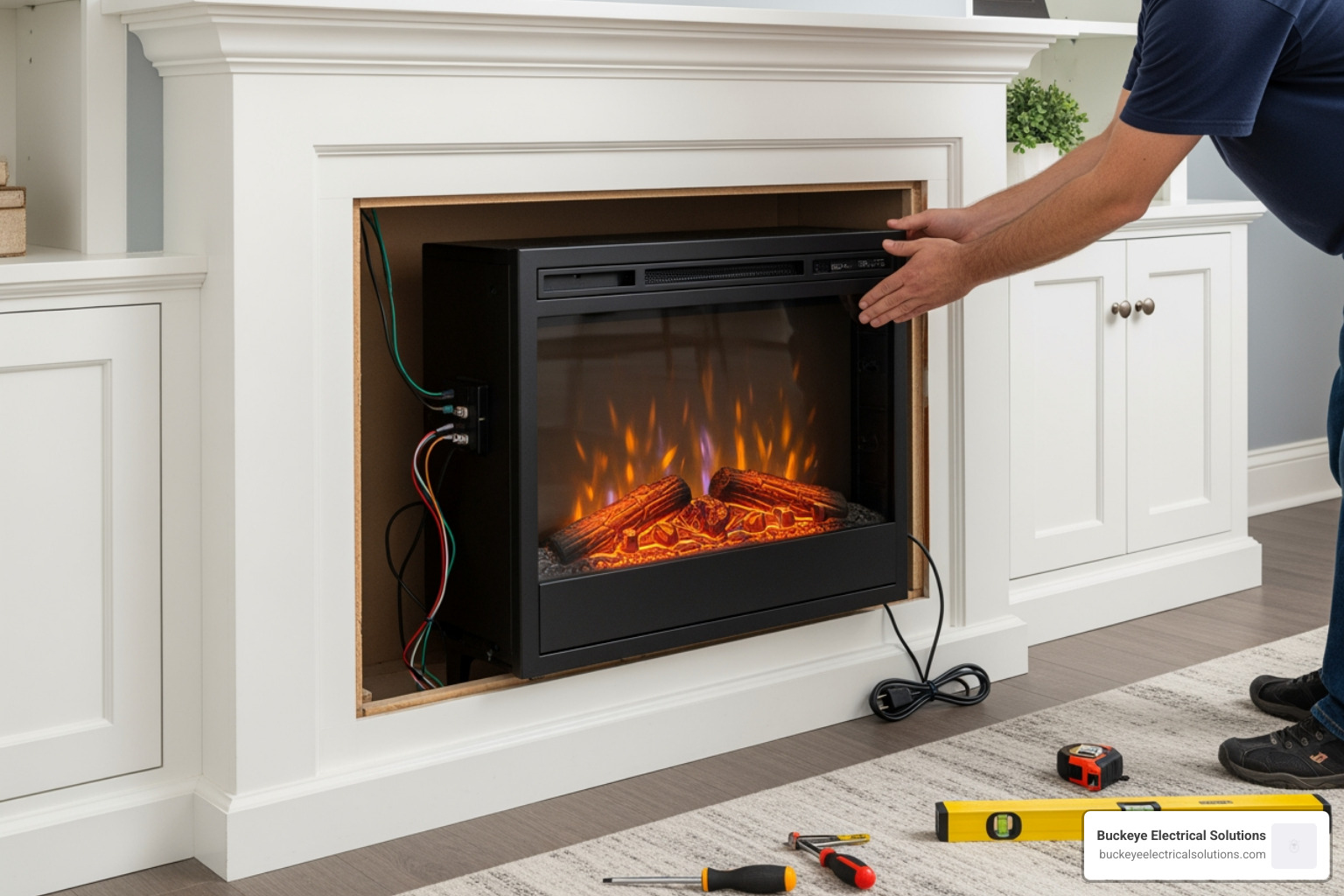
Step 1: Mount the Bracket
This is arguably the most crucial step for a secure wall-mounted installation.
- Locate Wall Studs: Use your stud finder to locate at least two wall studs in your chosen installation area. Studs are typically spaced 16 inches on-center in most homes. Mounting directly into studs provides the strongest support for your fireplace.
- Mark Pilot Holes: Hold the mounting bracket (usually provided with the fireplace) against the wall in your desired position. Use your level to ensure it’s perfectly straight. Mark the spots where you’ll drill pilot holes, aiming for the center of the studs.
- Secure the Bracket: Drill pilot holes, then use the provided screws to securely fasten the mounting bracket to the wall studs. Drive at least two screws into solid backing for maximum stability.
- Using Wall Anchors (if necessary): If you can’t hit studs for all mounting points, or if the manufacturer’s instructions allow, you may use heavy-duty wall anchors for additional support in drywall. However, always prioritize securing to studs.
Step 2: Prepare the Electrical Connection
Your electric fireplace needs power, and how it gets it depends on the unit.
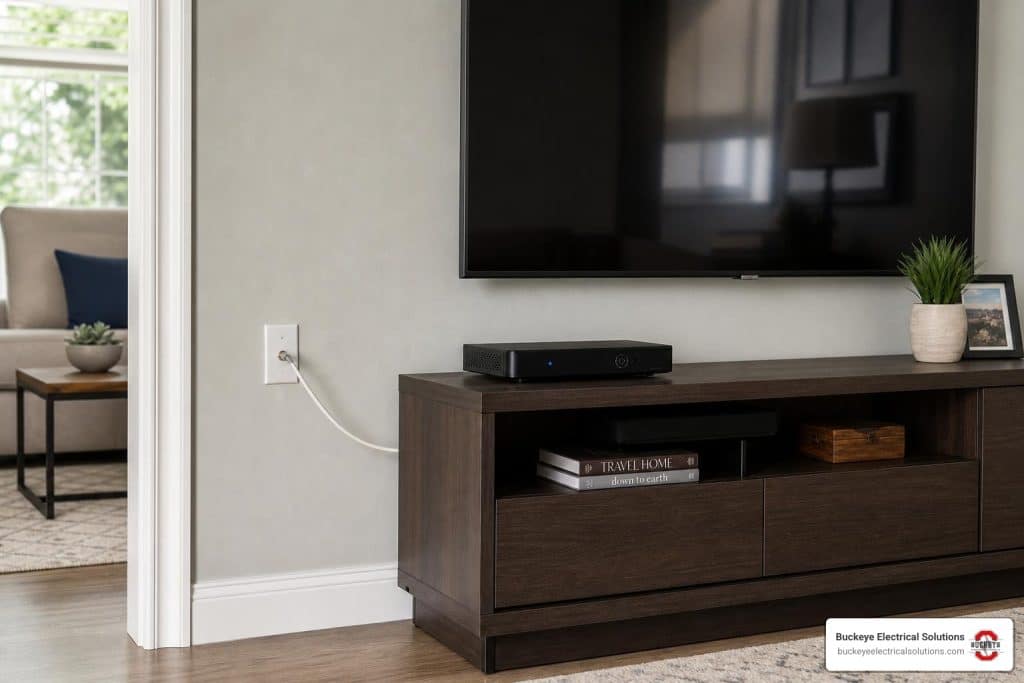
- Plug-in Units: Many wall-mounted electric fireplaces simply plug into a standard 120V outlet. Ensure the outlet is within reach of the fireplace’s cord and that it’s a properly grounded outlet. For safety reasons, never plug your electric fireplace into an extension cord or power strip, as these high-wattage appliances can overload them and create a fire hazard.
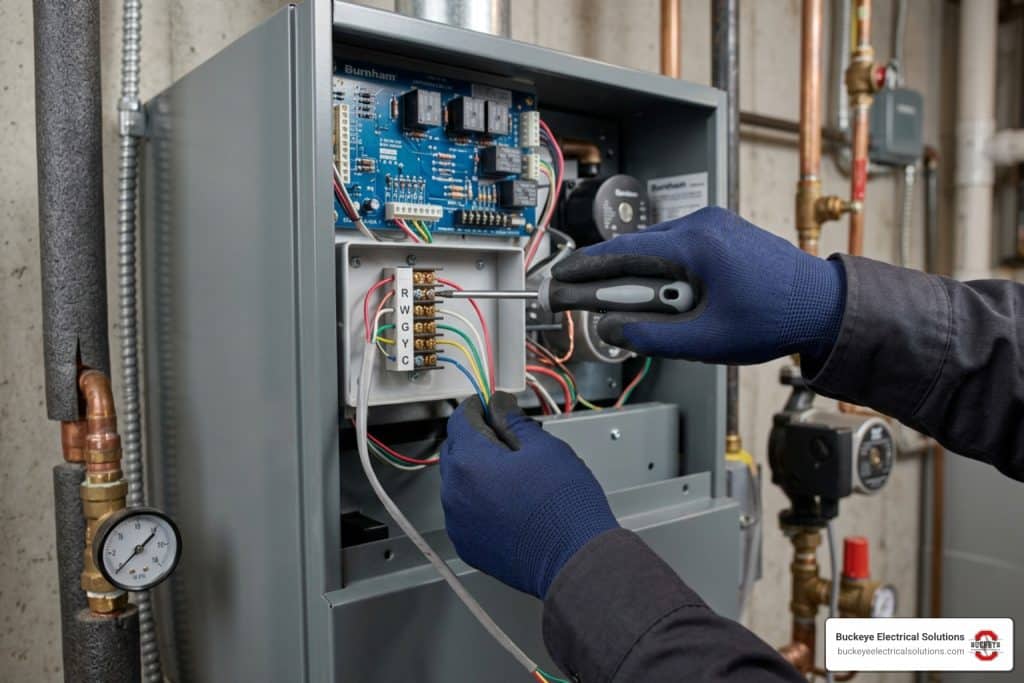
- Hardwired Units: Some units, especially recessed models or larger designs, are designed to be hardwired directly into your home’s electrical system. This provides a cleaner look with no visible cords and ensures a dedicated power source. However, this is not a DIY job for the inexperienced. Hardwiring typically requires a dedicated 15 AMP, 120 Volt, 60 Hz circuit. We strongly recommend consulting a qualified electrician, like us at Buckeye Electrical Solutions, for any hardwiring project. We’ll ensure it’s done safely and up to code. You can learn more about our expertise in this area by exploring More info about our Residential Electrical Services.
Step 3: Hang and Secure the Fireplace
With the bracket mounted and electrical ready, it’s time to hang your new focal point.
- Lift and Attach: Carefully lift the electric fireplace unit and align its hanging points (often slots or hooks) with the mounted wall bracket. Gently lower it until it’s securely seated on the bracket.
- Secure the Fireplace: Most units have additional screws or clips at the bottom to secure the fireplace to the wall, preventing it from swinging or being accidentally dislodged. Press the unit tight to the wall while driving these screws.
- Attach the Glass Front or Decorative Face: Once the main unit is secure, carefully attach the glass panel or decorative front according to the manufacturer’s instructions. This often involves aligning hooks and magnets or fastening with small setscrews. Clean the glass and screen as a final touch.
How to Install an Electric Fireplace Insert
Electric fireplace inserts are a brilliant way to revitalize an old, unused wood-burning fireplace. It’s a quick and relatively easy change that adds both warmth and modern appeal.
Step 1: Measure and Prepare the Opening
Accurate measurements are the secret to a professional-looking insert installation.
- Measure Height, Width, and Depth: Use your tape measure to carefully record the height, width, and depth of your existing fireplace opening. SimpliFire electric fireplace inserts, for example, come in specific sizes (25″, 30″, 35″), so you’ll need these dimensions to choose the correct model. The rough opening should ideally be slightly larger than the insert, about 1-1/2 inches taller and wider, to allow for drywall (if recessing) and a little wiggle room.
- Clean the Existing Firebox: Give your old firebox a good cleaning. Remove any ash, debris, or old grates. A clean slate makes for a much smoother installation.
- Seal the Damper and Flue: This is a crucial step to improve energy efficiency. Seal out all drafts with non-fibrous insulation materials, and close or seal the chimney flue and damper. This prevents cold air from entering and warm air from escaping, and it also helps prevent rain infiltration.
Step 2: Run Electrical to the Firebox
Unlike wall-mounted units, inserts often require power inside the firebox.
- Installing a Grounded Outlet: The cleanest solution is to have a properly grounded 120V outlet installed directly inside your firebox. This typically requires a dedicated 15 AMP, 120 Volt, 60 Hz circuit. If you don’t have an existing outlet or are unsure about the wiring, we highly recommend hiring a qualified electrician from Buckeye Electrical Solutions. We can run a new circuit and install a code-compliant outlet safely.
- Routing the Power Cord: Most electric fireplace inserts come with a standard NEMA-5-15P plug. If an internal outlet isn’t feasible, some units allow you to route the power cord through a small opening (often in the bottom corner of a trim surround) to a nearby wall outlet. Again, ensure this wall outlet is properly grounded and not shared with other high-wattage appliances.
Step 3: How to install an electric fireplace insert
Once the power is ready and the opening is prepped, the physical installation is quite straightforward.
- Slide the Insert: Carefully slide the electric fireplace insert into your prepared fireplace opening. It should fit snugly but not be forced.
- Leveling the Unit: Most inserts come with adjustable leveling feet or brackets. Use your level to ensure the unit is perfectly straight and flush with the opening. If needed, shims can be used for minor adjustments.
- Attaching a Trim Kit or Surround: Electric fireplace inserts often come with or allow for the addition of a trim kit or surround. These decorative frames are designed to cover any small gaps between the insert and the existing firebox opening, giving it a polished, built-in look. Surrounds are available in three or four-sided configurations to suit different openings.
- Securing the Unit: Follow the manufacturer’s instructions to secure the insert in place. This might involve small screws that fasten the unit to the firebox walls or clips that hold it firmly.
- Install the Decorative Front: Finally, attach the decorative front, such as a glass panel or mesh screen, by aligning hooks and magnets or using small fasteners as per your unit’s manual. For additional sizing and product details, review the product brochure SimpliFire electric fireplace insertscome in 25″ , 30″ and 35″ sizes. Before ordering yourSimpliFire electric insert, measure the height, width and depth of your existing fireplace opening. Whether you plan on ordering online or working with ahearth professional, these dimensions are needed to ensure….
Crucial Electrical and Safety Considerations
At Buckeye Electrical Solutions, safety is our top priority. When dealing with electricity and heating appliances, understanding the crucial electrical and safety considerations is non-negotiable.
Electrical Safety for How to Install an Electric Fireplace
Electric fireplaces, while generally safe, are high-wattage appliances, similar to space heaters.
- Wattage Requirements: Most electric fireplaces typically use between 1,000 and 1,500 watts. This is a significant draw on your electrical system.
- Dedicated Circuits Explained: A 15 AMP, 120 Volt, 60 Hz circuit with a properly grounded outlet is commonly required. While some units might simply say to plug into any 15-amp convenience outlet, the reality is that a dedicated circuit is often the safest and most reliable option. A 15-amp circuit can handle about 1800 watts (120V * 15A = 1800W). If your fireplace draws 1500 watts, that leaves very little room for other devices on the same circuit before you risk tripping a breaker. For example, trying to run a 10-amp fireplace and additional AV equipment (even if it draws less than 5 amps) on a single 15-amp circuit is often a recipe for frequent power interruptions. A dedicated circuit ensures your fireplace has its own power supply, preventing overloads.
- Dangers of Extension Cords: We cannot stress this enough: never plug an electric fireplace into an extension cord or power strip. These accessories are rarely rated for the high continuous current draw of an electric fireplace and can overheat, melt, and even cause fires. Always plug the unit directly into a wall receptacle.
- Hardwiring Benefits: For a clean, permanent, and often safer solution, hardwiring your electric fireplace to a dedicated circuit is ideal. This eliminates the cord entirely and integrates the fireplace seamlessly into your home’s electrical system. It’s also a requirement for many recessed or built-in units.
- National Electrical Code (NEC) Compliance: All electrical installations in Northeast Ohio must comply with the National Electrical Code. Our licensed electricians at Buckeye Electrical Solutions are experts in NEC standards and can ensure your electric fireplace installation, especially if hardwired or requiring a new circuit, meets all safety and code requirements.
Fire Prevention and Safe Operation
While electric fireplaces don’t have open flames or require venting, they still generate heat and require careful attention to fire prevention.
- Clearance from Flammable Materials: Always maintain adequate clearance around your electric fireplace. We recommend leaving at least 3 feet of space in any direction between your fireplace and walls, cords, curtains, tablecloths, paper, and other household decorative materials. This is especially important as space heaters (which share similar heating elements) are responsible for about 43% of all home heating fires, and more than 85% of all deaths associated with home heating fires are due to space heating elements.
- Cool-to-Touch Surfaces: Many modern electric fireplaces boast “cool-to-touch” exteriors, making them safer for homes with children or pets. However, the heating element itself will still be hot, so always exercise caution.
- Automatic Safety Shut-Off Features: Look for units with automatic safety shut-off features. These systems will turn off the heater if the unit overheats or tips over, providing an extra layer of protection.
- Never Blocking Vents: Ensure the heater vents on your electric fireplace are never blocked. Blocking vents can cause the unit to overheat, leading to potential damage or fire. Regularly clean the vents to prevent dust buildup.
In the rare event of an electrical fire, know what to do. Never use water on an electrical fire, as water conducts electricity and can worsen the situation. Do not use flour either, as it is flammable and conductive, potentially causing a fireball. Instead, if safe to do so, cut the power at the main breaker panel, and use a Class C (electrical) fire extinguisher. If the fire is inside a breaker panel or wall, evacuate immediately and call the fire department.
Post-Installation: Testing, Maintenance, and When to Call a Pro
You’ve successfully steered the steps for how to install electric fireplace . Now for the satisfying part: enjoying your new hearth and keeping it in top shape.
Testing Your New Fireplace
Before settling in with a warm drink, let’s make sure everything is working perfectly.
- Powering on the Unit: Plug in your fireplace (if it’s a plug-in model) or switch on the circuit breaker for hardwired units.
- Testing Flame Effects: Use the remote control or manual buttons on the unit to turn on the flame effects. Check if you can adjust flame colors, brightness, and intensity.
- Testing the Heater and Fan: Engage the heating function. You should hear the fan (if applicable) and feel warm air emanating from the vents. Test different heat settings if available.
- Checking Remote Control Functions: Ensure all functions on your remote control (power, flame, heat, timer, etc.) are working correctly.
Simple Maintenance for Longevity
Electric fireplaces are wonderfully low-maintenance, but a little care goes a long way in ensuring they provide years of cozy enjoyment.
- Regularly Cleaning the Screen and Vents: Dust and debris can accumulate on the glass screen and in the heater vents. Use a soft, dry cloth to clean the screen. For vents, a vacuum cleaner with a brush attachment can help remove dust, ensuring optimal airflow and preventing overheating.
- Replacing LED Bulbs: Over time, the LED bulbs that create the flame effect might dim or burn out. Consult your owner’s manual for instructions on how to access and replace them.
- Inspecting the Power Cord: Periodically check the power cord and plug for any signs of wear, fraying, or damage. If you notice any issues, stop using the fireplace and consult an electrician.
- Checking Remote Batteries: If your remote control starts acting up, the simplest solution is often to replace its batteries.
When to Hire a Professional
While many electric fireplace installations are DIY-friendly, there are specific situations where calling in a professional electrician is not just recommended, but essential for safety and compliance. We at Buckeye Electrical Solutions are always here to help.
- Complex Hardwiring: If your chosen electric fireplace requires hardwiring directly into your home’s electrical system, or if you need to remove the attached cord to hardwire it, this is a job for a licensed electrician. Incorrect wiring can lead to electrical hazards, fire, and damage to your home.
- Installing New Dedicated Circuits: If your existing electrical system cannot safely support the wattage requirements of your new fireplace, you’ll need a new dedicated circuit. This involves running new wiring from your breaker panel, installing a new breaker, and potentially a new outlet. This is a complex task that should always be handled by a professional.
- Structural Wall Modifications: For recessed electric fireplaces, you might need to modify your wall structure. While some framing might be DIY-friendly, if it involves altering load-bearing walls or requires extensive cutting, it’s best to consult with a contractor and an electrician to ensure structural integrity and proper electrical planning.
- If You’re Unsure About Any Step: If at any point during the installation process you feel uncertain, overwhelmed, or uncomfortable, don’t hesitate to call us. It’s always better to be safe than sorry.
- Peace of Mind: Sometimes, the best reason to hire a professional is simply for peace of mind. Knowing that your electric fireplace has been installed safely, correctly, and to code by experienced professionals is invaluable. For homeowners in Northeast Ohio, Buckeye Electrical Solutions offers quality residential electrical services to ensure your electric fireplace is installed perfectly.
Conclusion: Enjoy Your New Cozy Focal Point
We hope this comprehensive guide has demystified how to install electric fireplace units and empowered you to consider this fantastic addition to your Northeast Ohio home. From choosing the right type to understanding crucial electrical and safety considerations, we’ve walked through each step to ensure a successful and safe installation.
A properly installed electric fireplace offers so much more than just heat. It provides:
- Instant Ambiance: Enjoy the flickering glow and cozy atmosphere without the smoke, ash, or fuss of traditional fireplaces.
- Year-Round Enjoyment: Use the flame effects with or without heat, perfect for any season.
- Increased Home Value: A stylish and functional electric fireplace can improve the aesthetic appeal and perceived value of your home.
- Energy Efficiency: Use it as a supplemental heat source to warm specific rooms, potentially saving on your overall heating bills.
At Buckeye Electrical Solutions, we pride ourselves on over 20 years of experience providing quality residential electrical repair, installation, and maintenance across Northeast Ohio. We’re known for our exceptional service and prompt project completion, ensuring your home electrical needs are met with expertise and care.
For safe and professional electrical work for your new fireplace in Northeast Ohio, explore Our Services. We’re ready to help you spark up your space and enjoy the warmth and beauty of your new electric fireplace.