Why Hiring a Licensed Electrician Matters for Your Safety
A licensed electrician is a trained professional who has completed required apprenticeship hours, passed certification exams, and holds valid credentials to legally perform electrical work in their jurisdiction. Unlike unlicensed handymen or DIY enthusiasts, licensed electricians meet strict safety standards and carry proper insurance.
Key characteristics of a licensed electrician:
- Training: Completed 8,000+ hours of on-the-job experience plus classroom instruction
- Certification: Passed a qualification exam and holds a valid license number
- Legal authorization: Can pull permits and ensure work meets electrical code requirements
- Insurance: Carries liability and workers’ compensation coverage to protect you
- Accountability: Subject to regulatory oversight and professional standards
From charging your phone to keeping food fresh, electricity is woven into everyday life. But when electrical work goes wrong—faulty wiring, overloaded circuits, or improperly installed panels—the consequences can be devastating. According to recent data, 12,000 house fires occur in Canada each year, with 30% of all fire-related incidents linked to electrical problems.
The stakes are simple: hire someone who isn’t properly licensed, and you risk fire, electrocution, voided insurance policies, and costly repairs. It only takes one spark to turn everything you value into a pile of ashes.
While DIY tutorials make many home projects seem easy, electrical work is fundamentally different. One wrong connection can smolder for months before igniting a fire, and code violations finded later can force you to tear down walls and face steep fines. Licensing exists to prevent this, proving a professional has been trained, tested, and authorized to work safely in your home.
I’m Aaron, owner of Buckeye Electrical Solutions, and I’ve directed more than 60 permitted electrical projects across Northeast Ohio, from whole-home upgrades to commercial rewires. Working with a licensed electrician isn’t just about following the rules—it’s about protecting your family, your property, and your investment.
What is a Licensed Electrician and Why is it Crucial to Hire One?
At Buckeye Electrical Solutions, we know that a licensed electrician is the bedrock of safety, reliability, and peace of mind. This isn’t just someone who can fix an outlet; they are a highly trained professional whose qualifications have been rigorously vetted by state authorities. Hiring one is crucial because electrical systems are complex and dangerous. A licensed electrician in Northeast Ohio is trained to adhere strictly to the National Electrical Code (NEC) and local building codes, ensuring all work is safe and compliant.
The Dangers of Unlicensed Electrical Work
Opting for an unlicensed individual might seem like a cost-saving measure, but the potential dangers and long-term costs far outweigh any initial savings. Without proper training and adherence to code, critical errors can lead to devastating consequences:
- Electrical Fires: Faulty wiring from incorrect gauges, loose connections, or improper grounding is a leading cause of residential fires. A small spark behind a wall can smolder for days before erupting into a blaze.
- Electrocution Risk: Live wires, ungrounded outlets, or improperly installed switches pose a severe risk of shock or electrocution.
- Property Damage: Overloaded circuits or inadequate grounding can damage expensive appliances and your home’s infrastructure.
- Voided Insurance Policies: If your property sustains damage from unlicensed electrical work, your homeowner’s insurance policy may refuse to cover the costs, leaving you with massive repair bills.
- Legal Penalties: In Northeast Ohio, electrical work requires permits. Unlicensed individuals cannot pull these permits, meaning the work is illegal and could lead to fines and expensive remediation.
At Buckeye Electrical Solutions, we’ve seen the aftermath of cutting corners. We urge you to prioritize safety and compliance. For comprehensive and safe electrical solutions for your home, explore our Residential Electrical Services.
The Critical Difference: Licensed Contractor vs. Certified Electrician
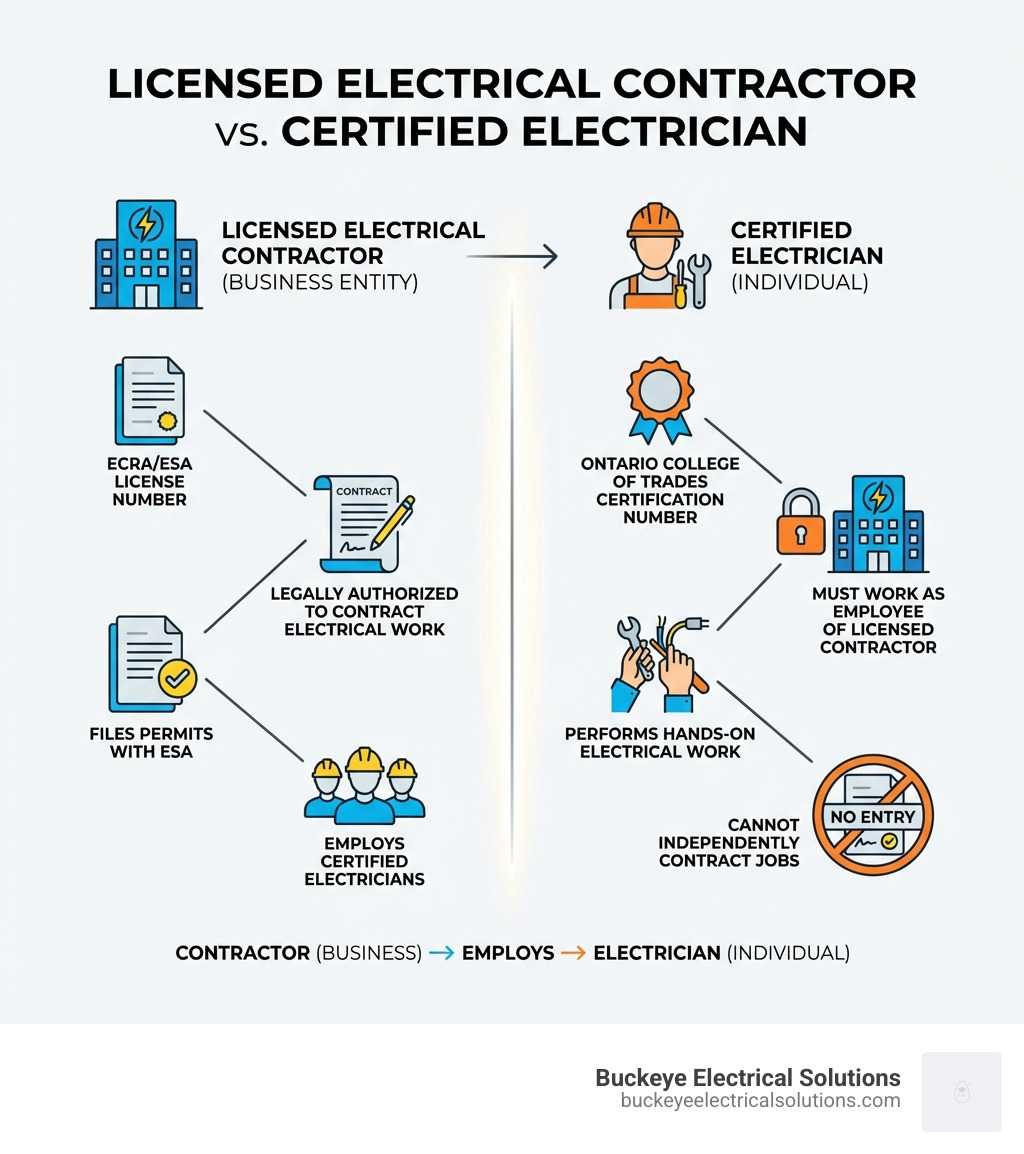
It’s vital for consumers to understand this distinction. A Certified Electrician is an individual who has completed their apprenticeship and passed exams, qualifying them to perform hands-on electrical work.
However, in most jurisdictions, an individual’s certification alone does not authorize them to contract for electrical work independently. They must work for a Licensed Electrical Contractor (LEC)—the business entity that is legally authorized to offer and perform electrical services for the public. The LEC is responsible for pulling permits, carrying insurance, and ensuring all work meets safety codes.
When you hire Buckeye Electrical Solutions, you’re engaging a Licensed Electrical Contractor. We employ qualified licensed electricians, and our business holds the necessary licensing to contract and oversee projects, ensuring compliance and accountability. This structure is designed to provide maximum protection for consumers.
The Path to Certification: Qualifications and Licensing Explained
Becoming a licensed electrician is a demanding career path requiring dedication, rigorous training, and continuous learning. The journey builds expertise from the ground up, ensuring every professional is equipped to handle the complexities and dangers of electrical systems.
The core of this journey is an intensive apprenticeship program that combines thousands of hours of on-the-job training with classroom instruction. Apprentices work alongside experienced journeymen to learn practical skills while studying electrical theory, code requirements, and safety protocols. After completing their apprenticeship, they must pass a comprehensive qualification exam. This rigorous process, overseen by bodies like the Ohio Construction Industry Licensing Board (OCILB), ensures that only the most qualified individuals are authorized to perform electrical work.
How to Become a Licensed Electrician
The path to becoming a licensed electrician is structured to produce highly skilled professionals. While requirements vary by state, the general framework is consistent. An apprenticeship can span five years and involve around 9,000 hours of training—combining roughly 8,160 hours of on-the-job experience with 840 hours of in-school training.
Educational prerequisites typically include a high school diploma or equivalent, with strong marks in Math and Physics being beneficial. After completing the apprenticeship and passing the qualification exam, the individual achieves Journeyman status, signifying they are fully qualified to perform electrical work under a licensed contractor. The journey can continue to Master Electrician status, which requires additional years of experience and passing an advanced exam, granting the ability to design, plan, and supervise electrical installations.
Types of Electrician Licenses and Career Paths
The electrical field offers various specializations. While core training is versatile, electricians often pursue specific licenses:
- Construction and Maintenance Electrician: Works in industrial, commercial, and residential settings.
- Residential Electrician: Specializes in the electrical needs of homes.
- Journeyman Electrician: The first level of full qualification after apprenticeship.
- Master Electrician: An expert with the experience to design, plan, and supervise projects.
- Supervising Electrician: Holds authority to oversee installations and ensure code compliance.
Beyond these licenses, a licensed electrician can advance to roles such as Foreman, Estimator, Project Manager, or Electrical Contractor. At Buckeye Electrical Solutions, our team is equipped for a wide array of projects. Learn more about our capabilities for businesses by visiting our Commercial Electrical Services page.
Hiring a Licensed Electrician: What to Look For and What to Expect
When you need electrical work, knowing what to look for in a licensed electrician can simplify the process and ensure you receive safe, reliable service. It’s about finding a trusted partner for your home’s safety.

First, always prioritize credentials. A professional licensed electrician or electrical contractor will readily provide proof of their licensing and insurance. In Northeast Ohio, this means verifying their license through the Ohio Construction Industry Licensing Board (OCILB).
At Buckeye Electrical Solutions, we provide detailed, written estimates that clearly outline the scope of work, materials, and costs. We also handle all necessary permits and inspections, ensuring your project is up to code and approved by local authorities.
Regarding costs, while rates vary, industry standards for a licensed electrician often range between $100 and $200 per hour, depending on the work’s complexity. We provide clear, upfront quotes custom to your project.
How to Verify an Electrician’s Credentials
Verifying an electrician’s credentials is a crucial step every homeowner in Northeast Ohio should take. Here’s how to ensure you’re hiring a legitimate professional:
- Ask for the License Number: A reputable electrical contractor will readily provide their state license number from the Ohio Construction Industry Licensing Board (OCILB).
- Use Online Verification Tools: Use the License Lookup – OCILB eLicense Center to confirm their license is active and in good standing.
- Check for Insurance and Bonding: A licensed electrician must carry liability insurance and workers’ compensation. Ask for proof of current coverage.
- Review Customer Feedback: Look for online reviews and testimonials. Consistent positive feedback often indicates a reliable and trustworthy professional.
Taking these steps protects your investment and, most importantly, your safety.
Common Services Offered by a Professional Licensed Electrician
Our licensed electricians at Buckeye Electrical Solutions offer a comprehensive range of services for your home or business in Northeast Ohio:
- Electrical Inspections: Assessing your system for hazards, code violations, and outdated parts.
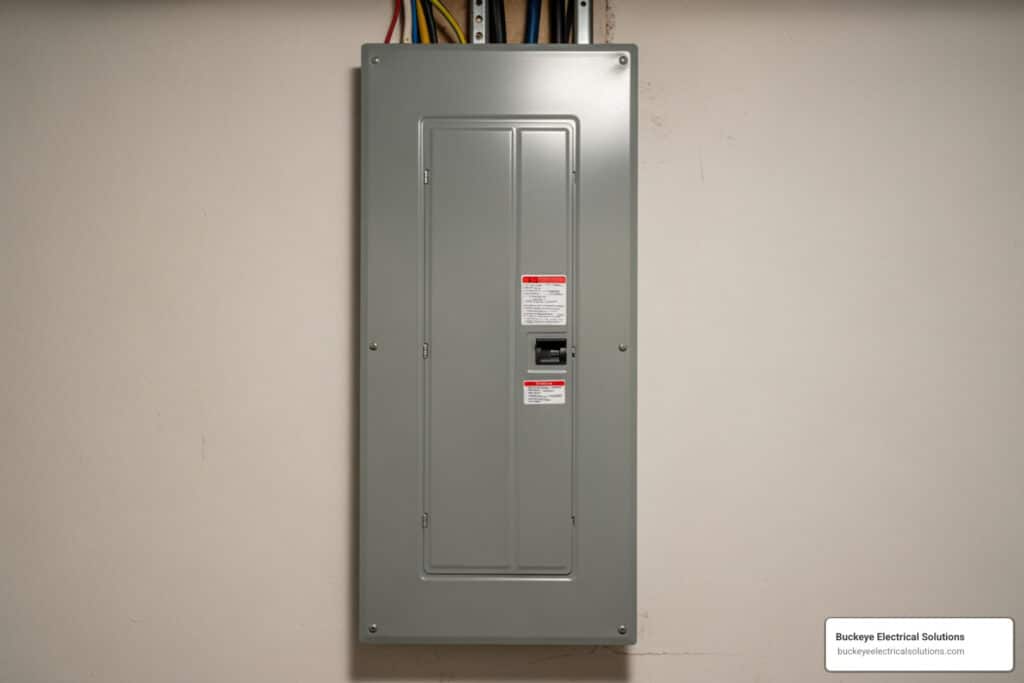
- Panel Upgrades and Replacements: Replacing old fuse boxes or circuit panels to safely meet modern power demands.
- Rewiring Services: Replacing outdated wiring (like knob-and-tube or aluminum) with safe, code-compliant copper wiring.
- New Construction Wiring: Designing and installing complete electrical systems for new buildings.
- Electrical Repairs: Troubleshooting and fixing issues like flickering lights, faulty outlets, and power outages.
- Lighting Installation: Installing indoor and outdoor lighting, including recessed, LED, and smart lighting systems.
- EV Charger Installation: Setting up dedicated charging stations for electric vehicles.
- Appliance Wiring: Ensuring safe power connections for major appliances like ovens and dryers.
- Smart Home Device Integration: Installing and connecting smart thermostats, security systems, and other devices.
- Surge Protection: Installing whole-home surge protectors to safeguard your electronics.
- Emergency Electrical Services: Providing prompt service for urgent electrical problems.
Whether you need a simple repair or a complex installation, our team is ready to deliver. Explore our full range of offerings on our Our Services page.
Navigating Electrical Regulations Across Different Regions
Electrical work is governed by regulations that vary significantly by region. While the National Electrical Code (NEC) provides a foundational standard in the United States, individual states, counties, and cities implement their own licensing requirements and local code amendments. This regional variation is why it’s crucial to verify that your electrician is licensed specifically for your area.
Understanding these nuances is part of what makes a licensed electrician invaluable; they steer this regulatory labyrinth to ensure your project is compliant. For example, states like California and Texas have their own distinct licensing systems, as do Canadian provinces like Ontario. Each has specific boards, exams, and experience requirements designed to ensure public safety.
In our home state, the Ohio Construction Industry Licensing Board (OCILB) is the primary authority for licensing electrical contractors. To earn a license, individuals must have at least five years of experience, pass a state exam, and demonstrate financial responsibility. The OCILB ensures that all licensed contractors in Ohio adhere to the highest standards of safety and professionalism. You can verify any Ohio electrical contractor’s license through the License Lookup – OCILB eLicense Center.
Frequently Asked Questions about Hiring Electricians
We get a lot of questions about electrical work, and rightfully so! It’s a critical part of any home or business. Here are some of the most common inquiries we receive, with answers focused on the standards in Northeast Ohio.
Can a general contractor perform electrical work?
No, unless that general contractor also holds a specific electrical contractor license. In Ohio, a general contractor is licensed to oversee projects but is not permitted to perform specialized trade work like electrical. For any electrical components, a general contractor must subcontract the work to a Licensed Electrical Contractor.
This ensures the work is handled by professionals with the specific training and insurance required for electrical systems. Having a handyman or general contractor perform electrical work puts you at significant risk of code violations and safety hazards. Always ensure a dedicated, licensed electrician is on the job.
Do I need a permit for small electrical jobs?
It depends on the job. Generally, a permit isn’t needed for simple maintenance, like replacing a broken switch or an identical light fixture. However, you almost certainly need a permit if you are:
- Running new wiring or adding new outlets
- Altering or installing permanent wiring
- Installing a new or upgraded electrical panel
- Installing certain low-voltage systems that require new wiring
Essentially, any work that changes or adds to your home’s electrical infrastructure requires a permit. A licensed electrician will handle the necessary permits and inspections for your project, ensuring everything is done correctly and legally. If work is done without a required permit, you could face fines or have difficulty selling your home.
How do I report someone performing unauthorized electrical work?
If you suspect someone is performing electrical work without a license or in an unsafe manner, you should report it to protect public safety. In Northeast Ohio, you have a few options:
- Your Local Building Department: Your city or county’s code enforcement office is the first point of contact for enforcing local permits and building codes.
- Ohio Construction Industry Licensing Board (OCILB): For issues related to contractor licensing, you can file a complaint with the OCILB. They oversee the licensing process and investigate complaints against both licensed and unlicensed individuals.
Providing details like the work’s location and the company’s name will help authorities investigate effectively. Your vigilance can help prevent serious accidents in our community.
Conclusion: Ensuring Your Electrical Work is Safe and Compliant
Throughout this guide, we’ve explored the critical role of a licensed electrician and Licensed Electrical Contractor in ensuring the safety, efficiency, and compliance of your electrical systems. From understanding the rigorous path to certification to navigating diverse regional regulations, the message is clear: when it comes to electricity, expertise and authorization are non-negotiable.
Choosing a licensed electrician isn’t just a recommendation; it’s an investment in your safety, your property’s value, and your peace of mind. It means your work adheres to the highest safety standards, is backed by proper insurance, and complies with all local and national codes. It saves you from the potential dangers of faulty wiring, the financial strain of voided insurance, and the stress of non-compliant installations.
At Buckeye Electrical Solutions, we pride ourselves on being your trusted Licensed Electrical Contractor in Northeast Ohio. With over 20 years of experience, our team of dedicated licensed electricians brings unparalleled quality, prompt service, and a commitment to safety to every residential and commercial project we undertake. We don’t just light up your spaces; we light them up safely and for the long haul.
Don’t gamble with your safety or your property. When you need electrical work done right, choose the professionals who are licensed, experienced, and committed to your well-being. For all your electrical needs in Northeast Ohio, reach out to us. We’re here to spark trust and ensure your electrical systems are safe and sound.
Ready to experience the difference a licensed electrician makes? Visit our services page to learn more: https://buckeyeelectricalsolutions.com/services/