Why Understanding Your Home’s Electrical System Matters
Home wiring is the network of cables and devices that deliver electricity throughout your house. Power flows from your utility company through a meter and service panel, then branches out through circuits to power your lights and appliances. Understanding this system helps you spot problems, stay safe, and communicate clearly with electricians when repairs are needed.
For homeowners in older Northeast Ohio properties, this knowledge is critical. Many homes over 50 years old face a higher fire risk, as their wiring struggles to keep up with modern electrical demands—which are nearly five times what they were in the 1950s. An older system pushed beyond its limits is a significant safety hazard.
A working knowledge of home wiring helps you recognize warning signs like flickering lights or warm outlets and make smarter decisions about necessary upgrades. Whether you’re troubleshooting a tripped breaker or planning a remodel, understanding the basics protects your family and your investment.
I’m Aaron, owner of Buckeye Electrical Solutions. With experience in permitted home wiring projects across Northeast Ohio, I’ve created this guide to walk you through the essentials, helping you keep your home safe and code-compliant.
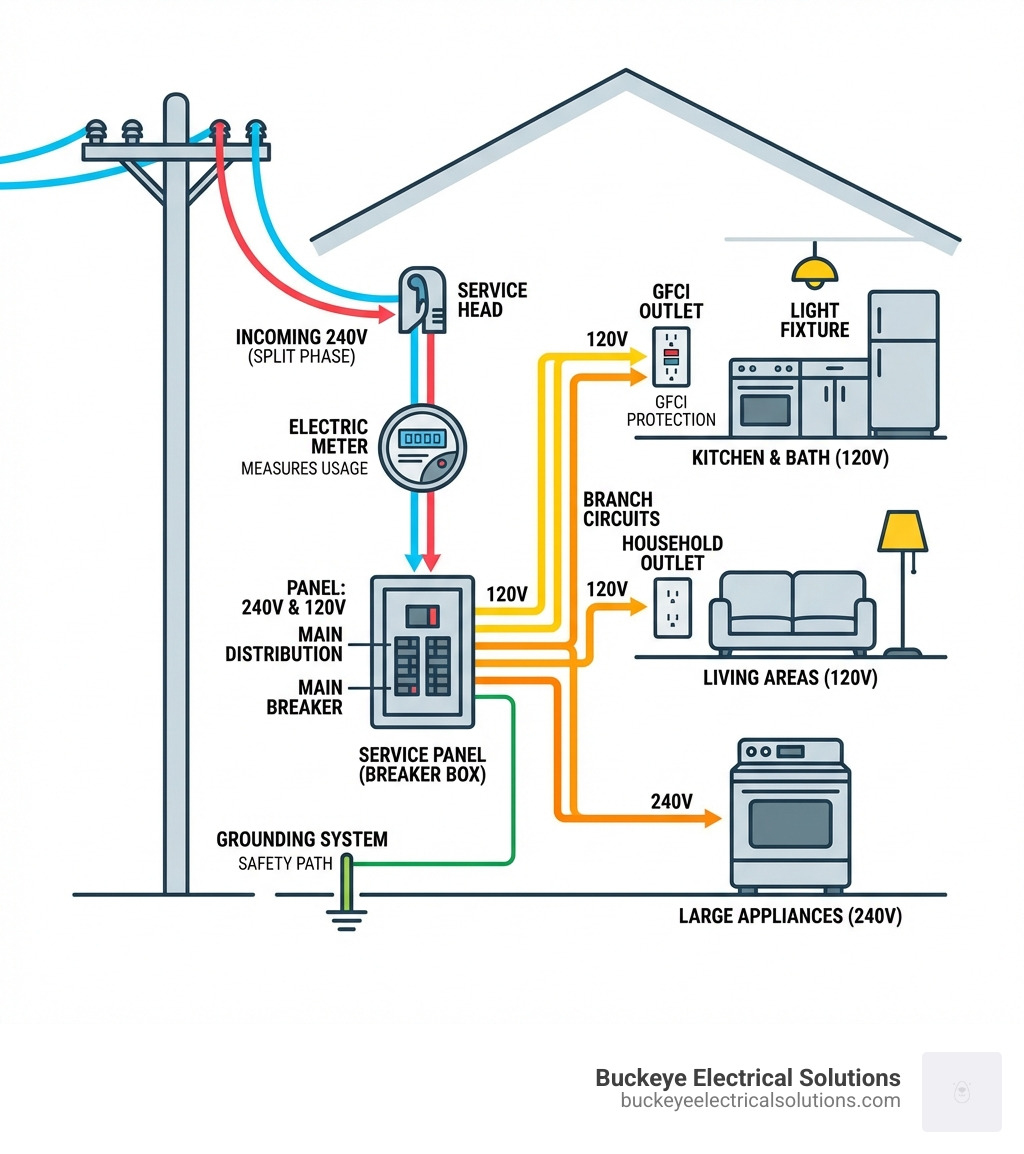
The Anatomy of a Home’s Electrical System
Your home’s electrical system is a network designed to bring power safely from the utility grid to your outlets. Key components work together to manage this flow:
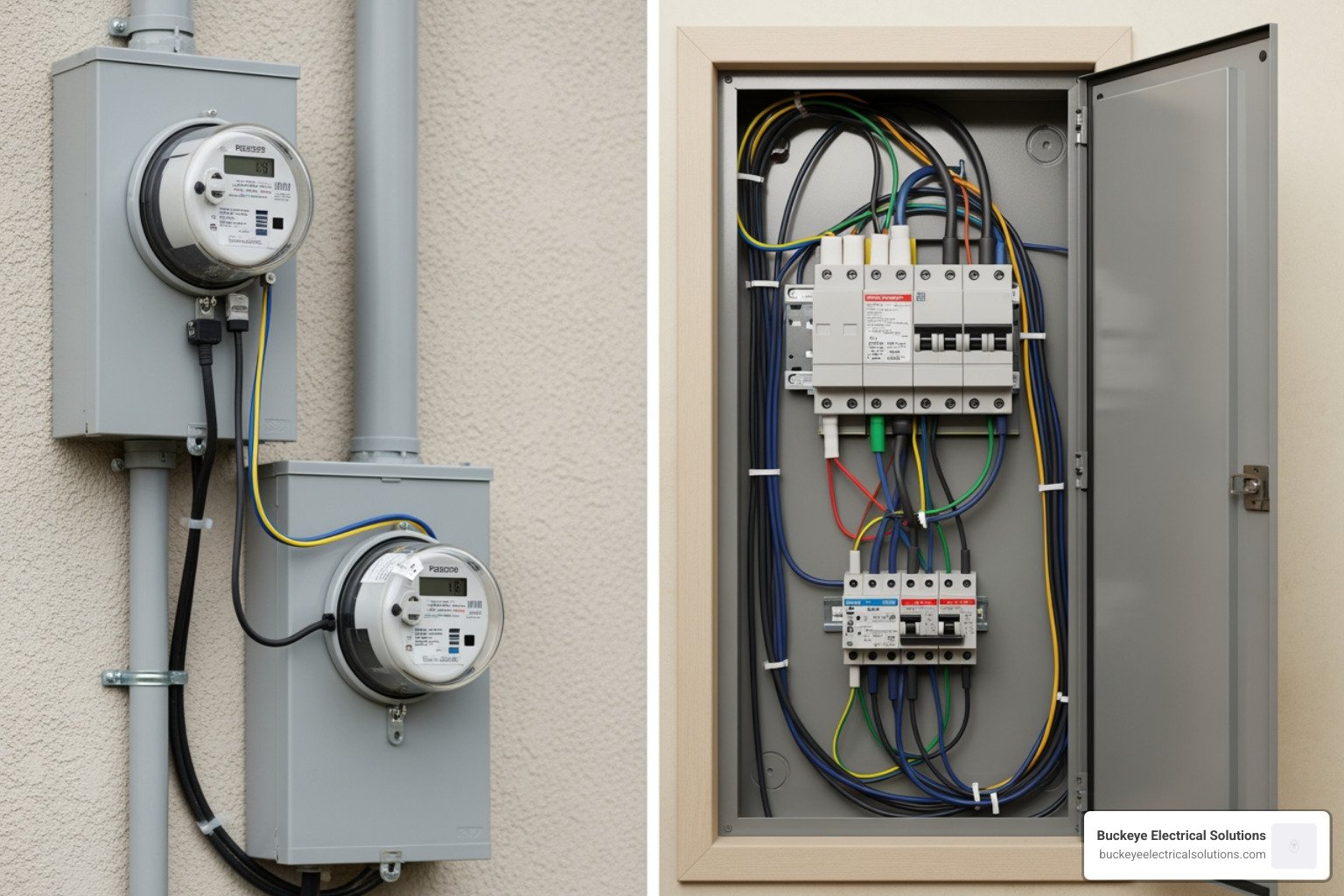
- Service Head: The entry point where utility lines connect to your property.
- Electric Meter: Measures your household’s electricity consumption for billing.
- Electrical Service Panel (Breaker Box): The command center that receives the main power supply and distributes it into smaller circuits.
- Circuit Breakers (or Fuses): Safety devices that automatically cut power to a circuit if it becomes overloaded, preventing overheating and fires.
- Grounding System: A critical safety feature that provides a safe path for excess electricity to dissipate into the earth.
- Outlets and Switches: The interfaces that allow you to plug in devices and control lights.
For a deeper dive, you can explore the Electrical Safety Foundation International’s resources on Understanding Your Home Electrical System.
From the Street to Your Switch: The Path of Power
Electricity enters your home at the service head, flows through the electric meter, and arrives at the main service panel. Inside the panel, the main power is split into various branch circuits, each protected by a circuit breaker.
Most everyday devices like lamps and TVs run on 120-volt circuits. These typically use 14-gauge wire with 15-amp breakers or 12-gauge wire with 20-amp breakers for higher-demand areas.
Larger appliances like electric stoves, dryers, and central air conditioners require more power and use 240-volt circuits. These are created by combining two 120-volt wires and require heavier-gauge wiring (10, 8, or 6-gauge) and higher-amperage breakers.
Circuits are categorized by their purpose:
- General-Use Circuits: Standard 120-volt circuits for lights and outlets in living areas and bedrooms.
- Small-Appliance Circuits: 20-amp, 120-volt circuits in kitchens and laundry rooms designed for devices like toasters and hair dryers.
- Dedicated Circuits: A circuit reserved for a single, high-demand appliance like a refrigerator, oven, or HVAC system, which may be 120-volt or 240-volt.
The Brains of the Operation: The Electrical Circuit Breaker Panel
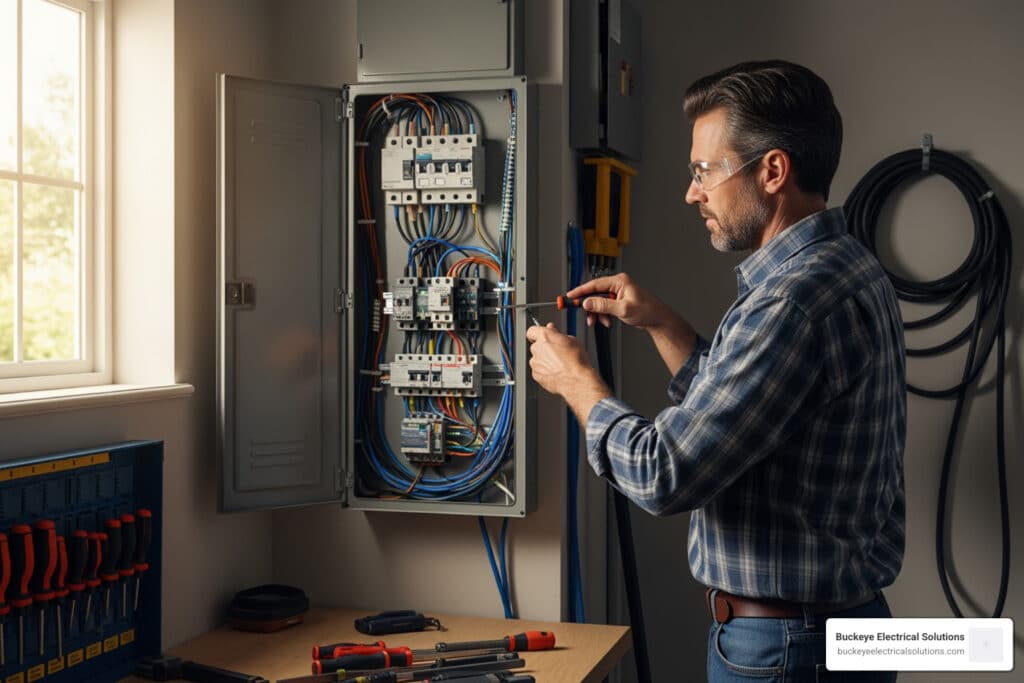
Your electrical service panel is the central hub of your home wiring, distributing power and ensuring safety. Inside, you’ll find either fuses or circuit breakers.
- Fuses, found in older homes (pre-1965), contain a wire that melts to break the circuit during an overload and must be replaced.
- Circuit breakers are modern switches that “trip” (turn off) during an overload and can be reset once the issue is resolved.
A frequently tripping breaker signals an overloaded circuit or a more serious fault. Each breaker has an amperage rating (e.g., 15-amp, 20-amp) that must match the wire gauge it protects to prevent a fire hazard.
- 14-AWG wire requires a 15-amp breaker.
- 12-AWG wire requires a 20-amp breaker.
- 10-AWG wire requires a 30-amp breaker.
A great way to empower yourself is to map your circuits by turning breakers off one by one and noting which outlets and lights lose power. Labeling your panel makes troubleshooting and future work much easier. This Old House has a great resource on Mapping Electrical Circuits in Your Home to help you get started.
Your First Line of Defense: Modern Safety Devices
Modern home wiring includes advanced safety devices to protect against specific hazards.
- Ground Fault Circuit Interrupters (GFCIs): These devices are your primary protection against electric shock. They detect imbalances in the electrical current—often caused by contact with water—and instantly cut power. GFCIs have helped cut home electrocutions in half since the 1970s and are required by the National Electrical Code (NEC) in kitchens, bathrooms, garages, and outdoor areas. You can learn More about GFCIs from the Electrical Safety Foundation International.
- Arc Fault Circuit Interrupters (AFCIs): AFCIs are designed to prevent fires. They detect dangerous electrical arcs caused by damaged or frayed wiring, which can generate intense heat and ignite surrounding materials. The NEC now requires AFCIs on most circuits in new homes.
- Tamper-Resistant Receptacles (TRRs): Essential for homes with children, TRRs have internal shutters that block foreign objects from being inserted into the outlet slots. This simple feature prevents thousands of childhood shocks and burns each year and has been required in new construction since 2008.
These devices, along with polarized and grounded outlets, create a robust safety net for any modern home.
A Guide to Wires, Cables, and Codes
Understanding the actual conductors that carry electricity is fundamental to grasping home wiring. It’s not just about what’s inside the walls, but how it’s constructed and rated.
| Wire Gauge (AWG) | Sheathing Color (NM Cable) | Amperage Rating | Common Uses |
|---|---|---|---|
| 14-gauge | White | 15-amp | General lighting, standard outlets |
| 12-gauge | Yellow | 20-amp | Kitchens, bathrooms, laundry, general-purpose outlets |
| 10-gauge | Orange | 30-amp | Water heaters, central air units, electric dryers |
| 8-gauge | Black (heavier) | 40-amp | Large appliances, sub-panels |
| 6-gauge | Black (heavier) | 60-amp | Electric stoves, main service feeds |
Key Principles of Basic Home Wiring
Understanding the language of home wiring is key to safety and proper installation.
- Wire vs. Cable: A wire is a single conductor, while a cable is a bundle of two or more wires in a protective sheath (like the common “Romex” brand cable).
- Wire Gauge (AWG) and Amperage: The American Wire Gauge (AWG) system measures wire size. A smaller AWG number means a larger wire that can carry more current (amperage). Using a wire too small for the load is a fire hazard. You can Learn more about wire gauge sizes.
- Voltage: US homes use 120 volts for general circuits and 240 volts for large appliances.
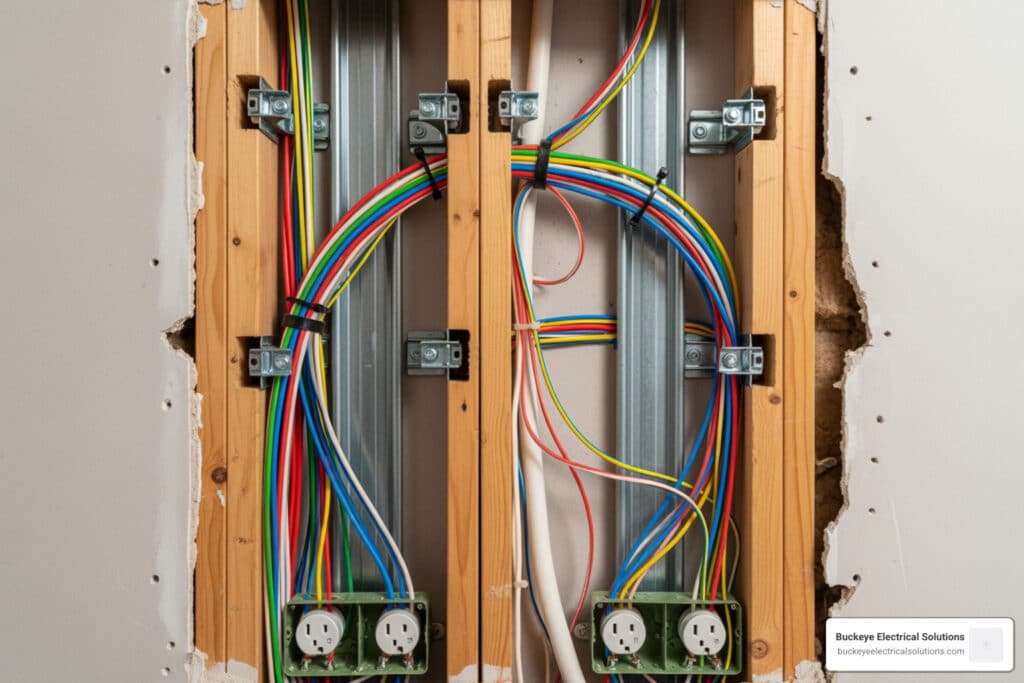
- Wire Color Codes: Wires are color-coded for safety:
- Hot: Black or Red (carries power from the panel).
- Neutral: White or Gray (carries power back to the panel).
- Ground: Green or Bare Copper (safety wire that directs stray current to the earth).
- Sheathing Color Codes: The outer jacket of non-metallic (NM) cable indicates the wire gauge inside:
- White: 14-gauge wire (15-amp circuits).
- Yellow: 12-gauge wire (20-amp circuits).
- Orange: 10-gauge wire (30-amp circuits).
- Other Key Terms:
- Electrical Wire Stripping: Carefully removing insulation to make a connection.
- Electrical Box Fill Capacity: The maximum number of wires a junction box can safely hold to prevent overheating.
- Direct-Burial Cable: Specialized cable designed for underground use.
- Wire Labels: The print on a wire provides its gauge, material, and voltage rating.
Common Household Home Wiring Issues and Solutions
Even well-maintained home wiring can have issues. Here are common signs and what they might mean:
- Flickering or Dimming Lights: Often indicates an overloaded circuit or a loose connection.
- Frequently Tripped Breakers: A clear sign of an overloaded circuit or a persistent electrical fault.
- Warm or Discolored Outlets/Switch Plates: A serious red flag indicating a dangerous heat buildup and fire hazard.
- Dead Outlets: Could be a tripped breaker, a faulty GFCI, or a loose wire.
- Overloaded Circuits: Occurs when too many devices draw power from one circuit. The solution may be redistributing appliances or adding a new circuit.
- Sags and Dips in Power: Momentary power loss could indicate issues with your main service.
When to troubleshoot vs. call a pro: Resetting a breaker after unplugging a device is a simple fix. However, for burning smells, discolored outlets, persistent problems, or any work you’re uncomfortable with, always call a licensed electrician. Don’t take chances with electricity. For complex issues or upgrades in Northeast Ohio, Buckeye Electrical Solutions offers comprehensive Residential Electrical Services.
Is Your Wiring Outdated? Identifying and Addressing Old Systems
If your Northeast Ohio home was built before the 1980s, its home wiring may be outdated and hazardous. Older systems were not designed for modern electricity consumption, leading to overloads, increased fire and shock risks, and potential complications with homeowners insurance. Understanding your wiring type is the first step to ensuring your home’s safety.
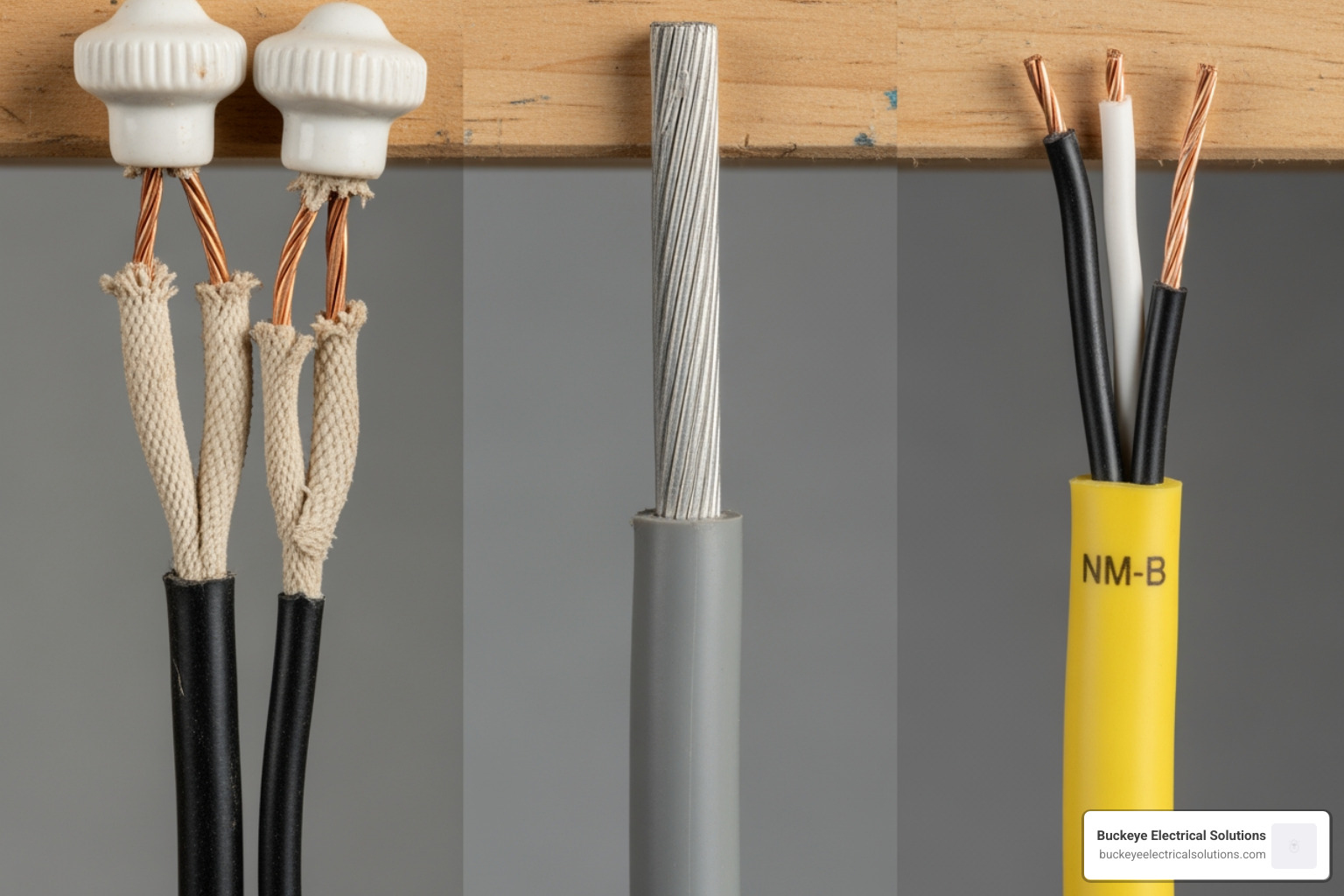
Common Types of Old House Wiring
Here are some older home wiring systems you might find:
- Knob-and-Tube Wiring (1880s-1940s): Identified by ceramic knobs and tubes supporting individual, cloth-covered wires in attics and basements.
- Problem: It lacks a ground wire, increasing shock risk. The insulation becomes brittle and can fall off, exposing live wires. Covering it with modern insulation is a major fire hazard. It almost always requires full replacement.
- Cloth-Wrapped Romex (1930s-1960s): An early form of cable with a fabric outer sheath.
- Problem: Like knob-and-tube, it often lacks a ground wire, and its rubber and cloth insulation degrades over time, creating fire and shock risks.
- Aluminum Wiring (1960s-1970s): Used in about two million homes, identified by “AL” or “Aluminum” stamped on the cable jacket.
- Problem: Aluminum expands and contracts more than copper, causing connections at outlets and switches to loosen over time. This leads to overheating and a significant fire hazard. A full rewire is the safest solution.
- Ungrounded Systems: Any system lacking a dedicated ground wire poses a shock hazard, as there is no safe path for fault current to travel.
Telltale Signs Your Home Wiring Needs Replacement
Your electrical system will often warn you when it’s struggling. Look for these signs that your home wiring may need replacement:
- Frequent Breaker Trips or Blown Fuses: Your system is overloaded or has a persistent fault.
- Dimming or Flickering Lights: Suggests an overloaded circuit or loose connections.
- Buzzing Sounds: Abnormal buzzing from outlets or the panel indicates a serious issue like arcing.
- Burning Smells: A critical warning of overheating components. Evacuate and call for help immediately.
- Charred or Warm Outlets: Indicates severe overheating and an immediate fire risk.
- Two-Prong Ungrounded Outlets: A sign your system lacks proper grounding, a major safety concern.
- Reliance on Extension Cords: Using extension cords permanently means your system isn’t meeting your needs and is likely overloaded.
- Planning a Major Renovation: Remodels are the perfect time to upgrade wiring to support new appliances and meet modern codes.
If you see these signs, especially in an older home, we recommend a professional electrical inspection.
Essential Safety, Codes, and the DIY vs. Pro Decision
Electricity is powerful, essential, and unforgiving. When dealing with home wiring, safety isn’t just a suggestion; it’s the golden rule. We always prioritize the well-being of our customers and our team.
Fundamental Electrical Safety Rules
These principles are non-negotiable when working with electricity:
- Always Turn Off Power: Before starting any work, turn off the correct circuit breaker at the main panel.
- Test for Voltage: Use a voltage tester to confirm the circuit is dead before touching any wires.
- Use Proper Tools: Use insulated tools designed for electrical work to prevent shock.
- Understand Your Limits: For complex tasks like working in the main panel or running new circuits, call a professional.
- Lockout/Tagout: For larger jobs, use a lockout device on the breaker to prevent it from being turned on accidentally.
Proper grounding is a critical aspect of electrical safety, providing a safe path for stray current. OSHA offers excellent resources on this topic: Proper grounding is a critical aspect of electrical safety.
Understanding the National Electrical Code (NEC)
The National Electrical Code (NEC) is the US standard for safe electrical design and installation, updated every three years to prevent fire and shock hazards. You can learn more from the Electrical Safety Foundation International: The National Electrical Code (NEC).
- Purpose of Codes: Electrical codes exist to protect you and your property by setting minimum safety standards.
- Local Codes and Permits: Local jurisdictions in Northeast Ohio adopt the NEC, often with their own amendments. Significant electrical work, like adding a new circuit or changing a panel, almost always requires a permit from your local building department. This ensures the work is inspected and meets all safety standards.
- Inspections: Permitted work must be inspected to verify that all wiring, connections, and safety devices are installed correctly. This process is for your safety and should never be skipped.
Frequently Asked Questions about Home Wiring
We often get asked common questions about home wiring from homeowners across Northeast Ohio. Here are some of the most frequent ones:
What is the difference between a 15-amp and a 20-amp circuit?
A 15-amp circuit uses 14-gauge wire and is for general lighting and standard outlets. A 20-amp circuit uses thicker 12-gauge wire to handle higher loads in kitchens, bathrooms, and laundry areas where powerful appliances are used. The thicker wire safely carries more current.
Can I replace a two-prong outlet with a three-prong outlet?
You can only replace a two-prong outlet with a three-prong one if a ground wire is present in the electrical box. Without a ground wire, installing a three-prong outlet is unsafe. The correct solution is to install a GFCI-protected outlet that is labeled “No Equipment Ground.” This provides shock protection but does not create a true ground path for appliances. We recommend having an electrician assess your grounding system.
How much does it cost to rewire a house?
The cost to rewire a house varies widely based on the home’s size, age, wall accessibility, and the scope of the work. A full rewire is a major investment, while partial upgrades are more affordable. Due to these variables, get a professional, on-site estimate from a licensed electrician to understand the costs for your specific project in Northeast Ohio.
Your Trusted Partner for Safe and Reliable Home Wiring
Understanding your home wiring is essential for your family’s safety. From the components in your panel to the type of wires in your walls, a modern, well-maintained electrical system is the foundation of a secure home.
For homeowners in Northeast Ohio, ensuring your system is code-compliant provides critical peace of mind. Whether you’re seeing warning signs like flickering lights, planning a renovation, or living in an older home, trusting a licensed professional is the safest choice. At Buckeye Electrical Solutions, we are your trusted partner for residential electrical needs. With over 20 years of experience, our team delivers quality repair, installation, and maintenance with exceptional service.
Don’t let faulty wiring compromise your safety. We’re here to steer the complexities of your home wiring with expertise and care.
Ready to power up your home safely? Contact Us today for an inspection or to discuss your project. You can also Explore our Residential Electrical Services to see how we can help.