When the Power Goes Out: What Every Northeast Ohio Homeowner Needs to Know
Portable generator hookup is the process of safely integrating a portable generator into your home’s electrical infrastructure. While it provides essential backup power during outages, the complexity of the connection requires a professional approach to ensure safety and code compliance. A licensed electrician ensures that the generator is placed at a safe distance from the home and connected via a code-compliant method such as a transfer switch or interlock kit, preventing dangerous scenarios like backfeeding.
When a storm knocks out power for days at a time, a portable generator can be the difference between comfort and crisis. But here’s the thing most homeowners don’t realize until it’s too late: how you connect that generator matters just as much as having one.
Improper connections can lead to catastrophic failures, including electrical fires, appliance damage, or life-threatening risks to utility workers. This guide covers the essential safety and professional requirements for code-compliant generator hookups in Northeast Ohio.
I’m Aaron, master electrician and owner of Buckeye Electrical Solutions, and I’ve overseen dozens of permitted electrical projects across Northeast Ohio, including safe portable generator hookup installations for homeowners just like you. Let’s make sure your backup power setup is done right.

Easy Portable generator hookup word list:
Essential Safety Protocols for Your Portable Generator Hookup
When we talk about a portable generator hookup, the very first priority isn’t power—it’s safety. Many homeowners in Northeast Ohio view their generator as a simple appliance, but it is actually a small power plant. If handled incorrectly, it can become a silent killer.
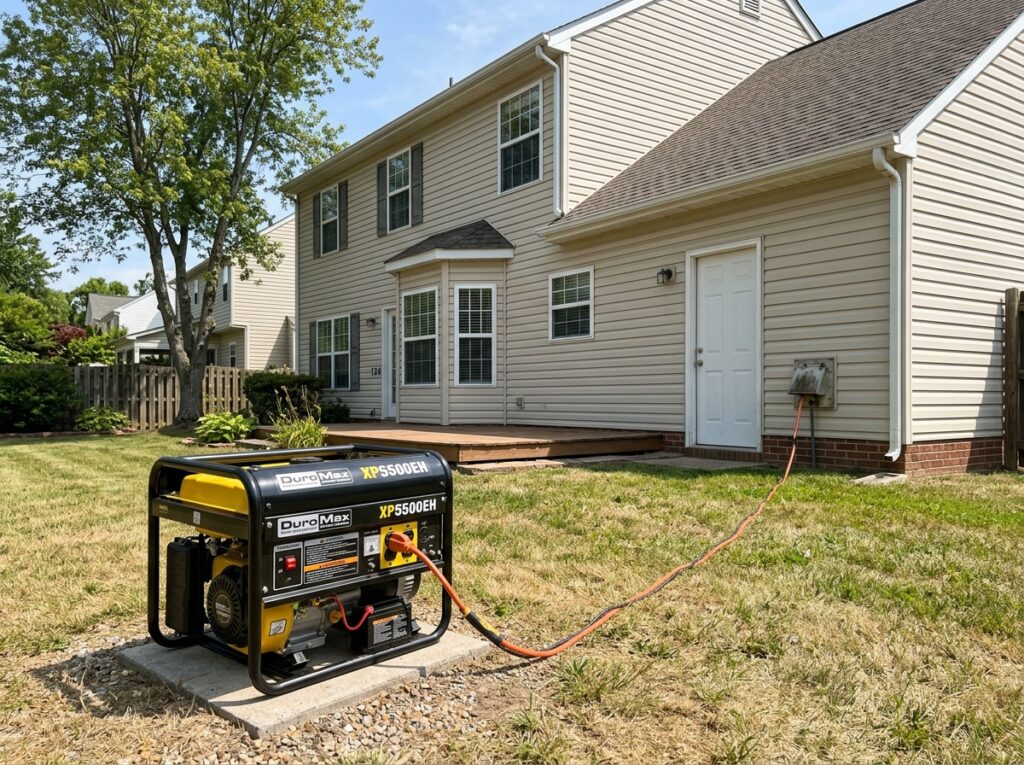
The most significant risk associated with portable generators is carbon monoxide (CO) poisoning. CO is a colorless, odorless, and tasteless gas that can overcome a person in minutes. To prevent this, professional standards emphasize the “20-foot rule.” A portable generator must be placed at least 20 feet away from any home doors, windows, or vents. Some experts even recommend a 25-foot clearance to ensure that exhaust fumes cannot accumulate near the structure.

Proper ventilation is non-negotiable. Generators should never be operated in enclosed spaces like garages or carports. The exhaust must be directed away from the house and any neighboring properties. Additionally, refueling requires a cautious approach; the engine must be turned off and allowed to cool down completely before adding fuel to prevent fires caused by gasoline splashing on a hot engine.
For those looking for more detail on these requirements, this comprehensive guide to generator safety provides excellent foundational knowledge. Finally, grounding is a technical necessity. While many modern portable units have a bonded neutral, some specific setups require a grounding rod to meet local Ohio codes and manufacturer specifications. We always verify these requirements during a professional installation to ensure your system is bonded correctly.
The Dangers of Backfeeding and Electrical Hazards
In our 20 years of experience at Buckeye Electrical Solutions, the most dangerous DIY mistake we see is “backfeeding.” This occurs when a homeowner attempts a portable generator hookup by using a “suicide cord”—a cable with two male ends—to plug the generator directly into a standard wall outlet or a dryer plug.
This practice is not only illegal; it is potentially lethal. When you backfeed your home without a proper disconnect from the utility grid, the electricity flows out of your house, through your transformer, and back onto the neighborhood power lines. A transformer works in both directions, so it will step that 240V generator power up to thousands of volts. This creates a deadly trap for utility linemen who believe the lines are dead while they are working to restore your power.
Beyond the risk to workers, backfeeding is a major fire hazard. It bypasses your home’s built-in circuit protection, which can lead to overheated wires and electrical fires. Furthermore, if the utility power suddenly comes back on while your generator is backfeeding, the two power sources will collide, likely destroying your generator and potentially causing an explosion or fire at your electrical panel.
For a deeper dive into why this is such a critical error, you can read more about understanding backfeeding risks. Using a backfeeding method will also likely void your homeowner’s insurance and leave you liable for any injuries to utility personnel. Following the National Electrical Code (NEC) isn’t just about red tape; it’s about keeping your family and your community alive.
Professional Connection Methods: Transfer Switches and Interlocks
To achieve a safe and legal portable generator hookup, we utilize professional-grade equipment that creates a physical barrier between your generator and the utility grid. There are two primary ways we do this for Northeast Ohio residents: the Manual Transfer Switch (MTS) and the Interlock Kit.
A manual transfer switch is a dedicated sub-panel installed next to your main electrical panel. Specific “essential” circuits—like your refrigerator, well pump, furnace blower, and a few light circuits—are wired directly into this switch. During a power failure, the MTS allows for a safe transition from “Line” to “Gen” power. This is often considered the “foolproof” method because it limits the load to what the generator can handle and ensures complete isolation from the grid.
An interlock kit is a more flexible and often more affordable alternative. It consists of a mechanical device installed on your existing main panel that prevents the “Main” breaker and the “Generator” breaker from being turned on at the same time. This allows for panel-wide flexibility, though it requires careful load management to avoid stalling the generator.
Both methods utilize a weatherproof power inlet box (often a NEMA L14-30 or L14-50) mounted on the exterior of your home. This allows homeowners to connect a generator using a single, heavy-duty cord without ever having to run extension cords through open windows or doors. For business owners, we also specialize in commercial generator installation, which often requires larger, more complex transfer systems.
Choosing the Right Portable Generator Hookup for Your Home
The choice between a transfer switch and an interlock kit usually depends on the specific needs of the household. A transfer switch is ideal for those who prefer a “set it and forget it” system with preselected circuits. If panel-wide flexibility is desired and the homeowner is comfortable monitoring power usage to avoid overloads, an interlock kit is a fantastic option.
During our consultation, we help you evaluate your panel space and local code requirements in Northeast Ohio to determine which safety fasteners and kits are approved for your specific brand of electrical panel.
Professional Installation vs. DIY Risks
While the internet is full of “how-to” videos, a portable generator hookup is not a weekend DIY project. It involves working inside your main service panel, where live electricity is always present—even if the main breaker is off.
Hiring a licensed electrician from Buckeye Electrical Solutions ensures that your installation is permitted and inspected. This protects your manufacturer’s warranty and, more importantly, your insurance coverage. A DIY installation that leads to a fire can be grounds for an insurance company to deny a claim. We provide full system testing after every installation to ensure your home transitions seamlessly from utility to backup power.
Sizing Your Generator and Managing Power Quality
Not all electricity is created equal. When planning your portable generator hookup, we must consider both the quantity (wattage) and the quality (cleanliness) of the power being produced.
First, we calculate your “starting” vs. “running” watts. Appliances with motors, like your refrigerator or well pump, require a massive “surge” of power to start up—often three times their running wattage. Technologies like PowerRush™ can provide up to 30% more starting capacity, allowing a smaller generator to handle larger initial loads. If you’re curious about which appliances we can help you back up, check out our essential generator services.
Second, we have to address “dirty power.” Traditional portable generators can have high Total Harmonic Distortion (THD). While this is fine for a toaster or a lightbulb, it can be devastating for sensitive electronics like smart TVs, laptops, and high-efficiency furnace boards. For modern “smart homes” in Northeast Ohio, we often recommend inverter generators. These units produce a pure sine wave with less than 3% THD, providing “medical-grade” clean power that is safe for all your sensitive devices.
Long-Term Maintenance and Reliability
A generator is like a car; if it sits in the garage for two years without being touched, it probably won’t start when you actually need it. To ensure your portable generator hookup is reliable for the next blizzard or summer storm, professional maintenance and regular oversight are required.
Reliability depends on consistent oil changes (usually every 50-100 hours of use), spark plug inspections, and air filter cleanings. We also highly recommend using a fuel stabilizer. Modern gasoline contains ethanol, which can gum up a carburetor in as little as 30 days. Professional storage protocols often include running the carburetor dry to prevent fuel degradation and engine failure.
Battery care is also vital for electric-start models. A small trickle charger can keep the battery ready to go. On average, a large-capacity steel fuel tank might provide about 11 hours of run time at a 50% load. Knowing your fuel efficiency helps you plan your fuel storage needs for extended outages.
Maintaining Your Portable Generator Hookup for Emergencies
The connection points are just as important as the engine. Regular professional inspections and monthly dry runs are recommended to ensure the system is ready for an emergency. This includes checking connection points for corrosion, ensuring the power inlet box is clear of debris, and verifying that the transfer switch or interlock functions correctly while the generator produces the proper voltage (typically 120/240V).
Frequently Asked Questions about Portable Generator Hookups
How far should a portable generator be placed from the house?
For safety, a portable generator should be placed at a 20-foot minimum distance from the house. At Buckeye Electrical Solutions, we often recommend 25 feet if the terrain allows. This distance ensures that carbon monoxide cannot drift back into the home through windows, doors, or soffit vents. Professional installation ensures that the exhaust is directed away from the structure.
What is the difference between a transfer switch and an interlock kit?
A transfer switch is a separate panel that controls specific, pre-wired circuits. It is designed for ease of use but limits power to those specific circuits. An interlock kit is a mechanical device on your main panel that allows for the use of any circuit in the house, provided the generator’s total wattage is not exceeded. The interlock is often more affordable but requires more active management of the home’s breakers.
Can I plug my generator directly into a wall outlet?
Absolutely not. This is “backfeeding,” and it is illegal, dangerous, and a violation of the National Electrical Code. It can electrocute utility workers, cause electrical fires in your home, and destroy your generator when utility power is restored. A professional portable generator hookup requires a transfer switch or interlock kit to safely isolate your home from the grid.
Conclusion
Preparing for a power outage in Northeast Ohio doesn’t have to be a stressful experience. When you invest in a professional portable generator hookup, you aren’t just buying convenience—you’re buying peace of mind and safety for your family.
At Buckeye Electrical Solutions, we bring over 20 years of experience to every project. We understand the specific needs of Ohio homeowners, from the heavy snow loads of winter to the summer thunderstorms that knock out the grid. Whether you need a simple interlock kit or a comprehensive manual transfer switch for a large tri-fuel generator, our team is here to ensure the job is done right, to code, and with the highest level of service.
Don’t wait for the next storm to realize your backup plan is unsafe. Contact us today for more info about our residential and commercial electrical services and let’s get your home ready to weather any storm.