
Why Older Homes Need Updated Electrical Systems
Redoing home electrical wiring is often the most important safety upgrade you can make to an older home. If your house was built before 1980, there’s a good chance the wiring wasn’t designed to handle today’s electrical demands—and outdated systems are a leading cause of house fires.
When You Should Consider Rewiring:
- Age: Homes built before 1950 typically need complete rewiring; homes from 1950-1965 may need partial updates
- Warning Signs: Frequent tripped breakers, flickering lights, burning smells, or two-prong outlets throughout the house
- Dangerous Wiring: Knob-and-tube or aluminum wiring that poses fire risks
- Insurance Issues: Many insurers won’t cover homes with wiring over 40 years old or require higher premiums
- Modern Needs: Your current system can’t safely power electric vehicles, heat pumps, or today’s appliances
What It Costs:
The average cost ranges from $8,000 to $30,000 depending on your home’s size. Most homeowners spend $12,000-$20,000 for a complete rewire. Costs break down to roughly $10-$20 per square foot, with labor making up 50-70% of the total.
The Bottom Line:
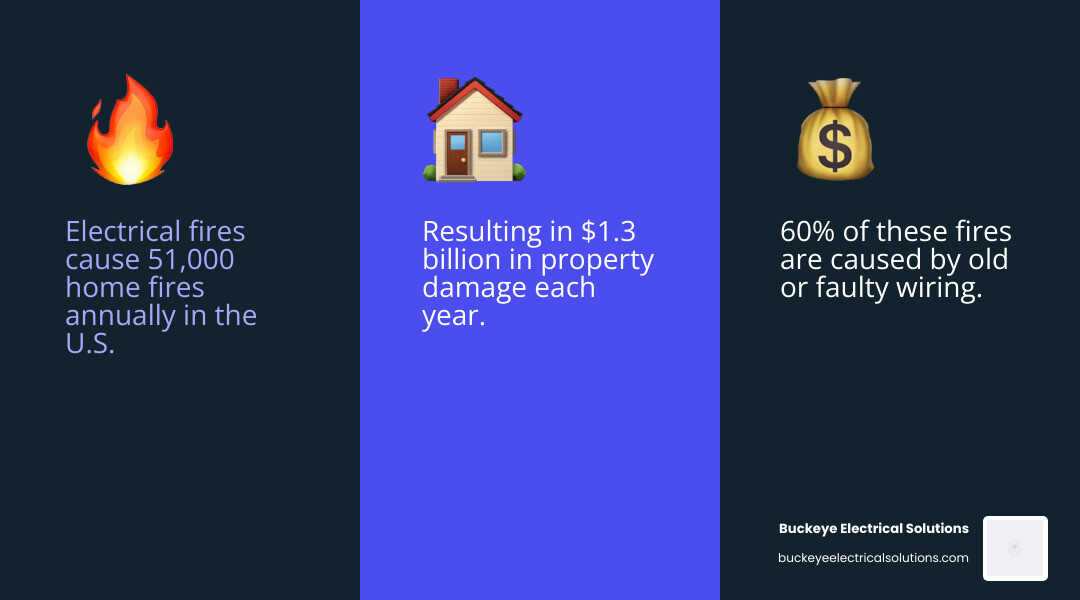
Electrical fires account for 51,000 home fires each year in the U.S., causing nearly 500 deaths and $1.3 billion in property damage. Sixty percent of these fires are caused by old or improperly installed wiring. Rewiring isn’t just about convenience—it’s about keeping your family safe.
I’m Aaron, and I’ve led Buckeye Electrical Solutions through dozens of full-home rewiring projects across Northeast Ohio, including complex 6,000 square foot rewires in older properties. Redoing home electrical wiring is one of our core services, and I’ve seen how proper electrical upgrades protect families while adding real value to their homes.
Recognizing the Signs: When Should You Rewire Your Home?
Owning an older home in Northeast Ohio comes with plenty of charm—the crown molding, the solid wood floors, and unfortunately, sometimes a “mystery” electrical system. Many homeowners don’t realize that redoing home electrical wiring isn’t just a cosmetic upgrade; it’s a fundamental safety requirement. According to the National Fire Protection Association, if your home is more than 40 years old, your wiring is likely out of date.
The Ghost of Wiring Past: Knob-and-Tube and Aluminum
If you peek into your attic or basement and see ceramic “knobs” and porcelain “tubes” holding up single strands of wire, you’ve found knob-and-tube wiring. Used before the 1950s, this system lacks a ground wire. Without a ground, there is no safe path for a surge to travel, which significantly increases the risk of shock and fire.
Then there is the 1960s and 70s favorite: aluminum wiring. Due to a copper shortage, aluminum wiring was installed in millions of homes. The problem? Aluminum expands and contracts more than copper, leading to loose connections that can arc and start fires. It also oxidizes more readily, which creates heat.
Warning Signs You Can’t Ignore
Your home usually tries to tell you when it’s struggling. Here are the red flags that suggest you need professional residential electrical services:
- Flickering or Dimming Lights: This often happens when you turn on a high-draw appliance like a vacuum or a microwave. It means your circuits are overloaded.
- Frequent Tripped Breakers: Breakers are designed to “trip” to prevent fires. If it happens often, the system is telling you it can’t handle your power needs.
- Burning Smells or Charred Outlets: If you smell something metallic or like “burning plastic” near an outlet, or see brown/black scorch marks, stop using that outlet immediately.
- Two-Prong Outlets: These are a sign that your system is ungrounded and entirely outdated for modern electronics.
Beyond safety, redoing home electrical wiring can actually save you money on homeowners insurance. Many insurance companies in Ohio are wary of knob-and-tube or aluminum wiring. Some may even refuse to renew your policy until the system is updated. Once you rewire, you can often secure premium reductions because the fire risk has plummeted.
The Cost of Redoing Home Electrical Wiring
We know that “how much is this going to cost?” is the first question every homeowner asks. While every house is unique, we can provide a general framework based on our experience in the Northeast Ohio market.
| Home Size (Sq. Ft.) | Estimated Cost Range | Common Scope of Work |
|---|---|---|
| 1,000 | $8,000 – $12,000 | Full rewire, 100A panel upgrade |
| 1,500 | $12,000 – $18,000 | Full rewire, 200A panel, new outlets |
| 2,500 | $20,000 – $30,000 | Full rewire, 200A panel, dedicated circuits |
Typically, the cost to rewire a house ranges from $10 to $20 per square foot. This includes labor (which is usually 50-70% of the total cost) and materials. When it comes to materials, Copper vs Aluminum material efficiency is a major factor; copper is the industry standard for its superior conductivity and safety, though its market price can fluctuate and impact your final quote.
Factors Influencing the Cost of Redoing Home Electrical Wiring
Why is there such a large range? Several factors play into the final tally:
- Home Age and Construction: If your home has plaster and lath walls (common in older Cleveland-area homes), it’s much harder to “fish” wires through than modern drywall.
- Accessibility: Do you have a crawl space or an unfinished attic? If our electricians can easily access the “bones” of the house, the labor cost goes down. If we’re squeezed into tight spaces, it takes longer.
- Regional Labor Rates: Here in Northeast Ohio, rates are competitive, but you should always look for more info about our services to ensure you are getting a licensed professional rather than a “handyman” special.
- Permit Fees: These vary by municipality (e.g., Akron vs. Canton), usually ranging from $200 to $900.
Budgeting for Redoing Home Electrical Wiring in Older Homes
When planning your budget, we always recommend a 10% to 20% contingency buffer. Old houses are full of surprises—sometimes we find “creative” DIY work from previous owners or structural issues that need addressing.
If a full rewire isn’t in the cards right now, ask about partial rewiring. We can focus on high-load areas like the kitchen and laundry room first. However, keep in mind that an electrical panel replacement is usually necessary to handle modern loads. A new 200-amp panel typically costs between $1,500 and $3,000.
The good news? There are ways to offset these costs. Under the Inflation Reduction Act, Rewiring America rebates and tax credits may be available for panel upgrades and electrical work that supports energy efficiency.
Step-by-Step: The Whole-House Rewiring Process
Rewiring a house sounds like a nightmare of dust and holes, but with a professional team, it’s a structured, manageable process. Here is how we handle a typical project at Buckeye Electrical Solutions.
1. Initial Inspection and Load Assessment
We start by looking at what you have. We check the age of the wiring, the state of the panel, and calculate your home’s electrical load based on your appliances. We’ll ask about your future plans—are you thinking about an EV charger or a hot tub? We plan for those now.
2. Layout and Planning
We map out every outlet, switch, and fixture. This is the time to add those extra outlets you’ve always wanted (goodbye, extension cord “daisy chains”!).
3. Power Shutdown and Removal
Safety first. We shut down the power to the areas being worked on. We remove as much old wiring as possible. While some buried wires in walls might stay (if they aren’t causing a hazard), they are completely disconnected from the power source.
4. New Circuit Installation
We begin “fishing” new Romex (non-metallic sheathed) cable through the walls. This is where the magic happens—we try to minimize the number of holes we cut in your drywall or plaster by using specialized tools. We also ensure all installations meet GFCI and AFCI protection standards. AFCI (Arc Fault Circuit Interrupters) are critical in older homes as they detect dangerous arcing before a fire starts.
5. Device Mounting and Testing
Once the wires are in place, we install new, grounded outlets and switches. Finally, we perform rigorous testing with multimeters to ensure every circuit is functioning perfectly. A typical project takes between 3 to 10 days, depending on the complexity.
Upgrading the Electrical Panel During Redoing Home Electrical Wiring
The electrical panel is the heart of your home. Many older homes have 60-amp or 100-amp service. In the age of big-screen TVs, air conditioners, and electric dryers, 100-amp is the bare minimum, while 200-amp is the modern standard.
Upgrading involves more than just a new box. It often includes:
- New service entrance cables from the utility line.
- Grounding electrodes (usually copper rods driven into the earth).
- A new array of circuit breakers tailored to your home’s layout.
You can find more info about about us and our 20+ years of experience in managing these heavy-duty upgrades for Northeast Ohio residents.
Professional vs. DIY: Navigating Permits and Safety
We love a good DIY project as much as anyone—painting a room or laying tile is a great way to save money. However, redoing home electrical wiring is where we draw the line. The risks of “learning on the job” are simply too high.
The Dangers of DIY Rewiring
The NFPA electrical fire research is clear: improperly installed wiring is a top cause of death and property damage. DIY errors like using the wrong wire gauge, overloading circuits, or failing to secure connections can lead to “hidden” fires inside your walls that you won’t see until it’s too late.
Permits and NEC Compliance
In Ohio, most municipalities require a permit for any significant electrical work. This ensures that a city inspector will review the work to confirm it meets the National Electrical Code (NEC).
- Homeowner Permits: While some cities allow homeowners to pull their own permits, you are still held to the same professional standard as a licensed electrician.
- Liability: If you do the work yourself and a fire occurs, your insurance company may deny the claim due to “faulty workmanship” or lack of professional inspection.
When you hire us, we handle the permits, the inspections, and the liability. We ensure every wire is stapled at the correct intervals (usually every 4.5 feet) and that every box is properly grounded.
Future-Proofing and Modernizing Your Electrical System
If you’re going through the effort of redoing home electrical wiring, you should look forward, not just backward. We recommend “future-proofing” your home so you don’t have to open the walls again in five years.
Smart Home and Connectivity
While we have the walls open, it’s the perfect time to run Ethernet (Cat6) cabling. While Wi-Fi is great, a hardwired connection is always faster and more stable for home offices and gaming. We can also install smart switches that allow you to control your lighting from your phone.
High-Demand Appliances
Are you planning to ditch gas for an induction range? Or perhaps you want to install a heat pump? These require dedicated, high-voltage circuits. We also specialize in commercial electrical services and bring that same high-level expertise to residential EV charger installations.
The 80% Rule: Always remember that a circuit should only be loaded to 80% of its capacity for continuous use. For example, a 20-amp circuit should only handle 16 amps of continuous load. We calculate all of this for you to ensure your new system never breaks a sweat.
Frequently Asked Questions about Redoing Home Electrical Wiring
How long does a full home rewiring project typically take?
For a standard 1,500 to 2,000 square foot home in Northeast Ohio, the process usually takes 3 to 10 days. The timeline depends on how easy it is to access your walls. If we can work through an attic or a basement, it goes faster. If we have to navigate multiple floors with limited access, it takes a bit longer. We always aim to keep your home livable during the process, working room by room.
Can you rewire a house without removing all the drywall?
Yes! This is a common concern. We use a technique called “fishing” where we use flexible rods and string to pull wires through small holes. We often use the attic or basement as a “hub” to run wires vertically through the wall cavities. While we may need to cut some small access holes—especially when using an oscillating tool for precision—we certainly don’t need to “gut” the house.
Does homeowners insurance cover the cost of rewiring?
Generally, no. Standard insurance policies cover sudden and accidental damage (like a lightning strike). They do not cover maintenance or upgrades for old, “wear and tear” wiring. However, having old wiring can make you a “high-risk” client. Updating your system is a form of risk mitigation that can lead to significant long-term premium discounts.
Conclusion
Redoing home electrical wiring is one of the smartest investments you can make for your property. It’s an investment in safety, efficiency, and modern convenience. At Buckeye Electrical Solutions, we bring over 20 years of experience to every job in Northeast Ohio. We understand the unique challenges of our local housing stock—from the historic homes in Cleveland Heights to the mid-century builds in Akron.
Don’t wait for a flickering light to turn into a fire hazard. Whether you need a full rewire or just a safety inspection, our team is known for exceptional service and prompt completion.
Schedule your residential electrical services today and give your old home the new power it deserves.