Why Fire Alarm Systems Are Your First Line of Defense
Fire alarm systems maintenance is essential for protecting lives and property. Systems must be inspected, tested, and serviced regularly to ensure they work when you need them most. Here’s a quick overview:
Quick Answer:
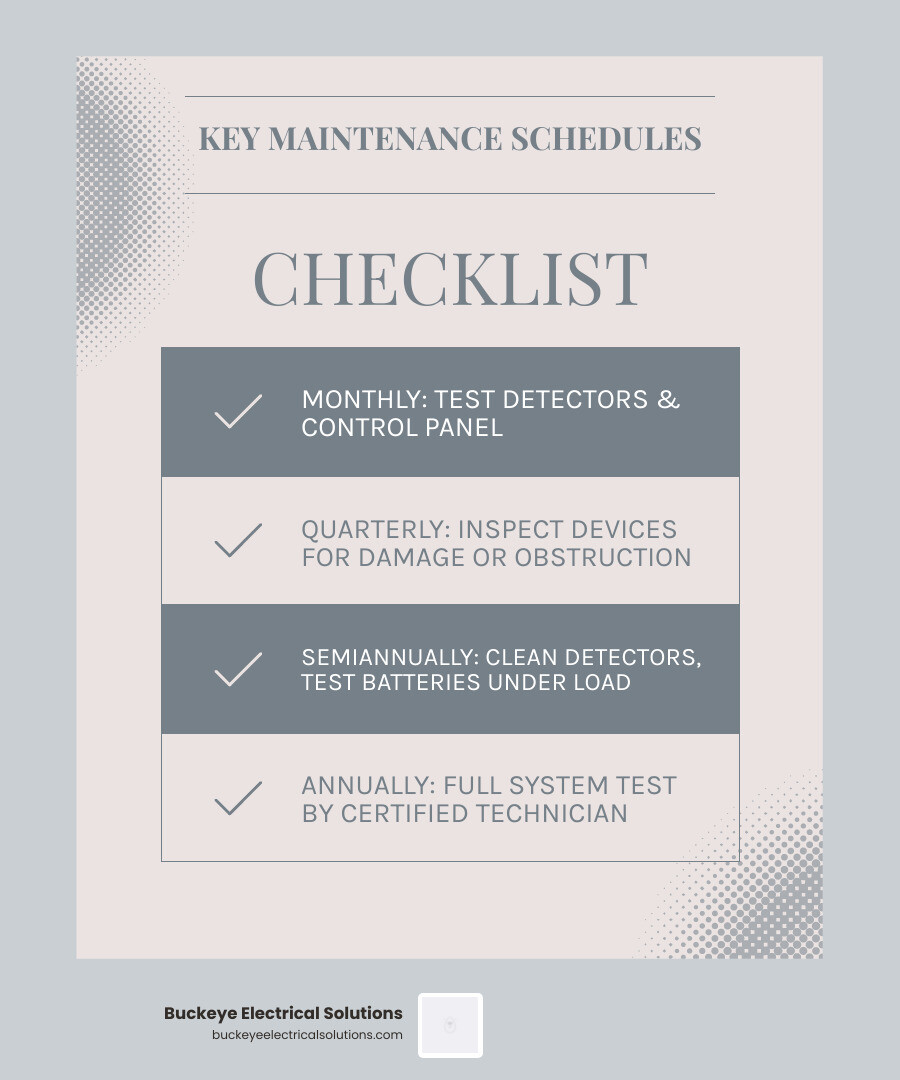
- Monthly: Test detectors and control panel
- Quarterly: Inspect devices for damage or obstruction
- Semiannually: Clean detectors, test batteries under load
- Annually: Full system test by certified technician
- Replace: Batteries every 4-5 years, detectors every 5-8 years
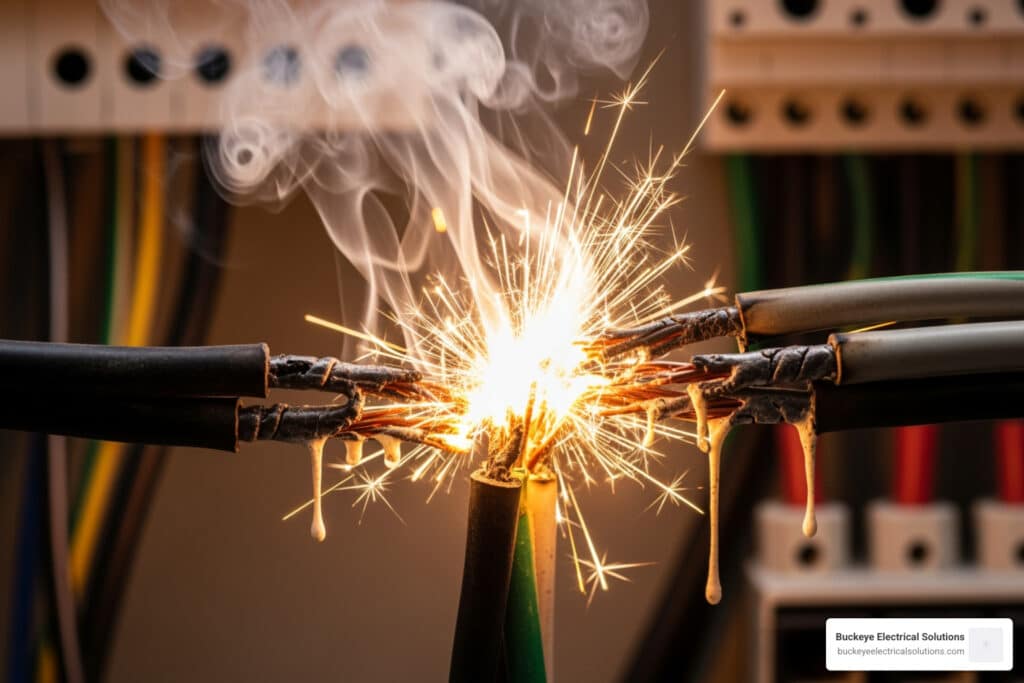
Imagine a fire starting, but the alarm stays silent due to dead batteries or clogged sensors. This isn’t hypothetical. A survey by the California State Board of Fire Services found that 73% of system failures were caused by a lack of maintenance. A neglected fire alarm can be more dangerous than having no system at all.
Fire alarm systems are complex networks that degrade over time. Sensors get dirty, batteries lose charge, and connections loosen. Without regular maintenance, even the most sophisticated system can fail.
Fortunately, proper maintenance is straightforward. Modern fire codes like NFPA 72 detail the required inspections and tests. While some tasks can be done in-house, others require professional expertise. The key is sticking to a schedule.
At Buckeye Electrical Solutions, we’ve overseen countless commercial fire alarm installations across Northeast Ohio. We know that regular maintenance isn’t just about compliance—it’s about ensuring these life-saving systems continue to protect people and property.
Anatomy of a Fire Alarm System: The Core Components
Understanding fire alarm systems maintenance begins with knowing the core components that work together to detect and respond to a fire.
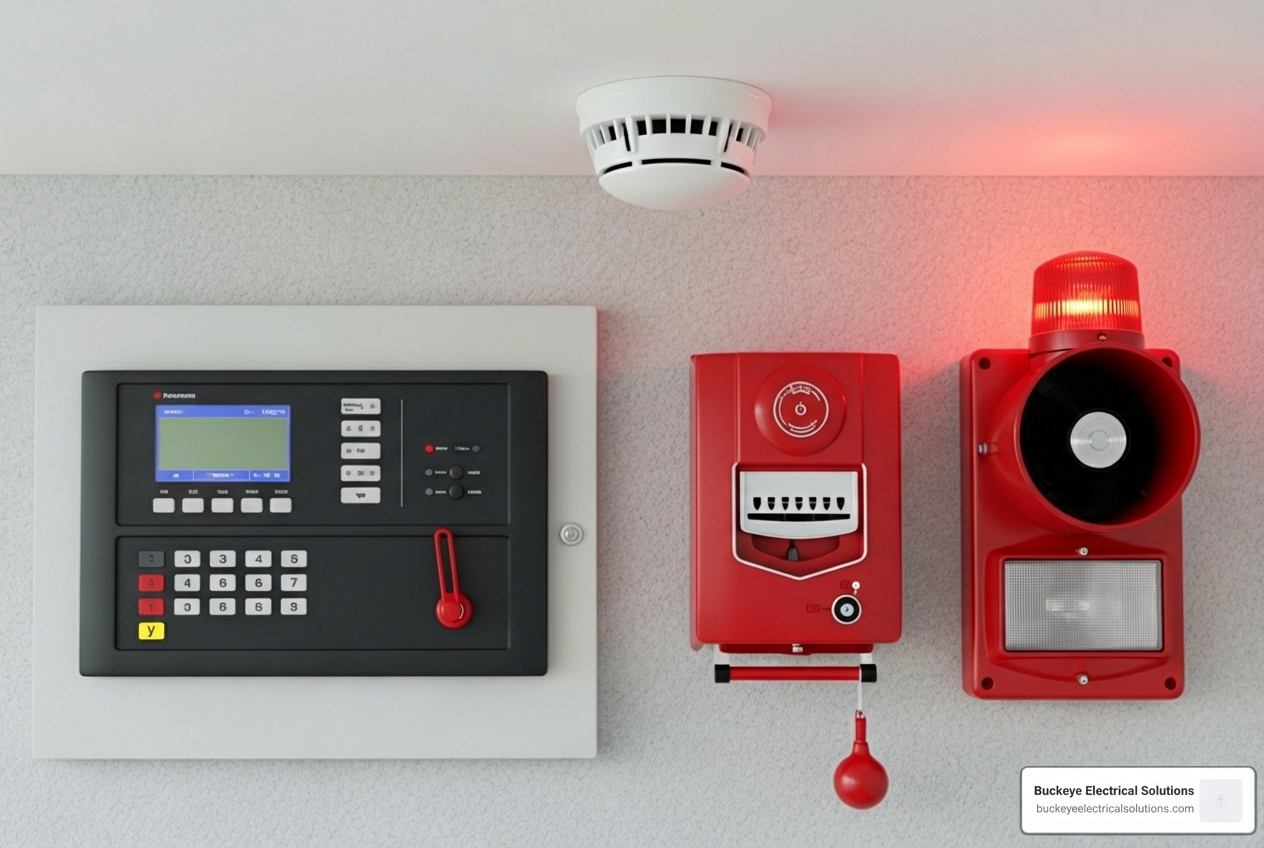
A fire alarm system includes several key parts:
- Control Panel: The “brain” of the system, it monitors all devices, processes signals, activates alarms, and communicates with emergency services.
- Detection Devices: The system’s “eyes and ears,” which monitor for signs of fire.
- Smoke Detectors: The most common type, sensing smoke particles. They can be ionization, photoelectric, or dual-sensor.
- Heat Detectors: Respond to high temperatures or rapid temperature rises, ideal for kitchens or dusty areas.
- Flame Detectors: Specialized devices that identify infrared or ultraviolet radiation from flames.
- Manual Pull Stations: Red boxes on walls that allow occupants to manually trigger the alarm.
- Notification Appliances: Devices that alert occupants to a fire.
- Audible Alarms: Horns, bells, or speakers that sound an alert.
- Visual Alarms (Strobes): Flashing lights for noisy environments or for the hearing-impaired.
- Power Supply: A primary AC power source from the building’s electrical system.
- Backup Batteries: Ensure the system operates during a power outage.
How a System Responds to a Fire
When a fire occurs, the system follows a rapid response sequence:
- Detection: A detector senses smoke, heat, or flame and sends a signal to the control panel.
- Processing: The control panel verifies the signal and confirms an emergency.
- Activation: The panel triggers notification appliances, sounding alarms and flashing strobes.
- Evacuation: Occupants are alerted and evacuate the building.
- Notification: The system automatically alerts a monitoring station or the fire department.
- Ancillary Functions: The system can also trigger other safety measures, such as HVAC shutdown, elevator recall, and fire door closure to contain the fire and smoke.
This coordinated response highlights why fire alarm systems maintenance is so critical. A failure in any component can compromise the entire life-saving sequence.
The Core of Fire Alarm Systems Maintenance: Inspections & Testing
Effective fire alarm systems maintenance involves visual inspections, functional testing, and preventative maintenance. These tasks are mandated by standards like NFPA 72 and enforced by local Authorities Having Jurisdiction (AHJ) in Northeast Ohio to ensure every component works in an emergency.
Inspection Frequencies and Requirements
NFPA 72 provides detailed schedules for inspection and testing. Here is a typical breakdown:
- Daily/Weekly: Check the central station connection (if monitored) daily. For unmonitored systems, check the control panel for trouble signals weekly.
- Monthly: Visually inspect the control panel for normal operation and check backup batteries.
- Quarterly: Inspect supervisory signal devices, waterflow devices, and ensure line-of-sight detectors are unobstructed.
- Semiannually: Perform a more thorough inspection of all initiating and notification devices. Conduct load voltage tests on backup batteries and check for stored trouble signals on the panel.
- Annually: A certified technician must perform a full system test. This includes functionally testing all detectors and notification appliances, testing emergency control functions (like elevator recall), and performing sensitivity testing on smoke detectors (required one year after installation, then every two to five years).
Documentation and Record-Keeping for Compliance
Proper documentation is proof of compliance and a vital diagnostic tool. We maintain thorough records for all maintenance activities, which is crucial for regulatory authorities and insurance purposes.
Key documents include:
- Record of Completion
- Past inspection and testing reports
- Device location map (zone list)
- Operating logs and test certificates
- Deficiency reports detailing any issues found and corrected
At Buckeye Electrical Solutions, we manage meticulous records as part of our comprehensive fire alarm services for businesses throughout Northeast Ohio.
Key Maintenance Procedures and Component Lifecycles
Proper fire alarm systems maintenance involves detailed procedures to ensure every component is ready to perform.
Control Panel and Power Supply Maintenance
Consistent attention to the system’s brain and power sources is critical:
- Control Panel Checks: We inspect the panel for error messages or trouble signals, ensure it’s clean and accessible, and verify all lights are functional. We also perform functional tests, including checking silence/reset functions and diagnosing any ground faults.
- Power Supply Tests: We confirm the primary AC power is on a dedicated, secure circuit. We also test the AC power failure alarm to ensure the system correctly signals a loss of power.
- Backup Battery Testing and Replacement: Backup batteries require rigorous load voltage tests. Since they don’t last forever, they must be replaced according to manufacturer instructions, typically every 4-5 years, to prevent failure during a power outage.
Detector and Alarm Maintenance Procedures
Frontline devices require specific care to function correctly:
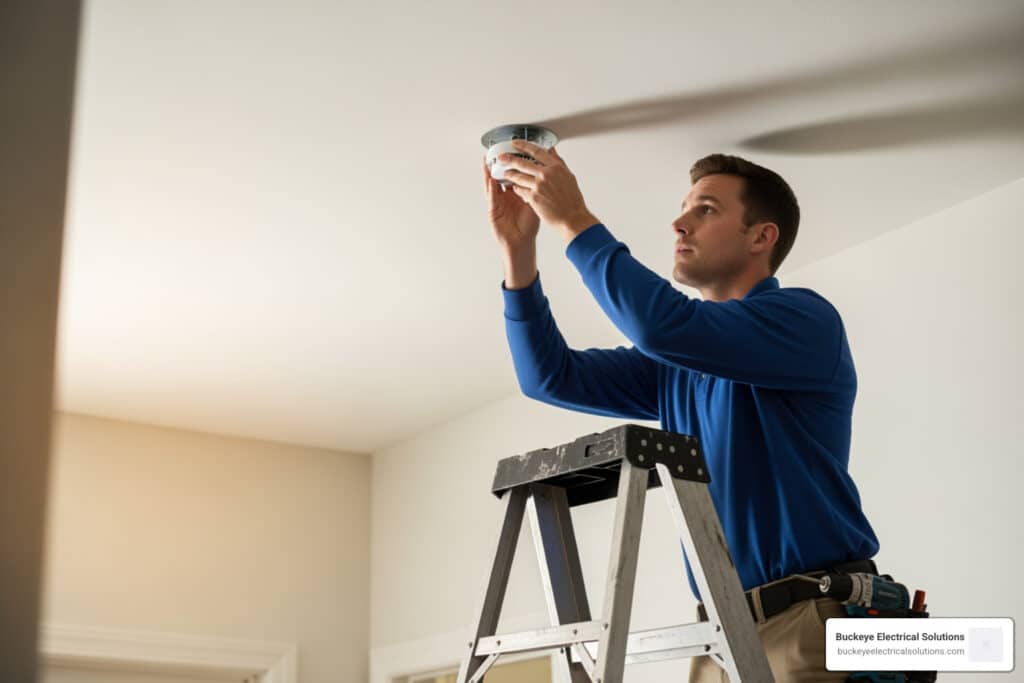
- Detector Cleaning: Dust and debris can impair sensor sensitivity, leading to false alarms or failure. We carefully clean detectors using specialized tools, following manufacturer guidelines.
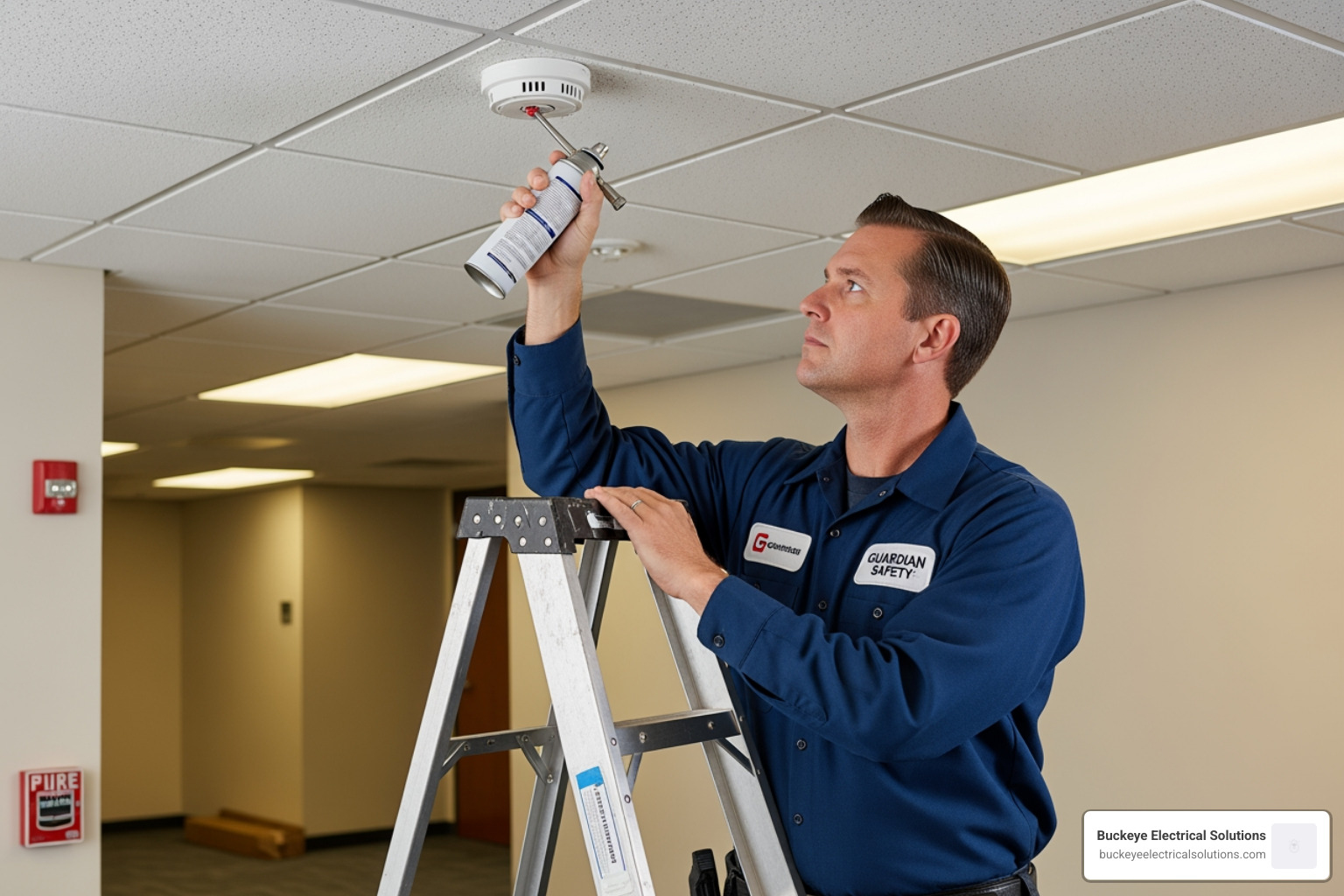
- Functional Testing: We test detectors with their intended stimuli. Smoke detectors are tested annually with canned smoke, as a magnet test only checks circuitry, not the sensor. Heat detectors are tested with a heat source.
- Sensitivity Checks: Smoke detector sensitivity is tested one year after installation and every 2-5 years thereafter. This ensures the detector is not too sensitive (causing false alarms) or too insensitive (failing to detect fire).
- Notification Appliance Tests: We verify all audible and visual alarms work correctly, measuring sound levels to ensure they meet code and checking that strobes synchronize properly to prevent disorientation.
- Detector Lifespan & Replacement: Smoke detectors have a limited lifespan. Most manufacturers and NFPA recommend replacement every 10 years. Depending on the model, some may need replacement after 5-8 years.
These complex procedures require specialized knowledge, which is why businesses in Northeast Ohio trust Buckeye Electrical Solutions for professional fire alarm systems maintenance.
Troubleshooting Common Issues and Preventing False Alarms
Knowing how to troubleshoot common issues and prevent false alarms is a key part of effective fire alarm systems maintenance.
Common Malfunctions and How to Troubleshoot Them
A “trouble” or “fault” signal usually indicates a non-fire issue. Here’s how we troubleshoot common problems:
- Trouble Signals: We check the control panel for specific error codes to locate the issue, which could be a wiring problem, low battery, or device malfunction.
- Ground Faults: Using specialized equipment, we isolate the faulty circuit and inspect its wiring and devices to find and repair the unintended connection to ground.
- Wiring Issues: We visually inspect terminal connections and cables for damage or loose wires that can cause intermittent faults.
- Power Supply Problems: We verify the AC power source, check breakers, and test backup batteries. Old batteries (4-5+ years) are a common culprit and often need replacement.
- Device Failure: If a specific device is flagged, we inspect it for damage and perform functional tests to confirm if it needs replacement.
After correcting an issue, we silence any false alarm and reset the system to return it to its normal monitoring state.
Preventing False Alarms Through Proper Maintenance
False alarms are disruptive and can lead to fines. Proper fire alarm systems maintenance is the best defense:
- Regular Detector Cleaning: Removing dust, dirt, and insects is the most effective way to prevent false alarms.
- Proper Detector Placement and Sensitivity: We ensure detectors are not placed in areas prone to drafts or humidity and that their sensitivity is set appropriately for the environment.
- Protecting Devices: Physical covers can protect detectors from accidental impact in high-traffic areas.
- User Training: Training staff on how to avoid accidental activations of manual pull stations can significantly reduce false alarms.
Proactive maintenance improves system reliability and minimizes disruptions for businesses throughout Northeast Ohio.
The Critical Importance of Professional Maintenance
Neglecting fire alarm systems maintenance provides a false sense of security. Regular inspections are non-negotiable for life safety, property protection, and business continuity.
Why Regular Maintenance is Non-Negotiable
Consistent maintenance is vital for several reasons:
- Life Safety & Property Protection: A maintained system provides early warning, giving occupants time to evacuate and allowing for a quicker fire department response, which minimizes damage.
- Business Continuity: For businesses, preventing major fire damage avoids significant downtime and financial loss.
- Legal & Insurance Compliance: Property owners in Ohio have a legal duty to maintain safety systems. Neglect can lead to fines, liability, and denied insurance claims.
- Cost Savings & Peace of Mind: Proactive maintenance prevents costly emergency repairs and provides peace of mind that your system is ready to perform.
73% of system failures are due to a lack of maintenance. A failed system is worse than no system at all. You can learn more from industry resources like the National Fire Protection Association (NFPA).
Who is Qualified to Perform Inspections and Maintenance?
While basic visual checks can be done in-house, comprehensive fire alarm systems maintenance requires specialized expertise. According to NFPA 72, all inspection, testing, and maintenance (ITM) must be performed by “qualified personnel.”
This means you need certified and licensed fire alarm technicians who are trained on NFPA standards, local Ohio codes, and specific system models. A qualified professional ensures all procedures meet the highest safety standards.
At Buckeye Electrical Solutions, our experienced and licensed electricians are qualified to handle all aspects of fire alarm systems maintenance for commercial properties in Northeast Ohio. We stay current with all codes and guidelines to ensure your system is compliant and ready to protect.
Frequently Asked Questions about Fire Alarm Maintenance
Here are answers to common questions about fire alarm systems maintenance.
What is the difference between a smoke alarm and a smoke detector?
Understanding this distinction is key for proper maintenance:
- Smoke Alarm: A self-contained, all-in-one device with a sensor and a built-in horn. It provides a localized warning and is typically used in residential settings. Maintenance involves monthly testing and regular battery replacement.
- Smoke Detector: A system component that only senses smoke and sends a signal to a central control panel. The panel then activates building-wide notification devices (horns, strobes). These are used in commercial buildings and require professional maintenance as part of the larger system.
How often do fire alarm components need to be replaced?
Components have a finite lifespan. Adhering to replacement schedules is critical:
- Smoke Detectors: Most should be replaced every 10 years, though some models may require replacement after 5-8 years. Always check the manufacturer’s date on the unit.
- CO Detectors: These have a shorter lifespan, typically needing replacement every 2-5 years.
- Backup Batteries: The lead-acid batteries in the main control panel should be replaced every 4-5 years.
- Smoke Alarm Batteries: For residential alarms, replace batteries annually or when the unit chirps. 10-year sealed alarms require the entire unit to be replaced after a decade.
What are the consequences of neglecting fire alarm maintenance?
Neglecting maintenance has severe consequences:
- System Failure: The most dangerous outcome is the system failing to detect a fire or sound an alarm, leading to increased risk to life and greater property damage.
- Legal and Financial Penalties: In Ohio, neglecting maintenance can result in heavy fines, legal liability, and denied insurance claims.
- Business Interruption: For businesses, a major fire can lead to extended downtime or even permanent closure.
As noted earlier, 73% of system failures are due to a lack of maintenance, highlighting the critical importance of a regular service schedule.
Ensure Your Safety with Professional Maintenance
We’ve covered a lot about fire alarm systems maintenance, from the intricate components to the critical inspection frequencies, troubleshooting tips, and the severe consequences of neglect. The key takeaway is clear: a fire alarm system is only as good as its maintenance.
For businesses and property owners across Northeast Ohio, ensuring the robust health of your fire alarm system is not just a regulatory checkbox—it’s a profound commitment to safety and continuity. While some basic checks can be performed in-house, the comprehensive inspections, testing, and preventative maintenance required by NFPA 72 demand the expertise of qualified, licensed professionals.
At Buckeye Electrical Solutions, we pride ourselves on providing exceptional commercial electrical services, including expert fire alarm systems maintenance. Our team understands the nuances of various systems and stays current with all local and national codes, ensuring your property is always protected and compliant.
Don’t leave your safety to chance. Let us help you safeguard your investment and, most importantly, the lives within your building.
Contact us today for a consultation or to schedule your next fire alarm systems maintenance service. We’re here to provide the peace of mind that comes with knowing your fire alarm system is always ready to perform.