The Critical Role of a Professional Smoke Alarm Installation and Maintenance Service
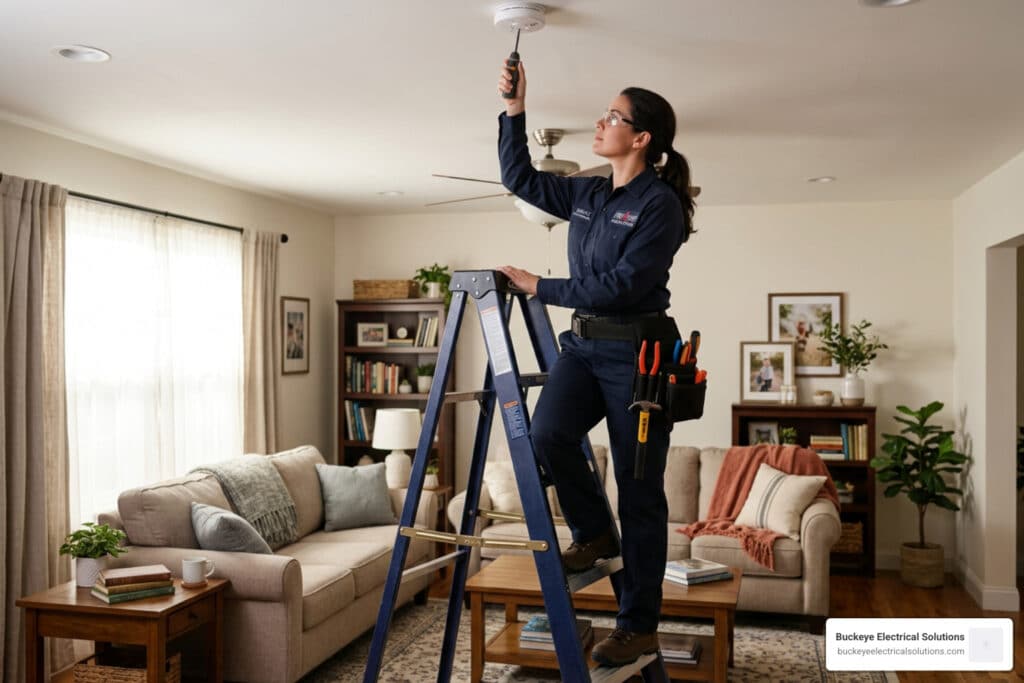
When it comes to the safety of your family or your employees in Northeast Ohio, “good enough” isn’t an option. While many homeowners view smoke detectors as simple “stick-on” gadgets, they are actually sophisticated life-safety devices. A professional smoke alarm installation and maintenance service ensures that your home or business adheres to the National Fire Protection Association standards, specifically NFPA 72, which dictates how these systems must be designed and maintained.
At Buckeye Electrical Solutions, our Fire Alarm Services go beyond just mounting a plastic disc on the ceiling. We provide a comprehensive professional assessment of your property’s layout. This includes identifying potential “dead air” spaces where smoke might not reach a detector quickly enough and ensuring that every unit is positioned to provide the earliest possible warning. For business owners, professional service is often a legal requirement to reduce liability and ensure code compliance with Ohio fire Marshals.
Why Professional Expertise Trumps DIY
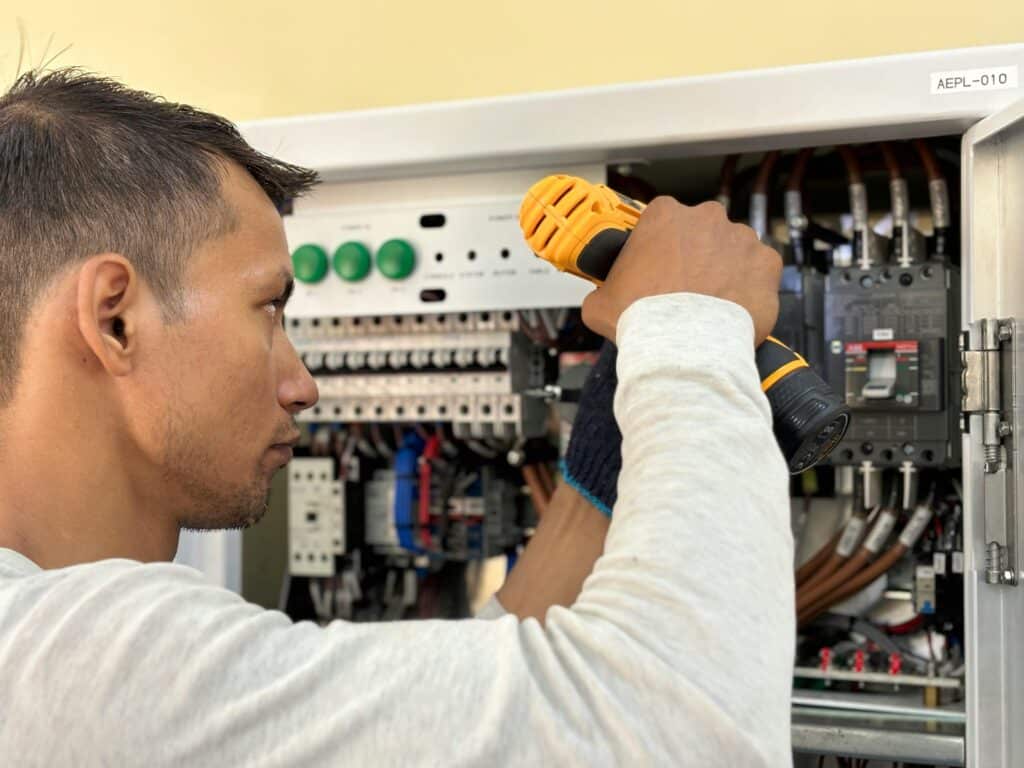
We often get asked why someone shouldn’t just grab a battery-powered unit from a big-box store and do it themselves. The answer lies in the complexity of modern safety requirements. Most new builds and major renovations in Ohio require hardwired, interconnected systems. This involves working directly with your home’s electrical panel—a task that carries significant risk of shock or fire if handled by an amateur.
Our Residential Electrical Services ensure that your alarms are integrated into your home’s circuitry safely. Professionals understand the nuances of mounting heights and the specific local building codes that dictate exactly how many inches from a corner or a peak a detector must sit. When you hire an expert, you aren’t just paying for a device; you’re paying for the certainty that the device will actually trigger when smoke is present.
Specialized Solutions for the Hearing Impaired
Standard audible alarms are not effective for everyone. For those who are deaf or hard of hearing, a “chirp” or a “siren” isn’t enough to provide a life-saving warning. We offer specialized life safety services that include ADA-compliant hardware.
These systems utilize high-intensity strobe lights to provide a visual alert and “bed shakers” that vibrate the mattress or pillow to wake a sleeping person during an emergency. These specialized units are often interconnected with the rest of the home’s smoke alarms, ensuring that if a fire starts in the kitchen, the visual and tactile alerts in the bedroom activate immediately.
Understanding Detector Types and Strategic Placement
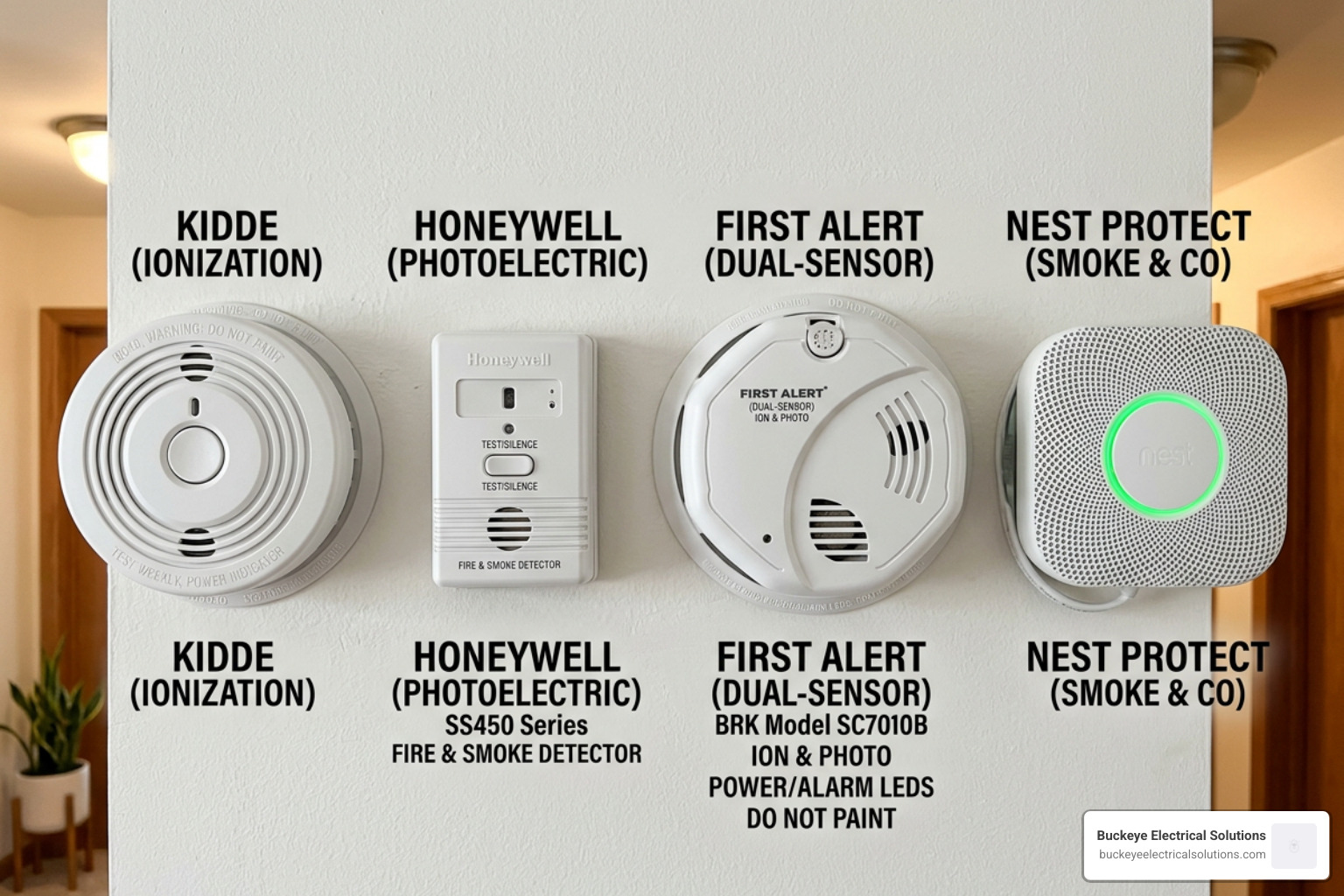
Not all fires are the same, and neither are all detectors. Choosing the wrong type for a specific room can lead to either a delayed response or an annoying string of false alarms.
| Detector Type | Best For… | How It Works |
|---|---|---|
| Ionization | Fast-flaming fires | Uses a small amount of radioactive material to ionize air; better at detecting invisible fire particles. |
| Photoelectric | Slow, smoldering fires | Uses a light beam; when smoke scatters the light, the alarm sounds. |
| Dual-Sensor | All fire types | Combines both technologies for maximum protection in any scenario. |
Optimal Locations for Smoke Alarm Installation and Maintenance Service
Placement is just as important as the device itself. To maximize safety, alarms must be installed:
- Inside every separate bedroom.
- Outside each sleeping area (like a hallway).
- On every level of the home, including the basement.
In larger homes, if a hallway is longer than 40 feet, multiple detectors may be required. One critical rule we follow is the 10-foot kitchen rule: smoke alarms should be placed at least 10 feet away from cooking appliances to minimize “nuisance alarms” caused by steam or normal cooking smoke.
While we focus on Ohio, national trends show how critical this is; data from major metropolitan areas often shows a spike in residential fires during colder months when heating systems are pushed to their limits. Proper placement ensures that no matter where a fire starts, you have the time needed to evacuate.
Carbon Monoxide Integration
Carbon monoxide (CO) is often called the “silent killer” because it is colorless, odorless, and tasteless. It is a byproduct of incomplete combustion from furnaces, water heaters, and fireplaces. We recommend dual-sensor units that monitor for both smoke and CO. It is important to remember that while smoke detectors last 10 years, the sensors in CO detectors typically have a shorter lifespan of 5 to 7 years. Our smoke alarm installation and maintenance service includes tracking these dates so you never rely on an expired sensor.
Hardwired vs. Battery-Powered Systems
In fire safety, reliability is king. While battery-only models are better than nothing, they rely entirely on the homeowner remembering to change the batteries. Statistics show that dead or missing batteries are the leading cause of smoke alarm failure during a fire.
Hardwired systems are connected directly to your home’s electrical system, providing a permanent power supply. However, they also include a battery backup so that they continue to function even during a power outage. For our Commercial Electrical Services clients, hardwired systems are the standard because they eliminate the “human error” factor of battery maintenance.
The Power of Interconnected Alarms
The greatest advantage of modern professional installation is interconnection. In an interconnected system, when one alarm detects smoke, every alarm in the house sounds. This is vital because a fire starting in a basement might not trigger a standalone alarm in a third-floor bedroom until the smoke is thick enough to be life-threatening. Interconnection provides a whole-home notification, giving your family the fastest possible evacuation time. This is a core requirement of NFPA 72 for modern residential safety.
Benefits of Hardwired Smoke Alarm Installation and Maintenance Service
Choosing a hardwired smoke alarm installation and maintenance service offers several long-term benefits:
- Synchronized Signals: Every occupant is alerted regardless of where they are in the building.
- Reduced Maintenance: You won’t have to climb ladders to change batteries as often (though annual checks are still required).
- Professional Wiring: Ensures the system is on a dedicated or protected circuit, reducing the risk of accidental shut-off.
- Long-term Reliability: Hardwired units are built to high standards and offer consistent performance for their full 10-year lifespan.
Essential Maintenance and Replacement Timelines
Even the best smoke alarm won’t work if it’s neglected. Adhering to a professional maintenance schedule is vital for ensuring these devices perform when needed. Industry experts recommend a “1-1-10” approach to system health:
- Monthly: Regular functional testing ensures the internal circuitry and power supply are active.
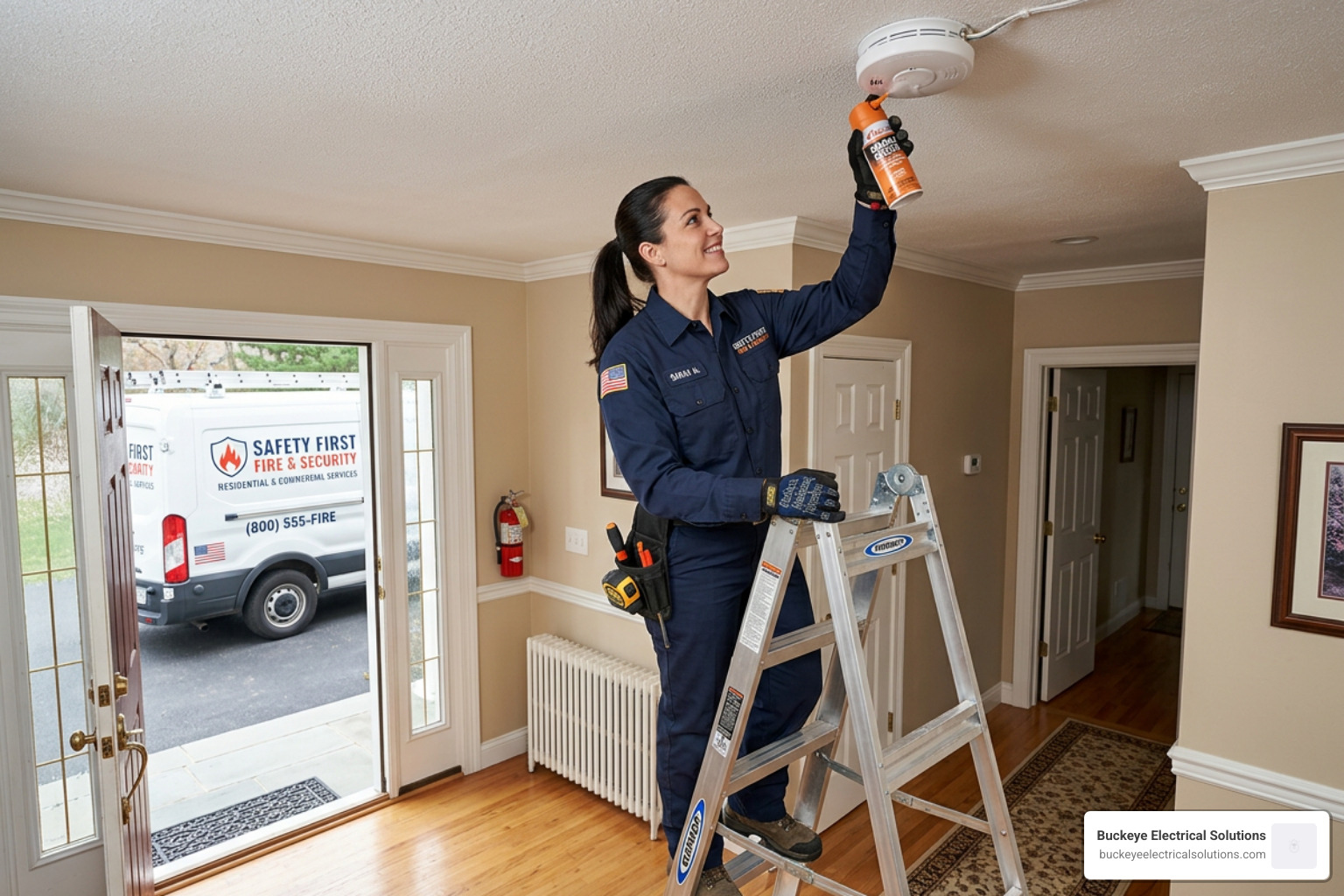
- Annually: Professional cleaning to remove environmental dust and the replacement of backup batteries helps prevent sensor failure and nuisance alarms.
- Decennially: The National Fire Protection Association (NFPA) requires the full replacement of smoke alarms every 10 years.
The 10-year replacement cycle is critical because internal sensors degrade over time, losing their ability to detect smoke particles effectively. When decommissioning old ionization units, it is important to handle them according to local regulations, as they contain a small amount of Americium-241. These units should be processed through hazardous waste programs or manufacturer recycling initiatives rather than standard disposal.
Recognizing Signs of Unit Failure
Beyond the standard replacement timeline, certain behaviors indicate a unit requires immediate professional attention:
- Persistent Chirping: If a unit continues to chirp after a battery replacement, it often signals a compromised sensor or that the device has reached its end-of-life.
- Frequent False Alarms: Malfunctioning sensors or environmental contamination can cause repeated nuisance triggers.
- Discolored Casing: Significant yellowing of the plastic housing is a common indicator of age and internal component degradation.
- No Response: If a device fails to sound during a routine test, it is considered non-functional and must be replaced immediately.
Smart Technology Enhancements
Modern fire safety technology offers advanced monitoring capabilities through smart smoke alarms. These devices integrate with home WiFi networks to provide real-time alerts to smartphones, ensuring property owners are notified of emergencies even when away. These systems often include self-diagnostic features that monitor battery health and sensor integrity, providing automated notifications when professional maintenance is required. Additionally, app-based controls allow for the convenient management of the system without the need for manual intervention at the ceiling level.
Frequently Asked Questions about Smoke Alarms
Why is my smoke alarm chirping even after a battery change?
This is a common concern. If a new battery doesn’t stop the chirp, it usually indicates that dust has accumulated in the sensing chamber, the unit has reached its 10-year expiration date, or there is a malfunction in the hardwired connection. Additionally, power surges can occasionally affect hardwired units, necessitating a professional reset.
How often should a fire safety system be professionally tested?
While monthly functional checks are a standard safety practice, an annual professional inspection is highly recommended. Professional services include checking the voltage of hardwired systems, thorough sensor cleaning, and verifying that the interconnection is functioning correctly across all levels. For landlords in Ohio, regular inspections are often a legal requirement to ensure tenant safety. If a system hasn’t been checked recently, it is advisable to Contact Us for an inspection.
What is the proper way to dispose of old smoke detectors?
Old detectors should not be disposed of in standard waste bins. Ionization detectors contain a small radioactive source and require specific handling. Many manufacturers offer take-back programs, and local Northeast Ohio waste management districts often provide “Hazardous Household Waste” drop-off days. While photoelectric alarms are easier to handle, recycling the plastic and electronic components is the recommended approach.
Conclusion
At Buckeye Electrical Solutions, we believe that fire safety is not the place for shortcuts. From the initial smoke alarm installation and maintenance service to the long-term upkeep of your system, our goal is to provide you with peace of mind. Whether you are a homeowner looking to protect your family or a business owner needing to meet strict fire codes, we bring over 20 years of experience to every job in Northeast Ohio.
Don’t wait for a “chirp” in the middle of the night to think about your fire safety. Take proactive steps today to ensure your warning systems are ready when it counts. For our business partners, you can Schedule your commercial fire safety service to ensure your facility is fully compliant and your employees are protected. Stay safe, stay prepared, and let us handle the technical details.