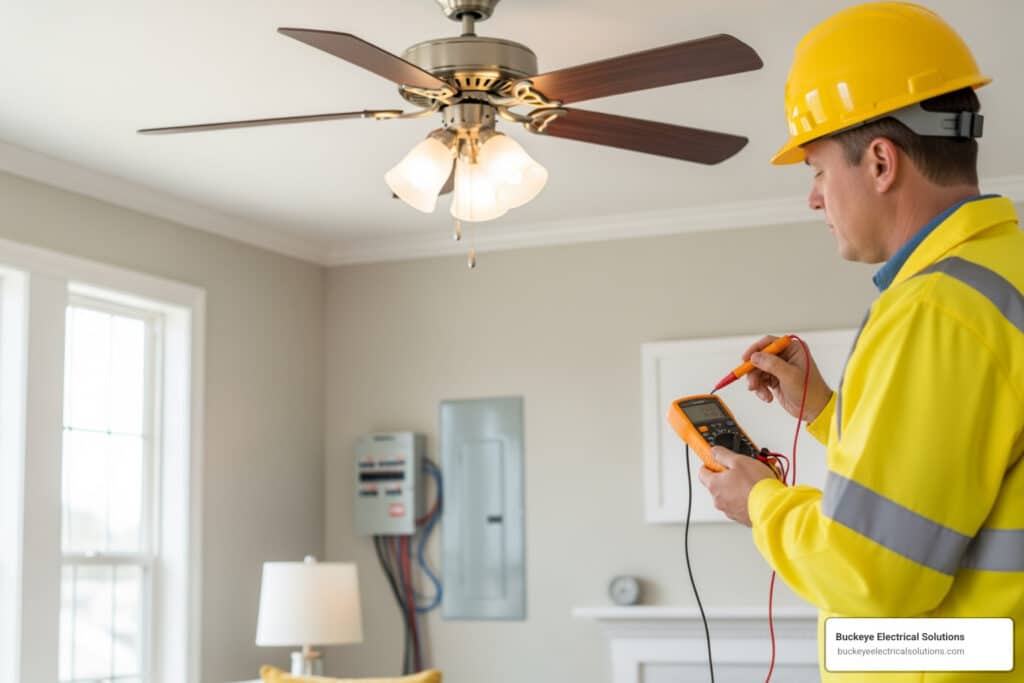
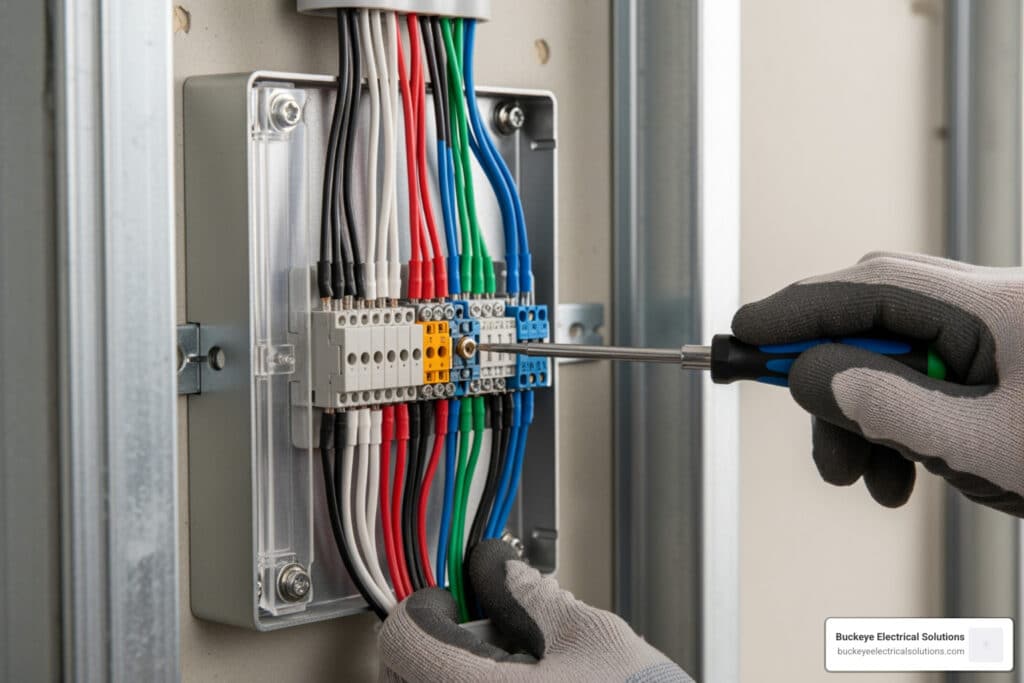
Why Commercial Fire Alarm Installation Is Critical for Your Business
Commercial fire alarm installation is the process of designing, wiring, and activating a life-safety system that detects smoke, heat, or fire and alerts building occupants and emergency services. Here’s what you need to know:
Quick Answer: Commercial Fire Alarm Installation Essentials
- System Types – Conventional (zone-based), addressable (pinpoint location), or monitored (auto-notification)
- Legal Requirements – Must comply with NFPA 72, local codes, ADA specifications, and require permits
- Professional Installation – Requires licensed electricians, proper design, and Authority Having Jurisdiction (AHJ) approval
- Key Components – Fire alarm control panel, smoke/heat detectors, pull stations, notification devices (horns/strobes)
- Testing & Maintenance – Annual professional inspections mandatory; semi-annual for suppression systems
- Cost Range – $10,000 to $100,000+ depending on building size and system complexity
A well-designed fire alarm system saves lives and protects property. According to the National Fire Protection Association, proper installation and maintenance are essential for system reliability when it matters most. In commercial settings, these systems must meet strict codes—the NFPA 72 standard governs design, installation, testing, and maintenance nationwide, while local jurisdictions add their own requirements.
The stakes are high. Fire alarm systems in buildings constructed before 2000 have largely reached end-of-life, with obsolete parts and frequent false alarms that reduce dependability. Modern systems offer precision detection, faster response times, and integration with other building systems like HVAC and elevators.
Installation isn’t a DIY project. Commercial properties require hardwired systems installed by licensed professionals. The work demands proper permits, code compliance, strategic device placement, and thorough testing witnessed by inspectors. Shortcuts risk lives, property damage, business interruption, and legal liability.
I’m Aaron, and I’ve led Buckeye Electrical Solutions through dozens of permitted projects across Northeast Ohio, including complex commercial work requiring proper commercial fire alarm installation and life-safety system integration. Our team understands the codes, the process, and the importance of getting it right the first time.
Decoding the Essentials: System Types and Legal Mandates
Understanding the available system types and the regulatory landscape is paramount for any commercial fire alarm installation. It’s about creating a comprehensive safety net that complies with stringent legal requirements, not just installing a few smoke detectors.
Every commercial fire alarm installation must steer a web of legal requirements. The cornerstone is the National Fire Protection Association’s NFPA 72 code, which guides design, installation, and testing. Local jurisdictions, including those in Northeast Ohio, adopt and amend this code. Key mandates include:
- Permits: Required from the Authority Having Jurisdiction (AHJ), like the local fire marshal, before work begins.
- ADA Compliance: The Americans with Disabilities Act (ADA) requires visual (strobe lights) and audible alarms to alert all occupants.
- Monitoring: Many commercial buildings need monitoring services to automatically notify emergency responders, ensuring a swift response.
Types of Systems for Commercial Fire Alarm Installation
Choosing the right type of fire alarm system is crucial for effective commercial fire alarm installation. The best system for your property depends on its size, layout, and specific fire risks.
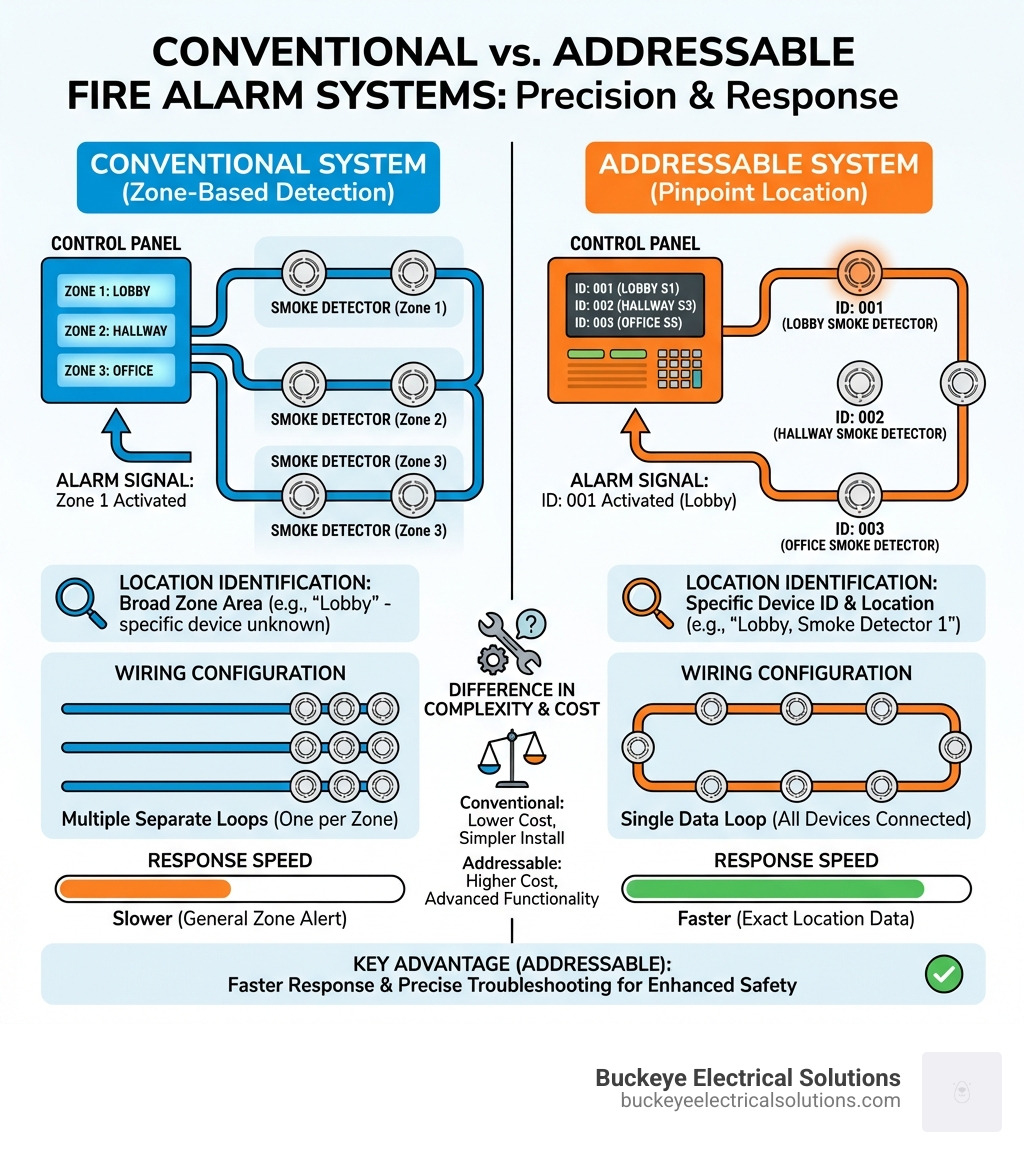
- Conventional Systems: These divide a building into “zones.” The control panel indicates the zone of an alarm, not the specific device. They are cost-effective and suitable for smaller buildings like a small office or retail store.
- Addressable Systems: Each device has a unique “address,” allowing the system to pinpoint the exact location of an alarm. This precision is invaluable in larger, complex buildings like high-rises or industrial facilities for a faster emergency response.
- Hybrid Systems: These combine elements of both conventional and addressable systems, offering a balance of cost and functionality.
- Monitored Systems: Essential for most commercial properties, these systems connect to a professional monitoring service that automatically notifies the fire department when an alarm is tripped.
- Choosing Trusted Manufacturers: Regardless of system type, using equipment from reputable manufacturers ensures reliability, standards compliance, and support. This investment in quality is critical.
Power Sources: Hardwired vs. Battery-Operated
The power source for your commercial fire alarm installation is a critical consideration, heavily influenced by reliability requirements and code compliance.
| Feature | Hardwired Systems | Battery-Operated Systems |
|---|---|---|
| Reliability | High. Directly connected to building’s electrical system, ensuring continuous power. | Moderate. Relies on batteries, which can die or be removed. |
| Battery Backup | Essential. Includes a battery backup to maintain functionality during power outages. | Primary Power. Batteries are the sole power source, requiring regular replacement. |
| Installation | Professional. Requires licensed electricians for safe and code-compliant integration with the electrical system. | Simpler. Often can be installed by property owners, but not suitable for commercial primary fire alarm systems. |
| Maintenance Needs | Regular professional inspections, battery checks/replacement as part of service. | Frequent battery checks and replacement (typically every 6-12 months), device replacement every 10 years. |
| Commercial Suitability | Gold Standard. Mandated by code for most commercial properties due to superior reliability and integration. | Limited. Generally not permissible as the primary fire alarm system for commercial buildings in Ohio due to code. |
| Electrical Integration | Fully integrated with the building’s electrical system, often requiring dedicated circuits. | Standalone, no direct integration with building electrical. |
| Cost | Higher initial installation cost, but lower long-term maintenance if properly serviced. | Lower initial cost, but higher ongoing cost for battery replacement and potential fines if not compliant for commercial use. |
For commercial properties in Northeast Ohio, hardwired systems are the gold standard and almost universally required by code. They connect to your building’s electrical system for continuous power and include a battery backup to remain operational during an outage. This reliability is non-negotiable for commercial safety. Due to their complexity, hardwired systems require professional installation by licensed electricians to ensure they are safely integrated and meet all code requirements. Battery-operated units are generally not permissible as a primary system for commercial buildings.
The Core of Compliance: Your Guide to Commercial Fire Alarm Installation
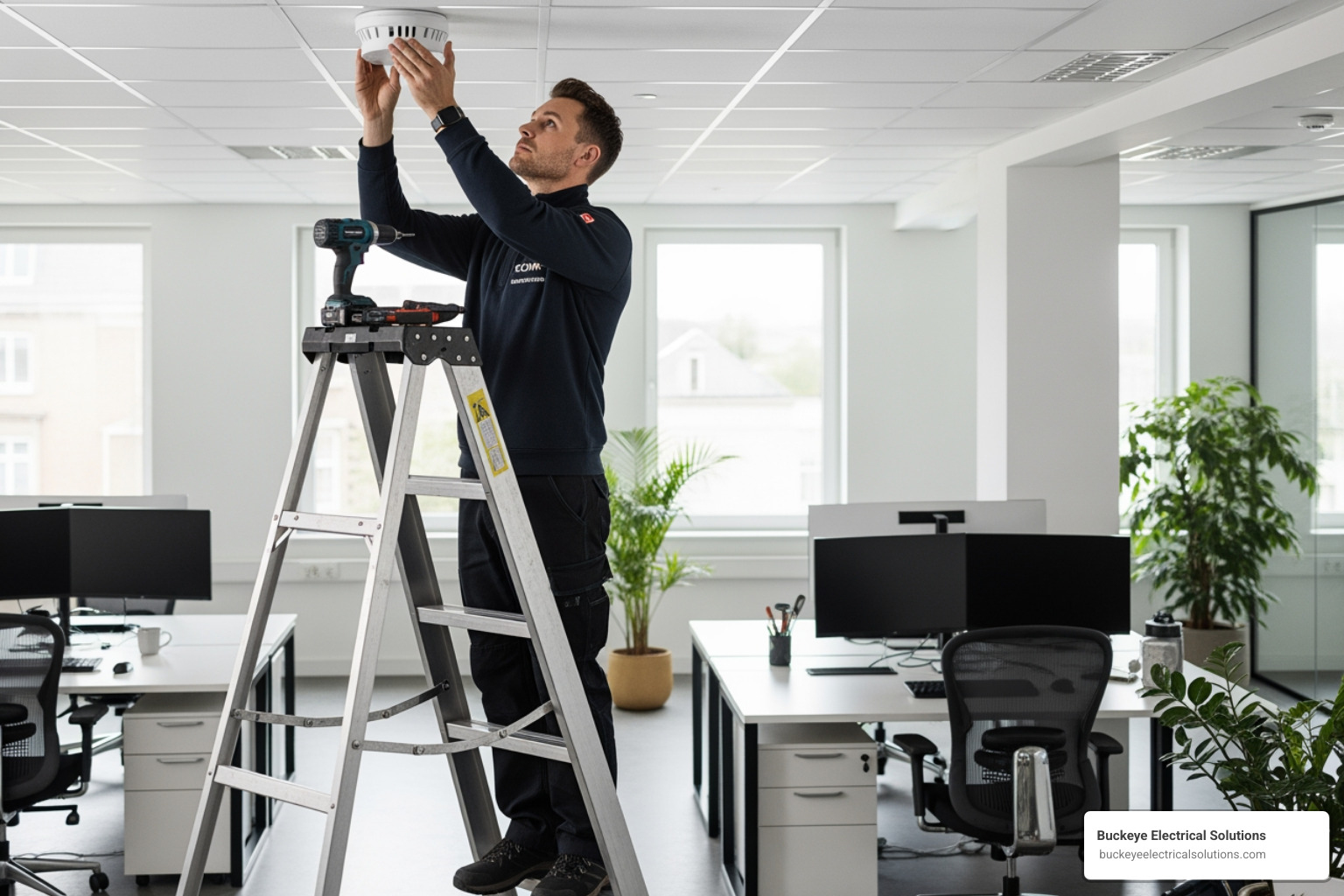
A successful commercial fire alarm installation involves carefully planning, installing, and integrating each component into a cohesive life-saving network. This section covers the essential parts of a system, the installation process, and device placement.
Key Components and Their Functions
Every commercial fire alarm system is composed of interconnected devices, each with a vital role.
- Fire Alarm Control Panel (FACP): The “brain” of the system that monitors devices, activates alarms, and communicates with monitoring stations.
- Initiating Devices: The “eyes and ears” that detect fire.
- Smoke Detectors: Photoelectric types are best for smoldering fires, while ionization types are better for fast-flaming fires. Beam detectors are used for large open spaces like warehouses.
- Heat Detectors: Fixed temperature detectors trigger at a set temperature (e.g., 135°F), while rate-of-rise detectors activate from a rapid temperature increase.
- Manual Pull Stations: Allow occupants to manually trigger an alarm.
- Water Flow Switches: Integrated with sprinkler systems to signal the FACP when water is flowing.
- Notification Appliances: Devices that alert occupants to evacuate.
- Horns/Bells/Sirens: Provide audible warnings.
- Strobe Lights: Provide visual warnings, required by the ADA.
- Speakers: Used for emergency voice alarm messages with clear instructions.
- Annunciator Panels: Remote displays that mirror the FACP, often at building entrances for first responders.
- Power Supplies: A primary electrical connection with a robust battery backup system is essential for operation during power outages.
The Step-by-Step Process for Commercial Fire Alarm Installation
Executing a professional commercial fire alarm installation is a detailed process that demands expertise and meticulous planning.
- Site Assessment: We evaluate your property’s layout, construction, and potential fire hazards to understand its unique needs.
- System Design and Engineering: We design a custom fire alarm system based on the assessment and code requirements (NFPA 72, Ohio regulations), creating engineered drawings for AHJ approval.
- Obtaining Permits: We handle the paperwork and coordination to secure all necessary permits from the local AHJ before installation.
- Device Mounting and Placement: Our licensed technicians strategically mount all initiating and notification devices according to the approved design for optimal coverage.
- Wiring and Connections: We install all cabling and integrate the fire alarm circuits safely into your building’s electrical system, meeting all code requirements.
- Panel Termination: All device wiring is carefully terminated at the FACP to ensure proper communication.
- System Programming: The FACP is programmed to recognize all devices, define zones or addresses, and establish alarm protocols for your building.
- Integration with Other Building Systems: We can integrate the fire alarm with other systems for a coordinated emergency response:
- HVAC Systems: To control smoke spread.
- Elevators: To recall them to the ground floor.
- Suppression Systems: To trigger sprinklers or other technologies.
- Building Management Systems (BMS): For centralized monitoring.
For more information about how we can help with your specific needs, please visit our Fire Alarm Services page.
Best Practices for Device Placement
Strategic placement of fire alarm devices is as crucial as the quality of the system itself. We adhere to strict guidelines, primarily those outlined in NFPA 72:
- Coverage: Place detectors in common areas, occupied rooms, and near exits.
- Hallway Spacing: Follow specific placement intervals in hallways to avoid “dead spots.”
- Avoiding Nuisance Alarms: Avoid placing smoke detectors near kitchens (typically within 20 feet) or in high-humidity areas like bathrooms to prevent false alarms.
- Mounting: Ceiling-mounted detectors should be at least 4 inches from walls. Wall-mounted units should be 4 to 12 inches below the ceiling.
- NFPA 72 Guidelines: We strictly follow NFPA 72 guidelines for placement near walls, corners, and air diffusers to ensure peak detector efficiency.
Ensuring Long-Term Reliability: Testing, Maintenance, and Professional Standards
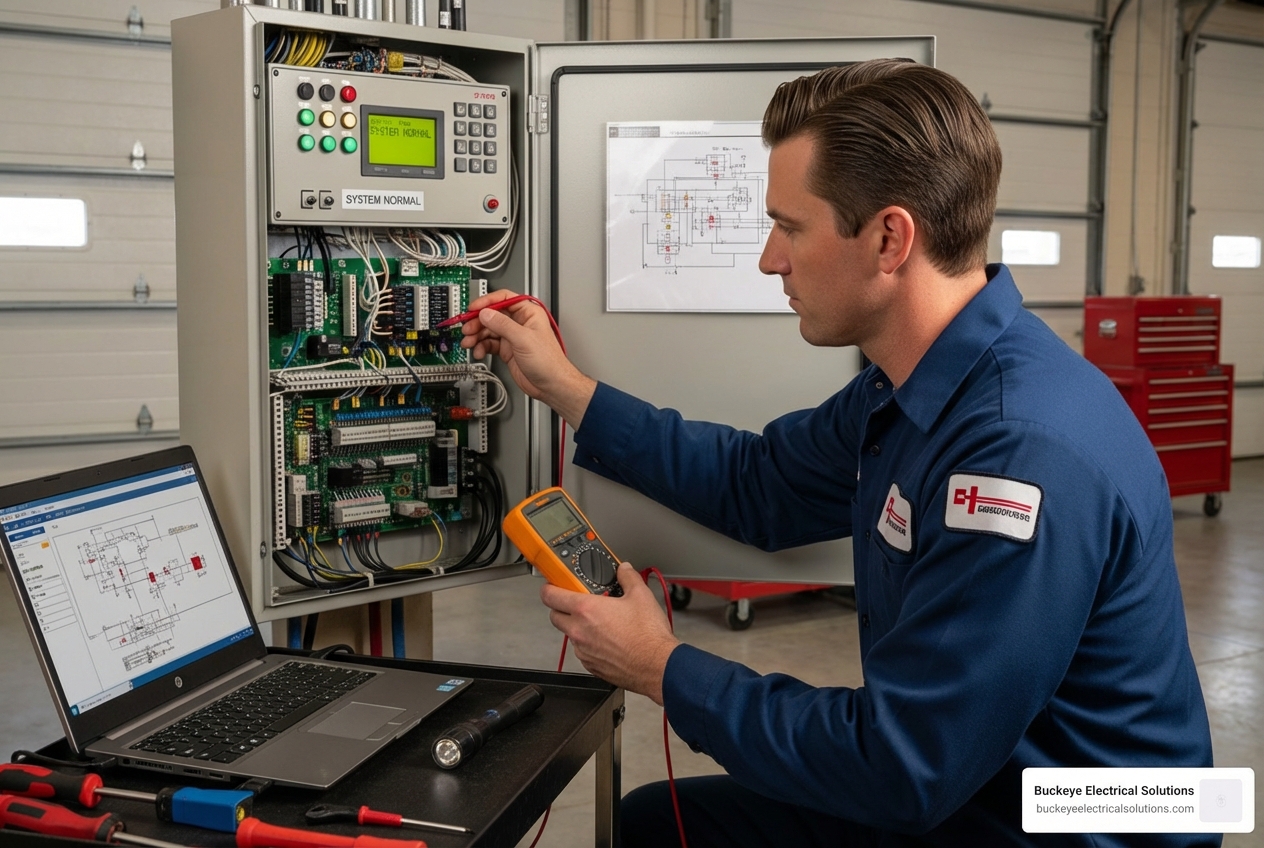
A commercial fire alarm installation is not a “set it and forget it” solution. Its long-term reliability hinges on consistent testing, rigorous maintenance, and the unwavering expertise of professionals. This ongoing commitment ensures your system remains compliant and ready to protect lives and property.
The Importance of Professional Expertise
When it comes to commercial fire alarm installation and maintenance, a DIY approach is not an option. The complexity and life-safety implications mandate professional expertise.
- Licensed Electricians: Legally required for hardwired systems in Ohio to ensure safe integration with your building’s electrical framework.
- NICET Certified Personnel: Professionals certified by the National Institute for Certification in Engineering Technologies (NICET) have proven expertise in fire alarm systems, a best practice recognized in standards like IR A-21: Design, Installation and Maintenance of Fire Alarm Systems.
- Electrical Engineers: Crucial for designing large or complex projects to meet performance specifications.
- Code Compliance Guarantee: Professionals ensure your installation meets all NFPA 72 and local Ohio codes, avoiding fines and re-inspections.
- System Reliability: Professional installation guarantees your system functions flawlessly, leading to dependable operation and fewer long-term issues.
For a deeper dive into our capabilities, explore our Commercial Electrical Services which encompass a wide range of solutions, including expert fire alarm system work.
Testing, Verification, and Maintenance Protocols
Ongoing testing and maintenance are crucial to ensuring the continued reliability and compliance of your commercial fire alarm installation. Regular checks minimize false alarms and ensure the system is ready for a real emergency.
- Initial System Testing and AHJ Witness Test: After installation, the system is rigorously tested, culminating in an inspection witnessed by the local fire marshal (AHJ) for final approval.
- Monthly User Tests: Property owners should perform simple monthly tests, such as activating a detector to ensure the panel and alarms respond.
- Quarterly Inspections: These are more thorough checks for physical damage, cleaning detectors, and inspecting battery connections.
- Annual Professional Inspections: This is a mandatory, comprehensive inspection by a certified technician. Every component is tested to meet NFPA 72 standards, and the results are documented for compliance.
- Semi-Annual Inspections: Often required for systems integrated with fire suppression technology (e.g., in commercial kitchens).
- Record Keeping: Maintaining detailed records of all tests and maintenance is essential for compliance.
Understanding the Costs
The cost of commercial fire alarm installation can vary significantly, reflecting the complexity and scale of the project. It’s an investment in safety and compliance.
- Installation Costs: A typical commercial fire alarm system starts at around $10,000, but for larger facilities, costs can range from $30,000 to $100,000 or more. This depends on system complexity, building size, equipment choice, and labor rates.
- Ongoing Maintenance Fees: Beyond installation, budget for regular maintenance. This includes the annual professional inspections, quarterly checks, and any necessary repairs or component replacements.
- Monitoring Service Costs: If your system is professionally monitored, there will be ongoing fees for this service, which provides a 24/7 connection to emergency responders.
Frequently Asked Questions about Commercial Fire Alarm Installation
We understand that commercial fire alarm installation can raise many questions. Here are some of the most common inquiries we receive from business owners in Northeast Ohio:
What are the ongoing maintenance requirements for a commercial fire alarm?
Maintaining your commercial fire alarm system is crucial for its reliability and compliance. Key tasks include:
- Monthly Checks (User-Performed): Visually inspect the control panel and test a device.
- Quarterly Inspections (Professional or Qualified Staff): Clean detectors and check for damage.
- Annual Professional Inspection (Mandatory): A certified fire alarm technician will conduct a comprehensive inspection of the entire system, testing every device and providing documentation for your records.
- Battery Replacement Schedules: Backup batteries for the control panel typically need to be replaced every 3-5 years.
Regular maintenance is vital to ensure system reliability and minimize false alarms.
How do I choose the right system for my building?
Choosing the ideal system for your commercial fire alarm installation involves balancing several key factors:
- Building Size and Use: A small retail shop might be well-served by a conventional system, while a large office building will require an addressable, monitored system.
- Occupancy Type: Buildings with many occupants or vulnerable populations demand more sophisticated systems.
- Local Code Requirements: Your local AHJ in Northeast Ohio has specific requirements based on your building’s classification and size. We ensure your system meets these mandates.
- Budget: A fire alarm system is a life-safety investment. We work with you to find a solution that fits your budget without compromising safety.
- Scalability for Future Expansion: If you anticipate growth, choose a system that can be easily expanded.
- Consultation with a Professional is Key: The best way to choose the right system is to consult with our experienced professionals. We can assess your property and recommend a custom solution.
What happens if my fire alarm system fails?
A fire alarm system failure is a serious matter that requires immediate action.
- Immediate Notification to Authorities: If your fire alarm control unit fails in an occupied building, you must immediately notify your local fire services.
- Establishing a Fire Watch: In many jurisdictions, including Ohio, a system failure requires establishing a “fire watch.” This means having trained personnel manually patrol the building to detect fires until repairs are completed.
- Contacting a Qualified Service Provider for Emergency Repairs: You need to contact a qualified fire alarm service provider immediately. Our team at Buckeye Electrical Solutions is equipped to provide prompt, expert service to get your system back online swiftly.
Don’t wait for an emergency. If your system shows a fault or trouble signal, contact us for prompt and reliable service. Contact Us for emergency service.
Your Partner in Fire Safety and Compliance
Throughout this guide, we’ve emphasized that commercial fire alarm installation is a complex, regulated, and critical undertaking. From understanding the nuances of system types and legal mandates to the meticulous process of installation and the ongoing commitment to testing and maintenance, every step is vital for ensuring the safety of your occupants and the protection of your property.
The long-term value of a compliant and well-maintained fire alarm system far outweighs its initial cost. It’s an investment in business continuity, peace of mind, and, most importantly, in saving lives. Choosing a professional installer isn’t just about meeting codes; it’s about partnering with experts who understand the gravity of their work.
At Buckeye Electrical Solutions, we bring over 20 years of experience to every project. As a trusted electrical contractor in Northeast Ohio, we pride ourselves on our team of certified technicians who are experts in commercial fire alarm installation. We are committed to delivering not just a system, but a comprehensive fire safety solution that meets the highest standards of quality and reliability. We understand the specific codes and challenges faced by businesses in our community and are dedicated to providing exceptional service and prompt project completion.
When it comes to protecting your commercial property and the people within it, don’t settle for anything less than expert installation and unwavering support. Protect your business with our expert commercial services—we’re here to ensure your peace of mind.