
Understanding House Electrical Inspection Cost in Northeast Ohio
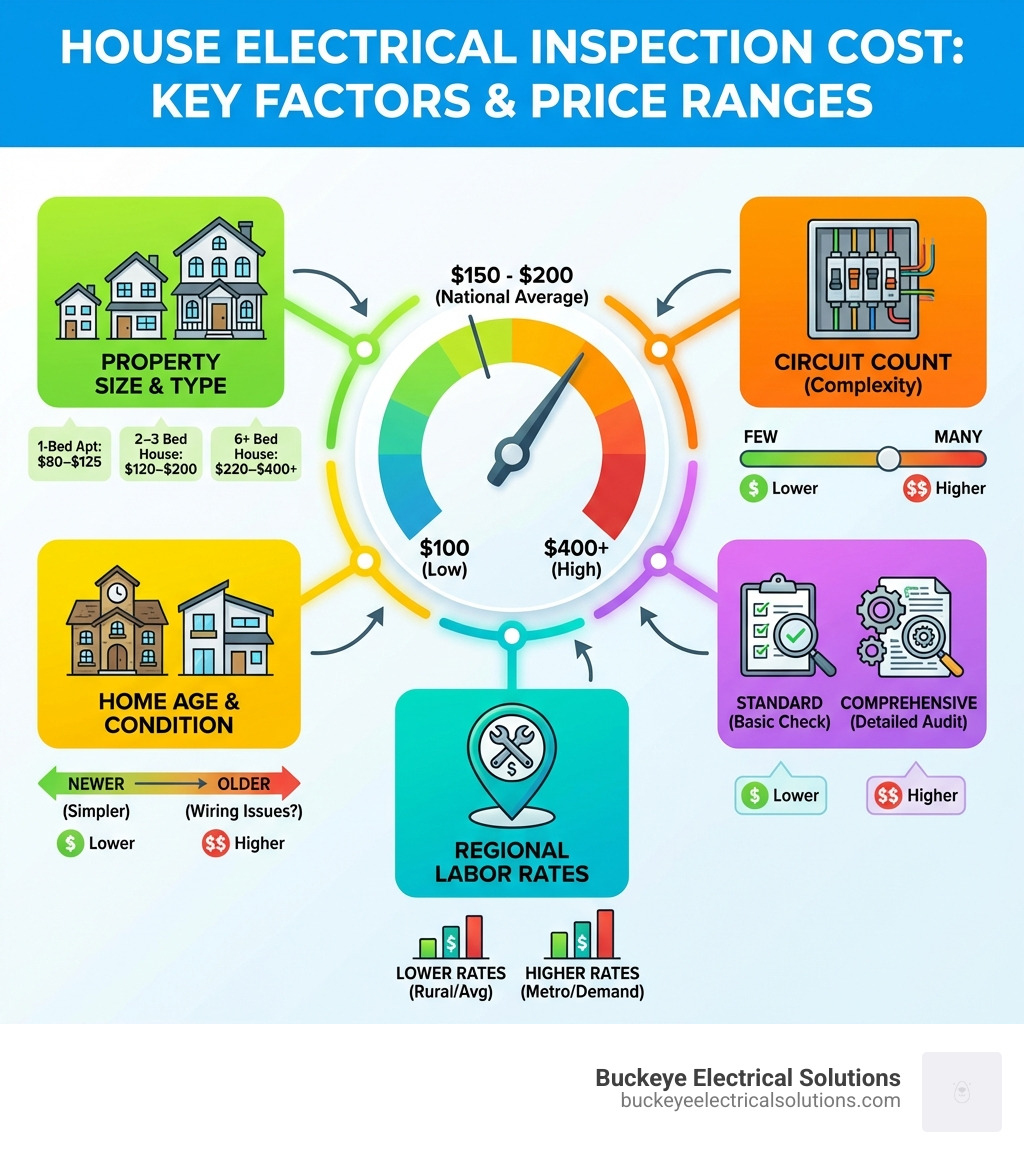
House electrical inspection cost typically ranges from $100 to $400 for most residential properties in the United States, with the national average around $150 to $200. Here’s what you can expect to pay:
| Property Type | Typical Cost Range | Average Duration |
|---|---|---|
| 1-bedroom apartment | $80–$125 | 1–2 hours |
| 2–3 bedroom house | $120–$200 | 2–3 hours |
| 4–5 bedroom house | $160–$300 | 3–4 hours |
| 6+ bedroom house | $220–$400+ | 4+ hours |
Key factors affecting your final price:
- Home size and square footage
- Number of electrical circuits
- Property age and wiring condition
- Accessibility of electrical systems
- Type of inspection needed (standard vs. comprehensive)
- Labor rates in your area
When you’re buying a home, planning renovations, or just want to ensure your family’s safety, understanding electrical inspection pricing helps you budget properly. The cost might seem like an extra expense, but it’s a small investment compared to the potential dangers of faulty wiring—which causes nearly half of all house fires in the US according to NFPA safety data.
I’m Aaron, and I’ve overseen dozens of permitted electrical projects across Northeast Ohio through Buckeye Electrical Solutions, giving me insight into what drives house electrical inspection cost and how homeowners can get the best value. Whether you’re a first-time homebuyer or a longtime property owner, knowing what to expect financially makes the inspection process much less stressful.
Factors That Influence House Electrical Inspection Cost
When we walk into a home in Akron or Cleveland to perform an assessment, the house electrical inspection cost isn’t just a number pulled out of thin air. It is a reflection of the time, expertise, and specialized equipment required to ensure your home meets the National Electrical Code (NEC).
Several variables can shift your quote from the lower end of the spectrum to the higher end:
- Property Size and Complexity: A multistory home with complex exterior lighting, a finished basement, and multiple sub-panels requires significantly more time than a single-story ranch. The more square footage we have to cover, the more outlets, switches, and fixtures there are to test.
- Number of Circuits: Think of your electrical panel as the heart of your home. A panel with 40 circuits takes much longer to inspect than an older 12-circuit fuse box. Each circuit must be evaluated for proper loading and safety.
- Home Age: Older homes in Northeast Ohio—especially those built before 1960—often present challenges like knob-and-tube wiring or ungrounded outlets. These require a more meticulous eye and often take longer to document.
- Wiring Accessibility: If your wiring is hidden behind finished walls, in tight crawlspaces, or in a cluttered attic, it takes us longer to perform a thorough check. Accessibility is a major labor driver.
- Inspection Type: A standard visual safety check is more affordable than a “Full Home” inspection or specialized infrared thermal imaging, which uses advanced technology to find hidden hot spots.
For those interested in the specifics of what we look for during these visits, you can explore our residential electrical services for a deeper dive into home safety.
Average house electrical inspection cost by property size
To help you plan your budget, we have broken down the typical costs based on the size of the property. While every home is unique, these figures represent the standard market rates for professional inspections in the Ohio region.
| Property Size | Estimated Square Footage | Circuit Count (Est.) | Average Cost |
|---|---|---|---|
| 1-Bedroom Apartment/Studio | Under 1,000 | 6–10 | $80 – $125 |
| 3-Bedroom Family Home | 1,500 – 2,200 | 15–25 | $150 – $250 |
| 5-Bedroom Estate | 3,500+ | 30–40+ | $300 – $500 |
Labor rates also play a role. In Northeast Ohio, a licensed journeyman electrician typically costs between $50 and $70 per hour, while a Master Electrician may charge $100 or more. Most inspections are quoted as a flat fee based on these property specifications to provide transparency for the homeowner.
How to reduce your house electrical inspection cost
We know that home maintenance adds up, so we always share tips on how to keep your house electrical inspection cost manageable without sacrificing safety:
- Clear Access: Before we arrive, make sure the electrical panel is accessible. Move boxes or furniture away from the panel, and ensure we have a clear path to the attic, crawlspace, and all outlets. If we spend 30 minutes moving your holiday decorations, that’s time you’re paying for!
- Documentation: Have a folder ready with any past permits, repair receipts, or previous inspection reports. This helps us understand the history of the home and can speed up the “discovery” phase of our visit.
- Bundle Services: If you know you need a ceiling fan installed or a few outlets replaced, ask to bundle these tasks with your inspection. Many contractors offer a discount on the inspection fee if they are already on-site for a larger project.
- Off-Peak Scheduling: Avoid requesting emergency or weekend inspections unless it’s a true safety crisis. Standard weekday appointments are almost always more cost-effective.
- Preliminary Visual Checks: Do a walk-through yourself. Replace any burnt-out light bulbs (which can sometimes look like fixture failures) and ensure all your smoke detectors have fresh batteries.
At Buckeye Electrical Solutions, we pride ourselves on being transparent about our pricing. You can learn more about us and our commitment to the Northeast Ohio community.
Types of Electrical Safety Inspections and Certificates
Not all inspections are created equal. Depending on whether you are renting out a property, selling a home, or just moving into a new place, you might need a specific type of report.
- Electrical Installation Condition Report (EICR): This is the “gold standard” of inspections. It provides an in-depth assessment of the existing electrical installation. In the UK, this is a legal requirement for landlords, and while the terminology differs slightly in the US, a “Full Safety Inspection” serves the same purpose here. You can find more information in the NICEIC homeowner guidance.
- Electrical Installation Certificate (EIC): This is issued for new installations, such as a full home rewire or a new build. It confirms the work was done to code from day one.
- Minor Works Certificate: Used for smaller additions, like adding a new circuit for a hot tub or a kitchen island.
- PAT Testing (Portable Appliance Testing): This involves checking individual appliances (toasters, lamps, computers) for safety. While often a commercial requirement, some landlords choose to do this for furnished rentals. This typically costs $30–$60 for the first 15–30 items.
For our business neighbors, we also provide comprehensive commercial electrical services that cover larger-scale safety requirements and code compliance.
What Happens During a Professional Electrical Inspection?
When we arrive at your home, we follow a rigorous process. It’s not just about flipping switches; it’s about verifying the integrity of the system that powers your life. A standard inspection usually takes 1 to 4 hours and involves:
- Visual Inspection: We look for obvious signs of trouble—frayed wires, “DIY” electrical work that doesn’t meet code, and charred outlets.
- Dead Testing: With the power off, we test the continuity and insulation resistance of your circuits. This ensures that electricity stays where it’s supposed to and doesn’t leak into places it shouldn’t (like your walls!).
- Live Testing: We turn the power back on to verify that your RCDs (Residual Current Devices) or GFCIs (Ground Fault Circuit Interrupters) trip as they should to prevent electrocution.
- Grounding and Bonding Verification: We ensure your electrical system is properly grounded to the earth. This is your primary defense against power surges and lightning strikes.
We believe in educating our customers throughout the process. Our team at Buckeye Electrical Solutions will walk you through our findings so you understand exactly what’s happening behind your walls. You can see the full range of our services to see how we handle everything from the initial test to the final repair.
Legal Requirements and When to Schedule an Inspection
In Ohio, legal requirements for inspections often hinge on the type of property you own.
- Landlords: While the US doesn’t have a universal federal law like the UK’s mandatory 5-year EICR, many local municipalities in Northeast Ohio have their own rental registry requirements. Landlords can face significant fines—sometimes up to $30,000 in certain jurisdictions—for failing to maintain safe electrical standards. For a comparison of strict regulatory environments, you can view the Government guide for landlords on electrical standards in the UK.
- Selling a House: Is an inspection required to sell? Usually, the buyer’s lender or insurance company will trigger the need for an inspection. Providing an up-to-date safety report can actually speed up your sale by 15–30 days by removing “fear of the unknown” for the buyer. You can also read more about selling a house electrical requirements to understand buyer expectations.
- Homeowners: We recommend a professional safety check every 10 years for modern homes. However, if your home is over 40 years old, you should aim for every 3 to 5 years.
Common Issues and Potential Repair Costs
An inspection identifies “findings,” which are usually categorized by their severity. In the industry, we often use codes to help you prioritize repairs:
- C1 (Danger Present): Risk of injury. Immediate action is required. (Example: Exposed live wires).
- C2 (Potentially Dangerous): Urgent remedial work needed. (Example: No grounding on an outlet).
- C3 (Improvement Recommended): Not dangerous, but doesn’t meet modern standards.
If your inspection uncovers issues, here are some typical repair costs in the Ohio area:
- GFCI Outlet Installation: $100 – $200 per outlet.
- Panel Upgrade (100 to 200 Amps): $1,500 – $4,000.
- Aluminum Wiring Remediation: $3,000 – $8,000 (depending on the number of points).
- Knob-and-Tube Replacement: $8,000 – $20,000 for a full home.
Don’t let these numbers scare you! Many issues found are minor, like a loose wire or a missing junction box cover. The goal is to catch them before they become expensive emergencies. If you’ve recently had an inspection and need a quote for repairs, contact us for a fair assessment.
Frequently Asked Questions about Electrical Inspections
Is an electrical inspection required to sell a house?
While not always a state law in Ohio, most buyers will include a home inspection contingency in their contract. If the general home inspector finds red flags, a specialized electrical inspection will be required by the buyer’s mortgage lender or insurance provider before they approve the loan.
Can I perform my own electrical safety check or issue a certificate?
You can certainly perform a “visual” check of your own home—looking for flickering lights or warm outlets—but you cannot issue a legal safety certificate. By law, only a licensed electrician with the proper credentials can provide a report that is recognized by insurance companies, lenders, or local building departments.
How long does a standard house electrical inspection take?
For a typical 3-bedroom home in Northeast Ohio, expect the process to take between 2 and 4 hours. If you have an older home with complex wiring or if we are using infrared technology, it may take a bit longer.
Conclusion
Investing in a professional electrical inspection is about much more than just checking a box for a real estate deal. It is an investment in your family’s safety and your property’s longevity. By understanding the house electrical inspection cost and the factors that influence it, you can budget effectively and avoid the “sticker shock” that often comes with home maintenance.
Whether you are a landlord protecting your investment or a homeowner seeking peace of mind, a certified report is your best defense against the hidden risks of fire and electrocution. Don’t wait for a flickering light to turn into a major hazard.
Schedule your residential electrical services today and let our team at Buckeye Electrical Solutions ensure your home is powered safely for years to come.