

Why Fire Alarm Installation Cost Matters for Your Home and Budget
Fire alarm installation cost typically ranges from $1,000 to $2,500 for residential properties and $2,000 to $5,000+ for commercial buildings. Here’s what you can expect:
- Basic residential system: $1,000–$2,500
- Commercial system: $2,000–$5,000+ (or $1–$12 per square foot)
- Single smoke detector: $70–$150 installed
- Annual monitoring: $50–$70 per month
- Annual testing: $400–$800
Fire safety isn’t just about checking a box—it’s about protecting your family and your biggest investment. When you’re planning to install or upgrade a fire alarm system, understanding the costs upfront helps you budget wisely and make informed decisions. The price you’ll pay depends on several factors: the size of your property, the type of system you choose, whether you’re building new or retrofitting an older home, and the complexity of your building’s layout.
Many Northeast Ohio homeowners are surprised to learn that costs can vary dramatically. A simple battery-powered smoke detector in a single room costs far less than a comprehensive hardwired system with monitoring and integration into your home automation setup. Commercial properties face even more variables, especially when local codes require specific equipment or regular professional inspections.
This guide walks you through everything that affects fire alarm installation pricing. You’ll learn about the different system types, what components cost, and how factors like building age and local regulations impact your bottom line. We’ll also cover the ongoing expenses—maintenance, testing, and monitoring—so you can plan for the total cost of ownership, not just the initial installation.
I’m Aaron, and as the owner of Buckeye Electrical Solutions, I’ve overseen dozens of permitted electrical and fire safety projects across Northeast Ohio, giving me insight into how fire alarm installation cost varies by home type, system complexity, and local code requirements. Whether you’re upgrading an older home or installing a brand-new system, my goal is to help you understand what you’re paying for and why it matters.
Breaking Down the Average Fire Alarm Installation Cost

The fire alarm installation cost is not a one-size-fits-all figure; the “average” can be misleading without understanding what drives the price. Costs in Northeast Ohio vary based on property type (residential or commercial) and project scope.
For a general overview, the average cost to install a fire alarm system is around $800, but this often refers to simpler systems or component replacements. A completely new system with a control panel and multiple detectors can easily exceed $3,500.
Cost per square foot is another common estimate, especially for commercial projects. New commercial installations can cost $1 to $2 per square foot, while retrofitting an older building can range from $4 to $12 per square foot due to increased complexity. The initial investment is a critical decision for any property owner, balancing safety, compliance, and peace of mind. For more detailed information on how we can help with your fire safety needs, please visit our Fire Alarm Services page.
Residential Fire Alarm Installation Cost
For homeowners in Northeast Ohio, the average fire alarm installation cost for a complete residential system typically ranges from $1,000 to $2,500. This range accounts for factors like home size and system type.
A basic residential system includes a control panel and several smoke and heat detectors. Larger homes require more detectors and wiring, increasing the cost. For example, a 2,000 sq ft house might need a detector for every 500 sq ft, plus one in each bedroom and on every floor.
Integrating with smart home technology offers features like remote alerts but can push the cost higher. Smart smoke detectors range from $50 to $150+ per unit, compared to basic detectors at $5-$25 each.
Another key differentiator is hardwired vs. battery-powered systems. Battery-powered detectors are cheaper to install but require regular battery changes. Hardwired systems connect to your home’s electrical system (with battery backup) for greater reliability. While more expensive upfront—potentially adding $500 or more if new wiring is needed—they offer continuous power and interconnected alerting, meaning if one alarm sounds, they all do.
We understand that protecting your home and family is paramount. For more information on electrical services that complement your home’s safety, including fire alarm installations, please visit our Residential Electrical Services page.
Commercial Fire Alarm Installation Cost
For commercial properties in Northeast Ohio, the fire alarm installation cost is significantly higher and more complex, ranging from $2,000 to $5,000 or more. This depends on the building’s size, complexity, and regulatory requirements.
On a per-square-foot basis, new commercial installations generally fall between $1 and $2, while retrofitting older buildings can cost $4 to $12 per square foot. This wide range reflects the diverse needs of different commercial spaces, from small offices to large industrial facilities.
The system’s complexity is a major cost driver, including the number and type of detectors (smoke, heat, carbon monoxide, flame), manual pull stations ($20-$99 each), notification appliances, and the central control panel. For instance, specialized flame detectors for high-risk environments can cost $2,800 to $3,500 per unit.
Local building codes in Northeast Ohio are crucial. Facilities like hospitals, schools, or manufacturing plants have stricter codes that necessitate more advanced and expensive systems. Compliance is essential for occupant safety and avoiding fines. The type of business also influences the system design—a small retail store has different needs than a multi-story office building.
We specialize in ensuring commercial properties are safe and compliant. To learn more about our services custom for businesses, please visit our Commercial Electrical Services page.
Key Factors That Influence Installation Pricing
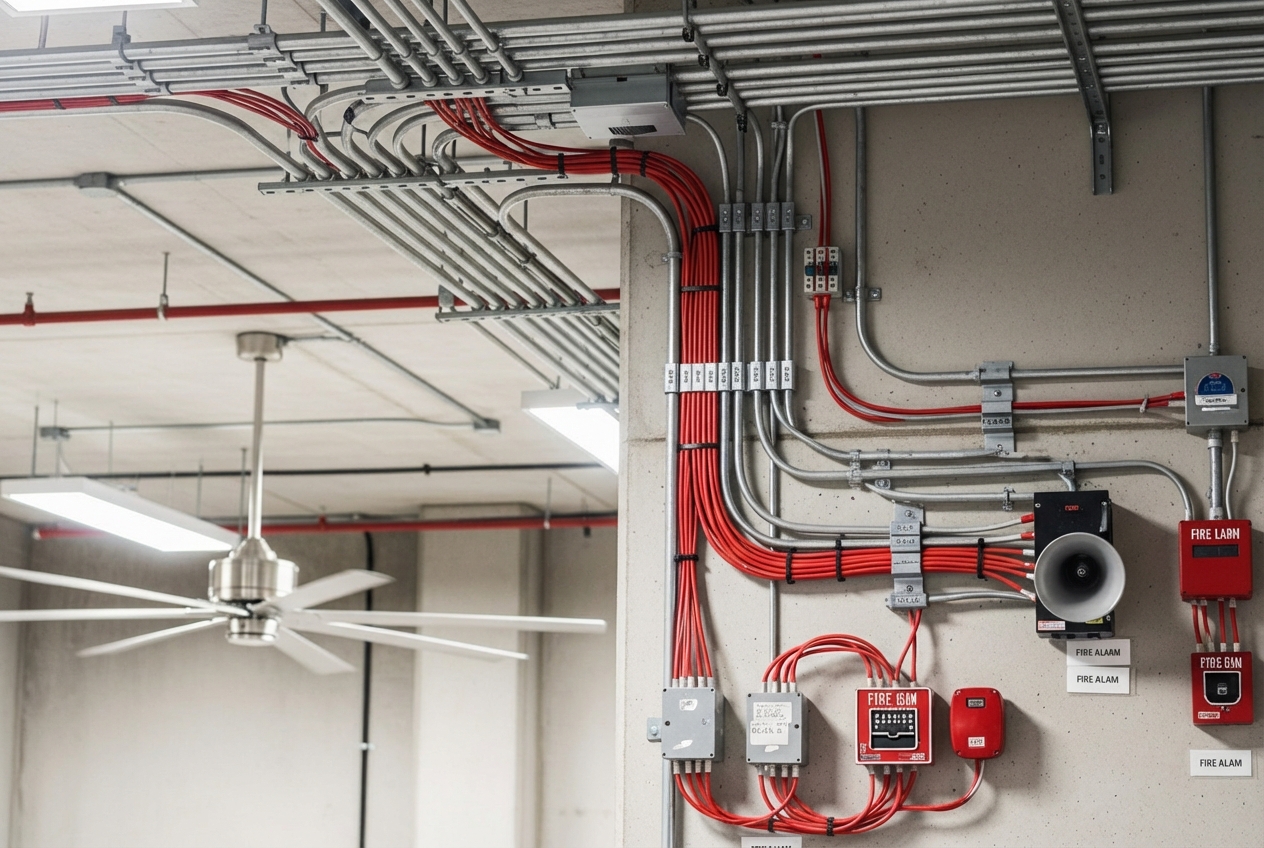
Understanding the fire alarm installation cost means looking beyond the equipment’s sticker price. Many variables contribute to the final bill, and being aware of them helps you budget accurately. From the system type to your building’s characteristics, each factor plays a role. A professional assessment is the best way to get a precise estimate for your Northeast Ohio property. Using an installation cost calculator can help you visualize these factors and get a more custom estimate.
System Type: Conventional vs. Addressable & Wired vs. Wireless
The choice of system is a significant factor in the overall fire alarm installation cost. We primarily work with conventional, addressable, wired, and wireless systems.
| System Type | Cost Implications | Best Use Case | Complexity |
|---|---|---|---|
| Conventional | Generally lower upfront cost | Small, less complex buildings (e.g., small offices, single-story shops) | Medium |
| Addressable | Higher initial cost, but better long-term efficiency | Larger, more complex buildings (e.g., multi-story offices, hospitals, schools) | High |
| Wired | Can be more costly for labor in existing structures, lower equipment cost | New construction or major renovations where wiring is accessible | Medium to High |
| Wireless | Higher equipment cost, lower labor cost (especially for retrofits) | Older buildings, historic properties, or spaces where extensive wiring is impractical | Medium |
Conventional Systems group devices into zones. When an alarm triggers, the panel identifies the zone, not the specific device. These are less expensive upfront and suitable for smaller buildings.
Addressable Systems give each device a unique “address,” allowing the control panel to pinpoint the exact location of an alarm for a faster response. While the initial fire alarm installation cost is higher, their precision is ideal for larger, complex buildings.
Wired Systems use physical cables to connect all components. Known for reliability, they are best for new construction. In existing buildings, the labor to run new wires can significantly increase costs.
Wireless Systems use radio frequencies, eliminating extensive wiring. This makes them flexible and ideal for retrofitting older or historic properties. While labor costs are lower, the wireless components are more expensive than their wired counterparts.
Building Characteristics: Size, Layout, and Age
Your property’s physical attributes significantly impact the fire alarm installation cost.
- Building Size: Larger buildings require more detectors, wiring, and notification appliances, which increases equipment and labor costs.
- Complex Layouts: Intricate floor plans, multiple floors, or specialized areas (like server rooms) require more sophisticated system designs and can increase the price.
- New Construction Advantages: Installing a system during new construction is more cost-effective because wiring and components can be integrated seamlessly, avoiding the challenges of working around existing structures.
- Retrofitting Challenges: Retrofitting older buildings is more expensive, costing $4 to $12 per square foot. This is due to challenges like:
- Wiring difficulties: Running wires through finished walls is labor-intensive.
- Structural access: Gaining access for installation can be difficult and time-consuming.
- Hazardous materials: Older buildings may contain asbestos or lead paint, requiring specialized and costly handling.
- Upgrading to current codes: Bringing an older building up to current fire safety codes can require extensive upgrades.
Component Choices and System Integration
The specific components you choose and how they integrate with other systems also significantly impact the overall fire alarm installation cost.
- Control Panels: This is the brain of your fire alarm system. Basic residential panels can be relatively inexpensive, while advanced commercial panels capable of monitoring hundreds of devices and integrating with other systems can cost thousands.
- Smoke Detectors: These are essential. Ionization smoke detectors (good for fast-flaming fires) are typically $5-$25 each, while photoelectric detectors (better for smoldering fires) are $10-$30. Dual-sensor models, offering both technologies, are $40-$150+. Smart smoke detectors, which connect to your network, can be $50-$150+.
- Heat Detectors: Used in areas where smoke detectors might cause false alarms (e.g., kitchens, garages). They typically cost $10-$100 each.
- Carbon Monoxide Detectors: Often integrated into fire alarm systems, these cost $15-$150 each.
- Manual Pull Stations: These allow occupants to manually trigger an alarm and typically range from $20 to $99.
- Notification Appliances: This includes horns, strobes, and voice evacuation systems that alert occupants to a fire. These can range from $50 to $300 each.
- Integration with Sprinklers: For commercial properties, integrating the fire alarm system with a fire sprinkler system is common. While the sprinkler system itself can add $2 to $10 per square foot, the integration ensures a coordinated response.
- Building Automation Systems: Integrating fire alarms with a comprehensive building automation system (BAS) can offer improved control and monitoring. While this adds to the initial fire alarm installation cost, it can lead to long-term savings through improved efficiency and simplified management.
Labor, Permits, and Local Code Compliance
The final piece of the fire alarm installation cost puzzle involves the human element and regulatory requirements specific to Northeast Ohio.
- Labor Costs: This is a substantial portion of any installation. Typical labor costs for installing a fire alarm system range from $50 to $100 per hour for a professional electrician or technician. The total labor cost will depend on the complexity of the system, the size of the building, and the amount of wiring required. For a complete system, installation labor alone can range from $1,500 to $5,000.
- Licensed Electrician Necessity: For hardwired systems and complex commercial installations, hiring a licensed electrical contractor like Buckeye Electrical Solutions is not just recommended, it’s often legally required. Improper installation can be dangerous and lead to system failures, voided warranties, and non-compliance with local codes.
- Permit Fees: Before any installation begins, permits are typically required from your local municipality in Northeast Ohio. These fees vary widely by location and the scope of the project. For example, some cities, like Cleveland, publish their fire prevention permit service fees, which can include costs for plan review and inspection. You can review an example of local fire permit fees to get an idea of potential costs, but always check with your specific local jurisdiction.
- Inspection Costs: Once installed, the fire alarm system usually needs to be inspected by local fire authorities to ensure it meets all safety and building codes. These inspections may incur additional fees.
- NFPA 72 Standards: All fire alarm systems, particularly commercial ones, must adhere to the standards set by the National Fire Protection Association (NFPA), specifically NFPA 72, the National Fire Alarm and Signaling Code. Our team ensures that every installation we perform in Northeast Ohio meets these stringent requirements, guaranteeing your system is safe, reliable, and compliant.
Beyond Installation: Ongoing Expenses and Long-Term Value
While the initial fire alarm installation cost is a significant consideration, it’s crucial to understand that it’s just one part of the total cost of ownership. A fire alarm system is an active safety measure that requires ongoing attention and investment. Thinking long-term about maintenance, testing, and monitoring will help you budget effectively and ensure your system remains a vigilant guardian for your property in Northeast Ohio. Investing in fire safety is an investment in protecting lives and assets, providing invaluable peace of mind.
Budgeting for Maintenance, Testing, and Monitoring
To keep your fire alarm system in top condition and compliant with regulations, you’ll need to budget for ongoing expenses:
- Annual Testing Costs: Most jurisdictions, including those in Northeast Ohio, require annual testing by certified technicians to ensure all components of your fire alarm system are functioning correctly. These annual tests can cost between $400 to $800. This ensures that every detector, pull station, and notification appliance is working as it should.
- Professional Monitoring Fees: Many residential and most commercial properties opt for professional monitoring. This service connects your fire alarm system to a central station that operates 24/7. If an alarm triggers, the central station immediately contacts the fire department. Monthly charges for fire alarm monitoring systems typically fall between $50 to $70 per month. For commercial systems, these fees can range from $720 to $1,295 annually. This ongoing service provides an extra layer of protection, especially when your property is unoccupied.
- Battery Replacement: Even hardwired systems have battery backups that need to be checked and replaced periodically. Battery-powered smoke detectors require regular battery changes (typically every 6-12 months). While individual battery costs are low, the cumulative cost and effort over time should be factored in.
- System Lifespan (10 years): Fire alarm systems and their components have a finite lifespan. Smoke detectors, for instance, should be replaced every 10 years. While the control panel and wiring might last longer, detectors and other active components will need upgrading. This means planning for replacement costs down the line, as a system’s operating capacity is typically exhausted after a decade.
- Routine Inspections: Beyond annual testing, routine visual inspections and minor maintenance (like cleaning dust from detectors) are good practice to ensure optimal performance.
The Financial Benefits of a Modern Fire Alarm System
While there’s an undeniable upfront fire alarm installation cost and ongoing expenses, a modern fire alarm system offers significant financial benefits that can offset these investments and provide immense long-term value.
- Insurance Premium Discounts: Many insurance providers offer discounts on property insurance premiums for homes and businesses equipped with professionally installed and monitored fire alarm systems. These savings can accumulate over time, reducing your overall operating costs.
- Preventing Catastrophic Property Damage: Fire burns and spreads swiftly. A functional fire alarm system provides early detection, allowing for quicker response times from the fire department. This early intervention can minimize the extent of fire damage, saving you potentially millions in repair and replacement costs. Compared to natural disasters, you can prepare for fire incidents, and preventive measures are crucial for minimizing damage.
- Improved Safety and Saving Lives: This is the most invaluable benefit. According to the National Fire Protection Association (NFPA), homes without working smoke alarms have a death rate nearly twice as high as those that do have working alarms. A well-maintained fire alarm system ensures that occupants are alerted promptly, giving them critical time to evacuate safely.
- Code Compliance: For commercial properties, compliance with local fire codes and NFPA standards is mandatory. A modern, properly installed system ensures you meet these requirements, avoiding potential fines, legal liabilities, and operational shutdowns.
- Reduced Downtime (Commercial): For businesses, minimizing downtime after a fire incident is critical. Early detection and suppression reduce the severity of a fire, allowing for faster recovery and resumption of operations.
Here’s a summary of the benefits:
- Property protection and reduced damage
- Lower insurance premiums
- Improved safety and life-saving alerts
- Compliance with building codes and regulations
- Faster emergency response
- Reduced business interruption
Frequently Asked Questions About Fire Alarm Costs
We often get asked specific questions about fire alarm installation cost. Here are some of the most common inquiries from our clients in Northeast Ohio:
How much does it cost to install just one smoke detector?
The cost to install a single smoke detector can vary based on the type of detector and whether professional installation is required. On average, professional smoke detector installation costs between $70 and $150, with an average of $115. This typically covers the labor for installing or replacing a single unit.
The device cost itself typically ranges:
- Ionization smoke detectors: $5–$25 each
- Photoelectric smoke detectors: $10–$30 each
- Dual-sensor smoke detectors: $40–$150+ each (combining both technologies)
- Smart smoke detectors: $50–$150+ each (offering connectivity and advanced features)
If you’re opting for a battery-powered unit, DIY installation is straightforward and significantly cheaper. However, for hardwired units, especially if new wiring needs to be run, professional installation by a licensed electrician is highly recommended and can make the total cost for that single unit much higher, potentially $500 or more for the project if extensive wiring is needed. The National Fire Protection Association (NFPA) recommends that homes have both ionization and photoelectric smoke detectors for comprehensive protection.
How does retrofitting an older building impact the cost?
Retrofitting an older building in Northeast Ohio for a fire alarm system almost always incurs a higher fire alarm installation cost compared to new construction. While new construction might cost $1 to $2 per square foot, retrofitting older buildings can cost between $4 to $12 per square foot.
This significant difference stems from several challenges:
- Wiring Challenges: Running new electrical wiring through existing walls, ceilings, and floors is far more labor-intensive and time-consuming than installing it during construction. This often involves opening up walls and then patching and painting them afterward.
- Structural Access: Accessing certain areas for detector placement or wiring runs can be difficult due to existing finishes or structural elements, requiring creative solutions or minor demolition.
- Asbestos/Lead Paint Issues: Many older buildings in Northeast Ohio may contain hazardous materials like asbestos or lead paint. If these are disturbed during installation, specialized abatement procedures are required, adding substantial costs and project delays.
- Upgrading to Current Codes: Older buildings might have outdated electrical systems or fire safety features that don’t meet current building codes. Retrofitting often involves not just installing a fire alarm system but also upgrading other aspects of the building to bring it into full compliance, which adds to the overall expense.
Are wireless fire alarm systems cheaper to install than wired ones?
The cost difference between wired and wireless fire alarm systems is nuanced. Generally, wireless systems tend to have lower labor costs but higher equipment costs compared to wired systems.
- Lower Labor Costs: The primary advantage of wireless systems is the elimination of extensive wiring. This significantly reduces the labor hours required for installation, especially in existing or older buildings where running cables would be disruptive, messy, or impractical. This makes them an ideal choice for historic buildings or properties where major structural changes are undesirable.
- Higher Equipment Costs: Wireless components (detectors, pull stations, control panels) typically cost more per unit than their wired counterparts. This is due to the added technology for wireless communication and battery power.
- Faster Installation Time: Without the need to run and conceal wires, wireless systems can be installed much faster, further contributing to lower labor expenses.
So, while the upfront equipment cost for a wireless system might be higher, the savings in labor, especially for retrofits or in buildings where wiring is difficult, can make the overall fire alarm installation cost comparable or even lower than a wired system. It’s a trade-off between material cost and labor intensity, and the best choice depends on your specific property’s characteristics and budget.
Partnering with a Pro for a Safe and Compliant Installation
Understanding the various factors that influence fire alarm installation cost—from system type and building characteristics to components, labor, and regulatory requirements—is the first step toward a successful project. However, the complexity of these systems and the critical role they play in safety underscore the importance of professional installation.
In Northeast Ohio, building codes and fire safety regulations are stringent for good reason. A properly installed and maintained fire alarm system is a lifeline, providing early warning and potentially saving lives and property. Attempting a DIY installation for anything beyond a simple battery-powered smoke detector can lead to system failures, non-compliance, and potentially catastrophic consequences. We believe it’s always best to prepare well and ensure your fire alarm system is installed correctly.
As a trusted electrical contractor in Northeast Ohio with over 20 years of experience, Buckeye Electrical Solutions understands these nuances. We ensure that every fire alarm system we install is not only effective but also fully compliant with all local codes and national standards like NFPA 72. Our team handles everything from expert assessment and system design to precise installation and ongoing maintenance advice.
Don’t compromise on safety. For a comprehensive and compliant installation that protects your home or business, explore Our Services today. We’re here to provide you with a reliable fire alarm system and the peace of mind that comes with knowing you’re protected.