
Why Your Kitchen Electrical Remodel Matters
A kitchen electrical remodel is one of the most important investments you can make in your home. Here’s what you need to know right away:
Essential Components of a Kitchen Electrical Remodel:
- Minimum 7 circuits required – Two 20-amp small appliance circuits, one lighting circuit, and dedicated circuits for major appliances
- GFCI outlets on all countertops – Required within 6 feet of sinks to prevent electrical shock
- AFCI protection – Now mandatory for kitchen circuits to prevent electrical fires
- Dedicated 240-volt circuit – Necessary for electric ranges (50-amp) and ovens
- Strategic outlet placement – No point on your countertop should be more than 24 inches from an outlet
- Possible panel upgrade – Older homes may need to upgrade from 100-amp to 200-amp service
Many people get excited about new cabinets, granite countertops, and beautiful tile backsplashes when planning a kitchen renovation. But what’s underneath those surfaces is just as critical to your kitchen’s overall functionality and safety.
Your electrical system powers everything – from your morning coffee maker to your evening meal prep. Without proper planning, you risk tripped breakers, fire hazards, and a kitchen that can’t keep up with modern appliances.
This guide walks you through every electrical consideration for your kitchen remodel. You’ll learn about code requirements, appliance needs, outlet placement, lighting design, and how to work with your main electrical panel. Whether you’re doing a full gut renovation or updating an existing kitchen, understanding these electrical fundamentals will help you create a safer, more functional space.
I’m Aaron, of Buckeye Electrical Solutions, and I’ve overseen dozens of permitted kitchen electrical remodel projects across Northeast Ohio, from simple circuit additions to complete 6,000 sq ft commercial rewires. My team and I know the specific challenges older homes in our region face, and we’ll help you steer every step of bringing your kitchen’s electrical system up to modern standards.
The Foundation: Code Compliance and Circuit Requirements
When we start on a kitchen electrical remodel, the first and most crucial step is to ensure everything meets the highest safety standards. This means adhering to the National Electrical Code (NEC) and any specific local building codes here in Ohio. Compliance isn’t just about passing inspections; it’s about protecting your home, your family, and your investment. Non-compliant work can lead to serious safety hazards, make your home difficult to sell, and even void your homeowner’s insurance in the event of an electrical incident. It’s truly the bedrock of a successful and safe renovation. We always make sure your kitchen wiring is up to code. You can learn more about general residential electric code requirements here.
Understanding GFCI and AFCI Protection
Modern kitchens are busy places, often combining water and electricity in close proximity. That’s why Ground Fault Circuit Interrupter (GFCI) and Arc-Fault Circuit Interrupter (AFCI) protection are non-negotiable for kitchen safety during any kitchen electrical remodel.
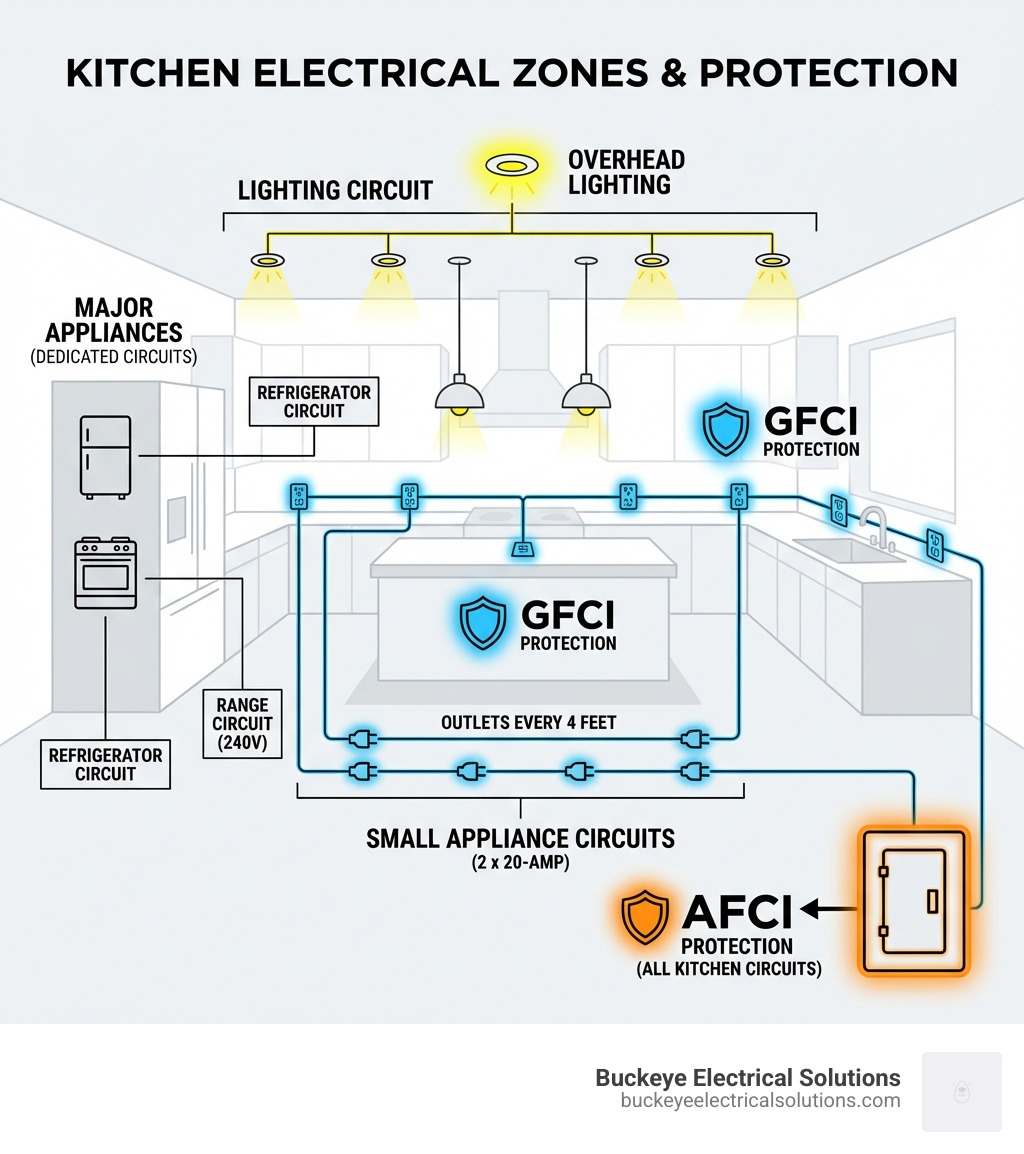
GFCI outlets are lifesavers. They’re designed to protect us from electrical shock by constantly monitoring the flow of electricity. If a GFCI detects an imbalance – even a tiny one, like when water causes a “ground fault” – it instantly cuts power to that outlet, often faster than you can even register a shock. This is why GFCI protection is required for all countertop receptacles and any outlet within six feet of a sink. We’ve all seen those test and reset buttons on outlets near water; those are your GFCIs at work, standing guard.
AFCI circuit breakers, on the other hand, are focused on fire prevention. They detect dangerous electrical arcs, which can be caused by damaged insulation, loose wires, or even a nail accidentally piercing a cable. These arcs generate heat and can ignite surrounding materials, leading to devastating fires. AFCI protection, now mandated by the NEC for nearly all kitchen circuits, steps in to shut off power before a small spark can become a big problem. Think of it as an early warning system against hidden electrical dangers. Both GFCI and AFCI technologies are critical components of a safe and modern kitchen.
Minimum Circuit Requirements for a Modern Kitchen
Gone are the days when a kitchen only needed a couple of outlets. Today’s kitchens are powerhouses! To keep everything running smoothly and safely, a modern kitchen requires a robust electrical system. As a general rule, we plan for a minimum of seven circuits for a remodeled kitchen, and often eight for new builds.
Here’s a breakdown of what that typically includes:
- Two dedicated 20-amp small appliance circuits: These are essential for powering your countertop appliances like toasters, coffee makers, blenders, and air fryers. The NEC requires these circuits to be dedicated to the kitchen countertop outlets, meaning they can’t power outlets outside the kitchen. This prevents overloads when you’re whipping up a storm with multiple gadgets.
- A dedicated 15-amp or 20-amp lighting circuit: Your kitchen lighting should have its own circuit to ensure consistent illumination and prevent flickering when other appliances kick on.
- Dedicated circuits for major appliances: This is where the bulk of your power needs come in. Appliances with motors or high wattage, such as your refrigerator, dishwasher, and microwave, typically need their own dedicated circuits. This prevents them from drawing too much power from a shared circuit and causing frequent breaker trips – a common headache in older homes not designed for modern electrical demands.
By planning for these minimum circuit requirements, we ensure your new kitchen has the electrical muscle to handle everything you throw at it, safely and efficiently.
Powering Your Culinary Hub: Appliance Needs and Outlet Layout
One of the biggest reasons for a kitchen electrical remodel is to accommodate today’s power-hungry appliances. Imagine finally getting that state-of-the-art refrigerator or a powerful stand mixer, only to have the circuit trip every time you use it! This is where dedicated circuits become your best friend. They ensure that each major appliance has its own direct power line, preventing overloads, extending the life of your appliances, and, most importantly, keeping your home safe.
Here’s a list of major kitchen appliances and their typical circuit requirements:
- Refrigerator: Dedicated 20-amp, 120-volt circuit. Modern “smart” fridges with touchscreens and ice makers can draw a significant amount of power, so their own circuit is crucial.
- Electric Oven/Range: This is typically the biggest power draw in your kitchen, requiring a dedicated 50-amp, 240-volt circuit with a special range outlet.
- Microwave: Dedicated 20-amp, 120-volt circuit with a grounding wire. While some older installations might share this with a gas stove outlet, a dedicated circuit is always best practice to avoid overloads.
- Dishwasher: Dedicated 15-amp, 120-volt circuit.
- Garbage Disposal: Dedicated 15-amp, 120-volt circuit. Depending on local codes in Northeast Ohio, the dishwasher and garbage disposal might be allowed to share a circuit, but we generally recommend separate circuits for optimal performance and to prevent nuisance trips.
Strategic Outlet Layout for Your Kitchen Electrical Remodel
When we design the electrical layout for your kitchen electrical remodel, we don’t just throw outlets wherever they fit. We think strategically about your workflow, appliance usage, and, of course, code requirements. A common complaint we hear from homeowners in older homes is the sheer lack of outlets! Modern kitchens need plenty of places to plug in.
The NEC has specific rules for countertop outlets:
- The 4-foot rule: Outlets must be placed so that no point along the countertop is more than 24 inches from a receptacle. This essentially means you’ll need an outlet every four feet or closer on your countertops. This ensures you always have a convenient spot for your coffee maker or food processor without resorting to dangerous extension cords.
- Height requirements: Outlets should be located no more than 20 inches above the countertop surface.
- Minimum width: Any countertop space 12 inches or wider requires an outlet.
Kitchen island electrical requirements and peninsula outlet rules are also important. If your island or peninsula is 12 inches or wider, it must have at least one receptacle. This receptacle should be mounted no more than 12 inches below the countertop. This is incredibly practical for island-based appliances like blenders or even for charging devices while you’re cooking.
For added convenience and a clutter-free look, we often recommend adding outlets inside cabinets or a pantry. Imagine a dedicated charging station for your devices, or a tucked-away spot for a small appliance like a toaster oven, all without visible cords on your pristine countertops! We ensure proper and safe installation of these. For more detailed instructions on how to properly install kitchen outlets, you can check out this guide here.
Planning for Ventilation Systems
A well-ventilated kitchen is crucial for comfort, air quality, and safety. Whether you’re opting for a powerful range hood above your stove, a sleek downdraft system, or general exhaust fans, these components require proper electrical planning. Range hoods, for example, typically need a dedicated 15-amp or 20-amp circuit, depending on their power and features. Ensuring adequate power for your ventilation system helps efficiently remove cooking odors, grease, and heat, keeping your kitchen fresh and clean. In fact, studies show that well-ventilated kitchens can reduce cooking-related respiratory issues by up to 70%!
Illuminating Your Space: Lighting and Smart Home Integration

Lighting is often an overlooked hero in a kitchen electrical remodel. It’s not just about turning on a light; it’s about creating a functional, inviting, and beautiful space. We approach kitchen lighting using three key layers:
- Task lighting: This is your workhorse lighting, focused on illuminating specific activity zones. Under-cabinet lighting is a prime example, providing bright, shadow-free illumination for food prep areas. We often recommend energy-efficient LED strips or puck lights for this purpose.
- Ambient lighting: This provides the general, overall illumination for the room. Recessed can lights are a popular choice for their clean look and even light distribution. Ceiling fixtures can also serve this purpose, offering a central source of light.
- Accent lighting: This layer adds visual interest and highlights architectural features or decorative elements. Pendant lights over an island are a classic example, providing both task lighting and a stylish focal point. LED strips along shelving or inside glass-front cabinets can also create beautiful accent lighting.
The value of dimmer switches cannot be overstated. They allow you to adjust the light intensity to suit different moods and activities, from bright task lighting for cooking to a softer glow for entertaining. For more information on how we can improve your home’s electrical system, including lighting, please visit our Residential Electrical Services page.
Smart Home Technology in the Kitchen
The kitchen is rapidly becoming the smartest room in the house, and your kitchen electrical remodel is the perfect time to integrate smart home technology. From controlling your lights with your voice to preheating your oven from your smartphone, the possibilities are exciting!
Here’s how we can plan for smart integration:
- Smart lighting: We can install smart switches or fixtures that allow you to control your kitchen lights via a smartphone app, voice commands, or even set schedules. Imagine telling your lights to dim for dinner or brightening them with a simple command while your hands are full!
- Smart outlets and plugs: These allow you to turn small appliances (like your coffee maker or slow cooker) on or off remotely, or even schedule them.
- Planning for Wi-Fi connected major appliances: Many new refrigerators, ovens, and dishwashers come with Wi-Fi connectivity, allowing for remote monitoring and control. We ensure you have reliable Wi-Fi coverage and appropriately placed outlets to support these advanced appliances.
- Future-proofing: Technology evolves quickly. By installing extra circuits and ensuring robust wiring, we help future-proof your kitchen, making it easier to adapt to new smart devices as they emerge.
Planning Your Kitchen Electrical Remodel: Budget, Permits, and Special Cases

A successful kitchen electrical remodel isn’t just about the wires and outlets; it’s also about careful planning, especially when it comes to your budget and navigating local regulations here in Northeast Ohio.
Budgeting for electrical work is a critical step that homeowners often underestimate. While the aesthetic elements get most of the attention, we typically advise allocating 10-20% of your total remodel budget to plumbing and electrical work. This ensures you have enough funds to cover necessary upgrades, dedicated circuits, and modern safety features, which are long-term investments in your home’s value and safety.
The role of permits and inspections cannot be stressed enough. For any significant electrical work during a remodel, permits are mandatory in our area. These permits ensure that licensed professionals perform the work and that it adheres to all local and national safety codes. The inspection process typically involves:
- Rough-in inspection: This occurs after all new wiring, junction boxes, and outlets are installed, but before any drywall goes up. The inspector checks that everything is correctly installed and up to code.
- Final inspection: After all devices, fixtures, and cover plates are installed, the final inspection ensures the completed work is safe and compliant.
Skipping permits might seem like a way to save money or time, but it’s a risky gamble. Unpermitted work can lead to fines, difficulties selling your home, and serious safety concerns that could void your insurance. We handle all necessary permits and coordinate inspections, ensuring your project is fully compliant. You can see examples of our meticulous work in our Project Gallery.
Upgrading Your Main Service and Handling Older Homes
Many homes in Northeast Ohio have stood for decades, and while their charm is undeniable, their electrical systems might be showing their age. If your home was built over 30 years ago, it likely has a 100-amp electrical service. While this was sufficient for the homes of yesteryear, it often struggles to handle the demands of a modern kitchen filled with high-power appliances.
When to upgrade your main panel: We often recommend upgrading your main electrical service from 100-amp to 200-amp during a kitchen electrical remodel if we observe signs of an overloaded system. These signs include frequent breaker trips, flickering or dimming lights when appliances kick on, or outlets that feel warm to the touch. An upgrade ensures your entire home has enough power for today’s needs and future additions.
Common electrical challenges in older Northeast Ohio homes include:
- Outdated fuse boxes: While functional, fuse boxes are less convenient and offer less precise protection than modern circuit breakers. Upgrading to a circuit breaker panel provides faster reaction to power fluctuations and easier resetting after a trip.
- Ungrounded wiring: Many older homes have two-prong outlets, indicating ungrounded wiring. This is a significant safety hazard, as grounding provides a critical path for stray electrical current, preventing shocks and protecting appliances.
- Aluminum wiring: Some homes from the 1960s and 70s might have aluminum wiring, which can be a fire hazard due to its tendency to expand and contract, leading to loose connections.
Addressing these challenges during your kitchen electrical remodel is crucial for safety and brings your home’s electrical infrastructure into the 21st century. For more detailed information on electrical upgrades custom for your renovation needs, please visit our page on Residential Electrical Services.
Key Differences: New Build vs. Remodel
While both new builds and remodels require meticulous electrical planning, the approach can differ significantly.
In a new build, we have the ultimate flexibility. We can design the entire electrical system from scratch, placing outlets, switches, and circuits exactly where they’re needed without the constraints of existing walls or wiring. This allows for seamless integration of smart home technology, ample dedicated circuits, and perfect lighting layouts from day one.
A kitchen electrical remodel, especially in an older home, often presents more constraints. We’re working within an existing structure, which means unexpected findies like outdated wiring, limited space in walls, or structural elements can impact our plans. Our experienced team excels at navigating these challenges, finding creative solutions to bring your vision to life while adhering to all safety and code requirements. It’s like solving a puzzle, but with much higher stakes!
Frequently Asked Questions about Kitchen Electrical Remodels
How many circuits does a modern kitchen need?
A modern kitchen typically requires a minimum of seven circuits: two for small countertop appliances, one for lighting, and one each for the refrigerator, dishwasher, garbage disposal, and microwave. An electric range requires its own separate high-voltage circuit.
When are GFCI and AFCI outlets required by code?
GFCI (Ground Fault Circuit Interrupter) outlets are required for all countertop receptacles and any outlet within six feet of a sink to prevent electrical shock. AFCI (Arc-Fault Circuit Interrupter) protection is now required by the NEC for nearly all circuits in a kitchen to protect against fire hazards from arcing wires.
Do I need to upgrade my main electrical panel for a kitchen remodel?
You may need to upgrade your panel if your current service (e.g., 100 amps or less) cannot handle the added electrical load of new, powerful appliances. A licensed electrician can perform a load calculation to determine if an upgrade to 200 amps is necessary for safety and functionality.
Conclusion: Bringing Your Vision to Light Safely
A kitchen electrical remodel is far more than just aesthetics; it’s about building a safer, more efficient, and more functional heart for your home. We’ve explored the critical role of code compliance, the specific needs of modern appliances, the art of strategic outlet placement, and the magic of layered lighting and smart home integration.
The journey of a kitchen remodel, especially its electrical components, can seem daunting. But with careful planning and the right expertise, you can achieve a perfect balance of safety, functionality, and stunning aesthetics. For homeowners throughout Northeast Ohio, our team at Buckeye Electrical Solutions is ready to ensure your project is not just completed, but completed to the highest standards, giving you peace of mind and a kitchen you’ll love for years to come.
Ready to illuminate your dream kitchen? Contact Us for a consultation today, and let’s discuss your bright ideas. You can also explore all of Our Services to get started on your project.