Is Your Home’s Electrical Panel Keeping Up With Modern Demands?
An electrical panel upgrade is the process of replacing or expanding your home’s main breaker panel to handle more electrical load — and for many Northeast Ohio homeowners, it’s one of the most important safety and efficiency improvements they can make.
Here’s a quick overview of what you need to know:
| Question | Quick Answer |
|---|---|
| What is it? | Replacing your existing panel with a larger or newer one (typically 200A) |
| Who needs it? | Homes with fuse boxes, 60A or 100A panels, frequent breaker trips, or new high-draw appliances |
| Average cost | $3,000–$5,000 for most homes (parts, labor, and permits) |
| How long does it take? | Most upgrades are completed in a single day |
| DIY or professional? | Always hire a licensed electrician — no exceptions |
| Tax credit available? | Yes — 30% of project cost, up to $600 (through Dec 31, 2025) |
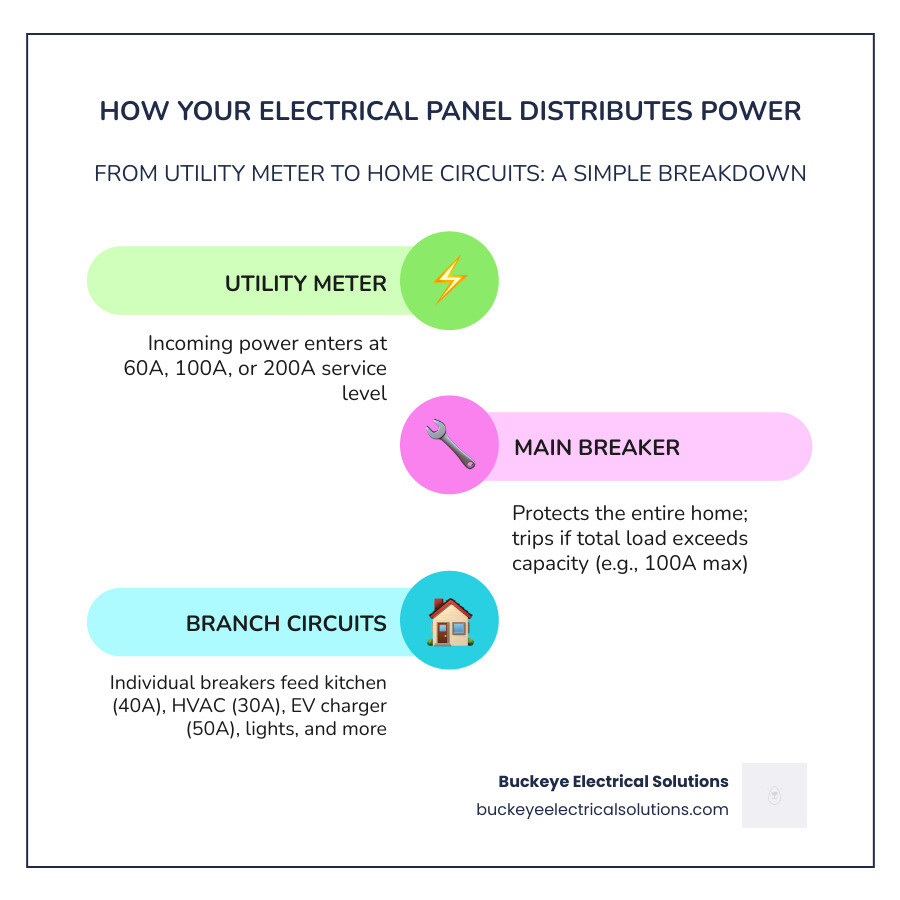
Your electrical panel is the heart of your home’s power system. It takes electricity from the utility and distributes it to every circuit in your house. When it can’t keep up — whether because it’s old, undersized, or simply not built for today’s appliances — the results range from annoying (flickering lights, tripped breakers) to dangerous (overheating, electrical fires).
The good news? A proper upgrade solves all of that.
I’m Aaron, owner of Buckeye Electrical Solutions LLC, and I’ve led dozens of permitted electrical panel upgrade projects across Northeast Ohio — from straightforward 100-to-200-amp service upgrades to complex full-home rewires. I’ll walk you through everything you need to know to make a confident, informed decision.
Signs Your Home Needs an Electrical Panel Upgrade
Recognizing the warning signs of an outdated or failing electrical system is the first step toward protecting your family. Many homes in Northeast Ohio were built in an era when a 60-amp or 100-amp service was plenty. Today, between our high-efficiency HVAC systems, electric ranges, and dozens of smart devices, those old panels are gasping for air.
If you notice any of the following, it’s time to look into our residential electrical services:
- Flickering or Dimming Lights: Do your lights dip whenever the refrigerator kicks on or you start the microwave? This is a classic sign that your panel is struggling to manage the “inrush” of current required by large appliances.
- Frequent Breaker Trips: Breakers are designed to trip to prevent fires. If you find yourself walking to the basement or garage once a week to flip a switch, your circuits are overloaded.
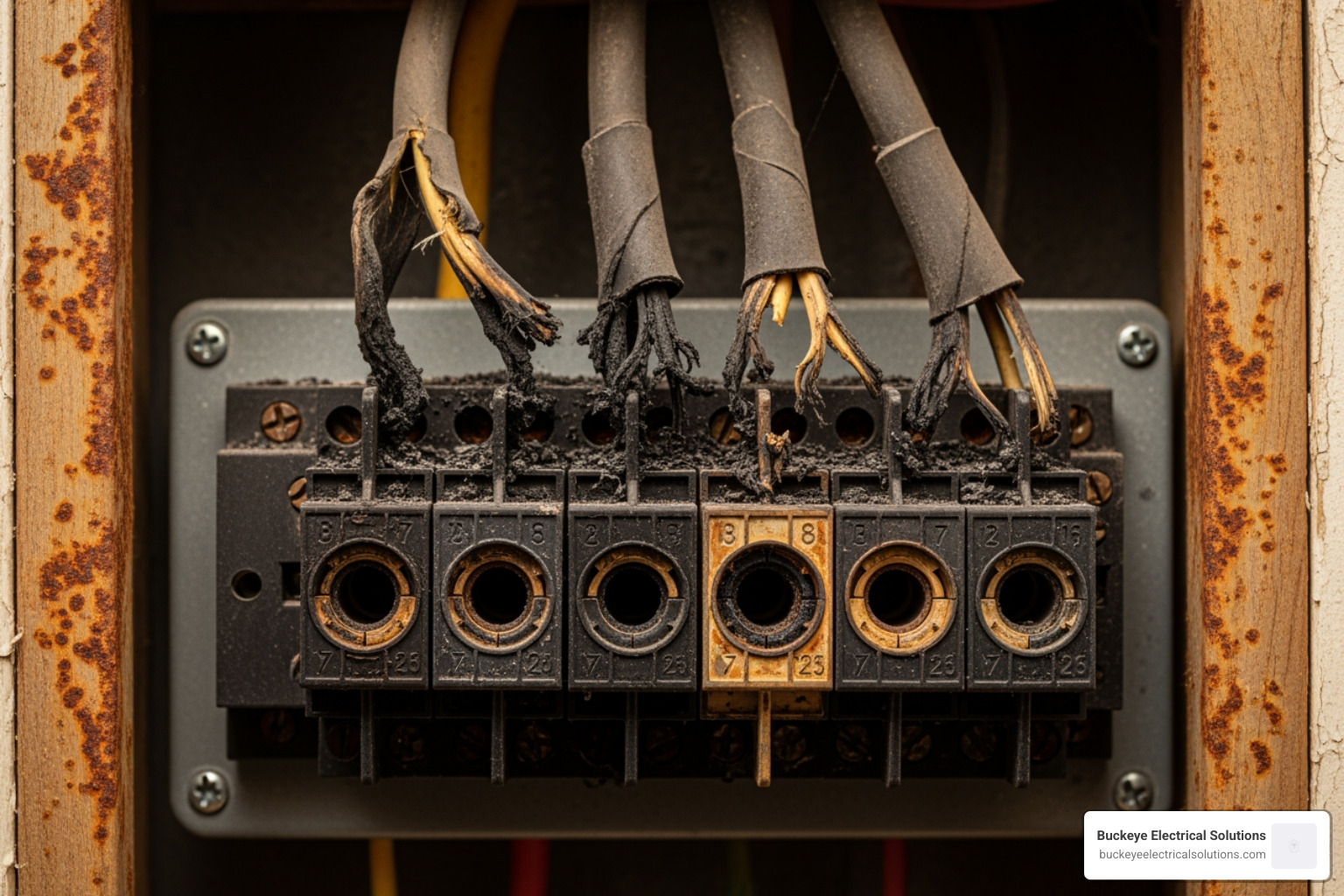
- A Burning Smell or Scorch Marks: This is an emergency. If you smell ozone or see “tea-colored” stains or black soot on your panel or outlets, heat is building up where it shouldn’t.
- Warm Panel Cover: Your electrical panel should never feel hot to the touch. Warmth indicates that the internal bus bars or connections are failing.
- Outdated Technology (Fuses and Unsafe Brands): If you still have a fuse box, you are likely paying more for insurance and living with a higher fire risk. Furthermore, certain brands like Federal Pacific Electric (FPE) and Zinsco are notorious for design flaws where breakers fail to trip even during a massive overload. These are “ticking time bombs” that should be replaced immediately.
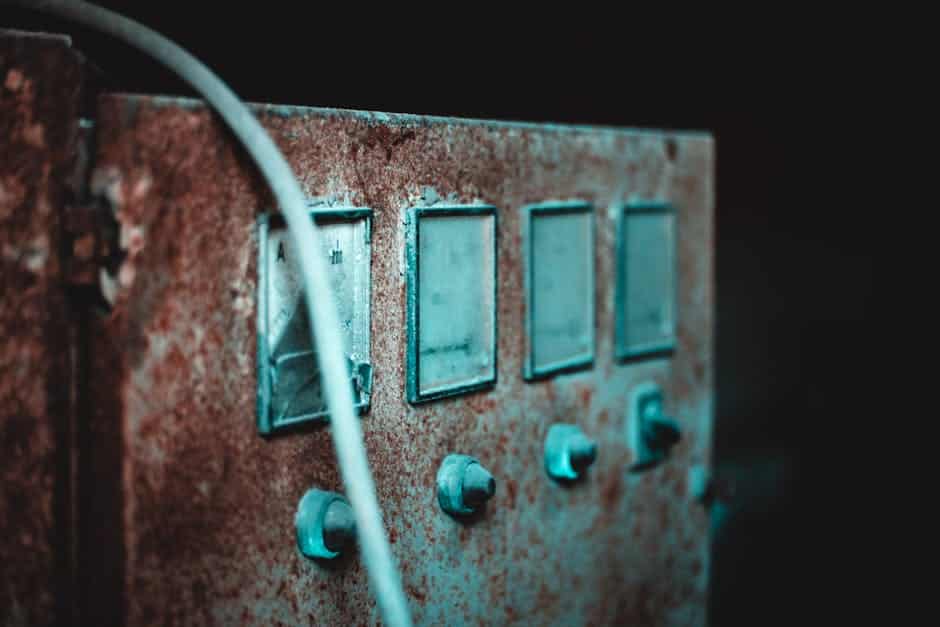
- Corrosion and Rust: Ohio humidity can take a toll. If you see white powdery oxidation or orange rust on your breakers, moisture has compromised the electrical connections.
According to Electrical Industry News, improved safety measures and code compliance have contributed to a significant decrease in electrical fires over recent years. Upgrading your panel is the single most effective way to ensure your home stays on the right side of those statistics.
The Benefits of Upgrading to a 200-Amp Service
While a 100-amp panel is technically the minimum required by the National Electrical Code (NEC) for most homes, it doesn’t leave much room for growth. A 200-amp electrical panel upgrade is the gold standard.
Why bother with the extra capacity? Here are the primary benefits:
- Safety and Fire Prevention: Modern panels include space for Arc-Fault Circuit Interrupter (AFCI) and Ground-Fault Circuit Interrupter (GFCI) breakers, which detect dangerous conditions that old panels simply ignore.
- Home Electrification: Thinking about an EV charger, a heat pump, or a hot tub? Most of these high-draw items require 30 to 60 amps each. On a 100-amp panel, you’ll run out of “budgeted” power very quickly.
- Increased Resale Value: A 200-amp service is a major selling point. Home inspectors often flag 60-amp or 100-amp services as “insufficient,” which can lead to buyers asking for credits or walking away.
- Insurance Eligibility: Many insurance companies now refuse to cover homes with fuse boxes or FPE panels. Upgrading can lower your premiums and ensure your claim isn’t denied due to “known hazardous equipment.”
To help you visualize the difference, take a look at our full list of electrical services and this capacity comparison:
| Appliance / Load | 100-Amp Panel Capacity | 200-Amp Panel Capacity |
|---|---|---|
| Lighting & Standard Outlets | Supported | Supported |
| Central Air Conditioning | Supported (tightly) | Supported (easily) |
| Electric Range / Oven | Supported | Supported |
| Electric Vehicle (EV) Charger | Often requires load shedding | Supported with room to spare |
| Heat Pump / Hot Tub | Limited | Supported |
| Future Expansion | Minimal | Substantial |
Understanding the Electrical Panel Upgrade Cost and Process
We know that “cost” is the big question. In our experience across Northeast Ohio, a professional electrical panel upgrade typically ranges from $3,000 to $5,000.
Several factors influence the final price:
- Amperage: Moving from 100A to 200A is more expensive than a simple 100A-to-100A replacement because it requires thicker wires from the utility and often a new meter socket.
- Service Mast Updates: If the pipe on the side of your house (the mast) is too thin for 200-amp wire, it must be replaced.
- Permits and Inspections: We handle the paperwork, but city permit fees in Ohio vary by municipality.
- Grounding and Bonding: Modern codes require two 8-foot ground rods and bonding to your water lines. If your home is older, we often have to bring this up to current safety standards.
The process usually follows these steps:
- Load Assessment: We calculate your home’s peak demand to ensure the new panel size is perfect.
- Permitting: We secure the necessary approvals from your local building department.
- Installation Day: We coordinate with the utility company to pull your meter and “kill” the power. We then rip out the old equipment and install the new UL-listed panel, breakers, and grounding.
- Inspection: A city inspector verifies our work.
- Reconnection: The utility company installs a new meter, and we “juice up” your home.
For those looking to maximize efficiency during this process, checking the Energy Star Product Finder can help you identify high-efficiency appliances to pair with your new capacity.
Tax Credits and Rebates for Your Electrical Panel Upgrade
Did you know Uncle Sam might help pay for your upgrade? Under the Energy Efficient Home Improvement Tax Credit, homeowners can claim a 30% tax credit up to $600 for an electrical panel upgrade.
To qualify, the panel must:
- Be installed in your primary residence.
- Meet the National Electric Code.
- Have a capacity of at least 200 amps.
- Enable the installation of other energy-efficient equipment (like a heat pump or EV charger).
You can claim this using IRS Form 5695. Just remember that the annual aggregate limit for these credits is $3,200, so if you’re doing a full “green” home overhaul, it pays to plan your projects strategically.
Why You Should Never DIY an Electrical Panel Upgrade
We love a good DIY project as much as anyone, but the electrical panel is where you should draw the line.
Here’s why:
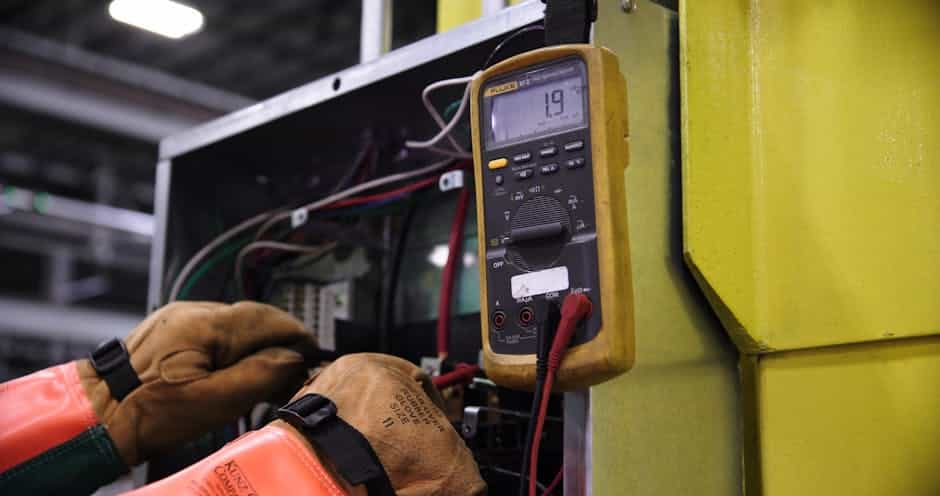
- Fatal Voltage: Even with the main breaker off, the “lugs” at the top of the panel are still live with enough current to kill a person instantly.
- Fire Hazards: Loose connections create “arcing,” which is the #1 cause of electrical fires. A professional knows exactly how many inch-pounds of torque each screw requires.
- Code Compliance: If you install a panel without a permit and your house catches fire (even for an unrelated reason), your insurance company may use the unpermitted work as a reason to deny your claim.
- Utility Coordination: FirstEnergy and other local utilities will only work with licensed contractors to disconnect and reconnect service.
Frequently Asked Questions about Electrical Panel Upgrades
How long does a panel upgrade take?
The actual installation usually takes between 4 and 8 hours. You should plan to be without power for most of the workday. We coordinate with the utility and the city inspector to minimize this downtime, but you’ll want to keep the fridge closed and perhaps find a nice coffee shop to work from for the afternoon!
Can I add a subpanel instead of upgrading the main panel?
A subpanel is great for adding physical space for more breakers, but it does not add amperage to your home. If your main 100-amp breaker is already struggling, adding a subpanel is like adding more seats to a car that doesn’t have a big enough engine to move them. If your total home load exceeds your main breaker’s rating, a full electrical panel upgrade is the only safe solution.
Does a panel upgrade increase home value?
Absolutely. While it’s not as “pretty” as a kitchen remodel, it provides “invisible peace of mind.” During a real estate transaction, a modern 200-amp panel signals to the buyer that the home has been well-maintained and is ready for modern technology. Many buyers specifically look for this to avoid the headache of upgrading immediately after moving in.
Do I need a permit for an electrical panel upgrade?
Yes. In Northeast Ohio, a permit is required for any main service or panel upgrade. This ensures that a third-party inspector verifies the work meets the National Electrical Code (NEC) for your safety.
Conclusion
Your electrical panel shouldn’t be a source of stress or a mystery. It’s simply the gatekeeper of your home’s energy. If you’re living in an older home in Northeast Ohio, upgrading your panel is an investment in safety, convenience, and the future value of your property.
At Buckeye Electrical Solutions, we bring decades of experience to every job site. We pride ourselves on prompt service, clean work, and making sure every wire is exactly where it belongs. We’ve seen it all—from crumbling fuse boxes to the most advanced smart panels—and we’re here to make sure your home is “amped up” for whatever the future holds.
Ready to see if your home is due for an electrical panel upgrade? Contact Us for a professional assessment today. We’ll take a look at your current setup, listen to your future plans, and provide a clear, honest quote to keep your home running safely.