
Why More Ohio Homes Are Moving the Main Breaker Outside
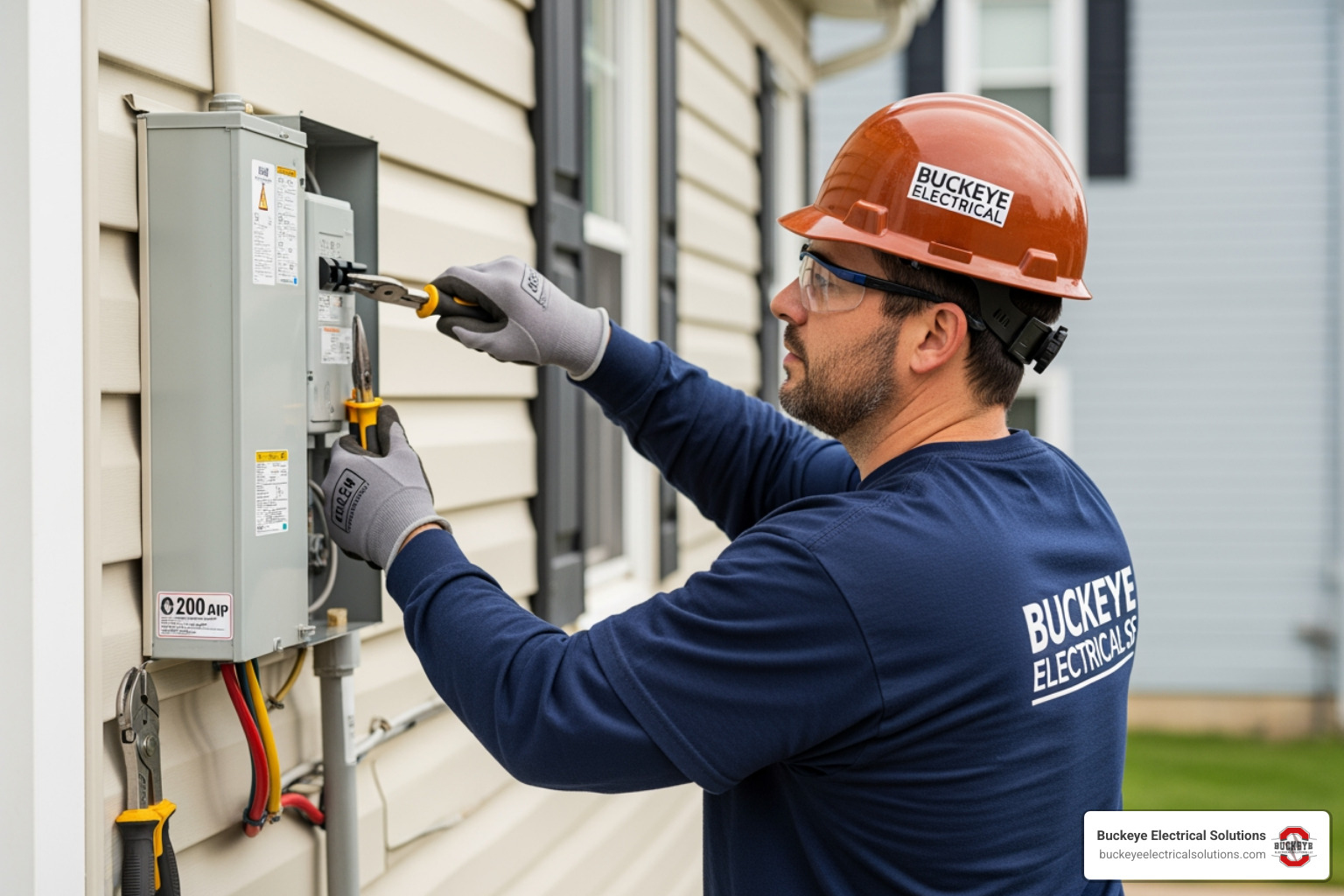
A 200 amp breaker box is exactly what it sounds like — a weatherproof electrical panel mounted on the exterior of your home that controls all the power coming in from the utility. Here’s a quick overview of what you need to know:
- What it does: Acts as the main disconnect for your home’s electrical service, rated at 200 amps — the current standard for modern homes
- Why outside: Easier emergency shutoff, simpler code compliance, and better placement for utility connections
- Who needs one: New construction, service upgrades, homes adding EV chargers or solar, and any home where running service conductors to an interior panel isn’t practical
- Key feature to look for: NEMA 3R rated enclosure — built to handle Ohio rain, snow, and temperature swings
- Cost: Varies based on local permit requirements, utility rules, and site conditions — get a licensed electrician to assess your specific setup
If you’ve noticed more homes in your neighborhood with a gray metal box mounted outside near the electric meter, you’re not imagining things. Outdoor main breaker panels are becoming the go-to setup for new homes and service upgrades across Northeast Ohio — and for good reason.
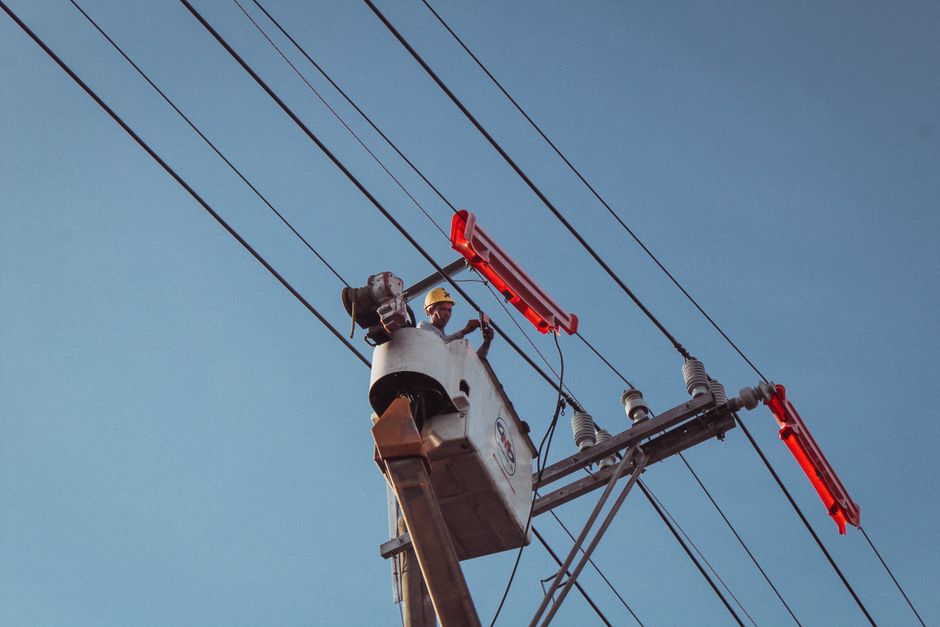
Modern households demand more power than ever. Electric vehicle chargers, heat pumps, electric ranges, home offices — these loads add up fast. A 200-amp service is the recognized standard for handling that demand, and locating the main breaker outside makes the whole system safer, more accessible, and easier to expand down the road.
The shift isn’t just about convenience. Local code requirements, utility preferences, and practical layout challenges — like finished basements or attached garages — often make an outdoor panel the most sensible choice. In some cases, your Authority Having Jurisdiction (AHJ) may require it.
I’m Aaron, owner of Buckeye Electrical Solutions LLC, and I’ve overseen dozens of permitted service upgrades and 200 amp breaker box installations across Northeast Ohio. In this guide, I’ll walk you through everything you need to know to make a smart, code-compliant decision for your home.
What a 200 Amp Breaker Box Actually Is
In electrical contracting, an outdoor 200 amp panel is often referred to as an “outdoor load center” or a “service entrance device.” While your standard indoor panel sits in a basement or utility room, this box lives on the exterior wall of your home. It serves as the primary gateway for electricity entering your property.
These units are designed to handle 120/240V single-phase power, which is the standard for North American residential use. The “200 amp” rating refers to the maximum amount of current the main breaker and the bus bars inside can safely carry at one time.
How a 200 amp breaker box differs from an indoor panel
The most obvious difference is the “skin” of the box. Outdoor panels must be NEMA 3R rated, meaning they are constructed with a rainproof enclosure. This housing features a specialized “overhanging” cover and internal gaskets to keep moisture, ice, and snow away from the live electrical components.
Beyond weatherproofing, these panels are built for corrosion resistance, often using galvanized steel with an electrostatic powder coat finish. They also have different working clearance requirements. While an indoor panel might be tucked in a closet (which we don’t recommend!), an outdoor panel needs a clear path for utility workers and electricians to access it safely.
Meter-main combo vs standalone outdoor load center
When you look at a 200 amp breaker box outside the home, you might see one of two things:
- Standalone Load Center: This is just the breaker box. It sits next to a separate meter socket.
- Meter-Main Combo (CSED): Short for “Combination Service Entrance Device,” this unit houses both the electric meter and the main disconnect (and sometimes branch breakers) in one single enclosure.
Many modern Ohio installations use the CSED approach because it saves space and reduces the amount of external conduit. These often feature “feed-through lugs,” allowing us to run the full 200-amp capacity from the outdoor main to a large subpanel inside the home where your individual room circuits are located.
Why outdoor 200-amp panels are more common in Ohio homes
The trend toward outdoor panels in Northeast Ohio is driven by the 2023 National Electrical Code (NEC), which Ohio adopted in April 2024. One of the biggest changes in recent years is the requirement for an “emergency disconnect” located in a readily accessible outdoor location. This allows first responders to cut power to a structure without entering a burning or flooded building.
Additionally, many modern Ohio homes have finished basements or attached garages that make it difficult to meet the “nearest point of entrance” rule for service conductors. By placing the 200 amp breaker box outside your home, we satisfy the code immediately at the service entrance, giving us more flexibility for where we place the distribution panels inside.
Why Homeowners Choose a 200 Amp Breaker Box Outside
Choosing to install your main breaker outside isn’t just a code requirement; it’s a strategic move for the longevity of your home’s electrical system.
Emergency access and firefighter safety with a 200 amp breaker box outside
In an emergency, every second counts. If there is a house fire, firefighters need to kill the power to prevent electrical shock while they use water to extinguish flames. Historically, they might have had to “pull the meter”—literally yanking the glass meter out of the socket—which is dangerous and can cause an electrical arc.
With a 200 amp breaker box outside your home, a firefighter can simply flip the clearly labeled main disconnect. It’s safer for them and faster for you. This exterior access is also helpful for homeowners during utility emergencies or if you suspect a major electrical fault while you’re standing outside.
Capacity for modern living and future expansion
A 200-amp service is the gold standard for 2026. If you still have a 60-amp or 100-amp service, you are likely feeling the “pinch.” Upgrading to a 200-amp outdoor panel provides the “overhead” needed for:
- EV Chargers: Most Level 2 chargers require a 60-amp circuit.
- Electric Heat Pumps: As Ohioans move away from gas, high-efficiency heat pumps become a major draw.
- Solar Readiness: Many outdoor 200A panels are “solar-ready,” featuring bus bars designed to handle the back-feed from solar panels without needing expensive modifications later.
If you’re curious about the financial side of these upgrades, you can find more info about panel upgrade costs and savings to help plan your budget.
When an outdoor main breaker helps with home value and insurability
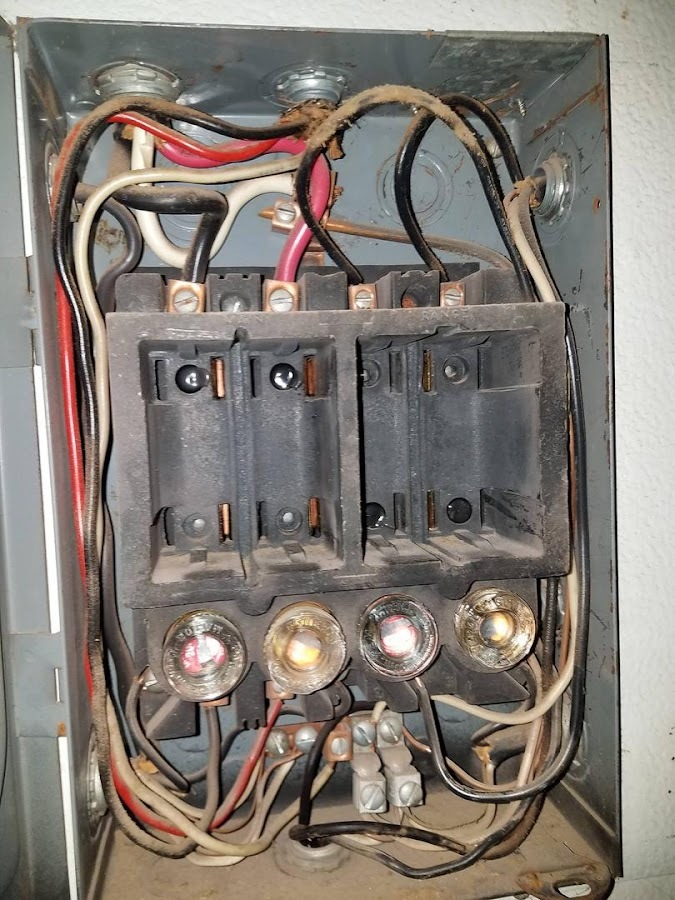
If your home still uses a fuse box or an obsolete brand like Federal Pacific, you might find it impossible to get homeowner’s insurance. Many insurers in Ohio will no longer cover homes with these “high-risk” components because they are known fire hazards.
Upgrading to a modern 200 amp breaker box outside the home immediately increases your home’s resale value. Buyers in 2026 are looking for “turn-key” electrical systems that can handle their gadgets and cars. For a deeper dive into why this matters, check out more info about panel upgrade benefits.
How to Choose the Right Outdoor 200 Amp Panel
Not all outdoor panels are created equal. When we help a homeowner select a unit, we look at several technical factors.
Typical space and circuit configurations
The “spaces” are the physical slots for breakers, while “circuits” refer to how many individual lines it can handle (using tandem breakers).
- Compact Disconnects (8-space/16-circuit): Best if you only need an outdoor main disconnect before feeding a large indoor panel.
- Full Load Centers (30-space/42-circuit or 40-space/80-circuit): Best if you want to run most of your home’s circuits directly from the outdoor box.
| Feature | Compact Outdoor Disconnect | Full-Capacity Outdoor Load Center |
|---|---|---|
| Likely Cause for Use | Main disconnect requirement | Whole-home distribution |
| Space Count | 8 to 12 spaces | 30 to 40 spaces |
| Circuit Capacity | 16 to 24 circuits | 40 to 80 circuits |
| Priority Level | High (for Code Compliance) | High (for Future-Proofing) |
Features that matter most in Ohio weather
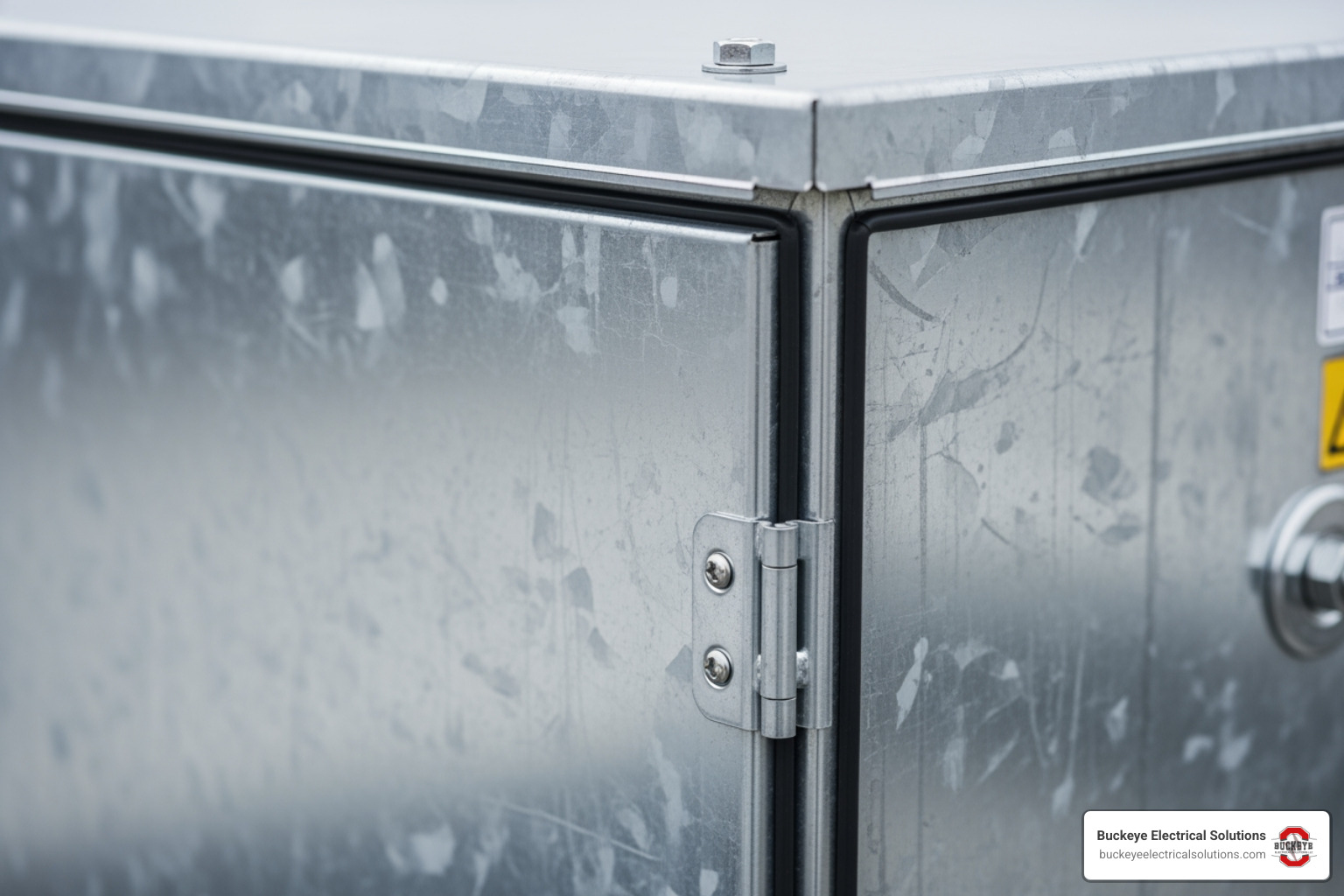
In Ohio, we deal with “lake effect” moisture and freezing temperatures. You want a panel with:
- Plug-On Neutral: This design eliminates the “pigtail” wires on AFCI and GFCI breakers, making the box cleaner and less prone to wire damage.
- Aluminum or Copper Bus Bars: Tin-plated copper is the premium choice for corrosion resistance.
- Bottom Feed Capability: Some panels can be rotated 180 degrees to allow wires to enter from the bottom while keeping the main breaker handle in the correct horizontal orientation.
Popular retail options homeowners will see
You’ll likely encounter brands like Square D (Homeline or QO), Siemens, and Eaton at major retailers.
- The Square D Homeline 200 Amp 30-Space 42-Circuit Outdoor CSED is a very popular “solar-ready” choice.
- For those looking at other retailers, you can browse Outdoor 200-Amp Breaker Boxes at Lowe’s to see the variety of NEMA 3R options available.
Ohio Code, Permits, and Installation Realities
Installing a 200 amp breaker box outside is not a weekend DIY project. In Ohio, this work requires a permit from your local building department and coordination with your utility provider (like FirstEnergy or AEP).
When code may require an outdoor main disconnect
Under the 2023 NEC, if your interior panel is more than a few feet away from where the wires enter the house, you must have an external disconnect. Some Ohio jurisdictions limit the “unprotected” service wire length inside a building to as little as 3 to 5 feet. If your basement is finished or the layout doesn’t allow the panel to be right at the entrance point, the outdoor main breaker becomes a legal necessity.
Installation considerations for a 200 amp breaker box outside
When we install these units, we have to consider:
- Grounding: We typically install two 8-foot ground rods spaced at least 6 feet apart.
- Working Space: The code requires a 30-inch wide by 36-inch deep clear working space in front of the panel.
- Expanded GFCI Rules: Ohio’s adoption of the 2023 NEC includes expanded GFCI requirements for certain outdoor and indoor locations, which may affect how we wire the branch circuits in your new panel.
If you’re preparing for an upgrade, reviewing more info about home electrical inspections can help you understand what the city inspector will be looking for.
Typical costs, timelines, and upgrade variables
Most 200-amp service upgrades can be completed in a single day. Your power will typically be off for 4 to 8 hours while we swap the equipment and coordinate with the utility for the “hook-up.”
Pricing is always subject to change and depends on local site conditions or AHJ requirements. Factors that influence the cost include:
- The distance from the utility transformer.
- Whether the service is overhead (requiring a new mast) or underground (requiring trenching).
- The complexity of the interior subpanel wiring.
For those with massive power needs, you might even consider if a 400 amp upgrade is a better long-term fit than a standard 200-amp setup.
Common Misconceptions and Practical Maintenance Tips
Common myths about exterior breaker boxes
- Myth: “Outdoor panels are less safe because anyone can touch them.”
- Reality: While they are accessible, they are designed with lockable covers. The safety benefit for firefighters far outweighs the “tampering” risk, which is statistically very low.
- Myth: “The rain will make the breakers trip.”
- Reality: NEMA 3R enclosures are specifically engineered to prevent water from reaching the breakers. As long as the door is kept closed and the seals are intact, rain is not an issue.
What maintenance and inspections matter most
Even though these boxes are “set it and forget it,” we recommend an annual visual check:
- Check for Rust: Look for any signs of “bubbling” paint or orange streaks.
- Clear Vegetation: Don’t let bushes or vines grow over the box; it needs to be accessible for emergencies.
- Pest Check: Mice and wasps love the warmth of a breaker box. Ensure the knockouts are sealed.
For older homes, getting a professional electrical inspection is the best way to catch issues before they become emergencies.
Warning signs that call for service
If you notice any of the following, call us immediately:
- Buzzing or Hissing: This indicates “arcing,” which is a major fire risk.
- Warm Enclosure: The box should not feel hot to the touch.
- Flickering Lights: This often indicates a loose “neutral” wire at the service entrance.
- Outlet has no voltage; could indicate breaker, GFCI, switch, or wiring issue. If you lose power to a section of your home, it could be a failing breaker in your outdoor panel.
If you’re trying to figure out a smaller issue, our guide to electrical troubleshooting can offer some expert tips.
Frequently Asked Questions about 200 amp breaker box outside
Do I need both an outdoor 200-amp main breaker and an indoor panel?
In most Northeast Ohio homes, yes. The outdoor box acts as the “Main Disconnect.” We then run a large cable to an indoor “Subpanel” which contains all the individual breakers for your lights, outlets, and appliances. This keeps the majority of your breakers inside where they are convenient to reset if they trip.
Is a meter-main combo better than a separate meter and panel?
It depends on your utility’s rules. Meter-main combos are generally cheaper to install because there is less conduit and labor involved. However, some utilities have very specific “approved lists” of which combo units they allow. We always check with the utility before purchasing equipment.
Can I install or replace a 200 amp breaker box outside myself?
No. In Ohio, working on service entrance equipment requires a licensed electrician and a permit. Because you are working with “unfused” power directly from the utility, a mistake can be fatal or cause a massive fire. Additionally, your insurance will likely not cover any claims if the work wasn’t performed by a pro and inspected by the city.
Conclusion
A 200 amp breaker box outside the home is more than just a gray box on the wall—it’s the backbone of a modern, safe, and future-ready Ohio home. Whether you’re preparing for an EV charger, satisfying a new code requirement, or simply looking to increase your home’s safety for first responders, moving your main disconnect outside is a smart investment.
At Buckeye Electrical Solutions, we have over 20 years of experience helping Northeast Ohio homeowners navigate these upgrades. We pride ourselves on prompt, professional service that gets your power back on quickly and safely.
Ready to upgrade your home’s electrical gateway? Contact us today for a consultation. We’ll help you choose the right 200-amp setup for your needs and handle everything from the permits to the final inspection.