LED holiday lights vs incandescent sets differ most in energy use, heat, durability, and how many strands your outlets can handle. Northeast Ohio homeowners usually start hanging lights in November, before the snow and ice make ladder work harder. This guide compares the two types side by side, explains how each one affects your home’s electrical circuits, and covers the outdoor outlet setup that keeps a display running through a wet Cleveland winter.
How LED and Incandescent Christmas Lights Work
An incandescent bulb makes light by heating a thin filament until it glows. Most of the electricity turns into heat, which is why older mini lights and C9 bulbs feel warm after an hour on the tree. Incandescent strings also use small parts called shunts, so one burned-out bulb may not shut off the whole set, but a failed shunt can still leave a section dark.
An LED (light-emitting diode) makes light from a small semiconductor chip instead of a hot filament. The U.S. Department of Energy explains that a failed LED usually creates its own path for the current, so the rest of the strand can keep working. ENERGY STAR notes that certified LED light strings have no filaments or glass, which makes them harder to break when you pull them out of a storage bin each year.
LED Holiday Lights vs Incandescent: Side-by-Side Comparison
This table compares the two types on the points that matter most for a home display. Your exact numbers depend on the brand, so check the label on each box.
| Feature | LED holiday lights | Incandescent holiday lights |
| Energy use | About 70% less than incandescent strings, per ENERGY STAR | Highest energy use of the two |
| Heat | Cool to the touch | Bulbs get warm, larger bulbs get hot |
| Durability | No filament or glass in certified sets | Glass bulbs and filaments break more easily |
| One bulb fails | Rest of the strand usually stays lit | Shunts help, but sections can go dark |
| Strands connected end to end | Often more, follow the tag | Three sets at most, per CPSC and ESFI |
| Look | Warm white and multicolor options, varies by brand | Classic warm glow |
| Upfront cost | Usually higher per set | Usually lower per set |
Energy efficiency is the main reason people switch to LED Christmas lights. ENERGY STAR certified LED light strings use about 70% less energy than incandescent strings, which adds up over a season of nightly use. Cost per box is the tradeoff. Incandescent Christmas lights still cost less at the store, and some homeowners prefer the warm glow of incandescent bulbs on a tree. If you like that look, choose LED sets labeled “warm white” and compare color in person before you buy a full display.

How Many Strands Can Share One Outlet or Circuit
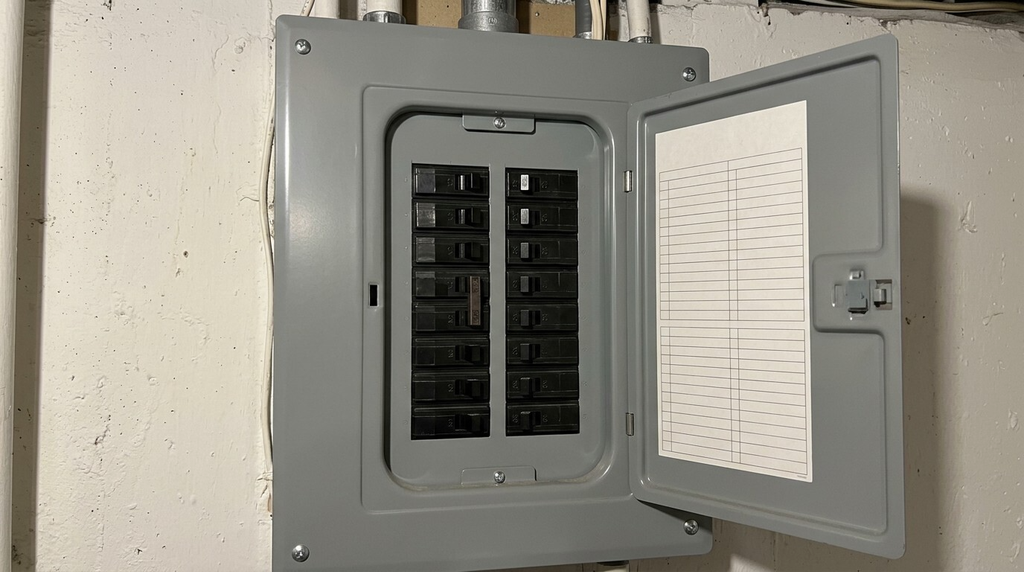
Every strand you plug in adds load to a household circuit. A standard 15-amp circuit can carry 1,800 watts at most. The National Electrical Code (NEC) keeps loads that run three hours or more at or below 80% of the breaker rating, which is about 1,440 watts on a 15-amp circuit. Holiday lights that run every evening count as that kind of load, subject to locally enforced code.
To plan your display, add up the watts printed on each box, then add anything else that shares the circuit, such as a porch light, an inflatable, or a space heater inside the house. A display built from sets labeled 40 watts each reaches 1,440 watts at 36 sets, while LED sets with a lower wattage leave far more room on the same circuit. Your outdoor outlets and some indoor rooms may share one circuit, so test which outlets go dark when you switch off a breaker before you split the load.
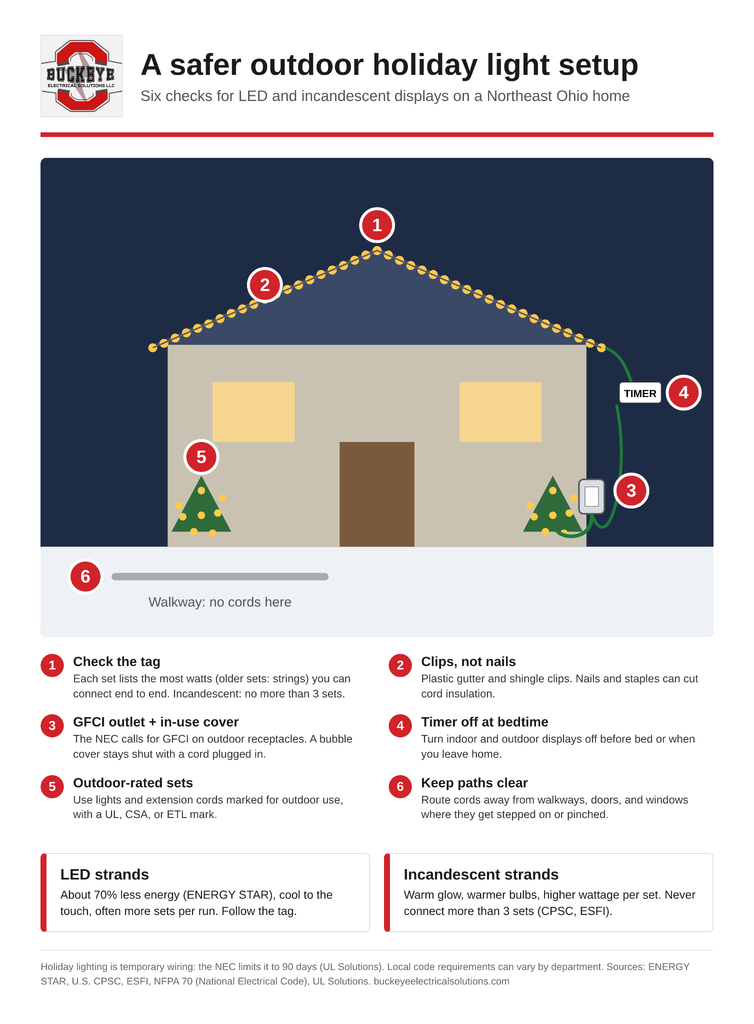
Connecting strands end to end has a separate limit. The CPSC and the Electrical Safety Foundation International (ESFI) both advise against connecting more than three sets of incandescent lights together. For LED sets, read the tag on the cord. UL 588, the safety standard for seasonal lights, now has manufacturers list the total maximum wattage you can connect end to end, and older sets list a maximum number of strings. If a circuit trips every night once the display turns on, our guide on what to do when a breaker keeps tripping explains the common causes.
Safety Differences That Matter
Lighting and wiring problems play a real part in holiday fires. The National Fire Protection Association (NFPA) reports that electrical distribution or lighting equipment was involved in two in five home Christmas tree fires. NFPA also estimates that U.S. fire departments respond to about 835 home fires a year that start with decorations other than trees.
LED lights run cooler, which lowers the heat risk on a dry tree or near curtains, but any light set can fail if the cord is damaged. Follow these steps with either type:
- Buy lights with a mark from a nationally recognized testing laboratory, such as UL, CSA, or ETL.
- Check every strand for cracked sockets, loose or bare wires, and loose connections before you hang it.
- Use only sets marked for outdoor use outside your home.
- Hang lights with plastic clips, not nails or staples that can cut the insulation.
- Keep cords out of doorways and windows, where they can get pinched.
- Turn off indoor and outdoor displays before bed or when you leave home.
Falls are the other big risk. The CPSC estimates about 160 decorating-related injuries a day during the holiday season, and nearly half involve falls. Hang roofline lights on a dry day, use a ladder rated for your weight, and have someone hold it.
Outdoor Outlets and GFCI Protection in Northeast Ohio
Snow, sleet, and freeze-thaw cycles make outdoor outlets the weak point in many Cleveland-area displays. The NEC calls for GFCI (ground fault circuit interrupter) protection on outdoor receptacles at homes. A GFCI shuts off power when it senses current leaking out of the circuit, which can happen when water gets into a plug or a damaged cord. Local requirements can vary by department, so ask before you add or change an outdoor outlet.

An in-use cover, sometimes called a bubble cover, stays closed while a cord is plugged in and keeps snow and rain off the connection. A flat flip-up cover is designed to protect the outlet when nothing is plugged into it. If your GFCI outlet trips after every storm, have the outlet and the cord connections checked, because repeated trips can point to water getting in.
According to UL Solutions, the NEC also treats holiday lighting as temporary wiring and limits it to 90 days. If you want lights on your roofline year-round, permanent outdoor lighting is a separate electrical project. Buckeye Electrical Solutions offers outdoor lighting installation and electrical safety inspections for homeowners across Northeast Ohio.
Frequently asked questions
Are LED Christmas lights safer than incandescent lights?
LED lights run cooler, so they lower the heat risk near a tree, curtains, or dry wreaths. They still need a testing lab mark, an undamaged cord, and outdoor rating for use outside. A damaged LED strand can still cause a shock or start a fire.
Can I mix LED and incandescent lights on the same strand?
Follow the tag on each set. Connector types and wattage limits differ between brands and between LED and incandescent sets, so don’t connect them unless both tags allow it. Plug mixed displays into separate outlets or extension cords rated for outdoor use.
Why do my outdoor lights trip the GFCI outlet?
Moisture is the most common reason. Water in a plug, a cracked socket, or a cord sitting in snow can let current leak, and the GFCI shuts off power. Dry the connections, swap any damaged strand, and call an electrician if the outlet keeps tripping.
How long can I leave holiday lights up?
The NEC limits temporary holiday lighting to 90 days. For lights you want up all year, talk with an electrician about permanent outdoor lighting.
Do I really need an electrician for holiday lights?
You don’t need one to hang a plug-in display. For outlets that keep tripping, warm or discolored outlets, or adding a new outdoor outlet or circuit, a licensed electrician can find the problem and explain the work before it starts.
Sources for this article are listed below.
- ENERGY STAR, Light Strings
- U.S. Department of Energy, How Do Holiday Lights Work?
- NFPA, Winter Holidays
- U.S. Consumer Product Safety Commission, Happy Holidays Start with Safety
- ESFI, Indoor Lights and Electrical Decorations Safety Tips
- UL Solutions, String Lights for All-Year Use
Choosing between LED holiday lights vs incandescent sets is easier once you know what your outlets and circuits can handle. If your outdoor outlets trip or you’re planning a bigger display this season, get in touch with Buckeye Electrical Solutions to schedule a visit and protect your home’s wiring.