What Does Recessed Lighting Installation Cost in 2026?
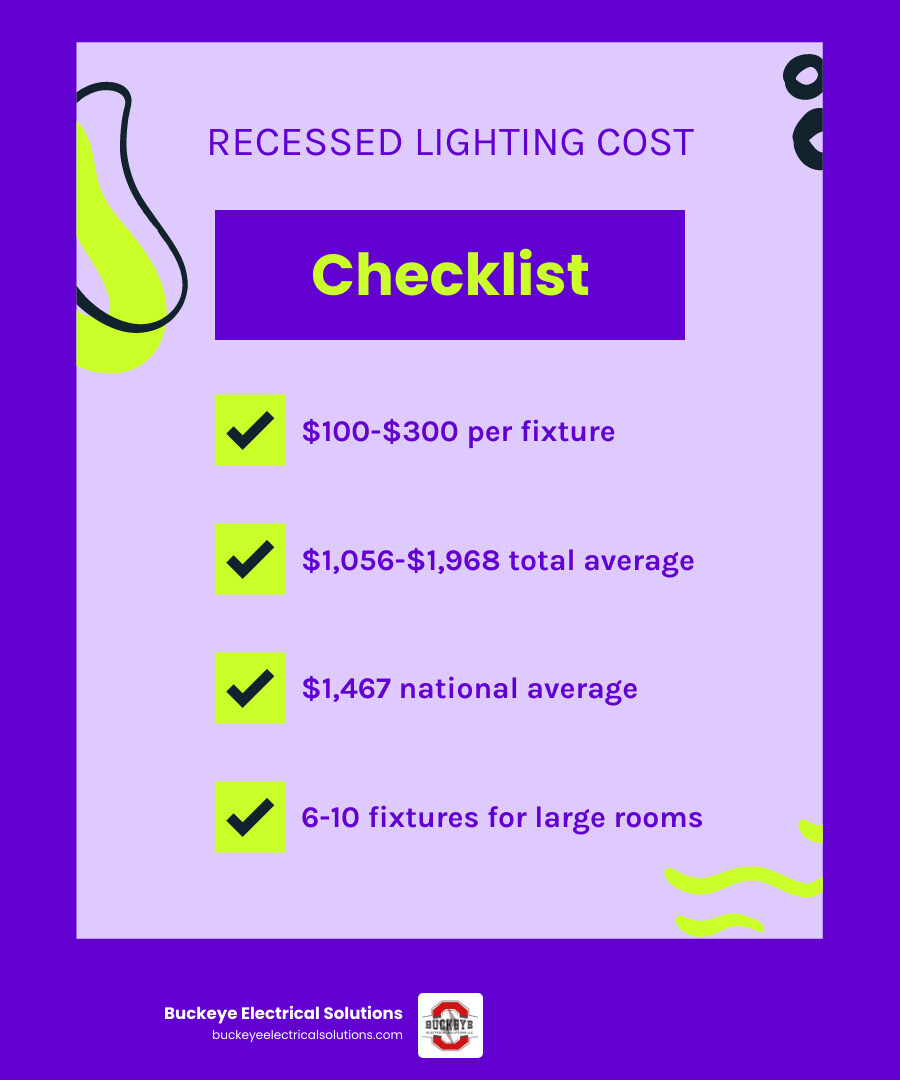
Recessed lighting installation cost typically falls between $100 and $300 per fixture for most Northeast Ohio homeowners, with total project costs ranging from around $1,056 to $1,968 depending on room size, ceiling type, and local labor conditions.
Here’s a quick snapshot to answer your question right away:
| Project Size | Typical Fixture Count | Estimated Cost Range* |
|---|---|---|
| Small room (powder room, hallway) | 2-4 lights | $300 – $900 |
| Medium room (bedroom, small kitchen) | 4-6 lights | $700 – $1,400 |
| Large room (kitchen, living room) | 6-10 lights | $1,200 – $2,500 |
| Open plan or basement | 10-16 lights | $2,000 – $4,000 |
| Whole home | 20+ lights | $3,500 – $8,000 |
*Estimates are subject to change based on local site conditions, ceiling access, wiring complexity, permit requirements, and your local authority having jurisdiction (AHJ).
The national average for a standard recessed lighting project runs around $1,467, but your actual cost in Northeast Ohio will depend on several variables — fixture type, whether your ceiling is open or finished, and whether new wiring or circuits are needed.
This guide walks you through everything: how costs are calculated, what drives prices up or down, and how to get the most value from your project.
I’m Aaron, owner of Buckeye Electrical Solutions LLC and a licensed master electrician who has directed more than 60 permitted electrical projects across Northeast Ohio — including dozens of recessed lighting installations that gave me a first-hand understanding of what recessed lighting installation cost really looks like in our region. In the sections below, I’ll break down exactly what you can expect to pay and why.
Easy Recessed lighting installation cost word list:
National and Ohio Average Recessed Lighting Installation Cost in 2026
As we move through May 2026, we’ve seen that the national average for a recessed lighting project has stabilized at approximately $1,467. However, averages only tell part of the story. In Northeast Ohio, we often find that the recessed lighting installation cost is heavily influenced by the age and construction of our local homes.

For a standard professional installation, you can expect to pay between $100 and $300 per fixture, which includes both the hardware and the labor. If you are looking at a high-end installation with premium finishes or smart home integration, those costs can reach $400 or more per light.
According to data from Angi, most homeowners pay between $1,056 and $1,968 for a total project. In our experience working in areas like Akron and Cleveland, the complexity of the wiring often dictates where you fall in that range. For instance, a kitchen electrical remodel typically requires more fixtures (6 to 10) to eliminate shadows on countertops, bringing the project total closer to the $2,000 mark.
Project Size Comparison by Room Type
| Room Type | Recommended Fixtures | Purpose |
|---|---|---|
| Half Bath / Powder Room | 2-4 | Ambient lighting and mirror task lighting |
| Standard Bedroom | 4-6 | General illumination and corner accents |
| Kitchen (Medium) | 6-10 | Task lighting for prep areas and general fill |
| Living Room (Large) | 8-12 | Zoned lighting for reading and entertainment |
Key Factors and Labor Rates for Northeast Ohio Homeowners
When we provide an estimate for recessed lighting installation cost, we aren’t just looking at the price of the “can.” Several technical and structural factors determine the final investment.

Labor Rates and Professional Expertise
In Northeast Ohio, professional electrician labor rates typically range from $50 to $130 per hour. For a straightforward installation, it takes about two to three hours per fixture in an existing ceiling. If we are working in new construction where the joists are exposed, that time is cut significantly, often reducing labor costs by 30% to 50%.
New Construction vs. Retrofit
Retrofit projects (installing into an existing, finished ceiling) are more expensive because we have to “fish” wires through the ceiling. If there is no attic access above the room, the complexity increases. We may need to cut small access holes in the drywall to route the wire around joists. While we handle minor patching, painting is usually a separate homeowner task.
2023 NEC Adoption and Safety Requirements
Ohio’s adoption of the 2023 National Electrical Code (NEC) has introduced expanded GFCI (Ground Fault Circuit Interrupter) requirements. While many people associate GFCIs with bathrooms, the rules for kitchens are situational and can affect how we wire your new lights.
During an electrical inspection, we look for common issues that could complicate your installation:
| Identified Issue | likely causes | priority level |
|---|---|---|
| Outlet has no voltage; could indicate breaker, GFCI, switch, or wiring issue | Potential circuit interruption or component failure | High |
| Improper wiring or bootleg ground | Aging infrastructure or previous non-compliant work | High |
| Overloaded circuits | Excessive demand requiring a new dedicated line ($200–$500) | Moderate |
Permits and Inspections
Do not skip the permit! Electrical permits in Ohio municipalities typically cost between $50 and $500. This ensures that a third-party inspector verifies the work meets safety standards, which is vital for your home’s resale value and insurance compliance. You can find more details on these variables in the 2026 Price Guide.
Maximizing ROI: Fixture Types and Long-Term Savings
One of the best ways to offset the recessed lighting installation cost is through energy efficiency. Modern recessed lighting projects can deliver a return on investment (ROI) of 50% to 80%, particularly in high-traffic areas like kitchens and living rooms.
The LED Advantage
Switching to LED is no longer just an “option”—it’s the industry standard. LED bulbs use up to 90% less electricity than traditional halogen or incandescent bulbs. This can save the average household about $225 in energy costs per year.
- Lifespan: LED lights last 25,000 to 50,000 hours. A halogen bulb typically burns out after just 2,000 hours.
- Heat: LEDs generate very little heat, which reduces the load on your air conditioning during hot Ohio summers and lowers fire risks.
IC-Rated Housings
If your ceiling has insulation (standard in most Northeast Ohio attics), we must use IC-rated (Insulation Contact) housings. These are designed to be covered by insulation without overheating. Non-IC housings require a 3-inch gap, which can lead to “thermal leaks” where your expensive heat escapes into the attic.
For more modern looks, many of our clients opt for smart light installation which allows for color-tuning and app-based control.
Comparing Fixture Quality and Recessed Lighting Installation Cost
Not all fixtures are created equal. The “trim” is the visible part of the light, and it can significantly impact the price:
- Baffle Trim: The most common. It has ribbed inserts to reduce glare.
- Reflector Trim: Uses a polished interior to maximize light output.
- Gimbal/Eyeball Trim: Allows you to pivot the light to highlight artwork or a fireplace.
- Integrated LED Trims: These don’t have a “bulb” to change; the light source is built into the trim. While slightly more expensive upfront, they offer the cleanest look and longest warranties.
Smart Technology and Recessed Lighting Installation Cost
Adding smart functionality is a popular 2026 trend. While a standard dimmer switch might cost $20 in materials, a smart dimmer with voice control and hub integration can cost $50 to $150. However, the ability to automate your lighting—having it dim as the sun sets or turn off automatically when you leave—adds both convenience and further energy savings.
Frequently Asked Questions about Recessed Lighting
How many recessed lights do I need for a 12×12 room?
For a standard 12×12 bedroom or living area, we typically recommend 4 to 6 lights. A common rule of thumb is to space the lights at a distance equal to half the ceiling height. If you have 8-foot ceilings, placing the lights 4 feet apart is ideal. For optimal coverage, we recommend keeping fixtures 2 to 3 feet away from the walls to avoid harsh shadows.
Do I need an electrical permit for installation in Ohio?
Yes. In almost all Northeast Ohio jurisdictions, adding new lighting fixtures and wiring requires an electrical permit. This protects you by ensuring the work is inspected and meets the current NEC standards. At Buckeye Electrical Solutions, we handle the permitting process for our clients to ensure everything is “by the book.”
How long does a professional recessed lighting installation take?
For a standard room with 6 lights, a professional team can usually complete the installation in one full day. This includes the layout, cutting the holes, fishing the wire, installing the housings, and cleaning up the workspace. If we are working with an unfinished basement or new construction, the process is even faster.
Conclusion
Upgrading your home with recessed lighting is one of the most effective ways to modernize your space and increase its value. While the recessed lighting installation cost involves several variables—from the type of LED trim you choose to the complexity of your home’s wiring—the long-term benefits of energy savings and improved ambiance are well worth the investment.
At Buckeye Electrical Solutions, we bring over 20 years of experience to every Northeast Ohio home. We pride ourselves on safety, code compliance, and providing our neighbors with transparent, honest pricing. Whether you are in Akron, Canton, or the surrounding areas, we are here to help you light up your life safely.
Ready to brighten your home? Contact our team today for an itemized assessment tailored to your specific project needs.