Why Smart Light Installation Is the Best Upgrade You Can Make Right Now
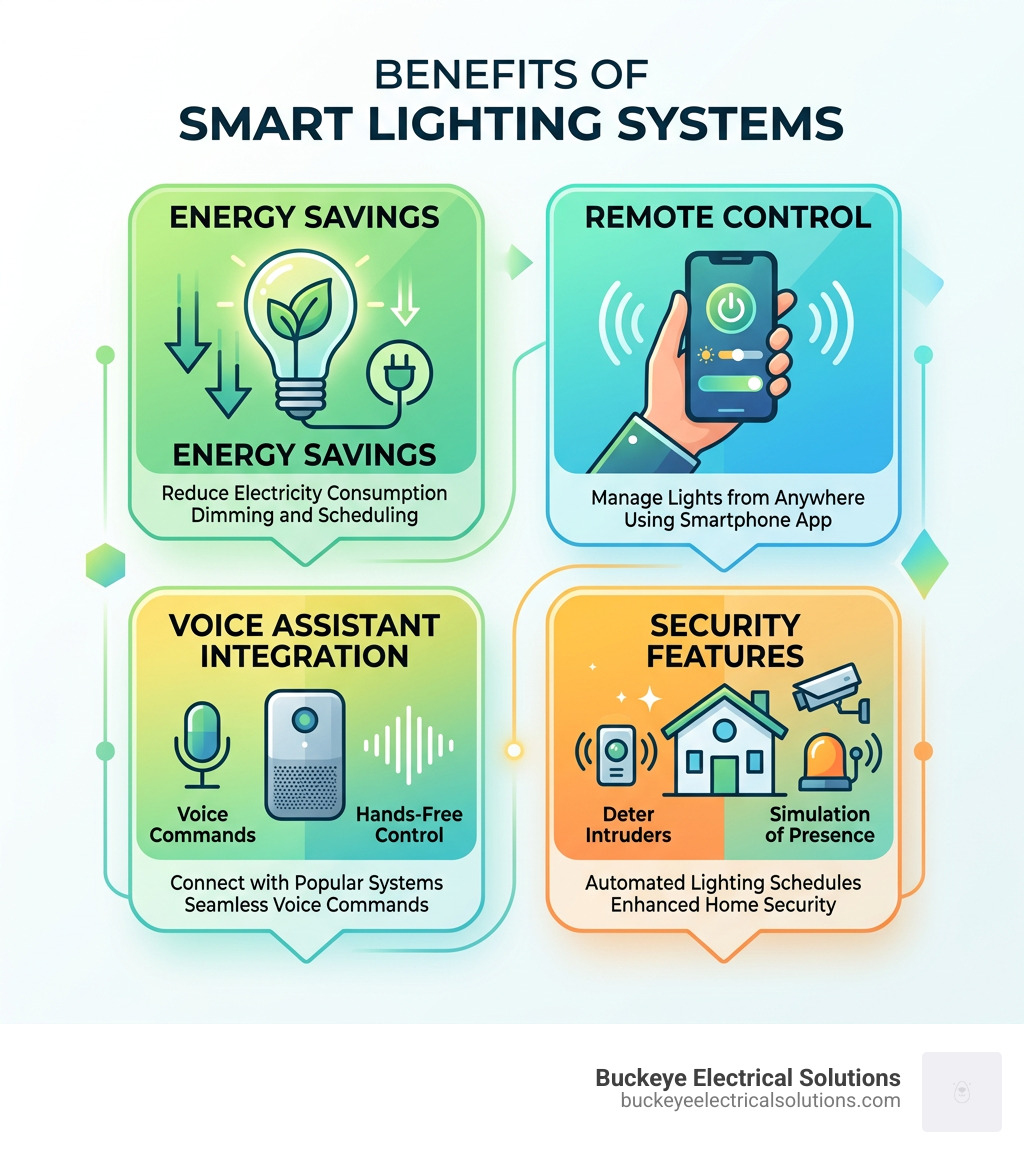
Smart light installation is one of the easiest ways to add convenience, security, and energy savings to your home. Smart lighting isn’t just a novelty. A single smart LED bulb can last up to 20,000 hours, and smart switches can reduce your electric bill by dimming lights and turning them off remotely. Whether you want motion-activated floodlights along your driveway or color-changing bulbs in your living room, there’s a solution for every room and every budget.
That said, getting it right — especially when wiring is involved — takes more than just swapping a bulb. Older homes in Northeast Ohio often lack the neutral or ground wires that many smart switches require, and miswiring a switch can create real safety hazards.
I’m Aaron, owner of Buckeye Electrical Solutions LLC and a master electrician with over 60 permitted residential and commercial projects across Northeast Ohio — including countless smart light installation jobs where proper wiring made all the difference. In the sections below, I’ll provide the essential information needed to make informed decisions about your home’s lighting.
Understanding Your Smart Lighting Options
When we talk about smart light installation, we aren’t just talking about one type of device. The market has exploded with options ranging from simple screw-in bulbs to complex integrated systems. Understanding the hardware is the first step toward a successful upgrade.
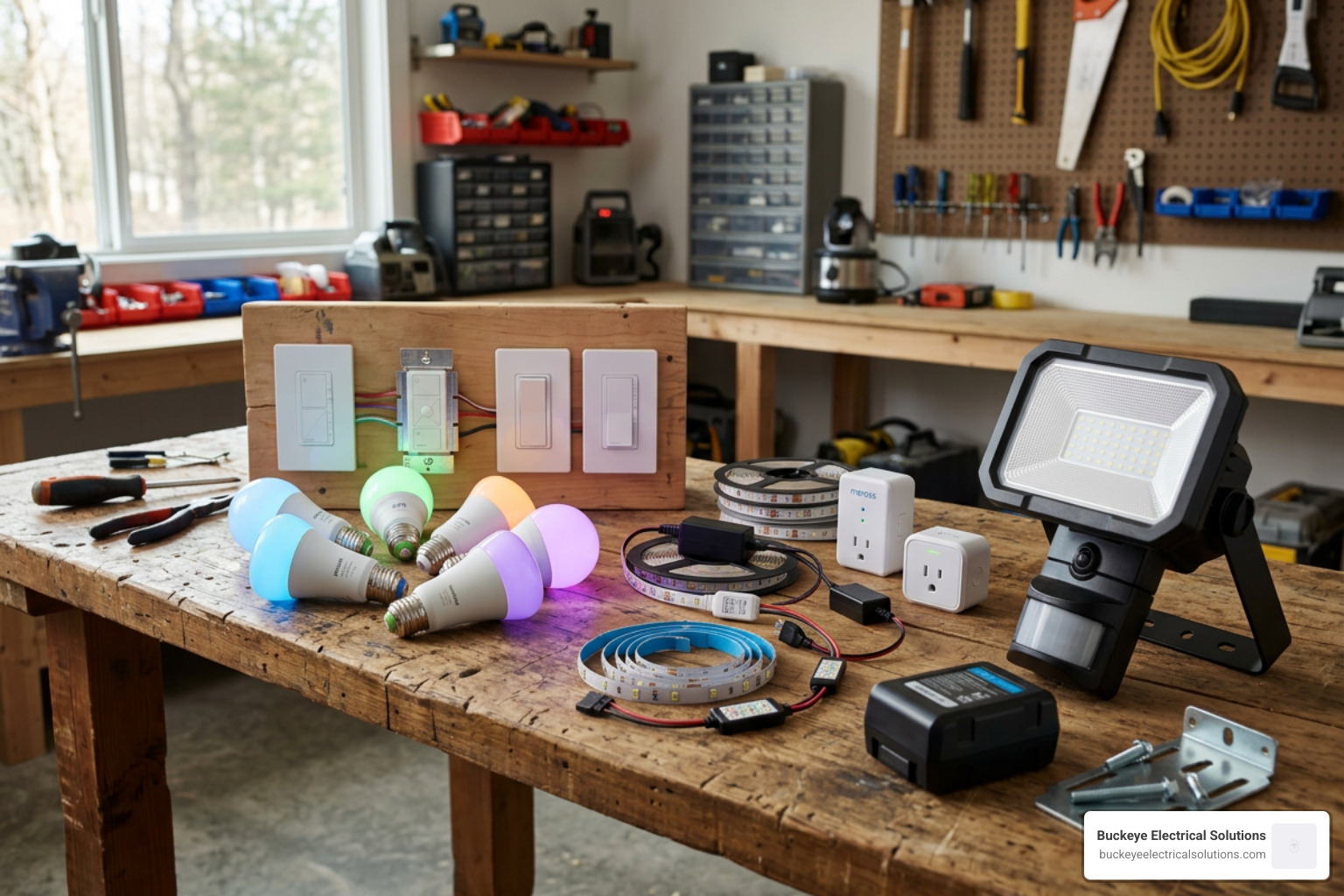
- Smart Bulbs: These are a popular entry point for home automation. They are designed to fit into existing sockets and are perfect for renters or for lamps where color-changing capabilities are desired.
- Smart Switches: These replace the physical switch on your wall. The beauty here is that they control the entire fixture. If you have a chandelier with six bulbs, one smart switch makes them all “smart” without needing to buy six individual smart bulbs.
- Smart Plugs: These sit between your wall outlet and a lamp. They are great for floor lamps or holiday lights that don’t have a standard bulb socket.
- LED Strips: These are flexible adhesive strips used for under-cabinet lighting or accenting a home theater. Brands like Philips Hue offer dedicated strip light solutions that can be customized to fit your space.
- Outdoor Lighting: This includes pathlights, steplights, and floodlights. Many modern outdoor options are solar-powered or battery-operated, making them easier to place in garden beds.
| Feature | Smart Bulbs | Smart Switches | Smart Plugs |
|---|---|---|---|
| Installation Type | Plug-and-Play | Hardwired (Pro Recommended) | Plug-and-Play |
| Cost per Point | $10 – $60 | $30 – $100 | $15 – $40 |
| Best For | Color changing, single lamps | Ceiling fans, chandeliers | Floor lamps, small appliances |
| Wall Switch Use | Must stay “ON” at wall | Works like a normal switch | N/A |
Professional Hardware Selection for smart light installation
Selecting the right bulb type is crucial for performance and safety. For standard indoor lamps, an A19 bulb is the typical choice. However, for recessed “can” lights or outdoor security fixtures, a PAR38 bulb is often required to cast a wider, more directed beam.
When upgrading switches, professional assessment is necessary to determine if the circuit requires a single-pole switch or a three-way switch configuration. Choosing the wrong hardware can lead to a non-functional circuit or electrical issues. Our Residential Electrical Services can help identify the right components for your specific layout.
Essential Components for a Successful Setup
A smart light installation is only as good as the network supporting it. Unlike traditional lights, these devices need to communicate effectively to provide the convenience they promise.
The communication protocols used by smart lights include:
- Wi-Fi: These connect directly to a router. While common, a high volume of devices can impact network performance.
- Zigbee & Z-Wave: These utilize a “hub” or “bridge” to create a mesh network, providing stability for large homes without taxing the Wi-Fi.
- Matter: The new industry standard designed to ensure seamless interoperability between different brands and ecosystems.
- Bluetooth: Typically used for single-room setups with limited range.
For integrated ceiling solutions, understanding how these units pair with specific apps using the 2.4 GHz frequency is a key part of the system configuration, as detailed in this overview of smart LED ceiling lights.
Professional Connectivity Optimization
Signal interference is a common challenge in Northeast Ohio homes, particularly those with thick plaster walls. Professional installation ensures the system is optimized for reliability through:
- Frequency Management: Ensuring smart devices are correctly assigned to the 2.4 GHz frequency for optimal range.
- Local Control: Configuring systems to function locally, ensuring your kitchen lights turn on even if the internet is down.
- Smart Bridges: For larger installations, a dedicated bridge (like the Ring Bridge or Philips Hue Bridge) is used to offload traffic from the router and stabilize the connection.
Explore Our Services to see how we can help optimize your home’s electrical backbone to support these high-tech additions.
Safety and Technical Requirements
Before any smart light installation involving a switch or a hardwired fixture, safety and technical compatibility must be the priority. Electricity requires professional handling to ensure the system is safe and reliable.
Key technical requirements include:
- The Neutral Wire: This is a common requirement for smart devices. Most smart switches require a neutral wire to stay powered even when the light is off. Homes built before the 1980s often lack these in the switch boxes, requiring specialized “no-neutral” solutions or wiring upgrades.
- Grounding: Essential for safety, the ground wire protects against electrical shocks and is a requirement for modern code-compliant installations.
- Fixture Compatibility: Smart bulbs should not be used in enclosed fixtures unless specifically rated for them, as heat buildup can damage the internal electronics. Additionally, smart bulbs should not be paired with traditional dimmer switches, as this can cause flickering and permanent damage.
For an overview of the physical space and complexity involved in these systems, resources like the Brilliant Dimmer Switch technical overview illustrate the technical nature of the hardware.
Advanced Electrical Considerations
In more complex setups, such as hallways or large rooms with multiple control points, the wiring becomes significantly more intricate. Modern smart systems often utilize wireless communication between switches rather than traditional physical wiring paths. Navigating these configurations requires a deep understanding of electrical loads and signal routing, which is a standard part of our Commercial Electrical Services and high-end residential projects.
Why Professional smart light installation is the Best Choice
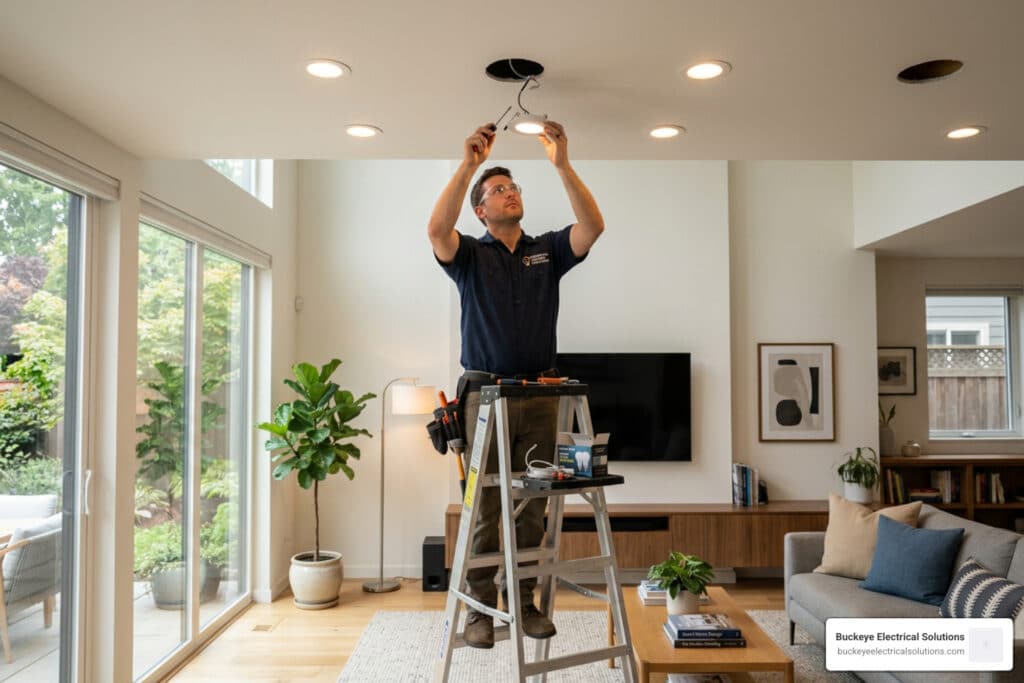
While screwing in a bulb is a DIY task, replacing switches and hardwired fixtures carries inherent risks. At Buckeye Electrical Solutions, we’ve seen many “DIY” projects turn into emergency calls because of crossed wires or overloaded circuits.
Hiring a professional ensures:
- Code Compliance: We ensure every installation meets the National Electrical Code (NEC) standards, which is vital for your home insurance and future resale value.
- Troubleshooting: If a QR code won’t scan or a switch won’t connect to your Wi-Fi, we have the tools to diagnose whether it’s a wiring issue or a network problem.
- Safety: We handle the high-voltage risks so you don’t have to. We also ensure that your electrical box isn’t overcrowded, which is a common fire hazard.
You can learn more About Us and our 20+ years of experience serving the Northeast Ohio community.
Integrating Ecosystems and Voice Assistants
The true magic of smart light installation happens after the hardware is in place. Integration allows you to control your home with your voice or through automated routines.
- Voice Assistants: Voice assistants like Alexa, Google Home, or Apple HomeKit can be linked to your lighting system. “Alexa, movie time” can dim the living room lights to 10% and turn off the kitchen lights simultaneously.
- Occupancy and Vacancy Sensors: These are perfect for bathrooms or laundry rooms. An occupancy sensor turns the light ON when you walk in and OFF when you leave. A vacancy sensor requires you to turn it ON manually but turns it OFF automatically—perfect for kids who forget to flip the switch.
- Scheduling: Porch lights can be scheduled to turn on at sunset and off at sunrise, enhancing security by making the home look occupied even when you’re on vacation.
Frequently Asked Questions about Smart Light Installation
Do I need a neutral wire for smart switch installation?
In most cases, yes. Most smart switches need a constant stream of power to stay connected to your Wi-Fi, which the neutral wire provides. If your home was built before 1980, you might not have one. However, there are specialized “no-neutral” switches available that work by “leaking” a tiny amount of power through the bulb, though these often require a specific “hub” to function correctly.
Can smart bulbs be installed in enclosed fixtures or with dimmers?
Generally, no. Smart bulbs contain sensitive electronics that can overheat in enclosed glass globes or recessed cans without proper airflow. Furthermore, using a smart bulb on a circuit with a traditional wall dimmer will cause the bulb to flicker or fail because the electronics aren’t getting the full voltage they expect. For dimming capabilities, a smart switch paired with standard dimmable LED bulbs is recommended.
What is the difference between Zigbee, Z-Wave, and Wi-Fi smart lights?
Wi-Fi lights connect directly to your router, making them easy to start with. Zigbee and Z-Wave are “mesh” protocols that require a hub. The advantage of Zigbee and Z-Wave is that they don’t use your Wi-Fi bandwidth, they have better range in large homes, and they often consume less power, which is why most battery-operated smart lights use these protocols.
Conclusion
A successful smart light installation can transform your home from a standard living space into a responsive, energy-efficient sanctuary. From the security of motion-activated floodlights to the convenience of voice-controlled dimming, the benefits are clear. Statistics show that smart switches can significantly reduce electric bills by ensuring lights are never left on in empty rooms, and the long lifespan of LED smart bulbs (up to 20,000 hours) means fewer trips up the ladder.
However, because these upgrades involve your home’s electrical system and network stability, the technical details matter. Whether you’re dealing with a lack of neutral wires in an older Cleveland home or trying to configure a complex three-way switch in a new build, professional expertise makes the process seamless.
At Buckeye Electrical Solutions, we pride ourselves on providing quality residential and commercial electrical repair, installation, and maintenance across Northeast Ohio. Ready to brighten up your home with the latest technology? Contact Us today to schedule your professional smart light installation.