Why Your Dream Home Might Be Hiding a Dangerous Secret
An electrical inspection before buying a house is a critical step that can save you thousands of dollars and protect your family from serious safety hazards. Here’s what you need to know:
Quick Answer: What to Expect from an Electrical Inspection Before Buying
- When to Schedule: During your due diligence period, after your offer is accepted but before closing
- What’s Checked: Electrical panel, wiring systems, outlets, switches, grounding, GFCI protection, and code compliance
- Who Should Do It: A licensed electrician (not just a general home inspector) for in-depth analysis
- Typical Cost: $300-$500, potentially saving you thousands in hidden repairs
- What You’ll Get: A detailed report identifying safety hazards, code violations, and outdated components
- Your Options: Use findings to negotiate repairs, request seller credits, or walk away from a bad deal
Home buying is exciting, but expensive surprises can ruin the experience. To ensure you’re getting what you pay for, attention to detail is key.
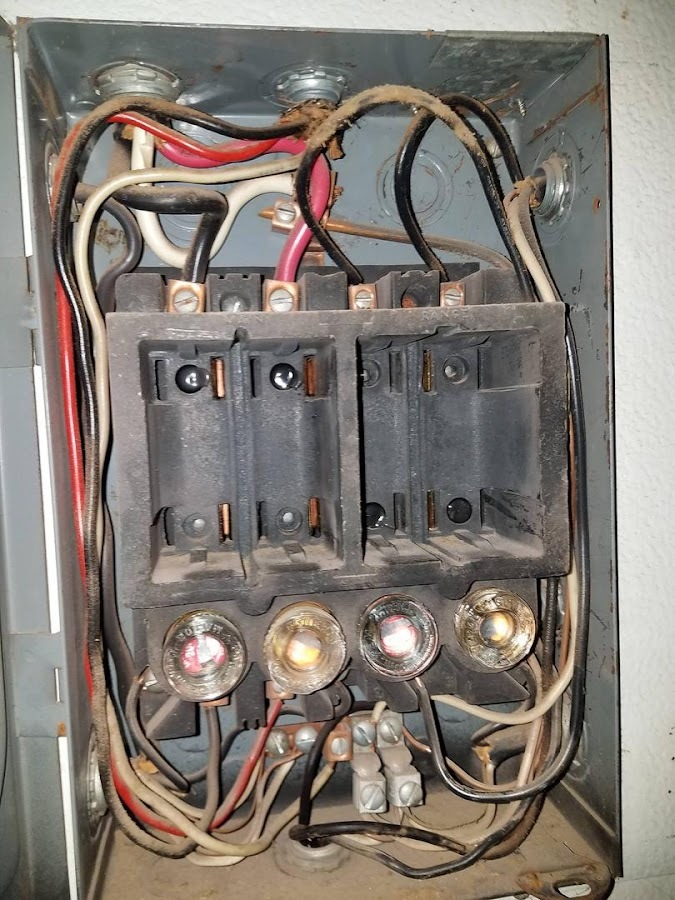
Hidden electrical problems are common, especially in homes over 40 years old. Their wiring often can’t handle modern demands from home offices, EV chargers, and smart devices. Worse, unsafe DIY electrical work from previous owners can create fire hazards behind your walls.
The stakes are high: electrical issues can cause fires, property damage, and even death. Many homebuyers mistakenly rely on a general home inspector, who only performs a surface-level check.
A professional electrical inspection gives you leverage. You can use the findings to renegotiate the price, ask the seller for repairs, or walk away from a risky deal. Insurance companies may also require an inspection before insuring an older property.
I’m Aaron, and I’ve led Buckeye Electrical Solutions through more than 60 permitted electrical projects across Northeast Ohio, including comprehensive inspections for homebuyers considering an electrical inspection before buying a house. I’ve seen how a thorough pre-purchase inspection protects families from dangerous wiring and costly surprises.
Why an Electrical Inspection is a Non-Negotiable Step Before Buying a House
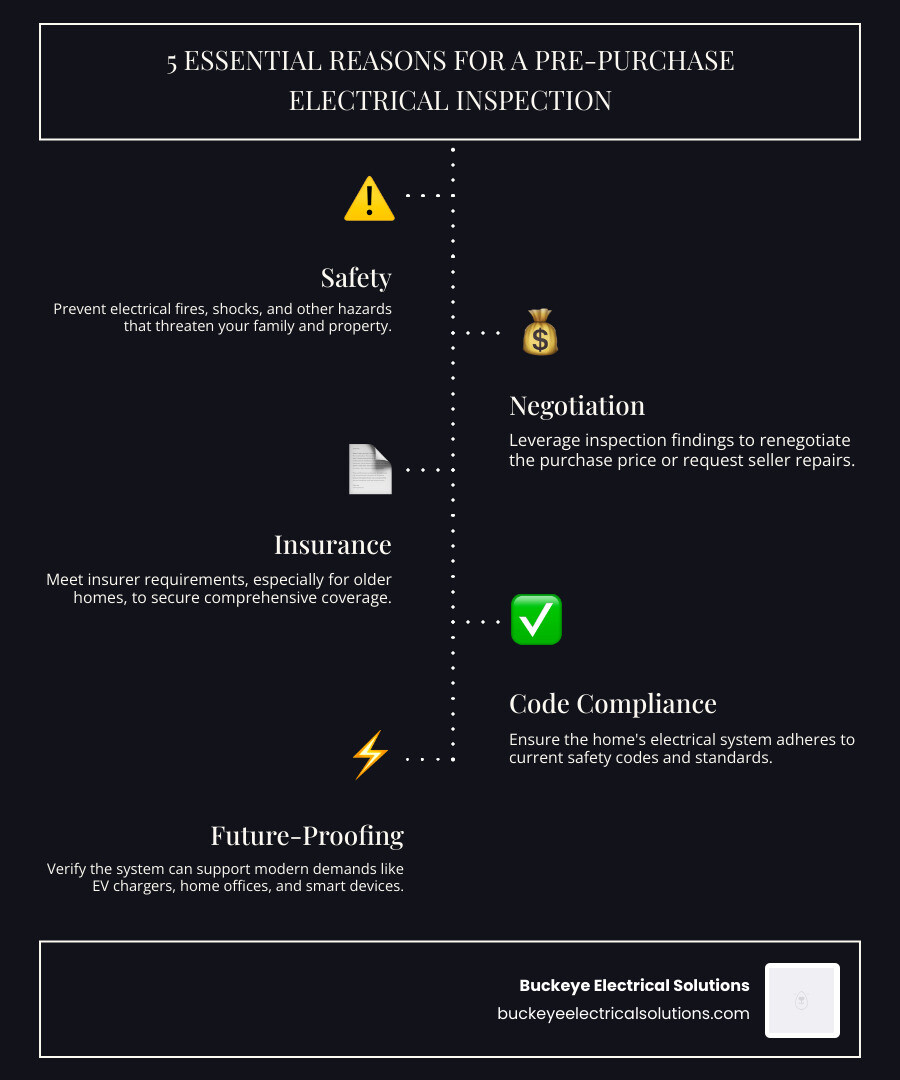
Finding your dream home is exciting, but don’t overlook a vital step that safeguards your investment and your family: a comprehensive electrical inspection before buying a house. It’s not just a recommendation; it’s a necessity for several compelling reasons.
First and foremost is safety from electrical fires. Electrical faults are a leading cause of home fires and property damage. Outdated or faulty wiring, circuits, and panels are hidden hazards. A professional inspection identifies these dangers to ensure your home meets current safety standards.
An inspection provides financial protection from costly repairs. Moving in only to find you need thousands in electrical upgrades is a nightmare. An inspection uncovers these money pits upfront, giving you the chance to budget or negotiate accordingly.
Older homes (40+ years) are especially at risk. Their electrical systems weren’t designed for today’s high energy use from devices like EV chargers and home offices. Many feature outdated and hazardous wiring, like knob-and-tube or aluminum. An inspection is critical to verify if the system can handle your family’s modern electrical demands.
Your insurance policy may require an electrical inspection, especially for older homes. Insurers are wary of the risks of outdated systems and may need a report before providing coverage.
An inspection is also crucial for planning future home improvements. If you’re planning a renovation or adding a major appliance, an inspection confirms if your system can handle the extra load, preventing future costs and delays.
For more information about how we can help keep your home safe and efficient, explore our residential electrical services. More info about our residential services
Telltale Signs Your Potential New Home Needs an Electrical Inspection
Even before a professional steps foot in the door, there are common red flags that suggest a home’s electrical system might be in distress. Being aware of these signs can help you prioritize a thorough electrical inspection before buying a house.
Here’s a list of warning signs to look out for during your walkthroughs:
- Flickering or dimming lights: Indicates a wiring problem or an overloaded circuit, especially if it happens when a major appliance turns on.
- Warm or discolored outlets: Heat from an outlet or switch is a major red flag for faulty wiring and an immediate fire hazard.
- Buzzing sounds from outlets or panels: Buzzing or humming from outlets, switches, or the panel can signal loose wiring, a faulty component, or an overload.
- Frequent circuit breaker trips: Breakers trip to prevent overheating. Frequent trips mean the system is undersized for the electrical load or has a fault.
- Outdated two-prong outlets: These outlets lack a grounding wire, which increases the risk of shock and damage to electronics. They indicate an older, ungrounded system.
- Overuse of extension cords: A reliance on extension cords and power strips suggests the home lacks enough outlets, leading to overloaded circuits and fire hazards.
- Burning smells: A critical warning sign of overheated wiring. This requires immediate professional attention.
When to Schedule Your Inspection
Timing is key when it comes to an electrical inspection before buying a house. The ideal time to schedule this crucial assessment is during the due diligence period, after your offer has been accepted but before the closing date. This allows you enough time to receive the report, understand its findings, and act on them.
We recommend making the electrical inspection a contract contingency in your purchase offer. This means your purchase is conditional upon a satisfactory inspection, giving you the legal right to renegotiate the price, request repairs, or even walk away from the deal if significant electrical problems are found. Don’t wait until the last minute; give yourself ample time to absorb the information and make informed decisions about your potential new home.
General Home Inspection vs. Specialized Electrical Inspection: What’s the Difference?
A general home inspection is a standard part of buying a house, covering the roof, plumbing, HVAC, and a basic electrical overview. However, it’s very different from a specialized electrical inspection performed by a licensed electrician. They serve different purposes and offer different levels of detail.
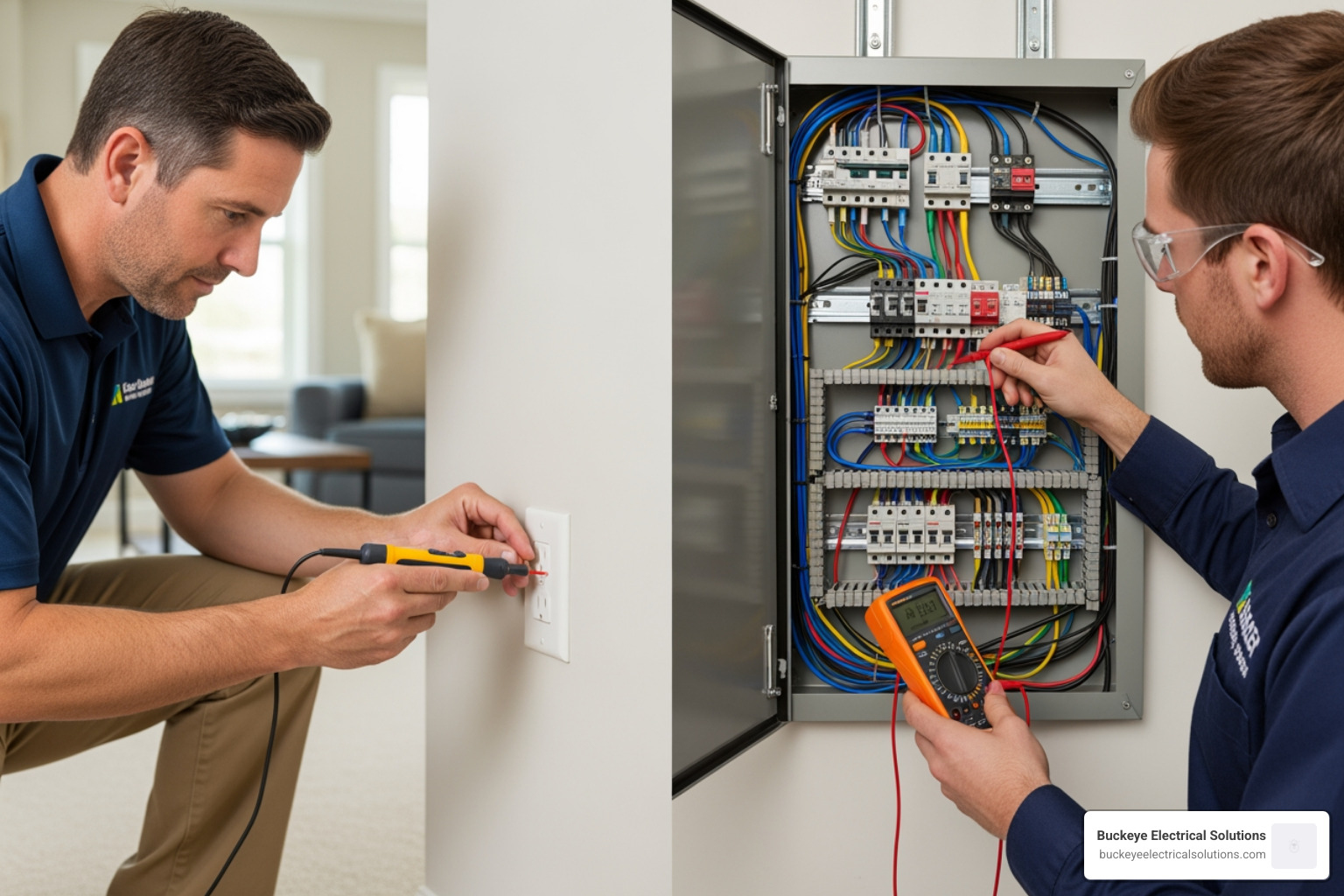
A general inspector’s scope is a surface-level, visual-only assessment. They check accessible components like outlets and switches, test light fixtures, and glance at the electrical panel’s exterior. This provides a basic snapshot but doesn’t uncover hidden issues.
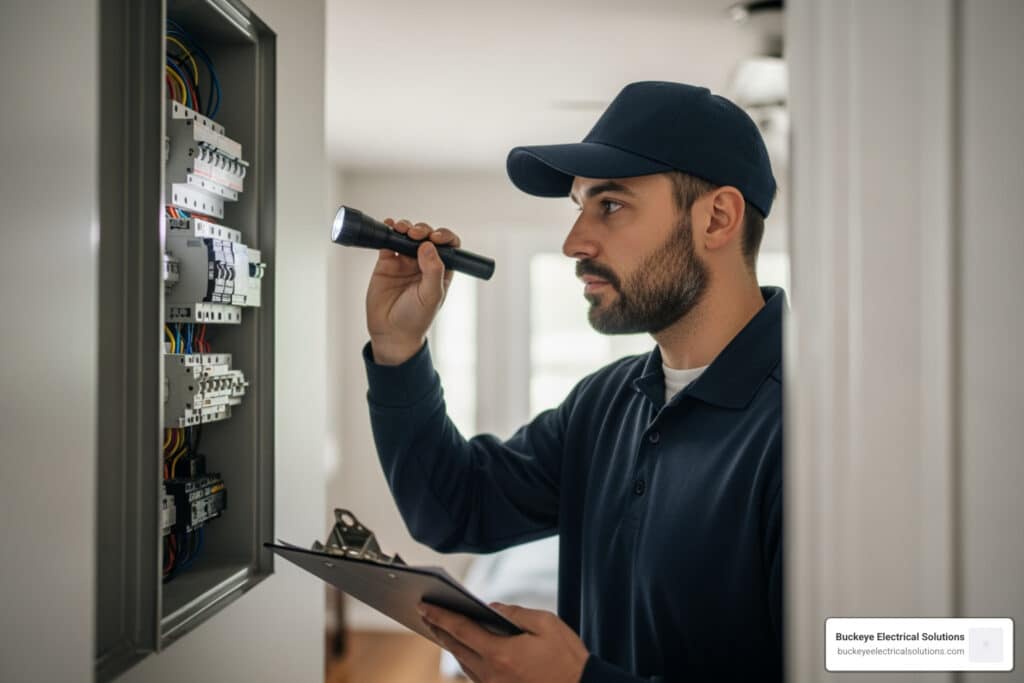
In contrast, a licensed electrician’s expertise provides an in-depth system analysis. We inspect the hidden parts of the system a generalist can’t. This includes opening the electrical panel, assessing wiring types, verifying grounding, and performing load calculations to ensure the system can handle modern demands. We focus on strict code compliance verification and overall safety.
What a General Home Inspector Typically Checks
During a standard home inspection, the inspector will typically perform the following electrical checks:
- Visible outlets and switches: They’ll test a representative number of these to ensure they are functional and properly installed.
- Functionality of light fixtures: A simple “on/off” test for accessible light fixtures.
- Visual check of the electrical panel: They’ll look for obvious signs of damage, corrosion, or missing covers, but typically won’t dig into the internal wiring.
- GFCI test buttons: They’ll press the test button on Ground Fault Circuit Interrupter (GFCI) outlets in areas like kitchens, bathrooms, and garages to see if they trip, indicating basic functionality.
While these checks are helpful, they don’t provide the comprehensive assessment needed to uncover hidden and potentially dangerous electrical problems.
Why You Need a Specialist for an electrical inspection before buying a house
You might wonder, “If a general home inspector looks at the electrical system, why do I need a specialist for an electrical inspection before buying a house?” The answer lies in the depth and expertise required to truly understand the condition and safety of a home’s electrical infrastructure.
Here’s a comparison to highlight why a professional electrician is indispensable:
| Criteria | General Home Inspection | Professional Electrical Inspection |
|---|---|---|
| Wiring Type | Visible wiring only; may note obvious outdated types. | Identifies outdated wiring (e.g., Knob & Tube, Aluminum) and assesses its condition and safety risks. |
| Grounding | May visually confirm presence of ground wire at outlets. | Verifies proper system grounding and bonding at the panel and throughout the home. |
| Panel Internals | Visual check of exterior; may not open panel or inspect internal components. | Opens and inspects internal wiring, bus bars, breakers, and connections for signs of damage, corrosion, or faulty installation. |
| Code Compliance | Notes obvious code violations visible during surface check. | Assesses entire system against current Ohio electrical safety codes and regulations, identifying subtle non-compliance issues. |
| Load Capacity | Limited assessment; may not evaluate if the system can handle modern demands. | Performs load calculations to determine if the service amperage is adequate for current and future use (e.g., EV chargers). |
Much of a home’s electrical system is located behind walls, where a general inspector can’t see. As licensed electricians, we are trained to identify hidden dangers like faulty connections or improper wiring that a generalist would miss.
Identifying outdated wiring like knob-and-tube or aluminum is critical, as these systems are often fire hazards and can complicate getting insurance. A specialist can identify these systems and explain the risks. An electrician’s report is also valuable for insurance validation.
A general inspector points out problems but doesn’t estimate repair costs. A specialized electrical inspection gives you a clearer picture of the true cost of repairs, which is powerful for negotiations.
What’s Under the Magnifying Glass? A Checklist of Key Electrical Components
When we conduct an electrical inspection before buying a house, we perform a comprehensive audit of the entire electrical system. Our goal is to identify any outdated or dangerous components, ensuring the system is safe and functional for your family and investment.

Electrical Panel and Service
The electrical panel is the heart of your home’s electrical system. A thorough inspection here is paramount. We’ll check:
- Service amperage (100A minimum): We verify the service is at least 100 amps, the modern standard. Older 60-amp services are insufficient for today’s needs.
- Panel brand and age: We identify the panel’s brand and age, as some older brands are known fire risks. We assess its condition and code compliance.
- Signs of overheating or corrosion: We look for red flags like discoloration, charring, burning smells, or corrosion, which can indicate overheating or moisture.
- Correct breaker sizing: We ensure breakers are correctly sized for their circuits to prevent overloads.
- Proper grounding and bonding: A proper grounding system is a key safety feature. We verify the system is correctly grounded and bonded to prevent shocks and equipment damage.
Wiring Systems
The wiring throughout the walls, attics, and basements is often where the most significant hazards hide. We carefully inspect:
- Outdated wiring types (Knob & Tube, Aluminum): We identify outdated wiring like Knob & Tube (pre-1950s, no ground wire) and Aluminum (1960s-70s, fire hazard from loose connections), which are major concerns in older homes.
- Frayed or damaged insulation: Exposed or damaged insulation on wires creates a direct electrocution and fire risk.
- Improperly secured wires: Loose wires can lead to arcing, overheating, and fire.
- DIY wiring mistakes: We look for non-compliant DIY wiring, which can be dangerous and expensive to fix.
- Junction box issues: We check that all junction boxes are covered, accessible, and have secure connections.
Outlets, Switches, and Fixtures
These are the points of interaction with your electrical system, and their proper function is key to daily safety:
- GFCI protection (kitchens, bathrooms, outdoors): We test GFCI outlets, which are required in wet areas like kitchens and bathrooms to prevent shocks.
- AFCI protection: We check for AFCI protection, required in living areas by modern codes to prevent fires from dangerous electrical arcs.
- Ungrounded outlets: Two-prong outlets indicate a lack of grounding, a safety concern. We test outlets to verify proper grounding.
- Loose connections: We check for loose outlets or switches, which can cause arcing and overheating.
- Proper functionality of all components: We test a sample of outlets, switches, and fixtures to ensure they work correctly.
From Report to Resolution: Using Your Inspection Findings
After the inspection, you’ll receive a detailed report. This roadmap to the home’s electrical health is vital for making an informed purchase decision.
The report categorizes issues from urgent safety hazards to minor fixes. We help you understand the severity of each item so you can prioritize and make informed decisions.
Using the Report as a Powerful Negotiation Tool
The report is a powerful negotiation tool. It provides concrete evidence of necessary repairs, giving you leverage with the seller.
- Identifying deal-breakers: Severe hazards, risky outdated wiring, or the need for a costly service upgrade can be deal-breakers. For context, significant electrical overhauls can be as costly as major structural repairs.
- Requesting seller repairs before closing: You can ask the seller to address specific electrical issues identified in the report before you finalize the purchase.
- Negotiating a lower price: If the seller is unwilling to perform repairs, you can use the estimated cost of these repairs to negotiate a reduction in the home’s purchase price.
- Asking for seller credits: Alternatively, you might request a credit at closing, allowing you to manage the repairs yourself after you take ownership.
What to Do When an electrical inspection before buying a house Reveals Problems
When an electrical inspection before buying a house reveals problems, don’t panic. You have options.
- Prioritizing safety issues: Focus first on any immediate safety concerns. These are non-negotiable and should be addressed promptly.
- Getting repair quotes from a qualified electrician: The inspection report will identify the problems, but it won’t typically provide repair costs. You’ll need to get estimates from licensed electricians for the work required. This is where Buckeye Electrical Solutions comes in.
- Deciding whether to proceed with the purchase: Armed with a clear understanding of the issues and their potential costs, you can make an educated decision. You might decide the repairs are manageable, or you might conclude that the home requires too much work, and it’s best to walk away.
If you’re in Northeast Ohio and need a repair estimate after an inspection, don’t hesitate to reach out to us. Contact Us for a repair estimate
Finding a Qualified Electrician and Understanding the Costs
The success of your electrical inspection before buying a house depends on hiring the right expert. You need a licensed and insured electrician who specializes in these assessments.
While tempting, don’t rely solely on a general home inspector. For the electrical system, you need a specialist. Prioritize hiring a licensed and insured professional who knows Ohio’s codes. To avoid conflicts of interest, choose an independent inspector who is accountable only to you.
How to Find a Reputable Inspector
Finding a qualified electrician for your inspection might seem daunting, but here are some best practices:
- Checking professional organizations: Check for members of professional organizations like the International Association of Certified Home Inspectors (InterNACHI). These groups have strict membership requirements and codes of ethics.
- Reading online reviews: Read online reviews on Google, Yelp, or the BBB. Look for consistent praise for thoroughness and professionalism.
- Asking for sample reports: Ask for a sample report to see the level of detail and clarity they provide.
- Ensuring local code knowledge: Ensure your inspector knows the local electrical codes in Northeast Ohio. Our team has deep knowledge of these specific requirements.
Is the Inspection a Worthwhile Investment?
An electrical-specific inspection typically costs between $300 and $500, depending on the home’s size and complexity.
Is it a worthwhile investment? Absolutely. The cost of potential repairs for issues like outdated wiring or a faulty panel can run into the thousands, far exceeding the inspection fee.
This small upfront cost for an inspection provides an immense return on investment (ROI) by:
- Preventing catastrophic failures: Identifying and addressing fire hazards or electrocution risks before you move in is priceless.
- Long-term savings: Avoiding unexpected, costly repairs after purchase, and potentially securing a lower purchase price or seller credits.
- Peace of mind: Knowing your new home’s electrical system is safe and up to code is worth every penny.
Frequently Asked Questions about Electrical Inspections
We understand you likely have many questions about the process. Here are some of the most common inquiries we receive regarding an electrical inspection before buying a house.
How long does an electrical inspection take?
A typical electrical inspection takes 2-4 hours, depending on the home’s size and complexity. Older homes may take longer due to more intricate or outdated systems requiring extra scrutiny. Our goal is always thoroughness, not speed.
Should I attend the electrical inspection?
Yes, it’s highly recommended that you attend. Being present allows you to ask questions directly, see issues firsthand, and gain a deeper understanding of your potential new home’s electrical system. Your inspector acts as your advocate, and walking through the home with them can significantly improve your understanding of the report.
Can a new construction home fail an electrical inspection?
Yes, a new construction home can fail an electrical inspection. Construction defects and code violations can be missed by municipal inspectors. A buyer’s independent inspection provides a second set of eyes to catch overlooked issues before closing, ensuring your new home is safe from day one.
Secure Your Investment with a Professional Inspection
Buying a new home is exciting, but one of the most critical decisions is scheduling a professional electrical inspection before buying a house. This step is about more than checking a box—it’s about safeguarding your family, finances, and peace of mind.
A thorough inspection provides key advantages: improved safety by mitigating fire and shock hazards, significant savings by uncovering costly repairs upfront, and invaluable peace of mind. This proactive step empowers you to negotiate effectively and avoid future surprises.
For expert electrical services in Northeast Ohio, trust the licensed professionals at Buckeye Electrical Solutions. With over 20 years of experience, we provide quality residential and commercial electrical repair, installation, and maintenance, known for exceptional service and prompt project completion. We are committed to ensuring your new home is safe and up to code. Learn more about our company and our commitment to quality. About Us
Don’t leave the electrical health of your potential new home to chance. Ensure your new home is safe and up to code by scheduling one of our Residential Electrical Services. We’re here to help you make a confident and secure investment. Explore all our offerings on our Our Services page.