Why Every Homeowner Needs to Know About Emergency Residential Electrical Repair
Emergency residential electrical repair is a critical service that can save your home and protect your family when serious electrical problems strike. Whether it’s the middle of the night or a holiday weekend, electrical emergencies don’t wait for convenient times—and knowing what to do can mean the difference between a quick fix and a devastating house fire.
If you need emergency help right now:
- Call 911 if you see flames, smell gas, or someone has been shocked
- Shut off power at the main panel if it’s safe to reach
- Evacuate if you see smoke or persistent sparks
- Call a licensed emergency electrician for 24/7 response—never attempt DIY repairs on live electrical systems
The Real Danger of Electrical Emergencies
The statistics are sobering. Faulty electrical wiring causes tens of thousands of house fires annually in the United States, resulting in hundreds of deaths and over a billion dollars in property damage. Electrical failures are a leading cause of home structure fires, especially during winter months when heating systems and holiday lights strain home circuits.
The warning signs are often clear: a burning smell near an outlet, sparks when you plug something in, buzzing sounds from your electrical panel, or lights that flicker and dim for no reason. Some homeowners describe a “fishy smell” that turns out to be melting wire insulation. Others notice scorch marks around switches or feel a mild shock when touching an appliance.
This guide walks you through what to do in an electrical emergency—from spotting the first warning sign to the arrival of a professional. You’ll learn how to assess the danger, when to call for help, what to tell your electrician, and how to prevent these crises.
I’m Aaron, and I’ve led Buckeye Electrical Solutions through dozens of emergency residential electrical repair calls across Northeast Ohio, from middle-of-the-night power failures to storm-damaged panels. My team has seen how quickly electrical problems escalate and how proper emergency response protects both homes and families.
Step 1: Identify the Emergency and Ensure Immediate Safety
When an electrical issue arises in your home, the first step is to accurately identify if it’s a true emergency and then to prioritize the safety of everyone in the household. An electrical emergency is any electrical problem that poses an immediate threat to life, property, or causes significant disruption, making your home unsafe or uninhabitable. It’s not just an inconvenience; it’s a potential hazard.
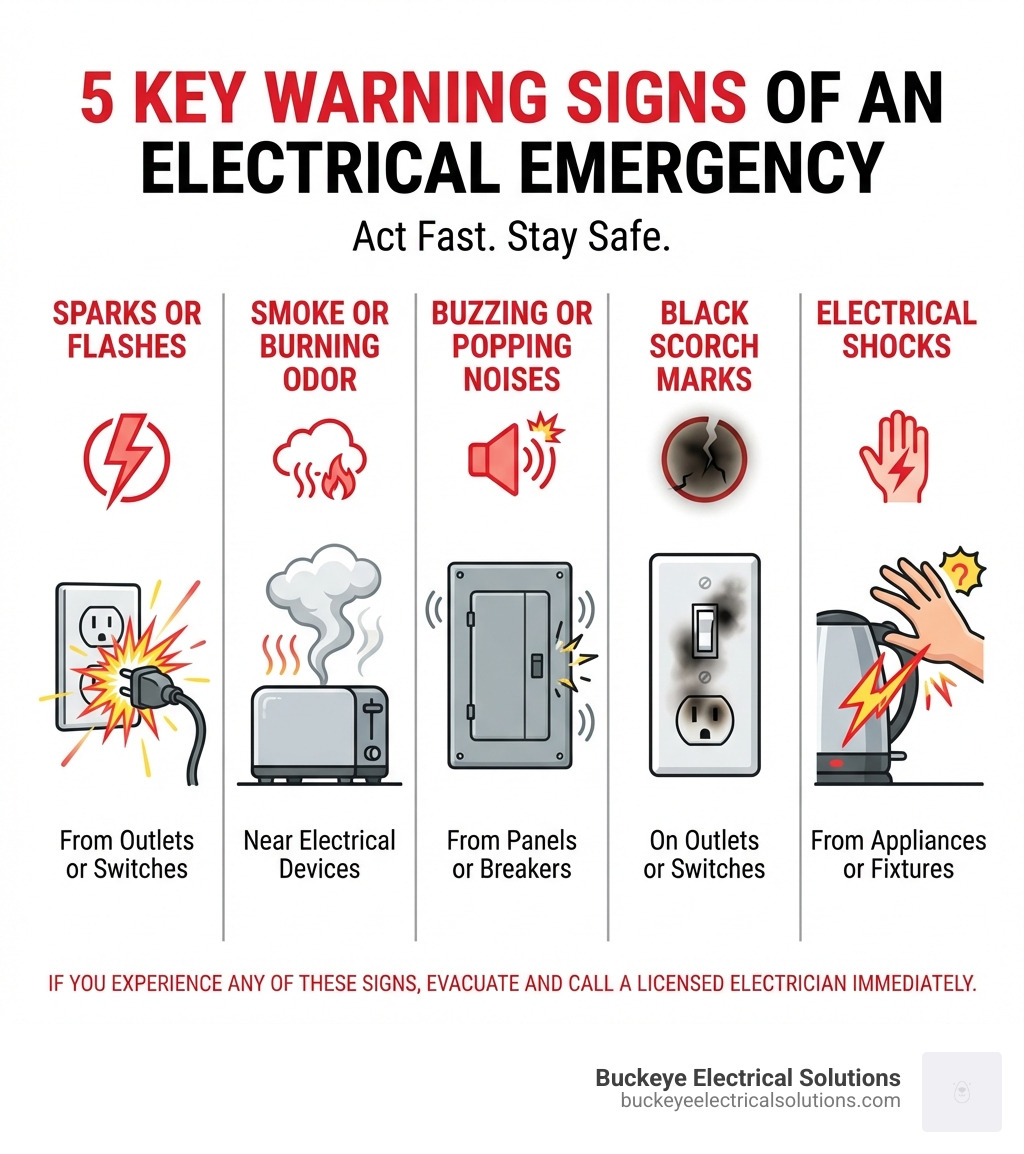
What constitutes an emergency residential electrical repair? We’re talking about situations that demand immediate professional attention, not something you can put off until tomorrow. Common red flags include:
- Burning Smells: This is a major warning sign. If you smell something burning, especially a plastic-like or acrid odor, it could indicate melting wire insulation or an overheated component. Some homeowners even describe a “fishy smell” which is often associated with overheating electrical PVC or wiring. This is a severe fire hazard.
- Sparks or Arcing: Any visible sparks, flashes, or arcing from outlets, switches, appliances, or your electrical panel is a critical emergency. This can quickly escalate into a full-blown electrical fire.
- Smoke from Outlets or Appliances: If you see smoke, even a wisp, coming from any electrical fixture or appliance, consider it an immediate danger.
- Popping or Buzzing Sounds: While a faint hum from your electrical panel might be normal, loud or persistent popping, buzzing, or sizzling sounds indicate a serious problem within your wiring or electrical components.
- Electrical Shocks: Experiencing an electrical shock, even a mild tingle, when touching an appliance, switch, or outlet means there’s a serious fault in your electrical system that needs to be addressed immediately.
- Flickering or Dimming Lights (Localized): If lights in one area of your home are flickering or dimming significantly, it could point to loose wiring or an overloaded circuit. If it’s widespread, it might be a utility issue, but localized issues often require an electrician.
- Hot Outlets or Switches: If an outlet or switch is hot to the touch (beyond a normal slight warmth from a dimmer), it indicates overheating and a potential fire risk.
When to Call 911
While we’re ready for any electrical emergency, some situations warrant a call to 911 before you call us:
- Visible Flames: If you see an actual electrical fire, call 911 immediately.
- Smoke Filling the Home: If smoke is rapidly filling your home, evacuate everyone and then call 911.
- Gas Smell: If you detect a gas smell in conjunction with an electrical issue, evacuate immediately and call 911, as there could be a gas leak.
- Someone Has Been Shocked and is Injured: If someone has received a severe shock and is unconscious or seriously injured, call 911 for medical assistance.
When dealing with an electrical fire, never use water to extinguish it. Water conducts electricity and can make the situation far worse, risking electrocution. Instead, use a Class C fire extinguisher, which is specifically designed for electrical fires. If you don’t have one or the fire is growing, evacuate and call 911.
If it’s safe to do so, and you haven’t already, shut off the main power to your home at the electrical panel. This can cut off the source of the danger and prevent further damage.
Step 2: Interact Safely with Your Circuit Breaker Panel
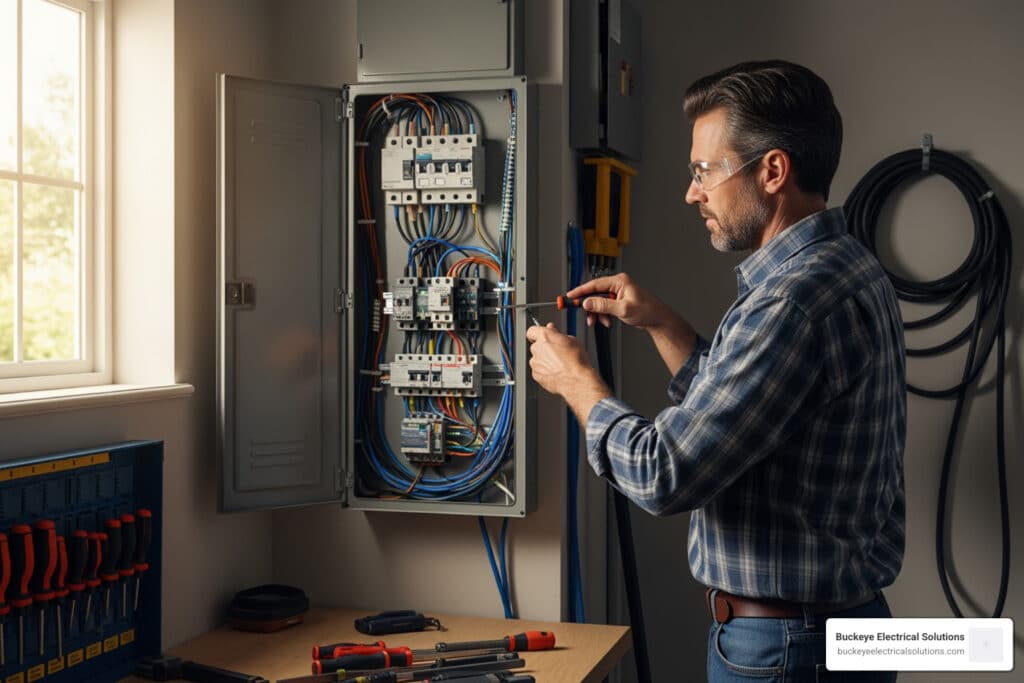
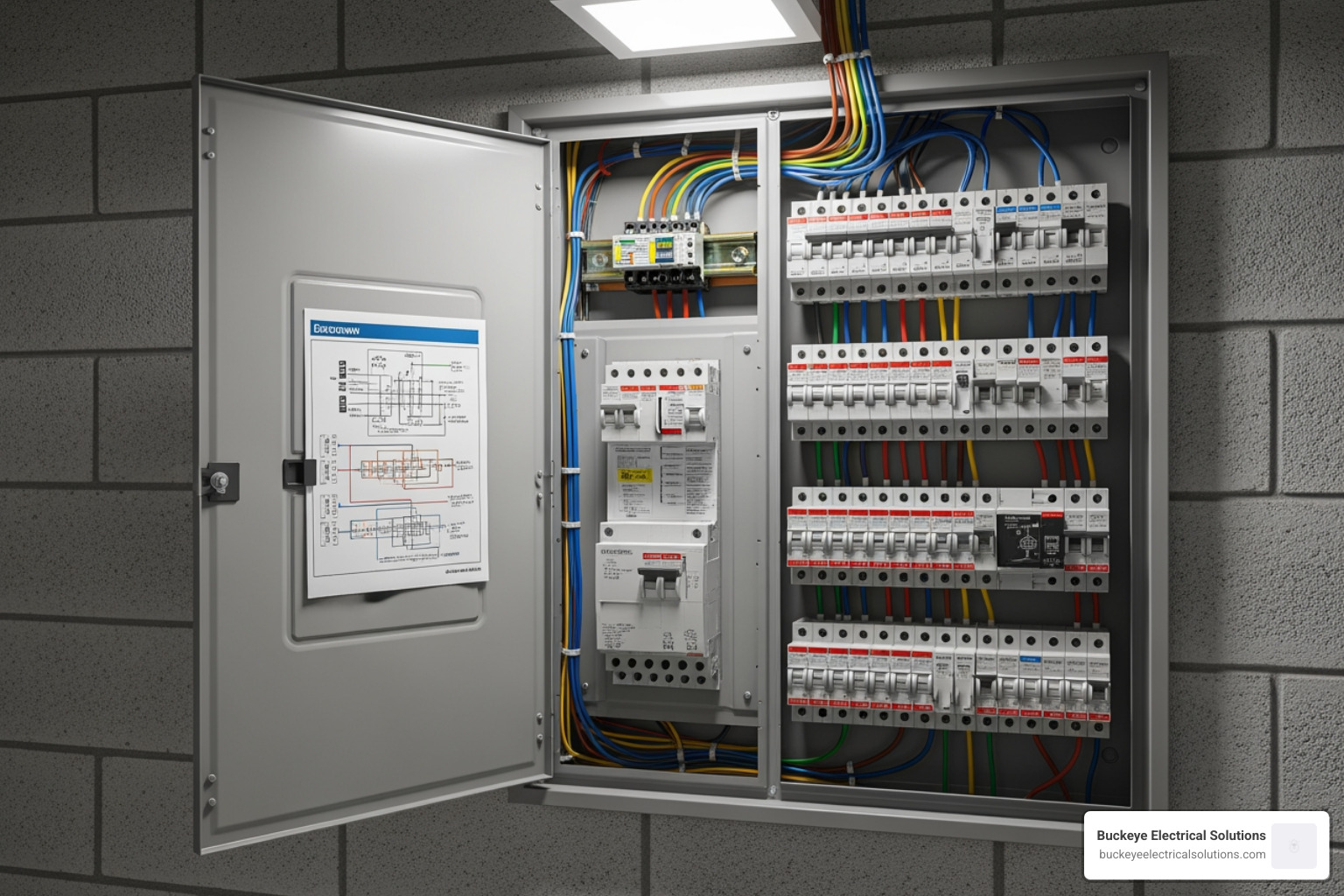
Your home’s electrical panel, often located in the basement, garage, or utility closet, is the heart of your electrical system. It houses the circuit breakers (or fuses in older homes) that act as crucial safety devices.
The role of a circuit breaker is simple yet vital: it automatically “trips” (shuts off) when it detects an overload of electricity or a short circuit. This immediate interruption of power is designed to prevent fires and prevent system damage to your wiring and appliances. Without functioning circuit breakers, an electrical fault could quickly overheat wires, melt insulation, and ignite flammable materials within your walls.
In older homes, you might find a fuse box instead of a breaker panel. Fuses serve the same purpose but operate differently: a metal strip inside the fuse melts and breaks the circuit when overloaded. Unlike breakers, which can be reset, a blown fuse must be replaced. If you have fuses, replace a blown fuse with one of the correct amperage to avoid serious hazards. We often recommend upgrading older fuse panels to modern circuit breaker panels for improved safety and convenience.
Locating and Interacting with Your Panel
First, know where to locate your panel. It’s usually a gray metal box, often marked with labels. Familiarize yourself with it before an emergency strikes.
If you’re experiencing an electrical issue like a power outage to a specific area or a frequently tripping breaker, here’s how to reset a tripped breaker:
- Safety First: Ensure your hands are dry and you’re not standing in water.
- Identify the Tripped Breaker: Look for a breaker that is in the “off” position or, more commonly, in an intermediate position (sometimes called “tripped” or “middle”).
- Flip Fully Off: Push the tripped breaker firmly to the “off” position first. You might hear a click.
- Flip to On: Then, push it firmly to the “on” position.
Before resetting, we always recommend you unplug any appliances or devices from the affected circuit. This helps determine if an overloaded circuit was the cause.
What to Do if a Breaker Trips Again
If a breaker trips immediately after you reset it, or if it trips repeatedly over a short period, do not reset it again. This is a clear indicator of a more serious underlying problem that requires professional attention. Repeatedly resetting a breaker that keeps tripping can lead to overheating, damage to your electrical system, and fire.
Two common reasons for a breaker to trip are:
- Short Circuits: This occurs when a “hot” wire accidentally touches a “neutral” wire or a grounded part of your electrical system. This creates a path of very low resistance, causing a sudden surge of current that trips the breaker almost instantly. Short circuits can happen due to damaged wire insulation (from age, rodents, or accidental punctures), faulty appliances, or loose connections.
- Overloaded Circuits: This happens when too many high-power appliances or devices are drawing electricity from a single circuit simultaneously, exceeding its amperage capacity. For example, plugging in a space heater, a vacuum cleaner, and a microwave into outlets on the same circuit can easily overload it. This is especially common during the winter months when additional heaters might be in use, pushing your electrical system to its limits.
If a breaker keeps tripping, you need to isolate the problem area. Try unplugging everything on that circuit, reset the breaker, and then plug devices back in one by one until it trips again. This can help pinpoint the problematic appliance. However, if the breaker trips even with nothing plugged in, the issue is likely within your home’s wiring or the breaker itself, and that’s when it’s time to call us.
Step 3: Calling for Professional Emergency Residential Electrical Repair
Knowing when to call an emergency electrician versus waiting for regular business hours is crucial for both safety and cost-effectiveness. The rule of thumb is: if it poses a threat to safety, property, or causes significant disruption, it’s an emergency.

When to call an emergency electrician:
- Any of the signs listed in Step 1 (burning smells, sparks, smoke, shocks, loud buzzing).
- A complete power outage in your home when your neighbors still have power (indicating a problem specific to your property, not the utility).
- Your main breaker keeps tripping, cutting power to your entire home.
- Loss of power to essential appliances like your furnace in winter, especially here in Northeast Ohio where temperatures can drop dangerously low, risking frozen pipes.
- Any electrical issue caused by storm damage, like downed wires on your property (after calling the utility company and 911 if necessary).
When to wait for regular business hours:
- A single outlet not working (unless it’s critical for medical equipment).
- A light fixture that’s out.
- Planning a minor electrical upgrade or installation.
- Flickering lights that are intermittent and not accompanied by other warning signs.
The good news is that emergency residential electrical repair services are available 24/7, including holidays and weekends. Electrical problems don’t adhere to a 9-to-5 schedule, and neither do we. Our team is always ready to respond, no matter the time or day.
Benefits of Hiring a Licensed and Insured Emergency Electrician
When dealing with electricity, cutting corners is never an option. The benefits of hiring a licensed and insured emergency electrician are paramount:
- Safety: Licensed electricians have undergone rigorous training and adhere to strict safety protocols. They understand the complexities of electrical systems and how to safely diagnose and repair issues, minimizing risks of electrocution, fire, and further damage.
- Expertise: With extensive experience, they can quickly and accurately diagnose the root cause of the problem, rather than just treating symptoms. Our team at Buckeye Electrical Solutions brings over 20 years of experience to every call.
- Compliance: Licensed electricians ensure all work is up to code, adhering to local and national electrical safety standards. To stay informed about the regulations that guide our work, such as British Columbia’s Electrical Safety Standards, you can explore the Electrical Safety Regulations, which govern all aspects of safe electrical practices in the province. Rest assured, our services adhere to the critical standards applicable in Ohio.
- Insurance: An insured electrician protects you from liability if an accident or further damage occurs during the repair process. This provides immense peace of mind.
- Proper Tools and Equipment: We arrive with fully stocked trucks, equipped with the specialized tools and diagnostic equipment needed to handle almost any electrical emergency efficiently.
Choosing a professional ensures the job is done right the first time, protecting your home and family in the long run. Learn more about our commitment to quality and service on our About Us page.
What to Tell Your Technician About Your Emergency Residential Electrical Repair Needs
When you call for emergency residential electrical repair, providing clear and concise information can significantly help us prepare and respond effectively. Be ready to provide:
- Your Name and Address: Obvious, but critical for dispatch.
- Detailed Description of the Problem: Explain exactly what happened, when it started, and any specific events leading up to it.
- What You See, Hear, and Smell: These sensory details are incredibly valuable. “I see sparks from the kitchen outlet,” “I hear a loud buzzing from the basement panel,” or “I smell burning plastic near the bedroom wall” are crucial clues.
- Location of the Issue in the Home: Specify which room, appliance, or area is affected. “The entire upstairs is out,” or “The outlet behind the refrigerator.”
- Any Steps You’ve Already Taken: Did you try resetting a breaker? Did you unplug devices? This helps us understand what’s been attempted.
- Ensuring Clear Access to the Panel: Let us know if your electrical panel is easily accessible or if it’s behind clutter. Clearing the path beforehand can save valuable time upon arrival.
Step 4: What to Expect During and After the Service Call
When you’re facing an electrical emergency, you need fast, reliable help. Here’s what you can typically expect from our emergency residential electrical repair service:
| Feature | Emergency Service Call | Regular Service Call |
|---|---|---|
| Response Time | Immediate, often within an hour or two | Scheduled, typically within business hours |
| Availability | 24/7, including weekends and holidays | During standard business hours |
| Cost | Higher call-out fee and hourly rate (emergency premium) | Standard service call fee and hourly rate |
| Urgency | High: addresses immediate safety hazards or critical outages | Low to moderate: for non-urgent repairs, installations, or maintenance |
Typical Response Time and Diagnosis
We prioritize emergency calls, aiming for a typical response time that gets a skilled electrician to your Northeast Ohio home as quickly as possible, often within an hour or two, depending on traffic and current call volume.
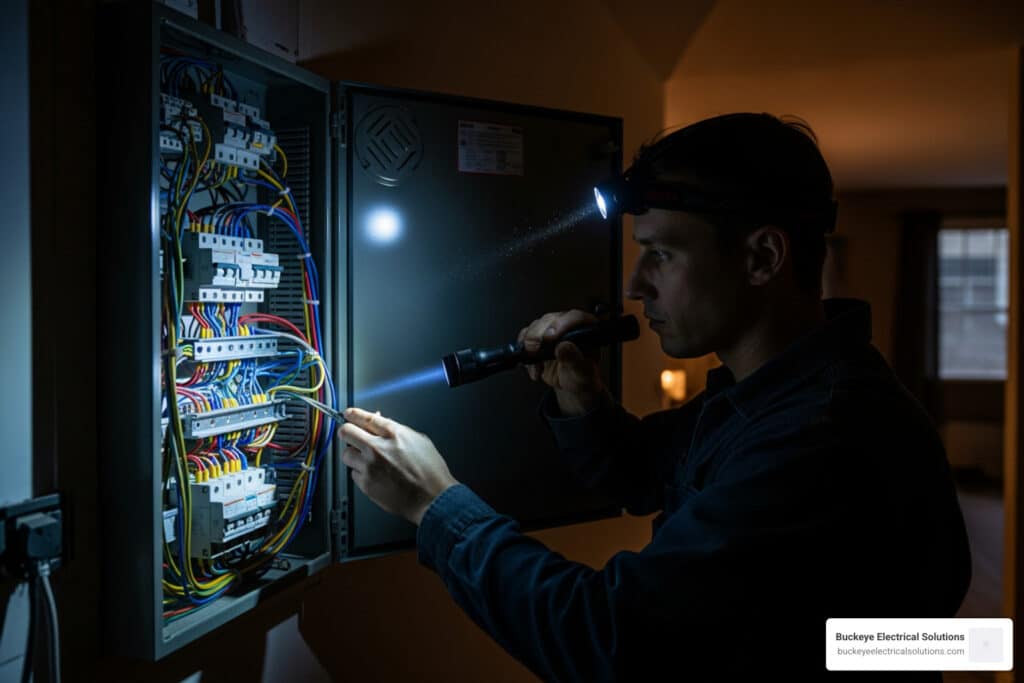
Upon arrival, our electrician will begin with a thorough diagnosis process. They’ll listen to your account of the problem, inspect the affected areas, and use specialized tools to pinpoint the exact issue. This might involve checking your electrical panel, testing circuits, and examining wiring or outlets.
Before any work begins, we believe in transparency. You’ll receive upfront pricing for the repair. Our technician will clearly explain the problem, the proposed solution, and the associated costs, ensuring you understand everything before we proceed.
Difference from a General Electrical Service Call
It’s important to understand the difference between a general electrical service call and an emergency electrical repair. A general service call is for non-urgent issues like installing a new fixture, troubleshooting a minor problem that isn’t a safety hazard, or performing routine maintenance. These are typically scheduled during regular business hours at standard rates.
An emergency residential electrical repair call, on the other hand, is for immediate, critical situations. It demands rapid response outside of normal business hours, which naturally impacts the potential costs. Expect a higher call-out fee and potentially higher hourly rates for emergency services. This premium covers the immediate dispatch of a qualified technician at any time of day or night, ensuring your safety and restoring power when you need it most. While the cost is higher, it’s a small price to pay for preventing fire, injury, and extensive property damage.
For any of your general electrical needs, from new installations to routine check-ups, please visit our Residential Electrical Services page.
Common Types of Emergency Residential Electrical Repair
Our team is equipped to handle a wide array of urgent electrical issues. Here are some common types of emergency residential electrical repair we tackle:
- Power Outage Troubleshooting: If your home loses power but your neighbors haven’t, the issue is on your property. We diagnose problems with the main breaker, meter base, or service line.
- Sparking Outlet Repair: We fix sparking, smoking, or scorched outlets, replacing them and checking for underlying wiring issues to prevent fires.
- Burning Smell Investigation: We trace burning or “fishy” smells to their source—like melting wires or failing components—and perform immediate repairs to eliminate fire hazards.
- Circuit Breaker and Panel Repair: We repair or replace faulty breakers that won’t reset, diagnose panel issues, and can upgrade outdated fuse boxes.
- Faulty Wiring Repair: We fix damaged, loose, or corroded wiring that causes power issues, flickering lights, or shock and fire risks, often caused by pests or accidental punctures.
- Storm Damage Repair: We repair electrical systems in Northeast Ohio damaged by severe weather, including issues with your service mast, meter base, or wiring caused by wind, ice, or lightning.
- Fallen Power Line Response: After the utility company secures downed lines, we repair the damage to your home’s electrical connection point.
- Generator Problems: When your backup generator malfunctions during an outage, we provide emergency troubleshooting and repair to restore your essential power.
Step 5: How to Prevent Future Electrical Emergencies
The best emergency residential electrical repair is the one you never need. Understanding the dangers of ignoring problems is the first step towards prevention. Ignoring seemingly minor electrical issues—like a flickering light, an occasional tripped breaker, or a warm outlet—can have severe consequences:
- Fire Hazards: Faulty wiring, overloaded circuits, and damaged outlets are leading causes of house fires. These fires can start quickly, cause extensive property damage (an estimated $1.3 billion annually), and pose a significant threat to life.
- Electrocution Risk: Exposed wires, ground faults, and damaged appliances can lead to dangerous electrical shocks, causing serious injury or even death.
- Property Damage Costs: Beyond fire, electrical malfunctions can damage expensive appliances, electronics, and even the structural integrity of your home. The cost of repair or replacement far outweighs the cost of preventative maintenance.
Proactive prevention is always the smarter approach. Here’s how homeowners in Northeast Ohio can minimize the risk of electrical emergencies:
- Regular Electrical Inspections: Just like your car needs a regular check-up, your home’s electrical system benefits from periodic professional inspections. Our electricians can identify potential problems in their early stages, such as outdated wiring, loose connections, or overloaded circuits, before they escalate into emergencies. This is often the best way to prevent unforeseen disasters.
- Upgrading Old Wiring: If you live in an older home, your wiring might not be sufficient for modern electrical demands. Outdated knob-and-tube or aluminum wiring can be a significant fire hazard. A whole-home rewire, while a larger project, can dramatically improve safety and capacity.
- Installing GFCI Outlets: Ground Fault Circuit Interrupter (GFCI) outlets are essential in areas exposed to moisture, like bathrooms, kitchens, laundry rooms, and outdoors. They quickly shut off power if they detect a ground fault, preventing severe electrical shocks.
- Whole-Home Surge Protection: While individual surge protectors are good for electronics, a whole-home surge protector installed at your electrical panel can protect all your appliances and sensitive electronics from power spikes caused by lightning or utility fluctuations.
- Avoiding Overloaded Circuits: Be mindful of how many devices you plug into a single outlet or circuit. If your breaker trips frequently, it’s a sign of an overloaded circuit. Distribute high-wattage appliances across different circuits or consider adding new dedicated circuits.
- Dedicated Circuits for Major Appliances: High-draw appliances like refrigerators, ovens, and furnaces (critical in Ohio winters) need dedicated circuits. This prevents overloads and ensures a tripped breaker won’t cut power to essential systems like your heat, which could risk frozen pipes.
By taking these preventative steps, you invest in the long-term safety and reliability of your home’s electrical system, significantly reducing the chances of needing an emergency residential electrical repair.
Frequently Asked Questions about Emergency Electrical Repair
What is the most critical sign that I need an emergency electrician right away?
The most critical signs that demand immediate attention are any indication of a fire hazard. This includes distinct burning smells (especially a plastic or “fishy” odor), visible sparks or smoke coming from outlets, switches, or your electrical panel, and scorch marks. These signals indicate an immediate danger of fire and require a professional, not a DIY fix, to ensure safety and prevent catastrophic damage.
Is it safe for me to reset a tripped circuit breaker?
Yes, it is generally safe for you to reset a circuit breaker once. If it trips due to a temporary overload, resetting it might restore power. However, if it trips again immediately after being reset, or if it trips repeatedly, do not reset it again. This indicates a more serious underlying problem like a short circuit or a persistent overload that needs professional diagnosis and repair. Continuing to reset it can cause damage or create a fire hazard.
How much more does an emergency electrical service typically cost?
Emergency electrical services typically come with a premium compared to routine service calls. You should expect a higher call-out fee and a higher hourly rate. This increased cost covers the immediate, 24/7 dispatch of a licensed and equipped electrician, even during nights, weekends, or holidays. While it’s an added expense, the cost ensures your home’s safety, prevents further damage, and restores essential power quickly, providing invaluable peace of mind.
Your Lifeline in an Electrical Crisis
When electricity fails, it can be scary, but remember: safety first. We’ve walked through the critical steps, from identifying an emergency and ensuring immediate safety to understanding how your circuit breaker panel works and what to expect when you call for professional help. The key takeaway is to act quickly and never attempt dangerous repairs yourself. Electricity is powerful and unforgiving, and professional help is crucial.
For residents throughout Northeast Ohio, Buckeye Electrical Solutions is your trusted partner for reliable, 24/7 emergency residential electrical repair services. With over 20 years of experience, we’re known for our exceptional service and prompt project completion, ensuring your home’s electrical system is safe and functional. Don’t wait when safety is on the line—get expert help now by exploring Our Services or contacting us directly.
Contact Us today. We’re here to be your lifeline in an electrical crisis.